











Milwaukee
Drilling overhead or cutting joists all day? Milwaukee tools let you match the kit to the workload.
M12 suits tight access and lighter carrying; M18 covers heavier drilling, cutting and grinding. For sparkies, plumbers and chippies, battery compatibility matters as much as the tool. Choose your platform first, then build the kit around your jobs.
What Jobs Are Milwaukee Tools Best At?
- Drill joists and drive fixings during first fix with a drill and impact driver matched to the hole sizes, fasteners and timber you work with.
- Cut pipe inside kitchen units and service cupboards with compact tools that leave room for your hands where larger machines become awkward.
- Cut framing timber, sheet materials and metal sections with the appropriate Milwaukee saw and a blade specified for the material.
- Drill concrete and masonry for brackets, cable containment and pipe supports with an SDS drill, suitable bits and effective dust extraction.
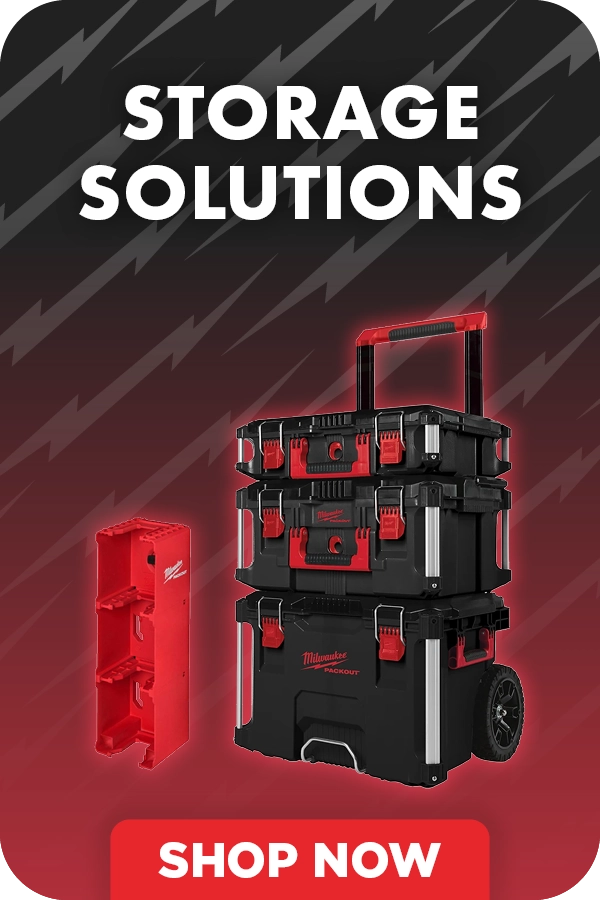
- Move tools between the van, workshop and work area using PACKOUT storage configured around the kit you need for that stage of the job.
Choosing the Right Milwaukee Tools
Buy for the hardest job you regularly do, not the biggest specification on the shelf.
1. Start with M12 or M18
If most of your work involves cupboard interiors, smaller fixings and overhead access, start by looking at M12. If you regularly drill larger holes, cut framing timber or use grinders, look at M18. Check the individual tool's capacity rather than judging by voltage alone.
2. Decide Whether FUEL Earns Its Keep
For repeated demanding cuts or drilling, compare the relevant FUEL model's output, capacity and control features. For occasional fastening, a less expensive model may cover the work. FUEL is Milwaukee's performance range, not a guarantee that every model suits every task.
3. Check Bare Tool Against Kit Contents
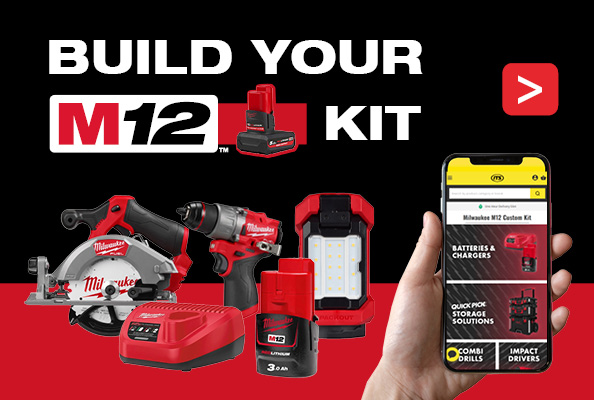
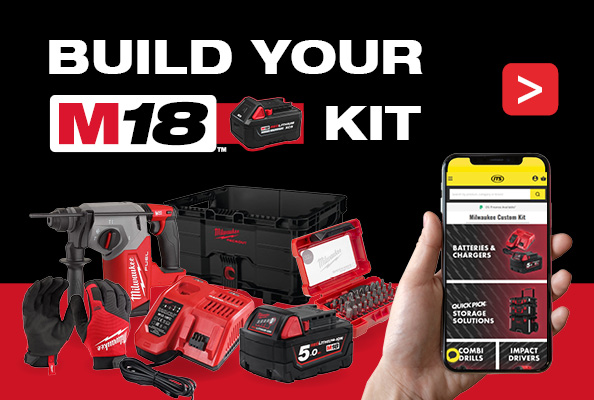
If you already own suitable batteries and a charger, a bare tool can avoid duplication. Starting from scratch? Check the kit includes the battery quantities, capacities and charger you need. A Milwaukee power tool set only saves money if you will use the tools supplied.
4. Match the Battery to the Work
Keep an overhead drill manageable with a suitable compact battery. For sustained sawing or grinding, check Milwaukee's recommended battery specification for that tool. Amp-hours indicate capacity, but battery design also affects the output available under load.
Who Uses Milwaukee Tools?
Sparkies and plumbers use compact Milwaukee tools for drilling, fastening and working around installed services. Chippies and fitters use drills, impact drivers and saws through first and second fix, while maintenance teams build cordless kits for repairs across occupied buildings. Groundworkers and installation crews can choose heavier drilling and breaking equipment where smaller cordless tools would be working beyond their capacity.
The Basics: Understanding Milwaukee Cordless Systems
The platform determines which batteries fit. The tool specification determines what work it can handle.
1. M12, M18 and MX FUEL Are Separate Platforms
M12 and M18 cover different cordless tool requirements, while MX FUEL serves larger equipment applications. Their batteries are not interchangeable between platforms. Some chargers accommodate both M12 and M18 batteries, but check the charger model before buying.
2. FUEL Is Not Another Battery Voltage
M12 FUEL and M18 FUEL tools combine Milwaukee's POWERSTATE brushless motors with electronic control and compatible REDLITHIUM batteries. They remain part of their respective M12 or M18 system; choosing FUEL does not mean starting a separate battery platform.
Accessories to Keep Your Milwaukee Kit Working
Sort the batteries, consumables and transport before the tool reaches site.
1. Compatible Spare Batteries and Chargers
A spare battery keeps work moving while another charges. Match the platform and check charger compatibility, particularly if your van carries both M12 and M18 tools.
2. Task-Matched Blades, Bits and Discs
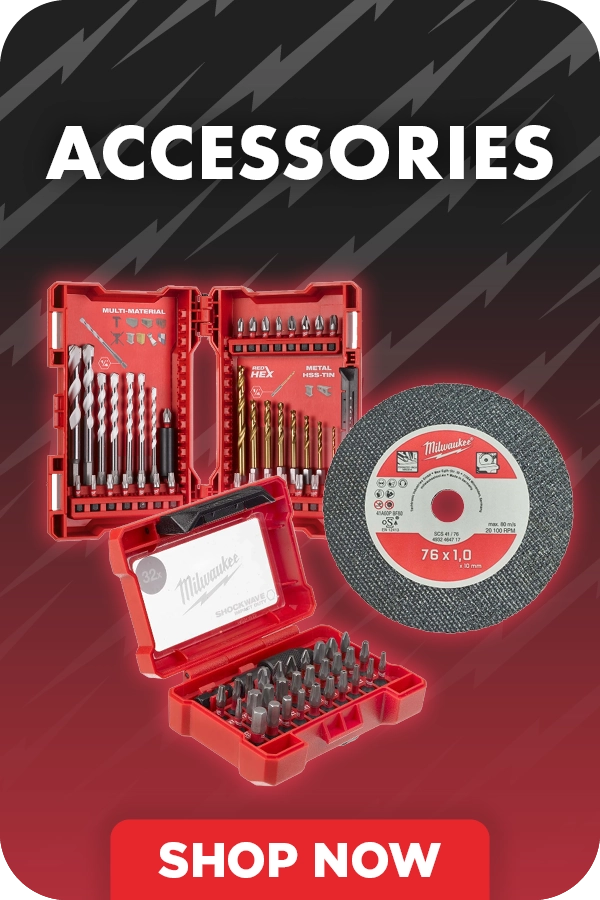
The wrong consumable wastes time and can damage the work. Check blade dimensions, arbor or shank fitting, material suitability and maximum speed before fitting it.
3. Compatible Dust Extraction Attachments
For drilling and cutting that produces hazardous dust, use a suitable capture attachment and correctly specified extractor. Check the connection and tool compatibility rather than assuming any hose will fit.
4. PACKOUT Storage
Cases, organisers and trolley options keep tools and consumables together between jobs. Check internal dimensions and load limits before building a stack around your heaviest equipment.
Choose the Right Milwaukee Tools for the Job
Start with the work you do most, then check the individual model's capacity.
| Your Job | Milwaukee Tool Type | Key Features |
|---|---|---|
| Fastening inside units and service cupboards | Compact M12 drill or driver | Short head length, manageable weight and suitable torque control. |
| Regular first-fix drilling and screwdriving | M18 drill and impact driver kit | Required drilling capacity, suitable batteries and a charger included. |
| Repeated timber cutting on site | M18 circular or reciprocating saw | Cutting capacity, correct blade fitting and recommended battery specification. |
| Installing fixings into concrete | M12 or M18 SDS drill | Rated hole range, impact energy and compatible dust capture. |
| Starting a cordless kit from scratch | Milwaukee combo kit | Useful tool combination, battery quantities, charger and storage provision. |
Common Buying and Usage Mistakes
- Buying an M12 tool for existing M18 batteries leaves you with incompatible kit. Check the platform on every tool, battery and charger before ordering.
- Choosing a combo kit by tool count can leave expensive equipment sitting unused. Price up the tools you actually need and compare the included batteries as well.
- Fitting the largest battery to every tool adds unnecessary weight during overhead work. Use a battery suited to the tool's demands and the length of the task.
- Assuming a hammer drill replaces an SDS drill can mean slow progress in hard concrete. Match the drilling mechanism and rated capacity to the material and hole size.
- Missing the warranty registration deadline can mean losing an available extension. Check eligibility and register qualifying products promptly, keeping the purchase receipt.
Milwaukee M12 vs M18 vs MX FUEL
M12: Compact Installation and Service Work
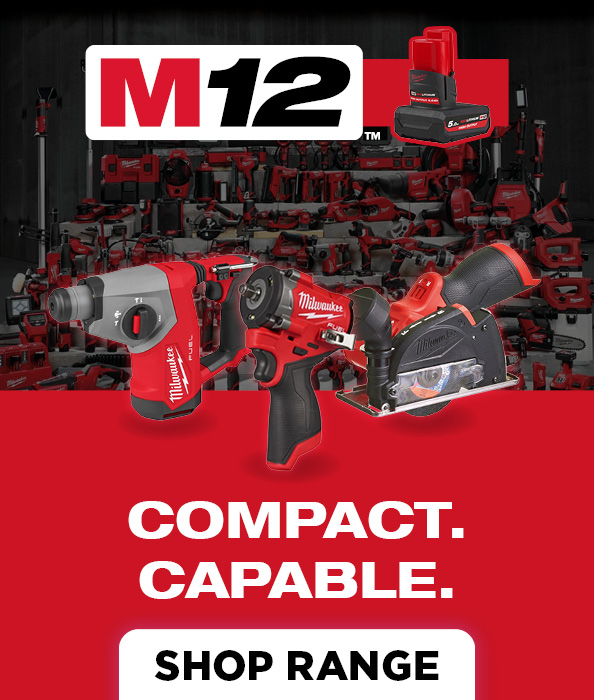
Choose M12 where access and carrying weight matter, particularly for installation, maintenance and smaller drilling or fastening jobs. Check capacity carefully if larger holes or sustained heavy cutting form a regular part of your day.
M18: Broader Site Workloads
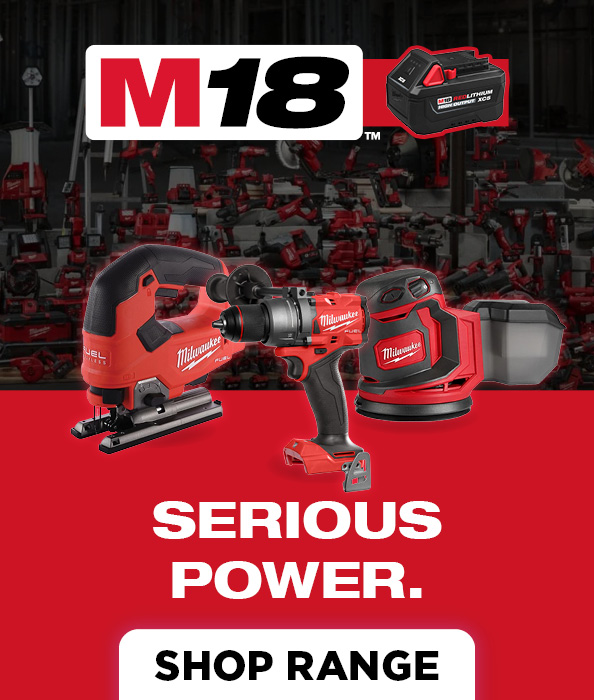
Choose M18 for a broad kit covering drilling, sawing, grinding and other demanding site work. Larger tools and batteries can add weight, so it need not replace compact M12 equipment for every awkward fixing.
MX FUEL: Larger Equipment Applications
Look at MX FUEL for equipment tasks such as heavy breaking or core drilling, where the specific machine meets your requirements. It uses a separate battery system and is not an upgrade battery option for M18 tools.
Maintenance and Care
Clear Dust After Work
Remove the battery before cleaning or changing accessories. Keep ventilation slots clear using the method specified in the manual, and do not hose down power tools or chargers.
Look After Batteries
Keep terminals clean and protected from loose screws or other metal objects. Follow storage temperature guidance, and stop using batteries with damaged cases, swelling or signs of overheating.
Inspect Working Parts
Check chucks, blade clamps, guards and accessory fixings before use. Replace worn consumables rather than forcing a blunt blade or bit and overloading the tool.
Store Dry and Repair Properly
Dry damp equipment before storage and protect exposed steel as the manual directs. Stop using tools with damaged housings, unreliable switches or unusual vibration; arrange a proper assessment rather than carrying on until they fail.
Your Milwaukee Tool Range, Ready to Go
ITS stocks a comprehensive Milwaukee range, covering M12 and M18 power tools, combo kits, batteries, chargers, hand tools, accessories and PACKOUT storage. Stock is held in our own warehouse, with in-stock lines ready for next-day delivery, subject to order cut-off times, delivery location and service availability.
Milwaukee Tools FAQs
Is Milwaukee its own brand?
Yes. Milwaukee is a distinct tool brand with its own product ranges, including M12, M18 and PACKOUT. It belongs to the wider Techtronic Industries group, but that does not make its batteries interchangeable with other brands in the group.
Who owns Milwaukee Tool?
Milwaukee Tool is owned by Techtronic Industries, usually shortened to TTI. TTI owns several tool brands, but Milwaukee operates its own cordless systems, so check Milwaukee-specific compatibility when buying tools, batteries and chargers.
Where are Milwaukee tools made?
Milwaukee uses manufacturing facilities in several countries, including the United States and China. The country of manufacture varies by product; being an American brand does not mean every tool is US-made. Check the individual tool's label or packaging if origin is a buying requirement.
How long is the Milwaukee warranty in the UK?
Milwaukee power tools generally carry a one-year manufacturer's warranty. Eligible tools can qualify for an extension to three years when registered within 30 days of purchase, subject to the current UK terms and purchase requirements. Batteries, accessories and some product ranges have different cover, so check the exact product's eligibility and keep your receipt.
Should I choose Milwaukee M12 or M18?
Choose M12 when compact size and lower carrying weight are priorities, particularly inside units or around services. Choose M18 when your regular workload includes heavier drilling, sawing or grinding. Compare the actual tool capacities before deciding, and remember that M12 and M18 batteries do not interchange.
Does a bare Milwaukee tool come with a battery and charger?
Normally, no. A bare tool is supplied without a battery and charger unless the listing explicitly says otherwise. Check the supplied contents for cases, blades and other accessories too; the product photograph alone is not a packing list.
Is a Milwaukee FUEL kit worth paying extra for?
It can be if the specific tools offer useful gains for your workload, such as greater cutting capacity or better performance under sustained load. Compare model specifications and included batteries rather than buying on the FUEL name alone. For lighter, occasional work, a lower-priced kit may cover the job properly.
-

Milwaukee Hand Tools: Carpentry
-

Milwaukee Heating, Plumbing & Cooling
-

Milwaukee Hand Tools: Automotive
-

Milwaukee Hand Tools: Gardening
-

Milwaukee Hand Tools: Electrical
-

Milwaukee Hand Tools: Plumbing
-

Milwaukee Automotive
-

Milwaukee Hexon
-

Milwaukee Power Tools
-

Milwaukee Trade Essentials
-

Milwaukee Power Tool Accessories
-

Milwaukee Hand Tools
-

Milwaukee FREEFLEX
-

Milwaukee WORKSKIN
-

Milwaukee Workwear & PPE
-

Milwaukee Tool Boxes and Storage
-

Milwaukee M18
-

Milwaukee M12
-

Milwaukee Packout
-

Milwaukee Fuel
-

Milwaukee SHOCKWAVE
-

Milwaukee Force Logic
-

Milwaukee REDSTICK
-

Milwaukee Shop All
-

Milwaukee Special Offers
-

Milwaukee New Tools
-

Milwaukee Garden Tools & Attachments
-

Milwaukee VDE
-

Milwaukee Site Lighting & Torches
-

Milwaukee Lighting & Electrical
-

Milwaukee Fixings & Fasteners
-

Milwaukee Coming Soon
-

Milwaukee ONE-KEY
-

Milwaukee BOLT
-

Milwaukee RedLithium USB
-

Milwaukee MX FUEL
-

Milwaukee Home & Leisure
-

Milwaukee FLEXTRED
-

Milwaukee Fastback
-

Milwaukee Ladders, Access & Benches
-

Milwaukee ARMOURTRED
-

Milwaukee Decorating
-

Milwaukee Plumbing & Heating
-

Milwaukee FORGE
VIDEOS FROM ITS
Tests, Tools & Reviews
Milwaukee SUPERSTORE - POWER TOOLS & ACCESSORIES
Milwaukee® has been leading innovation in the tool industry with their heavy-duty power tools. As an authorised distributor of Milwaukee, ITS strive to create the best tool shopping experience. Packed with content our superstores are the best way to learn about and shop for all the tools you need.
THE LARGEST MILWAUKEE SUPERSTORE IN THE UK
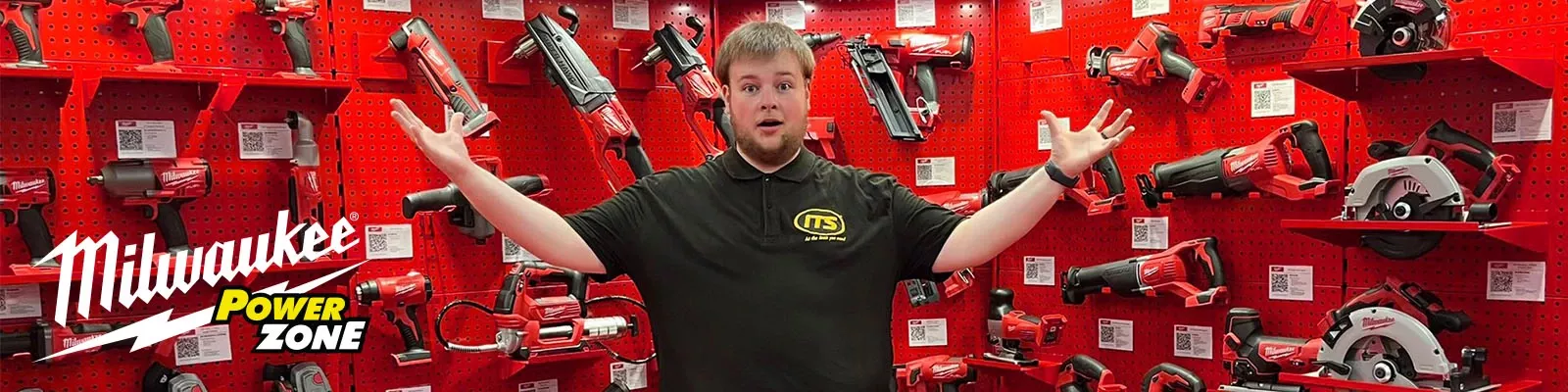
Milwaukee are not just one of the leading tool manufacturers in the UK, they are now one of the largest manufacturers of corded and cordless power tools, especially for professionals in the trade in the world. In 1924 (after being bought out due to a devastating fire). Milwaukee Electric Tool Corp was founded creating a brand that eventually became world renown for high-quality durable power tools and hand tools. Milwaukee has maintained the same ethos since its founding; to produce the best heavy-duty electric power tools and accessories for the professional user. Today, owning a Milwaukee tool means that you know that you will have the highest quality, durable and reliable tool that you can get your hands on. Our expert team works closely with Milwaukee to ensure that we have all tools you want, and all the tools you need so that whatever job you are doing.
ITS, in collaboration with Milwaukee, can supply you with the tools to get the job done. At ITS, we offer a Price Match Promise so you know you’re getting a good deal, as well as delivery options 7 days a week, including to site. And to give you complete peace of mind, you can even get a one-hour delivery window, so your tools are there when you need them. When you buy from us, you are buying from an independent, family-run business with EXCELLENT reviews through Trustpilot – don’t take our word for it.
WHAT JOBS CAN YOU DO WITH THE MILWAUKEE TOOLS RANGE
At ITS, we offer a detailed range of Milwaukee cordless power tools and Milwaukee hand tools with a choice of M12 12V power tools, or the M18 18V power tools. We also offer an extensive range of power tool accessories, from M12/M18 batteries and polishing, to connectable storage, trackable modules and so much more.
With our expertly chosen range of Milwaukee power tools, hand tools, accessories, and storage, we think we can cover almost every given job you can think of. From demolition, construction, automotive care, and maintenance, to renovations, electronics, cable management, site lighting, gardening, and grounds keeping….the list goes on. As it does for the respective trades catered for. From plumbing, electrical, construction, drywalling, and utility management to carpentry, landscaping, horticultural, ceiling, and transportation. There is a Milwaukee tool for you and your needs.
THE MILWAUKEE M12 POWER TOOL RANGE
The Milwaukee M12 product range is a 12V line of equipment that has been designed to produce premium-level performance and power in a compact, portable device. While ensuring that you can work more efficiently, in smaller spaces, the range covers over 90 separate cordless tools that offer multiple capabilities and produce the results that you need to get.
Driven by a range of 12V lithium-Ion batteries which are interchangeable across the tool range, the Milwaukee M12 range delivers iconic Milwaukee technology including Power state Brushless Motors, Redlithium battery packs, and Redlink Plus intelligent electronics.
The Milwaukee M12 range of power tools covers all aspects of building works, gardening as well as heated jackets for working in the cold. From M12 Garden blowers, impact wrenches, pruning saws, laser levels, wet/dry vacuums, multi-tools to Jobsite radios, die grinders, impact drivers, inflators, reciprocating saws, combi drills, nail guns, and much, much more.
Click here for more information and to view the whole Milwaukee M12 range
THE MILWAUKEE M18 POWER TOOL RANGE
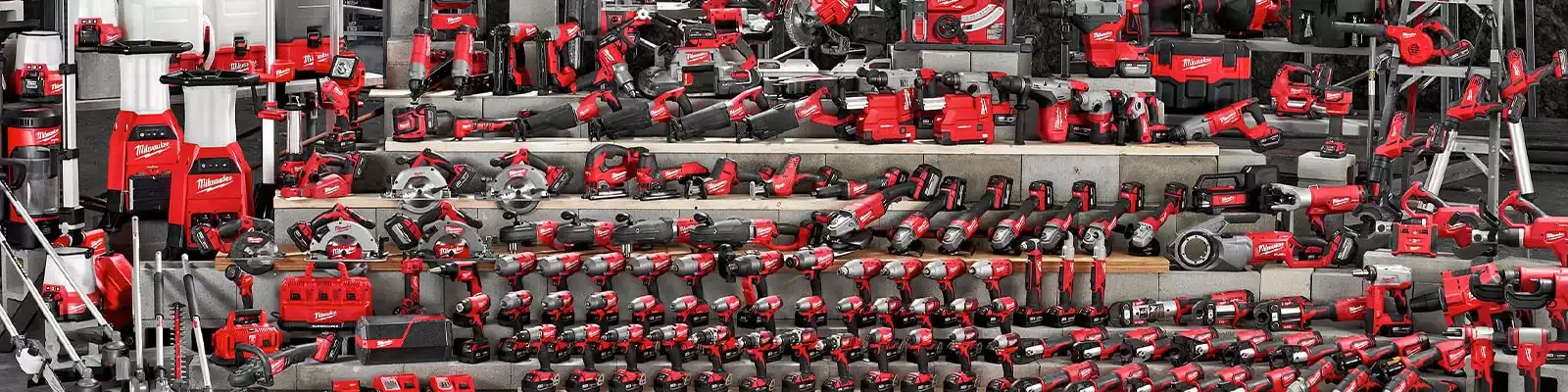
Driven by a range of 18V lithium-Ion batteries which are interchangeable across the tool range, the Milwaukee M18 range delivers iconic Milwaukee technology including Power state Brushless Motors, Redlithium battery packs, and Redlink Plus intelligent electronics.
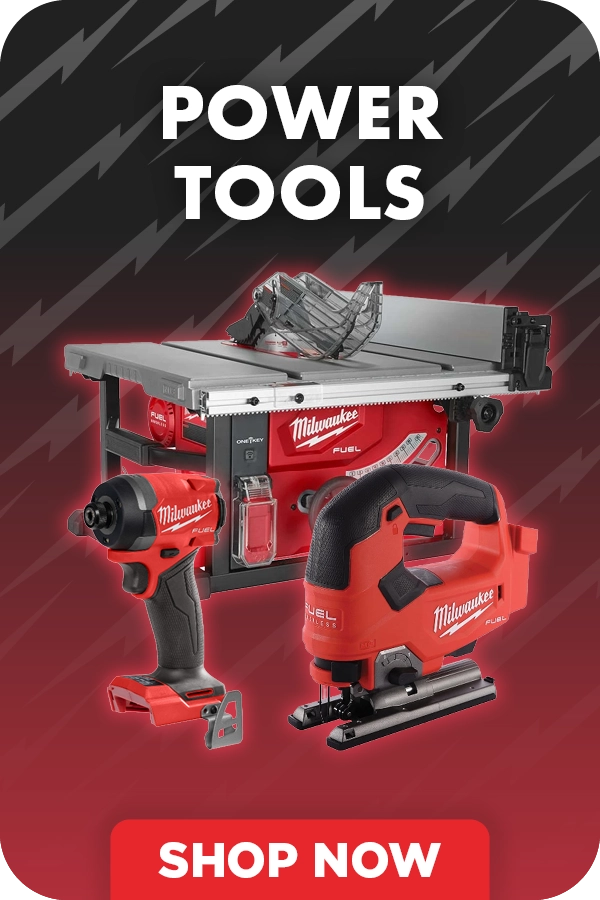
The Milwaukee M18 product is vast and covers an enormous range of applications. From combi drills, impact drivers, SDS rotary hammer drills, right-angle drills, and impact wrenches, to nail guns, drywall screw-guns, grinders, circular saws, jigsaws, reciprocating saws, mitre saws, planers, and sanders.
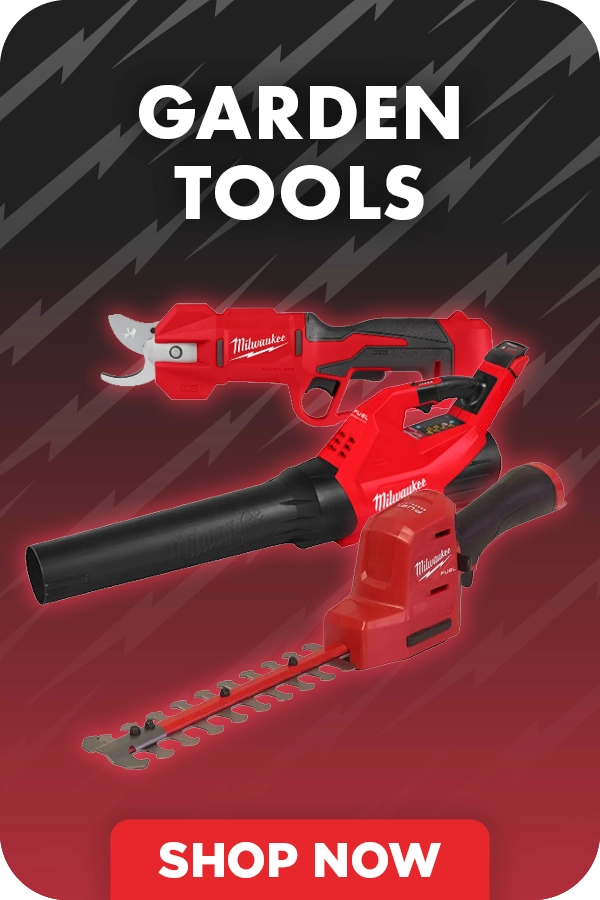
And it's not just tools for building and construction available within the range. The Milwaukee M18 catalog extends to tools for your gardening and landscaping needs. From chainsaws, leaf blowers, line trimmers, and lawn mowers, to sprayers, hedge trimmers, and a split-shaft system with multiple attachments, Milwaukee provide a full and comprehensive range of professional gardening tools to improve your special or public space.
Click here for more information and to view the whole Milwaukee M18 range
THE MILWAUKEE PACKOUT RANGE
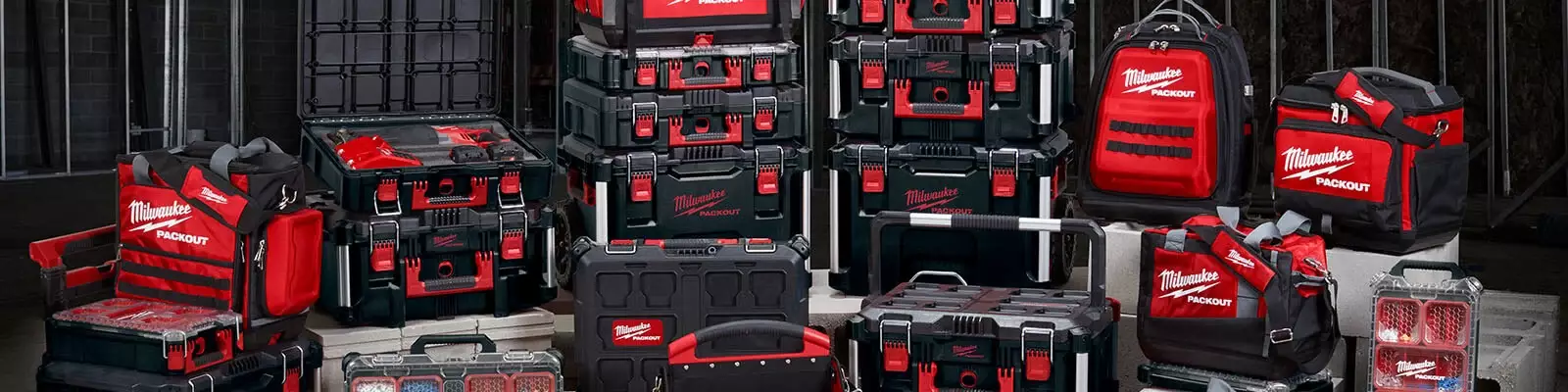
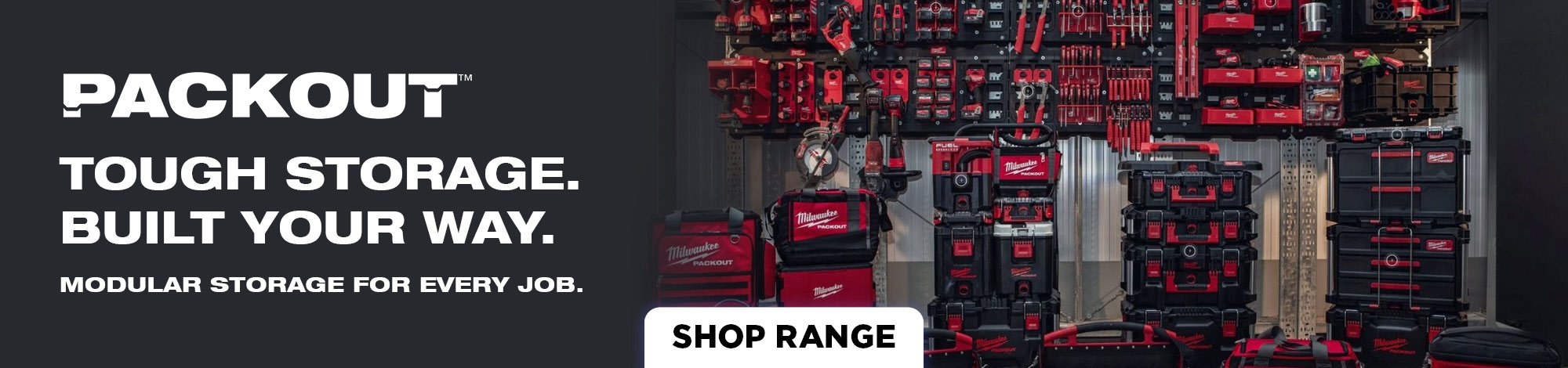
Revolutionising tool transportation, organisation and storage for the trades on-site, in transit, at the shop, and at home, the Milwaukee PACKOUT™ system range is here to redefine the world of tool logistics. Featuring intelligent, optimised modular storage and accessory solutions, Milwaukee has covered every base conceivable when it comes to your day-to-day needs.
Designed to provide users with the ability to interchange and interlock a wide assortment of heavy-duty tool boxes, organisers and storage totes in multiple configurations, PACKOUT™ is the most versatile and durable modular storage system in the industry.
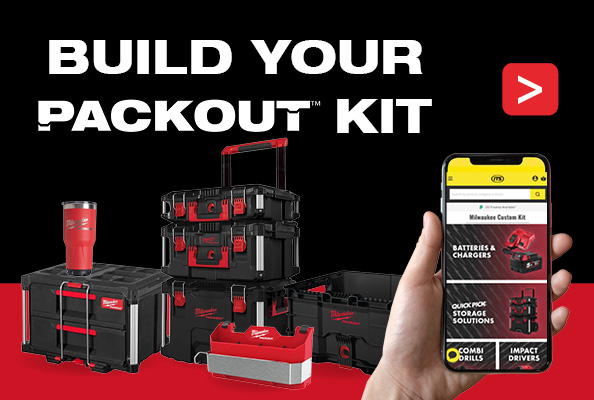
PACKOUT™ is the first system providing true modularity, including solutions like tool boxes, organizers, tool bags and even backpacks. Give it a try by tapping and placing the PACKOUT™ solutions to start building your system in any configuration that works for you.
With a packout kit, you can fully customise your tool storage and perfectly fit it to your needs
Click here for more information and to view the whole Milwaukee Packout range
THE MILWAUKEE ONE KEY RANGE
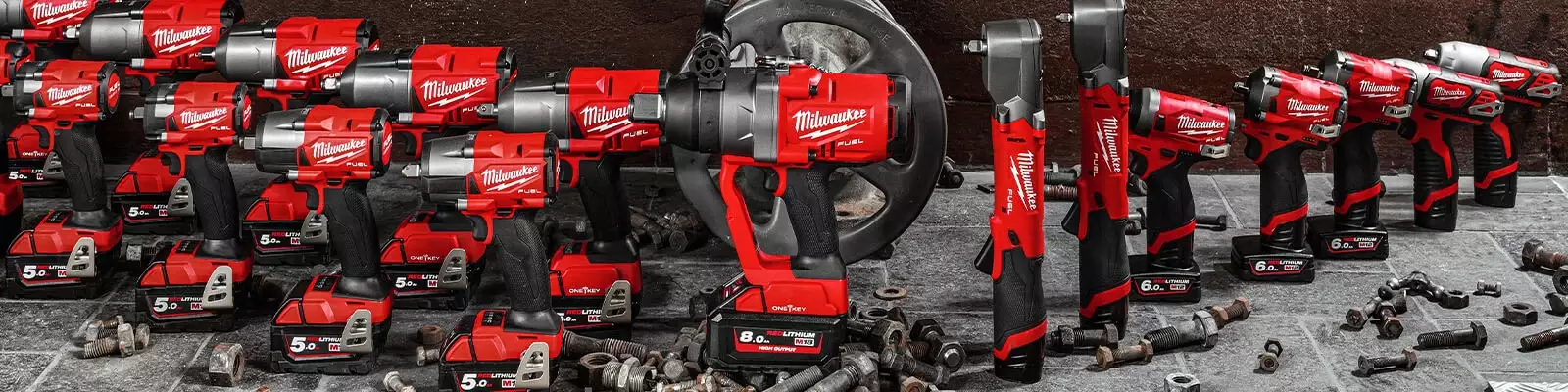
One key allows you to customize your tools & equipment by dialing in performance, track your items from anywhere, and manage inventory your way.
Small setbacks cause big problems. These problems can potentially be solved with ONE‑KEY™ - a collaborative tool and equipment platform that helps jobs run smoother, with fewer headaches along the way
One key is an all in one Construction Inventory Management system that gives you access to tool tracking and alerts, you can set it up to let you know when your tools are being moved around. The software allows you to access this information in an app or via your broswer
ONE-KEY™ inventory management puts time back in your day, so you can focus on the job at hand. Streamline your process with one digital catalog that your team can access from anywhere. Gain more insight on how your equipment is working for you.
Click here for more information and to view the whole Milwaukee One-Key range
WE ALSO HAVE MILWAUKEE POWER TOOL ACCESSORIES
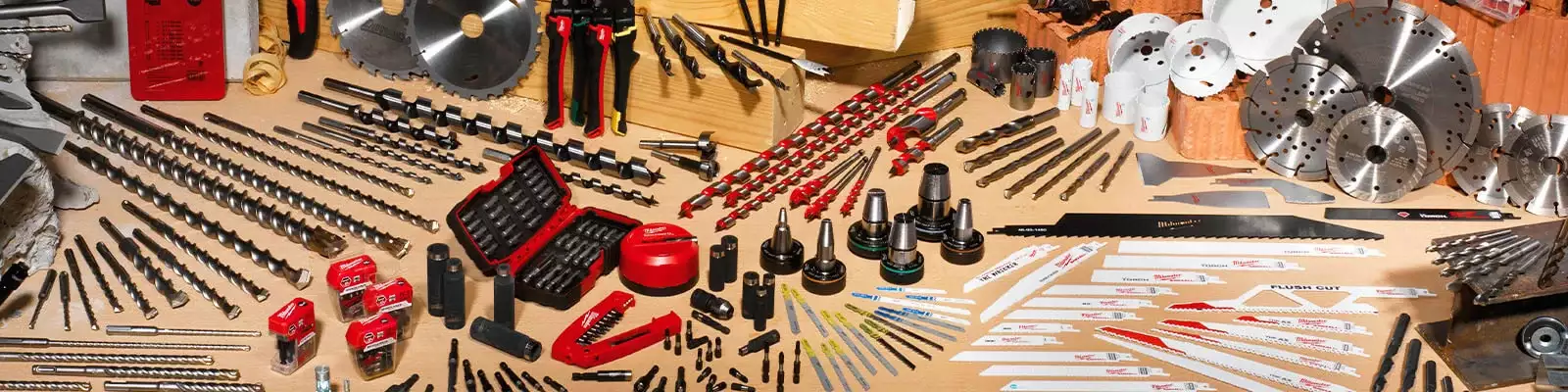
Milwaukee have a wide range of power tool accessories whether you’re looking for a reciprocating saw blades and jigsaws blades. Batteries and chargers are stocked for Milwaukee too, as well as drill bits, screwdriver bits, and everything you need for your nail guns
Click here for more information and to view the whole Milwaukee Power Tool Accessory range.
THE MILWAUKEE HUB
No fluff. Just Milwaukee know-how, tool tips, and buying advice from people who use the kit every day.



