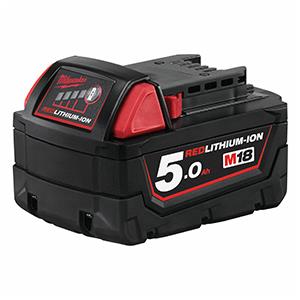
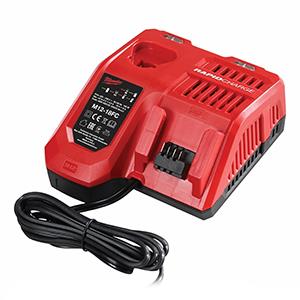
Milwaukee Batteries, Chargers and Mounts
When cordless tools stop mid-job, Milwaukee batteries and chargers keep spare packs ready for the next cut, fixing or hole.
Match M12 or M18 to your tools, then choose capacity for the workload and charging speed for your turnaround. Check what your bare tools need before buying a Milwaukee battery and charger kit.
What Are Milwaukee Batteries and Chargers Used For?
- Keep drilling and fixing through first fix by charging a spare pack while another runs your drill or impact driver.
- Support repeated cutting and grinding with compatible higher-output batteries matched to demanding M18 tools.
- Run compact M12 installation tools inside cupboards and service spaces without carrying an unnecessarily bulky battery.
- Recharge several packs at the workshop or site charging station, choosing a charger with enough charging channels for the team.
- Equip new bare tools with a matching battery and charger starter kit rather than finding out on site that your existing packs will not fit.
Choosing the Right Milwaukee Batteries and Chargers
Start with the tool platform, then match battery size and charging speed to how hard you work it.
1. Match M12 or M18 Before Anything Else
M12 and M18 batteries are not interchangeable. For a Milwaukee M12 battery and charger setup, check both items explicitly support M12. Do the same when buying a Milwaukee M18 battery and charger. Browse Milwaukee M12 Chargers or Milwaukee M18 Chargers by platform, but check the individual model because some support both.
2. Balance Runtime Against Weight
For overhead fixing or work inside cabinets, keep the pack compact unless runtime demands otherwise. For repeated sawing or grinding, consider higher-capacity, higher-output packs recommended for the tool. Ah indicates capacity, not the whole performance story; battery construction and the tool's power demand also matter.
3. Buy Charging Speed You Can Actually Use
If you recharge overnight, a standard charger may cover the job. If packs return empty throughout the day, compare a Milwaukee rapid charger with compatible Super Charger options. Check published times for your exact battery, and confirm whether a multi-bay model charges packs simultaneously or one after another. Compare Milwaukee Chargers on that basis, not socket count alone.
4. Check the Starter Kit Contents
A Milwaukee battery charger kit makes sense when you need both parts. Before choosing a Milwaukee M18 starter kit, check the battery quantity, capacity and exact charger supplied. If you already have enough chargers, separate batteries may be the more useful purchase.
Who Uses Milwaukee Batteries and Chargers?
Sparkies and plumbers use M12 packs for compact installation tools, while chippies and metalworkers need M18 batteries suited to saws, grinders and repeated drilling. Maintenance teams running both platforms benefit from a compatible dual-platform charger, while site supervisors should check charging capacity against the number of packs coming back between shifts.
The Basics: Understanding Milwaukee Batteries and Chargers
Platform, capacity and charging capability answer different questions. Keep them separate and it is much easier to choose a setup that works through the shift.
1. Voltage Identifies the Tool Platform
M12 batteries fit compatible M12 tools, and M18 batteries fit compatible M18 tools. A charger supporting both platforms has the appropriate connections for each; it does not make the batteries interchangeable between tools.
2. Capacity Is Not the Same as Output
Within the same platform, a higher Ah rating generally means more stored energy and longer runtime under comparable conditions. HIGH OUTPUT and FORGE packs also have performance characteristics beyond capacity alone, so check the tool and battery recommendations rather than assuming equal Ah means equal performance.
3. The Battery and Charger Set the Charging Rate Together
A faster charger only delivers its supported rate with a suitable battery. Pack temperature and charge level also affect turnaround, so a hot battery straight from heavy grinding may need time to cool before charging proceeds normally.
Accessories for Organised Battery Storage
Keep packs secured and charging equipment protected instead of leaving them loose among blades, screws and site debris.
1. Compatible Battery Mounts
Mounts give spare batteries a fixed storage position so they are easier to find and less likely to slide around the workshop or van. Check the platform, mounting method and suitability for transport. Milwaukee PACKOUT Battery Mounts & Chargers offer options for organising compatible kit within a PACKOUT setup.
2. Protective Transport Cases
A suitably sized case with compartments keeps packs and chargers away from loose metal fixings and protects them from knocks in transit. Secure everything inside, protect exposed terminals from conductive objects and never use a closed case as a charging enclosure.
Choose the Right Milwaukee Batteries and Chargers for the Job
Match the setup to the tools, workload and time available between charges.
| Your Job | Battery and Charger Setup | Key Features |
|---|---|---|
| Overhead fixing and installation work | Compact battery for your M12 or M18 tool, with a compatible charger | Lower working weight and manageable tool balance |
| Repeated cutting or grinding | Tool-recommended higher-output M18 packs and a suitable fast charger | Power delivery, runtime and published recharge times |
| Running M12 and M18 tools together | Dual-platform charger with separate platform-specific batteries | Explicit M12 and M18 support; check charging sequence |
| Supplying batteries for several operatives | Multi-bay charger with enough simultaneous charging capacity | Active charging channels, platform support and total turnaround |
| Buying your first bare tool | Matching battery and charger starter kit | Correct platform, useful pack capacity and confirmed kit contents |
Common Buying and Usage Mistakes
- Buying by brand alone can leave you with the wrong platform. Check M12 or M18 on the tool, battery and charger compatibility list before ordering.
- Choosing the largest pack for every tool adds unnecessary weight during overhead work. Keep compact packs for lighter tasks and reserve larger batteries for jobs that justify them.
- Assuming every bay charges at once can leave a team waiting for batteries. Check whether the charger operates sequentially or simultaneously.
- Expecting maximum charging speed from every battery and charger pairing leads to poor planning. Use the published charging table for the exact combination.
- Charging on a dusty bench under coats or packaging restricts ventilation. Use a dry, clear charging position and follow the charger's temperature and ventilation requirements.
Standard Chargers vs Rapid Chargers vs Super Chargers
Standard Chargers
Choose standard charging when packs can recharge overnight or you have enough spares to rotate. It avoids paying for speed you do not need, but larger batteries take longer to turn around.
Rapid Chargers
A practical step up when batteries need to return to work during the shift. Check the actual time saved with your packs, because platform support and charging rates vary by model.
Super Chargers
Consider these for demanding workloads where compatible batteries need the shortest supported turnaround. Their advantage depends on the battery pairing; do not assume every older pack receives the headline charging rate.
Maintenance and Care
Keep Contacts and Vents Clear
Unplug the charger before cleaning. Remove loose dust with a dry cloth or soft brush, keeping moisture, solvents and metal objects away from contacts and ventilation openings.
Avoid Temperature Extremes
Do not leave packs baking behind a van windscreen or expect a frozen battery to charge normally. Let batteries reach the permitted charging temperature naturally; never use direct heat to warm them.
Inspect After Knocks
Check battery housings, latches, charger cables and plugs regularly. Stop using damaged, swollen, leaking or abnormally hot packs, and arrange assessment or safe battery recycling rather than opening them.
Store Packs Securely
Keep batteries dry, secure and clear of loose screws or other conductive items. Follow Milwaukee's storage guidance for longer lay-ups. If a pack is confirmed faulty, choose compatible Milwaukee Replacement Batteries rather than attempting a cell repair.
Why Shop for Milwaukee Batteries and Chargers at ITS?
ITS stocks the full Milwaukee batteries and chargers range, covering M12 and M18 packs, starter kits, charging options and mounts. Stock is held in our own warehouse, ready for next-day delivery. Check the selected item's availability and delivery details before ordering for a time-critical job.
Milwaukee Batteries and Chargers FAQs
Which Milwaukee charger is fastest?
For compatible M18 batteries, Super Charger models offer Milwaukee's fastest charging options, but the quickest pairing depends on the exact pack and charger. Compare the published charging time for your battery, including whether the figure is for a partial or full charge. A headline time for one FORGE pack does not apply to every M18 battery.
Can one Milwaukee charger charge M12 and M18?
Yes, if that charger explicitly supports both platforms. Not every Milwaukee charger does. Also check whether it charges M12 and M18 batteries together or sequentially; having both connections does not guarantee simultaneous charging.
Is a battery and charger starter kit good value?
It can be, particularly when you are buying your first bare tool on that platform. Compare the kit price with the same batteries and charger bought separately, then check whether the supplied capacities suit your work. Another charger adds little value if you already have enough charging capacity.
How do I know if my Milwaukee battery is faulty?
Poor runtime, repeated charging faults or failure to power a compatible tool can indicate a problem, but temperature or a charger fault can cause similar symptoms. Check the manual's indicator guide and, if the pack is undamaged, test with a known-working compatible charger or tool. Stop using any battery that is swollen, cracked, leaking or unusually hot and arrange assessment.
Can you charge Milwaukee batteries in a van?
Yes, with an approved vehicle charger or a correctly specified electrical supply suitable for the mains charger. Do not assume a cigarette-lighter adaptor can run it. Secure the equipment, keep it dry and ventilated, and check inverter capacity, electrical protection and the effect on the vehicle battery with a competent installer.
How long does a Milwaukee battery take to charge?
There is no single time across the range. Battery capacity, pack technology, charger model, starting charge and temperature all affect it. Check the charging table for your exact Milwaukee battery pack and charger, and allow extra time if the pack returns hot from heavy use.
Do Milwaukee chargers have a warranty?
Yes, Milwaukee chargers carry a manufacturer's warranty, subject to the applicable terms and proof of purchase. Check the current UK terms for the specific model rather than assuming the tool warranty or registration extension also covers its charger. Keep the receipt and record the model and serial details.
Can a Milwaukee charger overcharge a battery?
A correctly functioning, compatible Milwaukee charger controls charging and stops normal charging when the battery is full. You do not need to time the charge manually. That protection is not a reason to use damaged equipment or leave a charging station unchecked indefinitely; follow the manual and your site's charging procedures.