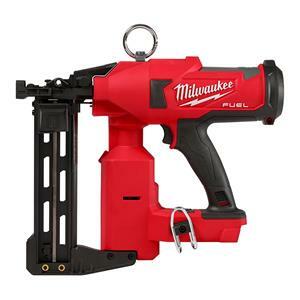
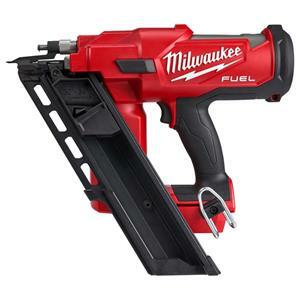
Milwaukee M18 Nail Guns Milwaukee M18 Nail Guns

Milwaukee M18 Nail Guns

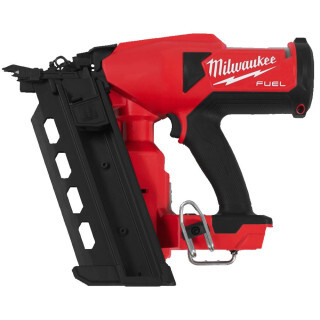
Milwaukee M18 nail gun kit is for fixing timber fast without dragging hoses, compressors, or gas round a live site.

If you're first-fixing stud, hanging doors, fitting trims or knocking up shuttering, a Milwaukee M18 FUEL nailer saves time and cuts faff straight away. These cordless nailers are built for lads working room to room, up ladders, or outside where hoses just get in the way. Pick the right gun for the fixings you use most and get on with it.

What Are Milwaukee M18 Nail Guns Used For?

  • Fixing studwork, noggins and general first-fix timber is where a Milwaukee framing nailer earns its keep, especially when you are moving quickly through plots and do not want airline snagging behind you.
  • Hanging skirting, architrave, trims and finer second-fix work is exactly what an M18 finish nailer is for, giving you clean fixing without dragging a compressor through a finished room.
  • Building shuttering, hoarding and temporary works on busy sites suits an m18 cordless nailer because you can grab it, fire your fixings, and move on without setting up extra kit.
  • Working outside on roofing edges, cladding details, fencing and timber repair jobs is easier with a cordless nailer when power is awkward and you need decent firing consistency in all sorts of weather.
  • Snagging and maintenance jobs in occupied buildings are quicker with a Milwaukee M18 nail gun because it cuts the setup time right down for small runs of fixing.

Choosing the Right Milwaukee M18 Nail Gun

Sorting the right one is simple. Match the gun to the fixing and the stage of the job, not just what is on offer.

1. Framing or Finish

If you are building stud walls, roofing, decking or shuttering, go straight to a framing nailer. If you are fixing skirting, architrave, trims or finer joinery, an m18 finish nailer is the better shout because the fixing is neater and better suited to visible work.

2. Straight Runs or Tight Detail

If most of your day is repetitive timber fixing, choose the model with the magazine and nail type that suits the volume. If you are working into corners, around casings or on detailed second-fix, buy the nailer that is easier to place accurately rather than just the biggest gun in the range.

3. Bare Unit or Kit

If you are already on M18, a body only Milwaukee M18 nail gun usually makes the most sense. If this is your first cordless nailer on the platform, get a kit with batteries that can keep up with a full shift rather than trying to scrape by on your smallest packs.

4. Match the Gun to the Nails You Actually Buy

Do not buy a nailer first and sort the consumables later. Check the nail gauge, length and style you use on your jobs, otherwise you will end up with the wrong gun for your regular fixings and that gets expensive fast.

Who Uses These on Site?

  • Chippies use these day in, day out for first-fix stud, roofing timber, skirting and architrave because they can move room to room without hoses trailing behind.
  • House bashers and site carpenters swear by an m18 fuel nailer when they are working across multiple plots and need quick firing with less setup at each stage.
  • Shopfitters and fit-out teams reach for an M18 finish nailer for trims, panels and second-fix details where dragging a compressor through finished areas is a pain.
  • Groundworkers and general builders use a Milwaukee framing nailer for shuttering, timber formwork and temporary structures where speed matters more than messing about with airline kit.
  • Maintenance teams keep an m18 cordless nailer in the van for repair work, boarding, trims and quick timber fixes that do not justify unloading bigger gear.

The Basics: Understanding Milwaukee M18 Nail Guns

The main thing with these is simple. They give you cordless fixing power without gas canisters or an airline setup, so you get faster setup and less kit to drag round site.

1. Framing Nailers

These are built for heavier timber fixing. Think stud walls, joists, shuttering and structural timber jobs where you need longer nails and proper holding power rather than a tidy finish.

2. Finish and Brad Nailers

These are for second-fix and cleaner visible work. They fire finer fixings for trims, skirting, architrave and joinery so you are not left filling oversized holes after every run.

3. Cordless Means Less Setup

With an m18 fuel nailer, there is no compressor to power up and no hose to drag through the building. That matters on snagging, ladder work and jobs where you are in and out of different rooms all day.

Milwaukee M18 Nail Gun Extras That Save Time on Site

A few sensible extras stop downtime and keep your cordless nailer earning its keep through the full shift.

1. Spare M18 Batteries

A spare battery is the obvious one. Do not be the bloke halfway through a run of stud or trims waiting on a charger when you could just swap packs and keep moving.

2. Correct Nails for Your Gun

Get the right gauge, angle and length for the nailer you buy. Wrong nails cause jams, bad drive depth and wasted time, which is exactly what cordless is supposed to save you from.

3. Charger

If your nailer lives in the van or gets used across different jobs, keep a proper charger with it. That stops the usual problem of batteries being borrowed for another tool and coming back flat.

4. Carry Case or Storage Box

Good storage matters more than people admit. It keeps the nailer, batteries and fixings together so you are not hunting round the van for the right nails every time you need the gun.

Choose the Right Milwaukee M18 Nail Gun for the Job

Use this quick guide to match the nailer to the work in front of you.

Your Job Milwaukee M18 Nail Gun Type Key Features
Stud walls, joists, roofing timber Framing nailer Takes longer nails, higher fixing power, suited to first-fix structural timber work
Skirting, architrave, trims Finish nailer Cleaner fixing, neater holes, better control on visible second-fix jobs
Fine mouldings and lighter detail work Brad nailer Smaller gauge fixings, reduced marking, good for tidy finishing runs
High volume fixing with collated coils Coil nailer Larger nail capacity, fewer reloads, useful for repetitive site work
Temporary timber fixing for breakdown later Duplex nailer Designed for pull-out and dismantling, handy for shuttering and temporary structures

Common Buying and Usage Mistakes

  • Buying a finish nailer for first-fix timber work is a common mistake. It will not suit heavier structural fixing, so match the gun to the size and type of fixing the job actually needs.
  • Not checking nail compatibility catches plenty of buyers out. If the gauge, angle or nail length does not match the gun, you will get jams, poor drive and wasted consumables.
  • Trying to run a busy day on your smallest battery pack is false economy. If you are firing regularly, use a battery with enough capacity to avoid constant swaps and charger delays.
  • Ignoring the stage of the job causes grief. A big framing nailer is brilliant on stud but clumsy for trims, while a second-fix gun is the wrong tool for heavy timber fixing.
  • Leaving the nailer loose in the van shortens its life. Store it properly, keep the nose clean and protect it from knocks if you want reliable firing over time.

Framing Nailer vs Finish Nailer vs Brad Nailer

Framing Nailer

This is the one for stud walls, roofing, joists and heavier timber jobs. It gives you the fixing power for first-fix work, but it is overkill for trims and will leave a rougher finish on visible joinery.

Finish Nailer

A finish nailer sits in the middle. It is ideal for skirting, architrave and second-fix carpentry where you need a decent hold with a neater result than a framing gun.

Brad Nailer

Brad nailers are best for finer trim, beadings and lighter detail work. They leave smaller holes and are easier to use on delicate pieces, but they are not the choice for heavier joinery or first-fix timber.

Which One to Buy

If you mainly do structural timber, buy framing. If you spend more time on doors, skirting and finishing, buy finish. If your work is lighter decorative trim, brad makes more sense and saves extra filling and making good.

Maintenance and Care

Keep the Nose Clean

Dust, resin and site muck build up around the firing end quicker than most think. Wipe it down regularly so the gun feeds properly and sits square on the work.

Use the Right Nails

Wrong or poor quality nails cause jams and bad firing. Stick to the correct type for the nailer and keep strips dry in storage so they do not swell or break apart.

Look After the Batteries

Do not leave packs rolling about the van dead flat or soaking wet. Charge them properly, rotate them through the week and store them somewhere dry if you want full runtime.

Check for Wear Before It Becomes Downtime

If the gun starts misfiring, marking work or failing to sink nails consistently, sort it early. A quick check beats losing half a day when the tool finally gives up mid job.

Store It Properly

A nail gun thrown loose in with other gear will get battered. Keep it in a case or dedicated box so the body, magazine and contacts are not taking pointless knocks between jobs.

Why Shop for Milwaukee M18 Nail Guns at ITS?

Whether you need a first-fix Milwaukee M18 nail gun, an m18 finish nailer or a cordless nailer for quicker snagging work, we stock the full range in one place. That includes Milwaukee M18 Framing Nailers, Milwaukee M18 Brad Nailers, Milwaukee M18 Coil Nailers, Milwaukee M18 Duplex Nailers and Milwaukee M18 Fencing Staplers. It is all held in our own warehouse, in stock and ready for next day delivery.

Milwaukee M18 Nail Gun FAQs

Does the M18 nail gun require gas?

No. That is one of the big reasons lads buy them. A Milwaukee M18 nail gun runs off the M18 battery platform, so you are not buying gas cells or dragging a compressor and hose round site.

What is the difference between M18 framing and finishing nailers?

Framing nailers are for heavier timber jobs like stud, joists, roofing and shuttering. Finishing nailers are for second-fix work like skirting, architrave and trims where you want a neater fixing and less making good afterwards.

How many nails can I fire on one M18 5.0Ah battery?

It depends on the nailer, nail size and how hard you are working it, so do not treat one number as gospel. In real site use, a 5.0Ah pack gives solid runtime for a good stretch of work, but if you are firing heavily all day, keep a spare battery ready.

Are Milwaukee M18 nail guns any good for snagging and small jobs?

Yes, that is where they really make sense. For quick boarding, trim repair or small timber fixes, you save a lot of time because there is no hose, no compressor and hardly any setup before you can start firing.

Will a cordless nailer replace my pneumatic gun completely?

For plenty of trades, yes. If you value mobility, fast setup and working across different rooms or plots, an m18 cordless nailer often becomes the first one you grab. If you are on one bench or one fixed area doing nonstop repetitive firing, some still keep pneumatic kit as well.

Do I need different nailers for first-fix and second-fix work?

Usually, yes. Trying to make one gun do every job is where most buying mistakes start. A framing nailer and an M18 finish nailer are built for different fixings, different materials and very different standards of finish.
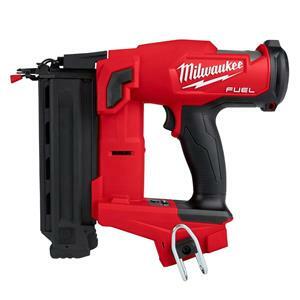
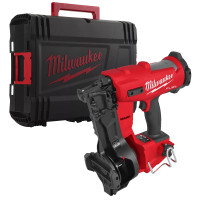
Read more

Milwaukee M18 Nail Guns

Milwaukee M18 nail gun kit is for fixing timber fast without dragging hoses, compressors, or gas round a live site.

If you're first-fixing stud, hanging doors, fitting trims or knocking up shuttering, a Milwaukee M18 FUEL nailer saves time and cuts faff straight away. These cordless nailers are built for lads working room to room, up ladders, or outside where hoses just get in the way. Pick the right gun for the fixings you use most and get on with it.

What Are Milwaukee M18 Nail Guns Used For?

  • Fixing studwork, noggins and general first-fix timber is where a Milwaukee framing nailer earns its keep, especially when you are moving quickly through plots and do not want airline snagging behind you.
  • Hanging skirting, architrave, trims and finer second-fix work is exactly what an M18 finish nailer is for, giving you clean fixing without dragging a compressor through a finished room.
  • Building shuttering, hoarding and temporary works on busy sites suits an m18 cordless nailer because you can grab it, fire your fixings, and move on without setting up extra kit.
  • Working outside on roofing edges, cladding details, fencing and timber repair jobs is easier with a cordless nailer when power is awkward and you need decent firing consistency in all sorts of weather.
  • Snagging and maintenance jobs in occupied buildings are quicker with a Milwaukee M18 nail gun because it cuts the setup time right down for small runs of fixing.

Choosing the Right Milwaukee M18 Nail Gun

Sorting the right one is simple. Match the gun to the fixing and the stage of the job, not just what is on offer.

1. Framing or Finish

If you are building stud walls, roofing, decking or shuttering, go straight to a framing nailer. If you are fixing skirting, architrave, trims or finer joinery, an m18 finish nailer is the better shout because the fixing is neater and better suited to visible work.

2. Straight Runs or Tight Detail

If most of your day is repetitive timber fixing, choose the model with the magazine and nail type that suits the volume. If you are working into corners, around casings or on detailed second-fix, buy the nailer that is easier to place accurately rather than just the biggest gun in the range.

3. Bare Unit or Kit

If you are already on M18, a body only Milwaukee M18 nail gun usually makes the most sense. If this is your first cordless nailer on the platform, get a kit with batteries that can keep up with a full shift rather than trying to scrape by on your smallest packs.

4. Match the Gun to the Nails You Actually Buy

Do not buy a nailer first and sort the consumables later. Check the nail gauge, length and style you use on your jobs, otherwise you will end up with the wrong gun for your regular fixings and that gets expensive fast.

Who Uses These on Site?

  • Chippies use these day in, day out for first-fix stud, roofing timber, skirting and architrave because they can move room to room without hoses trailing behind.
  • House bashers and site carpenters swear by an m18 fuel nailer when they are working across multiple plots and need quick firing with less setup at each stage.
  • Shopfitters and fit-out teams reach for an M18 finish nailer for trims, panels and second-fix details where dragging a compressor through finished areas is a pain.
  • Groundworkers and general builders use a Milwaukee framing nailer for shuttering, timber formwork and temporary structures where speed matters more than messing about with airline kit.
  • Maintenance teams keep an m18 cordless nailer in the van for repair work, boarding, trims and quick timber fixes that do not justify unloading bigger gear.

The Basics: Understanding Milwaukee M18 Nail Guns

The main thing with these is simple. They give you cordless fixing power without gas canisters or an airline setup, so you get faster setup and less kit to drag round site.

1. Framing Nailers

These are built for heavier timber fixing. Think stud walls, joists, shuttering and structural timber jobs where you need longer nails and proper holding power rather than a tidy finish.

2. Finish and Brad Nailers

These are for second-fix and cleaner visible work. They fire finer fixings for trims, skirting, architrave and joinery so you are not left filling oversized holes after every run.

3. Cordless Means Less Setup

With an m18 fuel nailer, there is no compressor to power up and no hose to drag through the building. That matters on snagging, ladder work and jobs where you are in and out of different rooms all day.

Milwaukee M18 Nail Gun Extras That Save Time on Site

A few sensible extras stop downtime and keep your cordless nailer earning its keep through the full shift.

1. Spare M18 Batteries

A spare battery is the obvious one. Do not be the bloke halfway through a run of stud or trims waiting on a charger when you could just swap packs and keep moving.

2. Correct Nails for Your Gun

Get the right gauge, angle and length for the nailer you buy. Wrong nails cause jams, bad drive depth and wasted time, which is exactly what cordless is supposed to save you from.

3. Charger

If your nailer lives in the van or gets used across different jobs, keep a proper charger with it. That stops the usual problem of batteries being borrowed for another tool and coming back flat.

4. Carry Case or Storage Box

Good storage matters more than people admit. It keeps the nailer, batteries and fixings together so you are not hunting round the van for the right nails every time you need the gun.

Choose the Right Milwaukee M18 Nail Gun for the Job

Use this quick guide to match the nailer to the work in front of you.

Your Job Milwaukee M18 Nail Gun Type Key Features
Stud walls, joists, roofing timber Framing nailer Takes longer nails, higher fixing power, suited to first-fix structural timber work
Skirting, architrave, trims Finish nailer Cleaner fixing, neater holes, better control on visible second-fix jobs
Fine mouldings and lighter detail work Brad nailer Smaller gauge fixings, reduced marking, good for tidy finishing runs
High volume fixing with collated coils Coil nailer Larger nail capacity, fewer reloads, useful for repetitive site work
Temporary timber fixing for breakdown later Duplex nailer Designed for pull-out and dismantling, handy for shuttering and temporary structures

Common Buying and Usage Mistakes

  • Buying a finish nailer for first-fix timber work is a common mistake. It will not suit heavier structural fixing, so match the gun to the size and type of fixing the job actually needs.
  • Not checking nail compatibility catches plenty of buyers out. If the gauge, angle or nail length does not match the gun, you will get jams, poor drive and wasted consumables.
  • Trying to run a busy day on your smallest battery pack is false economy. If you are firing regularly, use a battery with enough capacity to avoid constant swaps and charger delays.
  • Ignoring the stage of the job causes grief. A big framing nailer is brilliant on stud but clumsy for trims, while a second-fix gun is the wrong tool for heavy timber fixing.
  • Leaving the nailer loose in the van shortens its life. Store it properly, keep the nose clean and protect it from knocks if you want reliable firing over time.

Framing Nailer vs Finish Nailer vs Brad Nailer

Framing Nailer

This is the one for stud walls, roofing, joists and heavier timber jobs. It gives you the fixing power for first-fix work, but it is overkill for trims and will leave a rougher finish on visible joinery.

Finish Nailer

A finish nailer sits in the middle. It is ideal for skirting, architrave and second-fix carpentry where you need a decent hold with a neater result than a framing gun.

Brad Nailer

Brad nailers are best for finer trim, beadings and lighter detail work. They leave smaller holes and are easier to use on delicate pieces, but they are not the choice for heavier joinery or first-fix timber.

Which One to Buy

If you mainly do structural timber, buy framing. If you spend more time on doors, skirting and finishing, buy finish. If your work is lighter decorative trim, brad makes more sense and saves extra filling and making good.

Maintenance and Care

Keep the Nose Clean

Dust, resin and site muck build up around the firing end quicker than most think. Wipe it down regularly so the gun feeds properly and sits square on the work.

Use the Right Nails

Wrong or poor quality nails cause jams and bad firing. Stick to the correct type for the nailer and keep strips dry in storage so they do not swell or break apart.

Look After the Batteries

Do not leave packs rolling about the van dead flat or soaking wet. Charge them properly, rotate them through the week and store them somewhere dry if you want full runtime.

Check for Wear Before It Becomes Downtime

If the gun starts misfiring, marking work or failing to sink nails consistently, sort it early. A quick check beats losing half a day when the tool finally gives up mid job.

Store It Properly

A nail gun thrown loose in with other gear will get battered. Keep it in a case or dedicated box so the body, magazine and contacts are not taking pointless knocks between jobs.

Why Shop for Milwaukee M18 Nail Guns at ITS?

Whether you need a first-fix Milwaukee M18 nail gun, an m18 finish nailer or a cordless nailer for quicker snagging work, we stock the full range in one place. That includes Milwaukee M18 Framing Nailers, Milwaukee M18 Brad Nailers, Milwaukee M18 Coil Nailers, Milwaukee M18 Duplex Nailers and Milwaukee M18 Fencing Staplers. It is all held in our own warehouse, in stock and ready for next day delivery.

Milwaukee M18 Nail Gun FAQs

Does the M18 nail gun require gas?

No. That is one of the big reasons lads buy them. A Milwaukee M18 nail gun runs off the M18 battery platform, so you are not buying gas cells or dragging a compressor and hose round site.

What is the difference between M18 framing and finishing nailers?

Framing nailers are for heavier timber jobs like stud, joists, roofing and shuttering. Finishing nailers are for second-fix work like skirting, architrave and trims where you want a neater fixing and less making good afterwards.

How many nails can I fire on one M18 5.0Ah battery?

It depends on the nailer, nail size and how hard you are working it, so do not treat one number as gospel. In real site use, a 5.0Ah pack gives solid runtime for a good stretch of work, but if you are firing heavily all day, keep a spare battery ready.

Are Milwaukee M18 nail guns any good for snagging and small jobs?

Yes, that is where they really make sense. For quick boarding, trim repair or small timber fixes, you save a lot of time because there is no hose, no compressor and hardly any setup before you can start firing.

Will a cordless nailer replace my pneumatic gun completely?

For plenty of trades, yes. If you value mobility, fast setup and working across different rooms or plots, an m18 cordless nailer often becomes the first one you grab. If you are on one bench or one fixed area doing nonstop repetitive firing, some still keep pneumatic kit as well.

Do I need different nailers for first-fix and second-fix work?

Usually, yes. Trying to make one gun do every job is where most buying mistakes start. A framing nailer and an M18 finish nailer are built for different fixings, different materials and very different standards of finish.
ITS Click and Collect Icon
What3Words:
Get Directions
Store Opening Hours
Opening times