Milwaukee Fastening Tools
When fixings need tightening in cramped cupboards or machinery housings, Milwaukee fastening tools give you manual control.
Milwaukee hand fastening tools cover screwdriving and nut-and-bolt work for fitters, sparkies and maintenance teams. Match the tip, socket or jaw to the fixing before applying force. Choose individual replacements or sets to suit your regular jobs.
What Jobs Are Milwaukee Fastening Tools Best At?
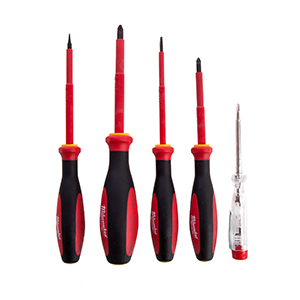
- Tighten terminal and cover screws during electrical installation with a correctly sized screwdriver, using suitably rated insulated tools wherever the risk assessment requires them.
- Assemble brackets, frames and machinery guards with ratchets and sockets where repeated nut-and-bolt fastening would be slow with a conventional spanner.
- Reach mounting bolts inside plant cupboards and equipment housings with a spanner or ratchet that has enough clearance to turn without slipping off the fixing.
- Adjust threaded fittings during plumbing and maintenance work with a correctly sized spanner or adjustable wrench, keeping the jaws seated squarely on the flats.
- Finish furniture, cabinetry and equipment assembly by hand where a powered driver could strip a small screw or damage the surrounding finish.
Choosing the Right Milwaukee Fastening Tools
Buy around the fixings you tackle every week: the right fit matters more than a bigger set.
1. Match the Screwdriver Tip Exactly
If the screw is Pozidriv, use Pozidriv rather than a Phillips tip that nearly fits. Check the tip size as well as the profile. A loose fit damages screw heads and makes removal harder when the fitting next needs servicing.
2. Choose Ratchet Drive Size for Access and Load
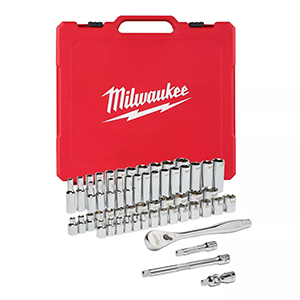
For small fasteners inside equipment, a compact 1/4-inch drive setup keeps bulk down. For general mechanical work, consider 3/8-inch drive; for larger fixings, consider 1/2-inch drive. These are square-drive sizes, not socket sizes, so check both before ordering.
3. Choose Spanners for Repeated Work
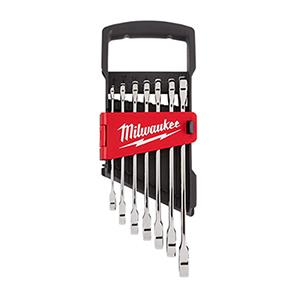
If you repeatedly work on the same nut sizes, buy matching fixed-size spanners for a close fit. An adjustable wrench is useful when sizes vary, but set the jaw snugly each time. Neither replaces a torque wrench where the assembly has a specified tightening torque.
4. Check Set Contents Before Buying
If you are building a kit from scratch, choose a set that covers your usual sizes without gaps. If one heavily used driver or spanner has worn out, replace that tool individually rather than buying another full set. Check whether storage trays or cases are included.
Who Uses Milwaukee Fastening Tools?
Sparkies and kitchen fitters use Milwaukee screwdrivers for fitting covers, brackets and cabinet hardware where control matters more than speed. Mechanical fitters, plumbers and maintenance teams use Milwaukee ratchets, spanners and wrenches for equipment assembly, servicing and awkward fixings inside plant rooms. Mechanics should choose socket coverage and drive sizes around the vehicles they actually service, rather than buying on piece count alone.
Accessories for Access, Storage and Correct Tightening
Match accessories to your tools before ordering, particularly square-drive sizes and storage dimensions.
1. Socket Extensions
A matching extension reaches recessed nuts and bolts without forcing the ratchet head against surrounding pipework or panels. Choose enough length for access without adding unnecessary bulk.
2. Socket Rails and Tool Trays
Keep sockets and spanners in size order so a missing tool is obvious before you leave the job. Check the tray dimensions against your drawer or organiser rather than assuming it will fit.
3. Torque Wrenches
Use a torque wrench for final tightening where the equipment manufacturer specifies a torque. An ordinary ratchet gets the fixing seated, but it cannot confirm the required setting.
Choose the Right Milwaukee Fastening Tools for the Job
Start with the fixing type, then check working clearance and size coverage.
| Your Job | Tool Type | Key Features |
|---|---|---|
| Fitting covers, brackets and cabinet hardware | Milwaukee screwdrivers | Correct tip profile and size, suitable shaft length and a handle you can grip securely. |
| Servicing small fasteners inside equipment | Compact ratchet and socket set | Small head dimensions, suitable drive size and sockets covering the actual fixings. |
| Repeated assembly of frames and machinery | Combination or ratcheting spanners | Correct metric or imperial sizes and sufficient clearance around the fastener. |
| Maintenance involving several nut sizes | Adjustable wrench | Enough jaw capacity, a snug adjustment and a head that fits the available space. |
| Setting specified bolt tightness | Torque wrench with matching sockets | A torque range covering the required setting and the correct square-drive connection. |
Common Buying and Usage Mistakes
- Buying a set on piece count alone can leave you with duplicate bits but no socket for the job. Read the size list before ordering.
- Using an imperial spanner on a near-matching metric fixing can round the corners. Match the marked size rather than accepting a loose fit.
- Adding a pipe to a ratchet handle can overload the mechanism. Use a correctly rated breaker bar for stubborn fixings, staying within the tool's limits.
- Assuming a coloured screwdriver handle means electrical insulation is unsafe. Check for the appropriate insulation markings and follow safe isolation procedures.
- Putting ordinary hand sockets on an impact wrench risks socket failure. Use sockets specifically rated for impact use.
Ratchets vs Fixed Spanners vs Adjustable Wrenches
Ratchets and Sockets
Choose these for repeated turning without lifting the tool off after each stroke. Extensions help with recessed bolts, but the socket and ratchet head need clearance above the fixing. Use a breaker bar, not extra leverage on the ratchet, for stubborn fasteners.
Fixed-Size Spanners
Choose these when access above the nut is restricted or you need to hold one side while tightening the other. A correctly sized ring end gives secure engagement, although conventional spanners need repositioning between strokes.
Adjustable Wrenches
Choose these for maintenance rounds where nut sizes vary and carrying fewer tools helps. The head can be bulkier than a fixed spanner, and the jaw needs careful adjustment. For repeated work on one size, take the matching spanner.
Maintenance and Care
Clean Before Packing Away
Wipe off oil, dust and debris after use, particularly around ratchet heads and adjustable jaws. Keep handles clean so your grip does not suffer on the next job.
Dry Tools Before Storage
Do not shut wet tools inside a case overnight. Dry them first and follow the care instructions for corrosion protection, keeping any protective oil off gripping surfaces.
Check Working Ends
Replace screwdrivers with badly worn tips and sockets with cracks or distorted openings. Remove damaged insulated tools from electrical service; tape is not a repair for compromised insulation.
Check Moving Mechanisms
Check that ratchets engage positively and adjustable jaws move smoothly. Stop using a ratchet that skips under load, and use only manufacturer-approved servicing methods or replacement parts.
Why Shop for Milwaukee Fastening Tools at ITS?
ITS stocks the full Milwaukee fastening tool range, covering individual screwdrivers, ratchets, spanners and fastening sets for building or replacing your working kit. Stock is held in our own warehouse, ready for next-day delivery. Check the selected item's availability and delivery options before ordering for a booked job.
Milwaukee Fastening Tools FAQs
What fastening hand tools does Milwaukee make?
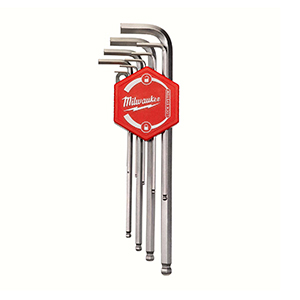
Milwaukee makes screwdrivers, ratchets, sockets, combination and ratcheting spanners, adjustable wrenches and hex keys, among other fastening tools. Check individual listings for available sizes and set contents rather than assuming every range includes the same coverage.
Are Milwaukee hand tools made in the USA?
Some are, but not all. Country of manufacture varies by product, so the Milwaukee name alone does not establish where a tool was made. Check the packaging or product-specific information if origin is a purchasing requirement.
Do Milwaukee hand tools have a lifetime warranty?
Many Milwaukee hand tools carry a limited lifetime guarantee, but coverage depends on the product and applicable UK terms. It is not cover for ordinary wear, misuse or overloading. Check the particular tool's guarantee and keep your proof of purchase.
Are Milwaukee spanners metric?
Milwaukee offers metric spanners, and imperial options also exist within its wider range. Check the size markings and contents of the selected set. For mixed equipment or older machinery, establish which fasteners you have before choosing a metric-only kit.
Are Milwaukee screwdrivers good quality?
Milwaukee screwdrivers are intended for professional use, but correct selection still matters. Choose the exact tip profile and size, check the handle suits your grip, and use an appropriately rated insulated model where required. No screwdriver tip will tolerate repeated slipping or use as a pry bar without damage.
Are Milwaukee fastening tools sold individually or in sets?
Both options are available across the range. Individual tools make sense for replacing a worn favourite or filling a missing size; sets suit a new kit or a wider spread of regular work. Check whether the advertised set includes a case, tray or loose tools.
Are Milwaukee hand tools good for mechanics?
Milwaukee ratchets, sockets and spanners suit mechanical assembly and servicing when their sizes and access match the job. Check for deep sockets or specialist profiles needed on your vehicles. Use a torque wrench for specified final tightening and impact-rated sockets with impact tools.
Do Milwaukee fastening tools fit in Packout organisers?
Some tools and sets can be stored in PACKOUT organisers, but not every supplied case or tray is a direct fit. Compare the tool or tray dimensions with the organiser's usable internal space, including lid clearance. Unless compatibility is explicitly stated, do not assume the set clips into the system.