Milwaukee Allen Keys (Hex Keys)
When socket screws need tightening in awkward spots, Milwaukee Allen keys give you access to recessed hex fixings.
Fitters and maintenance teams use Milwaukee hex keys on machinery, brackets and furniture assemblies. Match the key to the socket, check access before choosing the format, and pick the set that covers your regular fixing sizes.
What Are Milwaukee Allen Keys Used For?
- Tighten socket-head screws on machinery guards and adjustable brackets where a spanner cannot grip the recessed fixing.
- Assemble furniture frames and workshop benches using the correctly sized hex key to seat bolts without damaging their sockets.
- Adjust compatible tool fences, stops and accessories during setup, following the tool manufacturer's tightening instructions.
- Reach recessed fixings inside equipment housings during maintenance, with the equipment isolated before removing guards or making adjustments.
Choosing the Right Milwaukee Allen Keys
Buy for the fixing sizes and access you actually deal with; a bigger set is no help if the key will not seat properly.
1. Metric or Imperial Sizes
If your equipment specifies millimetres, choose a metric set. For imperial fasteners, use the correct inch size rather than a close metric substitute; that small amount of play can round a tight socket.
2. Straight End or Ball End
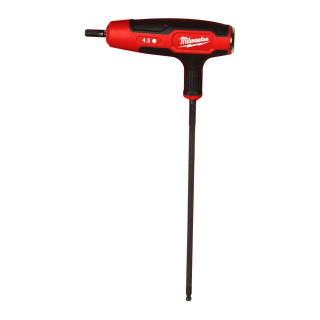
If nearby pipework or a frame prevents straight access, look for a listed ball-end option. Use a straight hex end, fully seated, for initial loosening and final tightening where access permits.
3. Loose Keys or Folding Format
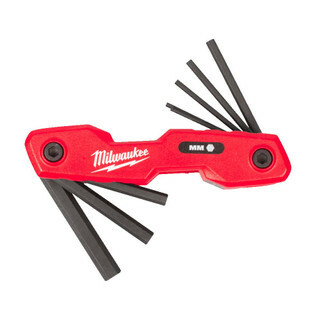
Choose loose L-shaped keys when you need to reach recessed screws or swing the short arm in a confined space. A folding set keeps sizes together for adjustments, but check whether its handle will clear surrounding parts.
Who Uses Milwaukee Allen Keys?
Maintenance fitters use hex keys for socket screws on guards, brackets and machine assemblies. Joiners and installation teams keep a set for furniture fittings and equipment setup, while mechanics need the correct metric or imperial sizes for the machinery they service.
Kit to Support Hex Fixing Work
Seized screws and specified tightening torques need more than extra force on an Allen key.
1. Penetrating Oil
For corroded metal fixings, a suitable penetrating oil can help free the threads before you damage the socket. Check compatibility with nearby materials and allow the stated working time.
2. Torque Wrench and Matching Hex Bit Sockets
When an assembly has a specified torque, use a suitably ranged torque wrench with the correct hex bit socket. An ordinary Allen key cannot tell you whether a critical fixing is correctly tightened.
Choose the Right Milwaukee Allen Keys for the Job
Check the listed sizes, end profile and format against the fixings you need to reach.
| Your Job | Hex Key Type | Key Features |
|---|---|---|
| Servicing equipment with metric socket screws | Metric set | Millimetre sizes covering the equipment's specified fixings. |
| Maintaining machinery with imperial fasteners | Imperial set | Exact inch sizes rather than near-fitting metric alternatives. |
| Turning screws behind frames or pipework | Ball-end keys | Angled engagement within the manufacturer's stated limits. |
| Accessing recessed screws in housings | Loose L-shaped keys | Suitable arm length and clearance around the fixing. |
Common Buying and Usage Mistakes
- Using a nearly matching size can round the socket. Confirm whether the fixing is metric or imperial and use a snug-fitting, undamaged key.
- Turning a key before clearing dirt or paint prevents full engagement. Clean the recess and seat the key fully before applying force.
- Using a ball end to force a seized screw can damage the key or fixing. Use the straight end where possible and investigate corrosion or thread-locking compound before forcing it.
- Adding a pipe for extra leverage can bend or snap the key. Stop and use a suitable tool and removal method rather than extending the handle.
Loose L-Shaped Keys vs Folding Sets vs Hex Bit Sockets
Loose L-Shaped Keys
Choose these for recessed screws and restricted access where a bulky handle gets in the way. Individual keys are easier to misplace, so return each size to its holder after use.
Folding Sets
These keep several sizes together for routine adjustments. The shared handle is convenient, but it can foul nearby surfaces before the key reaches a recessed fixing.
Hex Bit Sockets
Use these with a suitable ratchet or torque wrench for repeated assembly and specified tightening torques. They need more clearance than a bare key; only use impact-rated sockets with impact tools.
Maintenance and Care
Clean the Working Ends
Wipe away grit, grease and metal debris after use. Build-up on the tip can stop the key seating fully in the next fixing.
Store Dry and Organised
Dry wet keys before putting them away and keep them in their holder or pouch. This limits corrosion and makes missing sizes easier to spot before leaving site.
Replace Damaged Keys
Check for rounded corners, twisting, cracks or damaged ball ends. Replace a damaged key rather than grinding it into an uncertain fit and risking the next screw.
Why Shop for Milwaukee Allen Keys at ITS?
Shop the full Milwaukee Allen key range at ITS and compare set contents, sizes and formats before ordering. Stock is held in our own warehouse, with in-stock lines ready for next-day delivery, subject to order cut-off times and delivery postcode.
Milwaukee Allen Keys FAQs
What size Allen key for Milwaukee cut off tool?
That depends on the exact cut-off tool model and which fixing you mean. Check its manual for the specified key or blade-change tool; do not assume every Milwaukee cut-off tool uses the same size. Isolate the tool before checking or changing accessories.
Are Milwaukee Allen keys metric?
Milwaukee offers metric hex key sets, but check the individual listing rather than assuming every set is metric. Match the listed millimetre sizes to your fixings; imperial sockets need their correct inch-sized keys.
Are Milwaukee Allen keys ball end?
Some Milwaukee hex key sets have ball ends, but not every format does. Check the product specification. A ball end helps turn screws at an angle, while the straight end is the better choice for initial loosening and final tightening where access allows.
Can you buy Milwaukee Allen keys individually?
Check the current listings for the exact size you need; do not assume keys from a set are stocked separately. If no single key is listed, confirm replacement availability with ITS before ordering a complete set just to replace one missing size.