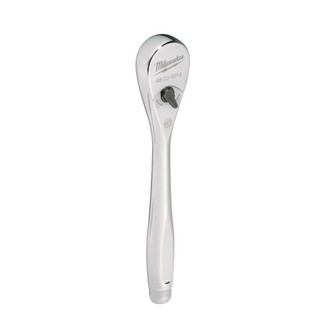
Milwaukee Socket Sets & Sockets Milwaukee Socket Sets & Sockets

Milwaukee Socket Sets & Sockets

Milwaukee socket sets are built for hard daily fastening, from plant checks to stubborn fixings on vans, steelwork and site kit.

When you're dealing with rounded nuts, tight access and bolts that have not moved in months, a decent Milwaukee socket set saves time and skinned knuckles. These Milwaukee sockets and ratchet sets are the sort of kit mechanics, fitters and site teams keep close because the markings stay readable, the cases stay organised and the sizes you need are there when the job turns awkward. If you already run PACKOUT, a Milwaukee packout socket set makes even more sense. For full kits, replacements and torque control, see Milwaukee Socket Sets, Milwaukee Individual Sockets, Milwaukee Torque Ratchets & Torque Wrenches, Milwaukee Spanner Sets & Spanners and Milwaukee Screwdrivers.

What Are Milwaukee Socket Sets Used For?

  • Stripping down plant guards, brackets and fixings on site is quicker with a Milwaukee ratchet set because you can move through common sizes without rooting round the van for loose sockets.
  • Working on vans, trailers and workshop equipment is where a Milwaukee 1 2 socket set earns its keep, giving you the reach and grip needed for larger, tighter fasteners.
  • Fitting containment, unistrut, channel and mechanical fixings is ideal territory for a Milwaukee 3 8 socket set, especially where there is not enough room for a bigger handle.
  • Handling control panels, small brackets and lighter assembly jobs suits a Milwaukee 1 4 socket set, where compact sockets help in tighter corners without overdoing the torque.
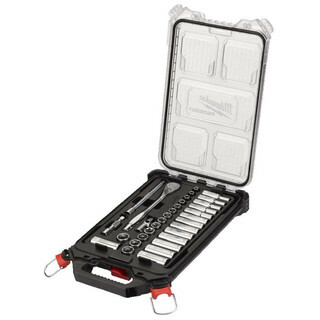
  • Keeping service kit organised in the van or on multi trade jobs is easier with a Milwaukee PACKOUT socket set, because everything stays visible, clipped in and ready for the next callout.

Choosing the Right Milwaukee Socket Set

Match the drive size to the fixing in front of you. Too small and you will fight it. Too big and you are carrying bulk you do not need.

1. 1 4 Inch for Light and Tight Access Work

If you are inside panels, working on smaller fixings or doing lighter assembly, a Milwaukee 1 4 socket set is the sensible choice. It gets into cramped spots and keeps the kit compact. Do not buy it expecting it to cover seized larger bolts all day.

2. 3 8 Inch for Everyday Site and Van Jobs

A Milwaukee socket set 3 8 is the best all rounder for most trades. If you want one set for service work, bracket fixing, mechanical install and general maintenance, start here. It gives a good balance of access and usable torque without being overkill.

3. 1 2 Inch for Bigger Fasteners and More Torque

If you are on heavier plant, wheel related work or stubborn structural fixings, go for a Milwaukee socket set 1 2. The larger drive handles more load and suits longer ratchets and breaker bars better. It is not the one to carry for small awkward fixings in a tight cupboard.

4. PACKOUT or Standard Case

If your van and site kit already run PACKOUT, a Milwaukee socket set packout is worth it because it keeps your fastening gear with the rest of your stack and cuts down lost pieces. If the set is mostly staying in a workshop drawer, a standard case may do the same job for less bulk.

Who Uses These Socket Sets?

  • Mechanical fitters use Milwaukee socket sets for plant installs, maintenance shutdowns and tightening brackets, guards and bolted connections where missing one size slows the whole job down.
  • Vehicle technicians and fleet teams keep a Milwaukee socket set UK side in the van or workshop for servicing pickups, trailers and site transport, especially when fast access to common metric sizes matters.
  • Steel erectors and maintenance crews reach for a Milwaukee 1 2 socket set when they need more leverage on heavier fixings without messing about with mixed, worn old sockets.
  • Sparkies and M and E installers often favour a Milwaukee 3 8 socket set for tray, basket, channel and support work, where compact ratchets get into tighter service voids and risers.
  • Site managers and snagging teams swear by a Milwaukee packout socket set because it stays tidy in transit and stops bits going missing between the store, the van and the job.

The Basics: Understanding Socket Set Drive Sizes

The main thing to understand is drive size. It decides how much torque you can put through the set and how easily it gets into the space you are working in.

1. 1 4 Inch Drive

This is for smaller fasteners and tighter spaces. It is the one for panels, clips, lighter brackets and service work where access matters more than brute force.

2. 3 8 Inch Drive

This is the everyday middle ground. A Milwaukee 3 8 socket set covers a lot of site, workshop and van maintenance jobs without being too bulky or too light.

3. 1 2 Inch Drive

This is for larger fixings and harder tightening or loosening work. If the fastener is stubborn, corroded or part of heavier equipment, this is usually the right place to start.

Socket Set Extras That Save Time on Site

A good socket set goes further with a few proper add ons that stop awkward access and missing torque from slowing the job down.

1. Extension Bars

These save you skinning your hand on engine bays, plant covers and recessed fixings. Without one, you end up trying to force the ratchet where it does not fit and wasting time on a bolt you could have reached cleanly.

2. Universal Joints

For fasteners tucked behind pipework, brackets or body panels, a universal joint is the bit that gets you on the fixing instead of stripping it at a bad angle.

3. Torque Wrench

If the fixing has to go back to a set figure, do not guess it. A torque wrench stops overtightening threads, crushing fittings and having to redo work that should have been right first time.

4. Spare Individual Sockets

The sizes you use most always go missing first. Keeping a couple of individual replacements stops a full set being useless because one common socket has vanished into the bottom of the van.

Choose the Right Milwaukee Socket Set for the Job

Pick the drive size and case style around the fasteners you actually deal with day to day.

Your Job Milwaukee Socket Set Type Key Features
Control panels, small brackets, lighter fixings Milwaukee 1 4 socket set Compact ratchet, smaller sockets, better access in tight spots
General van maintenance, service work, site install Milwaukee 3 8 socket set Best all round balance of access, torque and carry size
Plant maintenance, larger bolts, stubborn fixings Milwaukee 1 2 socket set Larger drive, stronger setup, better for heavier fastening jobs
Mobile work where kit gets moved site to site Milwaukee PACKOUT socket set Organised storage, secure retention, fits existing PACKOUT stacks
Replacing lost or worn sizes only Milwaukee individual sockets Cheaper than rebuying a full kit, keeps your main set complete

Common Buying and Usage Mistakes

  • Buying a 1 4 inch set as your only kit is a common mistake. It is handy for light work, but on seized or larger fasteners you will soon find its limits and end up reaching for another set anyway.
  • Using the wrong drive size for the job wastes time and can round fasteners. Match a Milwaukee 3 8 socket set to everyday work and step up to 1 2 inch when the fixings get heavier.
  • Ignoring storage matters more than people think. Loose Milwaukee sockets in a van disappear fast, so if your gear travels daily, a proper case or PACKOUT setup is worth having.
  • Assuming every socket is for impact use can wreck the set or the fastener. Check whether you need hand sockets or impact sockets before putting them on higher torque tools.
  • Running on with a worn or missing common size slows every job after it. Replace individual sockets as they go missing instead of making do with near fits that slip and mark the fixing.

1 4 Inch vs 3 8 Inch vs 1 2 Inch

1 4 Inch Drive

Best for small fixings, trim work, panels and cramped access. It is easy to carry and use one handed, but it is not the set for high torque or stubborn larger bolts.

3 8 Inch Drive

This is the sensible all rounder for most trades. It covers the bulk of service, maintenance and install work without the extra bulk of a 1 2 inch set.

1 2 Inch Drive

Go here for bigger fixings, more leverage and heavier mechanical work. It is stronger and better for hard fastening, but less handy when space is tight.

PACKOUT Set vs Standard Case

A PACKOUT socket set suits van based and mobile trades who want all fastening gear stacked and easy to grab. A standard case is fine if the set mostly lives in the workshop or site box.

Maintenance and Care

Wipe Down After Dirty Jobs

After working on greasy plant, road grit or wet site kit, wipe sockets and ratchets down before they go back in the case. It keeps the markings readable and stops the tray filling with grime.

Keep the Set Complete

Put each socket back in its slot at the end of the job. It sounds basic, but it is the difference between grabbing the right size in seconds and losing ten minutes hunting in the van.

Check Ratchet Mechanisms

If the ratchet starts feeling rough, sticking or slipping under load, clean it and check for wear before using it again. A ratchet that lets go on a tight bolt usually means barked knuckles.

Store Dry

Do not leave the set rattling round a damp van floor. Dry storage helps prevent surface corrosion and keeps the case hinges, clips and retention rails working properly.

Replace Worn or Split Sockets

If a socket is rounded inside, cracked or no longer grips properly, bin it and replace it. Hanging on to damaged sockets only leads to chewed fasteners and more grief on the next job.

Why Shop for Milwaukee Socket Sets at ITS?

Whether you need a compact Milwaukee 1 4 socket set, an all round Milwaukee 3 8 socket set, a heavier Milwaukee 1 2 socket set or a Milwaukee PACKOUT socket set, we stock the full range. That means full kits, replacement Milwaukee sockets and the fastening gear that goes with them, all in our own warehouse and ready for next day delivery.

Milwaukee Socket Set FAQs

Why are Milwaukee socket sets so expensive?

Because you are paying for more than a pile of sockets. Milwaukee sets are built for regular trade use, with clearer size marking, tighter storage, decent ratchets and better organisation than cheap mixed kits. If you only need a set for occasional home use, they can look pricey. If the set is living in a van and getting used most days, the build and case design make more sense.

How good are Milwaukee impact sockets?

They are solid for hard fastening work when matched to the right impact wrench and fixing. The important bit is not to confuse standard hand sockets with impact sockets. If you are on seized bolts, workshop repairs or heavier mechanical jobs, Milwaukee impact sockets are the safer choice and will hold up far better under repeated hammering loads.

Where are Milwaukee sockets made?

Milwaukee manufacturing varies by product line, so there is not one single answer for every socket or set. The best thing to do is check the individual product listing or packaging for country of origin. What matters on site is whether the set fits the job, stores well and stands up to regular use, and Milwaukee socket sets generally do.

Should I buy a Milwaukee 3 8 socket set or a Milwaukee 1 2 socket set?

If you want one set to cover most service and install work, go 3 8 inch. It is the best middle ground. If you are regularly on heavier plant, larger fixings or tougher mechanical work, buy the 1 2 inch set. Plenty of trades end up with both because they do different jobs properly.

Is a Milwaukee PACKOUT socket set actually worth it?

Yes, if your kit moves between van, site and workshop all week. The real advantage is organisation. You can see what is missing straight away and keep the set with the rest of your PACKOUT stack. If the set never leaves a bench drawer, the extra spend may not matter as much.

Do Milwaukee socket sets come with the sizes trades actually use?

Generally, yes. Milwaukee socket sets are put together around common metric sizes used in site, van and workshop work. Still check the exact contents before you buy, especially if you need a specific deep socket, extension or a less common size for one particular job.
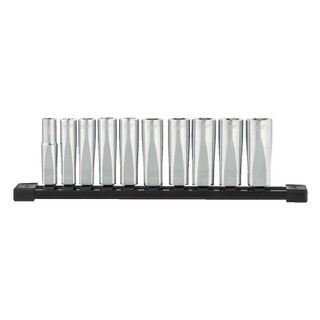
Read more

Milwaukee Socket Sets & Sockets

Milwaukee socket sets are built for hard daily fastening, from plant checks to stubborn fixings on vans, steelwork and site kit.

When you're dealing with rounded nuts, tight access and bolts that have not moved in months, a decent Milwaukee socket set saves time and skinned knuckles. These Milwaukee sockets and ratchet sets are the sort of kit mechanics, fitters and site teams keep close because the markings stay readable, the cases stay organised and the sizes you need are there when the job turns awkward. If you already run PACKOUT, a Milwaukee packout socket set makes even more sense. For full kits, replacements and torque control, see Milwaukee Socket Sets, Milwaukee Individual Sockets, Milwaukee Torque Ratchets & Torque Wrenches, Milwaukee Spanner Sets & Spanners and Milwaukee Screwdrivers.

What Are Milwaukee Socket Sets Used For?

  • Stripping down plant guards, brackets and fixings on site is quicker with a Milwaukee ratchet set because you can move through common sizes without rooting round the van for loose sockets.
  • Working on vans, trailers and workshop equipment is where a Milwaukee 1 2 socket set earns its keep, giving you the reach and grip needed for larger, tighter fasteners.
  • Fitting containment, unistrut, channel and mechanical fixings is ideal territory for a Milwaukee 3 8 socket set, especially where there is not enough room for a bigger handle.
  • Handling control panels, small brackets and lighter assembly jobs suits a Milwaukee 1 4 socket set, where compact sockets help in tighter corners without overdoing the torque.
  • Keeping service kit organised in the van or on multi trade jobs is easier with a Milwaukee PACKOUT socket set, because everything stays visible, clipped in and ready for the next callout.

Choosing the Right Milwaukee Socket Set

Match the drive size to the fixing in front of you. Too small and you will fight it. Too big and you are carrying bulk you do not need.

1. 1 4 Inch for Light and Tight Access Work

If you are inside panels, working on smaller fixings or doing lighter assembly, a Milwaukee 1 4 socket set is the sensible choice. It gets into cramped spots and keeps the kit compact. Do not buy it expecting it to cover seized larger bolts all day.

2. 3 8 Inch for Everyday Site and Van Jobs

A Milwaukee socket set 3 8 is the best all rounder for most trades. If you want one set for service work, bracket fixing, mechanical install and general maintenance, start here. It gives a good balance of access and usable torque without being overkill.

3. 1 2 Inch for Bigger Fasteners and More Torque

If you are on heavier plant, wheel related work or stubborn structural fixings, go for a Milwaukee socket set 1 2. The larger drive handles more load and suits longer ratchets and breaker bars better. It is not the one to carry for small awkward fixings in a tight cupboard.

4. PACKOUT or Standard Case

If your van and site kit already run PACKOUT, a Milwaukee socket set packout is worth it because it keeps your fastening gear with the rest of your stack and cuts down lost pieces. If the set is mostly staying in a workshop drawer, a standard case may do the same job for less bulk.

Who Uses These Socket Sets?

  • Mechanical fitters use Milwaukee socket sets for plant installs, maintenance shutdowns and tightening brackets, guards and bolted connections where missing one size slows the whole job down.
  • Vehicle technicians and fleet teams keep a Milwaukee socket set UK side in the van or workshop for servicing pickups, trailers and site transport, especially when fast access to common metric sizes matters.
  • Steel erectors and maintenance crews reach for a Milwaukee 1 2 socket set when they need more leverage on heavier fixings without messing about with mixed, worn old sockets.
  • Sparkies and M and E installers often favour a Milwaukee 3 8 socket set for tray, basket, channel and support work, where compact ratchets get into tighter service voids and risers.
  • Site managers and snagging teams swear by a Milwaukee packout socket set because it stays tidy in transit and stops bits going missing between the store, the van and the job.

The Basics: Understanding Socket Set Drive Sizes

The main thing to understand is drive size. It decides how much torque you can put through the set and how easily it gets into the space you are working in.

1. 1 4 Inch Drive

This is for smaller fasteners and tighter spaces. It is the one for panels, clips, lighter brackets and service work where access matters more than brute force.

2. 3 8 Inch Drive

This is the everyday middle ground. A Milwaukee 3 8 socket set covers a lot of site, workshop and van maintenance jobs without being too bulky or too light.

3. 1 2 Inch Drive

This is for larger fixings and harder tightening or loosening work. If the fastener is stubborn, corroded or part of heavier equipment, this is usually the right place to start.

Socket Set Extras That Save Time on Site

A good socket set goes further with a few proper add ons that stop awkward access and missing torque from slowing the job down.

1. Extension Bars

These save you skinning your hand on engine bays, plant covers and recessed fixings. Without one, you end up trying to force the ratchet where it does not fit and wasting time on a bolt you could have reached cleanly.

2. Universal Joints

For fasteners tucked behind pipework, brackets or body panels, a universal joint is the bit that gets you on the fixing instead of stripping it at a bad angle.

3. Torque Wrench

If the fixing has to go back to a set figure, do not guess it. A torque wrench stops overtightening threads, crushing fittings and having to redo work that should have been right first time.

4. Spare Individual Sockets

The sizes you use most always go missing first. Keeping a couple of individual replacements stops a full set being useless because one common socket has vanished into the bottom of the van.

Choose the Right Milwaukee Socket Set for the Job

Pick the drive size and case style around the fasteners you actually deal with day to day.

Your Job Milwaukee Socket Set Type Key Features
Control panels, small brackets, lighter fixings Milwaukee 1 4 socket set Compact ratchet, smaller sockets, better access in tight spots
General van maintenance, service work, site install Milwaukee 3 8 socket set Best all round balance of access, torque and carry size
Plant maintenance, larger bolts, stubborn fixings Milwaukee 1 2 socket set Larger drive, stronger setup, better for heavier fastening jobs
Mobile work where kit gets moved site to site Milwaukee PACKOUT socket set Organised storage, secure retention, fits existing PACKOUT stacks
Replacing lost or worn sizes only Milwaukee individual sockets Cheaper than rebuying a full kit, keeps your main set complete

Common Buying and Usage Mistakes

  • Buying a 1 4 inch set as your only kit is a common mistake. It is handy for light work, but on seized or larger fasteners you will soon find its limits and end up reaching for another set anyway.
  • Using the wrong drive size for the job wastes time and can round fasteners. Match a Milwaukee 3 8 socket set to everyday work and step up to 1 2 inch when the fixings get heavier.
  • Ignoring storage matters more than people think. Loose Milwaukee sockets in a van disappear fast, so if your gear travels daily, a proper case or PACKOUT setup is worth having.
  • Assuming every socket is for impact use can wreck the set or the fastener. Check whether you need hand sockets or impact sockets before putting them on higher torque tools.
  • Running on with a worn or missing common size slows every job after it. Replace individual sockets as they go missing instead of making do with near fits that slip and mark the fixing.

1 4 Inch vs 3 8 Inch vs 1 2 Inch

1 4 Inch Drive

Best for small fixings, trim work, panels and cramped access. It is easy to carry and use one handed, but it is not the set for high torque or stubborn larger bolts.

3 8 Inch Drive

This is the sensible all rounder for most trades. It covers the bulk of service, maintenance and install work without the extra bulk of a 1 2 inch set.

1 2 Inch Drive

Go here for bigger fixings, more leverage and heavier mechanical work. It is stronger and better for hard fastening, but less handy when space is tight.

PACKOUT Set vs Standard Case

A PACKOUT socket set suits van based and mobile trades who want all fastening gear stacked and easy to grab. A standard case is fine if the set mostly lives in the workshop or site box.

Maintenance and Care

Wipe Down After Dirty Jobs

After working on greasy plant, road grit or wet site kit, wipe sockets and ratchets down before they go back in the case. It keeps the markings readable and stops the tray filling with grime.

Keep the Set Complete

Put each socket back in its slot at the end of the job. It sounds basic, but it is the difference between grabbing the right size in seconds and losing ten minutes hunting in the van.

Check Ratchet Mechanisms

If the ratchet starts feeling rough, sticking or slipping under load, clean it and check for wear before using it again. A ratchet that lets go on a tight bolt usually means barked knuckles.

Store Dry

Do not leave the set rattling round a damp van floor. Dry storage helps prevent surface corrosion and keeps the case hinges, clips and retention rails working properly.

Replace Worn or Split Sockets

If a socket is rounded inside, cracked or no longer grips properly, bin it and replace it. Hanging on to damaged sockets only leads to chewed fasteners and more grief on the next job.

Why Shop for Milwaukee Socket Sets at ITS?

Whether you need a compact Milwaukee 1 4 socket set, an all round Milwaukee 3 8 socket set, a heavier Milwaukee 1 2 socket set or a Milwaukee PACKOUT socket set, we stock the full range. That means full kits, replacement Milwaukee sockets and the fastening gear that goes with them, all in our own warehouse and ready for next day delivery.

Milwaukee Socket Set FAQs

Why are Milwaukee socket sets so expensive?

Because you are paying for more than a pile of sockets. Milwaukee sets are built for regular trade use, with clearer size marking, tighter storage, decent ratchets and better organisation than cheap mixed kits. If you only need a set for occasional home use, they can look pricey. If the set is living in a van and getting used most days, the build and case design make more sense.

How good are Milwaukee impact sockets?

They are solid for hard fastening work when matched to the right impact wrench and fixing. The important bit is not to confuse standard hand sockets with impact sockets. If you are on seized bolts, workshop repairs or heavier mechanical jobs, Milwaukee impact sockets are the safer choice and will hold up far better under repeated hammering loads.

Where are Milwaukee sockets made?

Milwaukee manufacturing varies by product line, so there is not one single answer for every socket or set. The best thing to do is check the individual product listing or packaging for country of origin. What matters on site is whether the set fits the job, stores well and stands up to regular use, and Milwaukee socket sets generally do.

Should I buy a Milwaukee 3 8 socket set or a Milwaukee 1 2 socket set?

If you want one set to cover most service and install work, go 3 8 inch. It is the best middle ground. If you are regularly on heavier plant, larger fixings or tougher mechanical work, buy the 1 2 inch set. Plenty of trades end up with both because they do different jobs properly.

Is a Milwaukee PACKOUT socket set actually worth it?

Yes, if your kit moves between van, site and workshop all week. The real advantage is organisation. You can see what is missing straight away and keep the set with the rest of your PACKOUT stack. If the set never leaves a bench drawer, the extra spend may not matter as much.

Do Milwaukee socket sets come with the sizes trades actually use?

Generally, yes. Milwaukee socket sets are put together around common metric sizes used in site, van and workshop work. Still check the exact contents before you buy, especially if you need a specific deep socket, extension or a less common size for one particular job.
ITS Click and Collect Icon
What3Words:
Get Directions
Store Opening Hours
Opening times