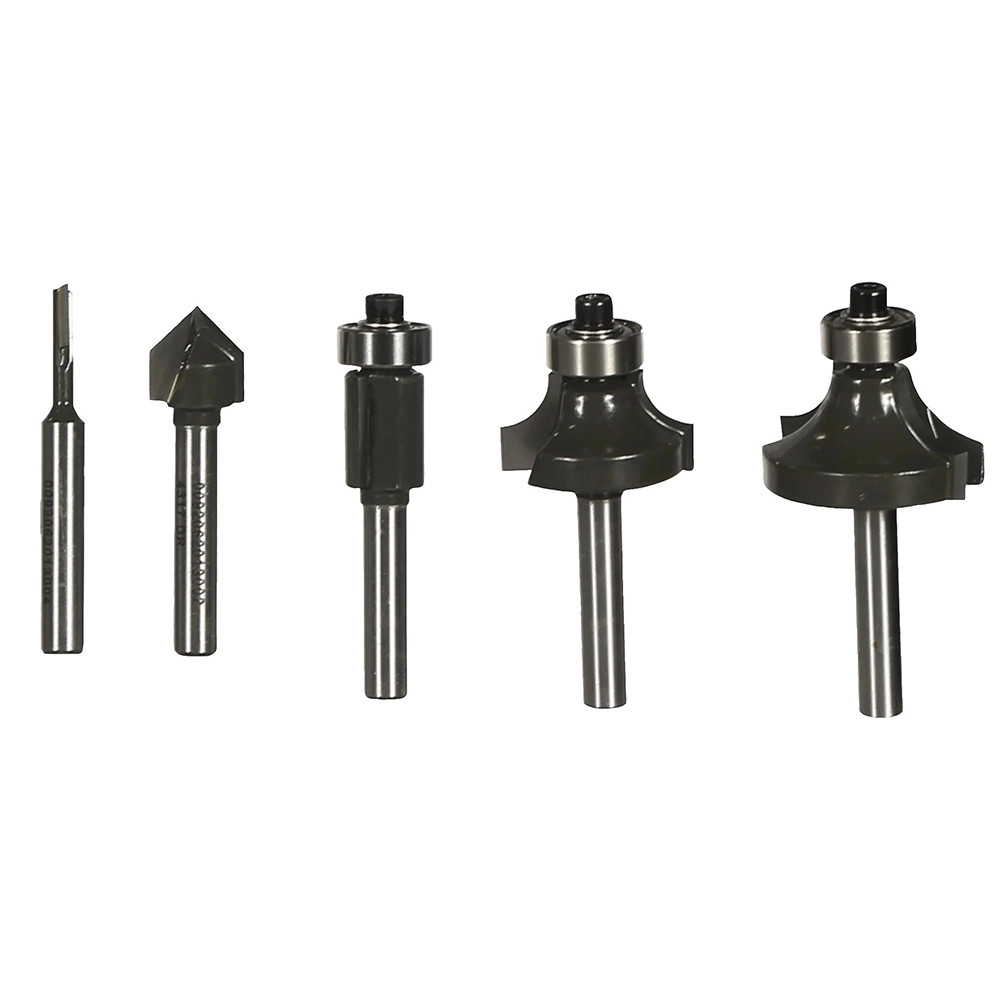
Ryobi Router Bits
Ryobi Router Bits are for clean grooves, trims and edge work in timber, laminate and sheet material without tearing the job to bits.
When you're cutting hinge recesses, rounding over worktops or tidying edge details on fitted jobs, decent bits matter more than most realise. These Ryobi Router Bits suit trade tools, DIY tools and home improvement tools alike, giving you replacement accessories that cut cleaner and save rework. If you're already in Ryobi kit, this is the place to sort the right bit and get on with it.
What Are Ryobi Router Bits Used For?
- Cutting clean grooves and rebates in timber when you're fitting cabinets, shelving, drawer runners or simple joinery on site or at home.
- Trimming laminate, veneered boards and worktop edges where a rough cut will show up straight away and cost you time in snagging.
- Profiling corners and exposed edges on shelves, doors and furniture panels so the finished job looks tidy instead of sharp and unfinished.
- Following templates for repeat cuts, hinge recesses and shaped timber work when accuracy matters more than trying to freehand it.
- Sorting repair work and replacement accessories for worn cutters, so your router keeps cutting properly instead of burning the material and fighting you.
Choosing the Right Ryobi Router Bits
Sorting the right bit is simple: match the cutter shape to the finish you need, not just the timber you're cutting.
1. Edge Work or Grooves
If you're easing edges, rounding corners or trimming laminate, go for edge-forming bits like straight trimmers or round-over profiles. If you're cutting housings, slots or recesses, a straight cutter is the one you actually need.
2. Shank Size Matters
Check the router collet before you buy. A bit that does not match your collet size is useless on the day, so make sure the shank suits your machine rather than guessing from the photo.
3. Material and Finish
If you're mainly cutting softwood and basic sheet material, standard cutters will do the job. If you're working on laminate, hardwood or anything likely to chip, buy sharper, cleaner-cutting bits and slow the pass down properly.
4. Singles or Sets
If you only ever do one or two routing jobs, buy the exact profile you need. If you're doing mixed fitting work, a set makes more sense and saves you getting caught short halfway through a job.
Who Uses These Router Bits?
- Chippies and kitchen fitters use them for trimming worktops, cutting grooves and cleaning up edge profiles where a rough finish is not acceptable.
- Joiners reach for Ryobi Router Bits when making repeat cuts in sheet material, housing joints or shaping timber parts in the workshop or on install jobs.
- Maintenance teams keep a few common profiles handy for repair work, door easing and small routing jobs that need doing there and then.
- DIY users and home improvement tools buyers rate them for shelves, cupboards, planter boxes and simple furniture jobs where a neat finish makes the difference.
The Basics: Understanding Router Bits
Router bits all spin fast, but the cutter shape decides the result on the timber. Get that right and the job goes cleanly. Get it wrong and you will burn, tear out or waste stock.
1. Straight Bits
These are for grooves, rebates, hinge recesses and general material removal. They are the standard choice when you need a flat-bottomed cut or a simple channel in timber or board.
2. Edge Forming Bits
Round-over, chamfer and trim bits shape the visible edge of the workpiece. That is what you use when the finish is on show and you want clean, repeatable detail without sanding for ages.
3. Bearing Guided Bits
These use a bearing to follow an edge or template, which keeps cuts consistent. They are handy for trimming flush, copying shapes and stopping the cutter wandering off line.
Router Accessories That Make the Job Easier
The right extras stop bad cuts, wasted boards and trips back to the van halfway through a routing job.
1. Collets and Adaptors
This is the bit that saves you buying the wrong shank size and finding out when the router is already out. If you swap between different cutter sizes, having the right collet sorted keeps the job moving.
2. Guide Bushes and Parallel Guides
Use these when you need repeatable grooves, recesses or template cuts instead of trying to hold a straight line by eye. They save a lot of grief on visible joinery.
3. Spare Batteries
If you're using cordless kit, a spare from Batteries Chargers and Mounts is a sensible shout. No one wants the router dying halfway through a long trim pass.
Choose the Right Ryobi Router Bits for the Job
Use this quick guide to narrow down the type you actually need.
| Your Job | Bit Type | Key Features |
|---|---|---|
| Cutting grooves for shelves, backs or housings | Straight router bit | Flat-bottomed cuts, clean channels, good control on repeated passes |
| Trimming laminate or flush cutting edges | Flush trim bit | Bearing guide, neat edge following, tidy finish on sheet material |
| Softening sharp timber edges | Round-over bit | Consistent profile, cleaner finish, less sanding after cutting |
| Bevelling visible edges on furniture or panels | Chamfer bit | Angled edge detail, smart finish, useful on exposed joinery |
| Template work and repeat shapes | Bearing guided profile bit | Follows templates accurately, repeatable cuts, less chance of drift |
Common Buying and Usage Mistakes
- Buying the wrong shank size for your router is the classic mistake. Check the collet first or the bit will be no use when you need it.
- Using a worn or cheap cutter on laminate or hardwood usually ends in burn marks and chipped edges. If the finish matters, fit a sharp bit and take steady passes.
- Trying to remove too much material in one go puts strain on the cutter and the router. Multiple shallow passes are slower on paper but faster than redoing spoiled work.
- Ignoring the bearing or guide setup leads to wandering cuts and uneven profiles. Set it properly before touching the workpiece and you save yourself a lot of filling and sanding.
- Treating all tool accessories as interchangeable causes problems with fit and finish. Match the bit to the router, the material and the actual job in front of you.
Straight Bits vs Flush Trim Bits vs Round-Over Bits
Straight Bits
Best for grooves, rebates and recesses where you need to remove material cleanly. They are the practical everyday choice for joinery cuts, but they will not shape a finished edge for you.
Flush Trim Bits
These are the ones for trimming one surface exactly to another, especially with templates or laminate edging. They are spot on for clean-up work, but less useful for cutting channels or decorative profiles.
Round-Over Bits
Pick these when you want to soften exposed edges on shelves, tops or timber details. They give a cleaner finished look, but they are not meant for plunging grooves or heavier stock removal.
Maintenance and Care
Clean Resin Off After Use
Pitch and resin build-up make bits run hotter and cut rougher. Give them a proper wipe down after cutting softwood or treated timber.
Store Cutters Properly
Do not throw loose bits in a box with other metal kit. Keep them in a case or holder so the cutting edges do not get knocked and dulled before the next job.
Check Bearings and Shanks
If a bearing feels rough or the shank is marked up, sort it before using the bit again. A damaged bit cuts badly and can mark the workpiece fast.
Replace When the Cut Quality Drops
If the bit starts burning timber, chipping laminate or needs forcing through the cut, it is past its best. Stop fighting it and fit a fresh replacement accessory.
Why Shop for Ryobi Router Bits at ITS?
Whether you need a single replacement for a worn cutter or a set to cover more Routing jobs, we stock the Ryobi accessories range properly. That means Ryobi Router Bits UK buyers can get the right profiles, sizes and tool accessories from our own warehouse, all in stock and ready for next day delivery. If you are already running Ryobi 18V ONE+ and other Garden Power Tools, it keeps your Ryobi tools UK setup under one roof.
Ryobi Router Bits FAQs
What are Ryobi Router Bits used for?
They are used for cutting grooves, trimming edges, shaping timber and cleaning up finished details on wood, laminate and sheet material. In real terms, that means shelves, worktops, hinge recesses, cabinets and other joinery jobs where a saw cut on its own is not neat enough.
Are Ryobi Router Bits compatible with Ryobi batteries?
No, router bits do not connect to batteries themselves. They fit the router collet, not the battery platform. The battery matters for the cordless router you are using, while the bit needs to match the router's collet size and intended job.
How do I choose the right ryobi router bits?
Start with the cut you need. Straight bits are for grooves and recesses, flush trim bits are for following edges, and round-over or chamfer bits are for visible finish work. Then check the shank size against your router so you do not buy a cutter you cannot use.
Can Ryobi Router Bits be used for DIY and garden jobs?
Yes, absolutely, as long as the bit matches the material and the router setup. They are useful for DIY tools and home improvement tools like shelving and cupboards, and for garden jobs such as planter boxes, benches and outdoor timber edging. Just take lighter passes on treated timber and keep the cutter clean.
Will these bits cope with hardwood and laminate, or just softwood?
Yes, they can handle harder materials, but the finish depends on using the right profile, speed and feed rate. Hardwood and laminate show every mistake, so use a sharp bit, do not force the cut and make more than one pass if needed.
Do I need a full set, or should I just buy single bits?
If you only do the odd routing job, buy the exact cutter you need and save your money. If you do mixed fitting, repairs or regular joinery work, a set is more practical and stops the usual problem of having the router on site but not the right bit.