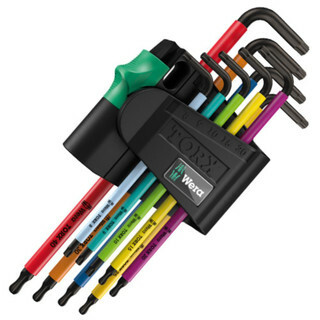
Wera L-Key Allen Keys (Hex Keys)
Wera L Key Allen Keys are for the fixings you cannot round off on site, in plant rooms, cabinets, bikes, machinery and awkward installs where proper grip matters.
These are the Wera L-Key options lads keep for repeated fastening work, not the throwaway keys that twist under load. Wera Hex Plus L keys bite properly in socket screws, long arm allen keys reach past housings, and ball end hex keys help when access is tight. If you are choosing metric allen keys for daily trade use, start with the sizes and reach you actually use.
What Are Wera L Key Allen Keys Used For?
- Tightening socket head fixings in control panels, consumer units, machinery guards and brackets is where Wera L Key Allen Keys earn their keep, especially when a driver handle will not physically fit.
- Reaching recessed bolts behind covers, inside frames or down past pipework is easier with long arm allen keys, giving you enough leverage and access without skinning your knuckles.
- Working on pumps, motors, HVAC kit and mechanical assemblies suits Wera L Key Hex Keys because the Hex Plus profile helps hold the screw and reduces the chance of chewing out the head.
- Adjusting site saws, benches, bike racks, door gear and workshop equipment is a common job for metric allen keys, where you need the right size quickly and do not want slop in the fixing.
- Starting fasteners at a slight angle during furniture fitting, maintenance or boxed-in installs is where ball end hex keys save time, as long as you switch to the straight end for final torque.
Choosing the Right Wera L Key Allen Keys
Sorting the right one is simple: match the key to the fixing access first, then think about leverage, speed and how often you use that size.
1. Ball End or Straight End
If you are coming in at an angle because the fixing is boxed in, ball end hex keys make life easier. If you are cracking off tight screws or doing final nip-up, use the straight end because it gives a fuller, stronger drive.
2. Long Arm or Shorter Pattern
If the bolt sits down inside a housing or behind another component, long arm allen keys are the obvious choice. If you are working in very shallow spaces with little swing room, a shorter key can be less of a fight.
3. Single Sizes or Sets
If you keep burning through the same sizes on repeat install work, buy singles and keep spares. If your jobs vary between plant, electrical kit and general fixing work, a proper set is the safer bet so you are not bodging with the nearest fit.
4. Hex Plus and Size Marking
If you regularly deal with stubborn or expensive fixings, Wera Hex Plus L keys are worth it because they grip the flats better than cheap basic keys. Colour coded hex keys and clear size marking also save more time than most lads admit, especially when you are moving between sizes all day.
Who Uses These Wera L Keys?
- Sparkies use them for panel work, trunking accessories and equipment fixings where space is tight and a clean fit matters more than brute force.
- Mechanical fitters and maintenance teams swear by them for plant, pumps, guards and machine servicing, especially when long reach and repeat use are part of the day.
- Kitchen fitters, joiners and furniture installers keep Wera L Key Allen Keys close for cabinet hardware, flat-pack assembly and adjustment jobs where rounded screws waste time fast.
- Bike mechanics, garage techs and installers reach for colour coded hex keys because they can grab the right metric size at a glance and get on with the job.
The Basics: Understanding Wera L Key Allen Keys
There is not much mystery here, but a couple of details make a big difference on site. The right tip style and profile decide how well the key fits, how much access you get and whether the fixing survives the job.
1. Straight End for Proper Drive
The straight end gives full contact in the hex socket. That is the end to use for loosening tight fixings, final tightening and anything you do not want to strip.
2. Ball End for Awkward Access
A ball end lets you engage the screw when you cannot get perfectly square to it. It speeds up access in boxed-in areas, but it is for running the fixing, not for maximum torque.
3. Hex Plus for Better Screw Contact
Wera Hex Plus L keys are shaped to spread load better on the internal faces of the screw. In plain terms, that means less chance of rounding the socket when the fixing is tight or has seen a bit of age.
Wera L Key Accessories and Add Ons That Actually Help
A few sensible extras make these quicker to carry, easier to replace and less likely to go missing halfway through a job.
1. Storage Clips and Holders
Get a proper holder or clip set if loose keys keep ending up at the bottom of the van. It saves the usual mess of missing the one size you need when you are leaning into a panel or machine.
2. Spare Individual Keys
The sizes you use most always vanish first or get lent out and never come back. Keeping spare individual metric allen keys stops one missing 4mm or 5mm holding up the whole install.
3. Full Hex Key Sets
If your work jumps between first fix, maintenance and assembly, a full set keeps the right size to hand. It is a lot cheaper than chewing a fixing because you tried to make the wrong key do it.
Choose the Right Wera L Key Allen Keys for the Job
Use this quick guide to sort the right type before you buy.
| Your Job | Category or Type | Key Features |
|---|---|---|
| General install and maintenance work | Metric L key set | Core sizes in one holder, quick size choice, everyday site coverage |
| Reaching recessed or obstructed fixings | Long arm allen keys | Extra reach, better leverage, easier access past covers and housings |
| Starting screws at an awkward angle | Ball end hex keys | Angled entry, faster engagement, ideal for access not final torque |
| Working on stubborn or valuable fixings | Wera Hex Plus L keys | Improved socket contact, less cam-out, reduced chance of rounding |
| Replacing the sizes you use constantly | Single Wera L keys | No need to rebuy a full set, handy for high-wear common sizes |
Common Buying and Usage Mistakes
- Using a near enough size instead of the exact metric fit will chew the socket fast. If the key has any play in the screw, stop and get the right one.
- Trying to crack off tight fixings with the ball end is asking for trouble. Use the straight end first, then use the ball end only when access demands it.
- Buying short keys for deep or boxed-in fixings usually means skinned hands and wasted time. If access is awkward, go straight to long arm allen keys.
- Leaving keys loose in the van is why the most-used sizes disappear. Keep them in a holder or replace common singles before the job catches you out.
- Assuming any cheap hex key is the same as a proper Wera profile often ends in rounded screws. If you work on equipment, panels or machinery often, better fit is worth paying for.
Ball End vs Straight End vs Hex Key Sets
Ball End
Best when access is awkward and you need to start or run a fixing from an angle. It is not the right choice for high torque or seized screws, so use it for reach and speed, not force.
Straight End
This is the one for full contact and proper torque. If the fixing is tight, expensive or already looks tired, the straight end is the safer option and should be your first move.
Single Keys
Best for replacing your most-used sizes or building a very specific kit. Good if you know exactly what fixings you deal with every day and do not need the rest.
Hex Key Sets
The practical choice for mixed trade work, maintenance rounds and install jobs where the fixing size changes from one task to the next. You spend less time hunting and less time making do.
Maintenance and Care
Wipe Off Dust and Swarf
After working in metal filings, plaster dust or general site muck, give the keys a quick wipe. Dirt on the tip stops proper seating and increases the chance of slipping in the screw.
Check the Working Ends
If the ends look rounded, chipped or polished off from abuse, retire that key. A worn tip will damage fixings long before it admits it is worn out.
Store Them as a Set
Keep them in the holder rather than loose in a pouch or van tray. It stops rust from damp rubbish, keeps the sizes together and means you can spot a missing key straight away.
Do Not Use Them as Pry Bars
L keys get bent when lads start levering clips or covers with them. Once bent, they never sit right in the screw again, so keep them for hex fixings only.
Why Shop for Wera L Key Allen Keys at ITS?
Whether you need individual sizes, colour coded hex keys, long arm allen keys or complete Wera L-Key Hex Key Sets, we stock the full range. You can also shop across Wera Hand Tools, Wera Hex Key Sets and Wera Allen Key Sets and Allen Keys (Hex Keys), all held in our own warehouse and ready for next day delivery.
Wera L Key Allen Keys FAQs
What are Wera L Key Allen Keys used for?
They are used for tightening and loosening hex socket screws in places where bulkier tools cannot get in. On site that means control gear, machinery covers, furniture fittings, brackets, bike kit and all sorts of install work with recessed or awkward fixings.
Are Wera L Key Hex Keys suitable for mechanics and installers?
Yes. They are a solid choice for mechanics, fitters and installers because they give good reach, proper control and a more dependable fit than cheap loose keys. They are especially useful where you are working around housings, panels or machine parts with limited swing room.
What is the benefit of long arm Wera L Keys?
The extra arm gets you down to recessed fixings and gives you more leverage without needing another tool. In real terms, that means fewer skinned knuckles, less struggle behind pipework or covers, and faster work on deep-set socket screws.
Should I use ball end or standard Wera L Key Allen Keys?
Use the ball end when access is awkward and you need to enter the fixing at a slight angle. Use the standard straight end for loosening tight screws and doing final tightening, because it gives fuller contact and is less likely to slip.
Can Wera L Key Allen Keys help reduce damage to hex screws?
Yes, especially the Wera Hex Plus L keys. They are designed to contact the screw more effectively, which helps reduce rounding and cam-out. That matters most on stubborn fixings, softer screws and kit you do not want to damage during service work.
Are these colour coded hex keys just a gimmick?
No. When you are swapping between sizes on repetitive work, colour coding speeds things up and cuts the usual rummaging about. It is one of those small details that saves more time than you think over a full week.