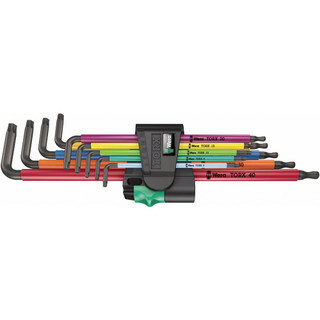
Wera L-Key
Wera L Key tools are for fixings you need tight, clean and not rounded off, whether you're on plant, panels, bikes, machinery or site kit repairs.
A proper Wera L-Key Hex Key Sets range saves time when you're working into recessed bolts, awkward angles and fasteners that have already had a hard life. Wera Hex Plus L keys grip better than basic hex keys, ball end L keys help when access is poor, and colour coded L keys make the right size easy to grab straight off the bench or out the van.
What Are Wera L Key Used For?
- Tightening socket head fixings on machinery guards, brackets and workshop equipment is where Wera L Key tools earn their keep, especially when a standard Allen key starts slipping in worn heads.
- Working inside cabinets, control panels and boxed-in assemblies is easier with ball end L keys, letting you pick up the fixing from an angle when your hand position is awkward.
- Assembling site gear, racking, fixtures and van fit-outs is quicker with Wera L Key Sets because the sizes stay together and the right key is easier to grab without emptying half the tool bag.
- Servicing bikes, plant attachments, jigs and precision kit suits Wera Hex Plus L keys because they reduce cam-out and help protect expensive fasteners from being rounded over.
- Sorting mixed fastener sizes on maintenance jobs is simpler with metric L keys and colour coded L keys, especially when you're moving between repeated adjustments all day.
Choosing the Right Wera L Key
Match the key to the fixing and access. That is the whole game. Buy the wrong profile or size system and you will round heads and lose time.
1. Metric or Imperial
If you are on European machinery, site hardware, furniture fittings or most modern kit, metric L keys are usually the right call. If you work on older imported gear, bikes or specialist equipment, keep imperial in the van as well because forcing a near fit is how fasteners get wrecked.
2. Standard End or Ball End
If you are cracking fixings loose or doing final tightening, use the straight end for full contact. If access is awkward and you need to drive from an angle, ball end L keys are worth having, but do not lean on them like a breaker bar.
3. Single Keys or Wera L Key Sets
If one size gets used all day on one machine, a single replacement key makes sense. If you jump between install, repair and adjustment work, Wera L Key Sets are the better buy because the full range stays together and you stop wasting time hunting for missing sizes.
4. Hex Plus Profile
If you regularly deal with tight, worn or expensive fixings, go straight to Wera Hex Plus L keys. They spread load better in the socket than basic profiles, which helps reduce slip and saves fasteners that are already on their last chance.
Who Uses These on Site?
- Maintenance engineers and fitters rely on Wera L Key Sets for machine guarding, adjustment points and service panels where a socket or driver bit simply will not fit.
- Sparkies use them on control gear, trunking hardware and specialist fixings inside boards or enclosures where neat access matters and rounded fixings cause delays.
- Plant mechanics and workshop teams swear by Wera Hex Plus L keys for stubborn cap head bolts on equipment that has seen weather, dirt and too many wrong-size keys.
- Kitchen fitters, joiners and installers keep a Wera L key set handy for furniture connectors, hardware adjustments and setting up kit where accuracy matters more than brute force.
- Bike techs and service crews also reach for Wera allen keys because the sizing is clear, the grip is positive and the set stores properly instead of ending up loose in a drawer.
The Basics: Understanding Wera L Key
These are simple tools, but the details matter. The tip shape, size system and arm length all affect how cleanly you can turn a fixing and how likely you are to damage it.
1. Hex Plus vs Standard Hex
Wera Hex Plus L keys are shaped to contact the fixing more effectively than a basic hex key. On the job that means less slipping in the socket and less chance of chewing out cap head bolts that still need to come back apart later.
2. Ball End Access
A ball end L key lets you engage the fixing at an angle, which is handy inside housings, behind guards and in tight assemblies. It is there to help with access and speed, not for maximum torque.
3. Long Arm Leverage
The long arm gives you reach into recessed fixings and a bit more leverage, while the short arm is what you use where space is tight. Pick the right shape for the job and you get faster turns without skinning your knuckles on surrounding hardware.
Useful Extras for Wera L Key Work
A few sensible add-ons keep your hex keys together, your fixings cleaner and the job moving when access is awkward.
1. Storage Clips and Holders
A proper holder stops loose keys ending up at the bottom of the van or left on a plant deck. If the set stays complete, you are not stuck bodging a near size into a fixing that matters.
2. Replacement Single Keys
The sizes you use most always disappear first. Keeping a couple of common replacement keys saves you buying a full new set just because one key has gone missing on site.
3. Hex Bit Sockets
When the same fixing needs more torque than an L key is meant to take, hex bit sockets are the safer option. They let you move onto a ratchet or torque wrench instead of overloading the key and rounding the fastener.
Choose the Right Wera L Key for the Job
Use this quick guide to sort the right type before you start rounding fixings.
| Your Job | Category or Type | Key Features |
|---|---|---|
| General machinery, fittings and site maintenance | Metric Wera L key set | Common site sizes, quick selection, good all-round cover for modern fasteners |
| Awkward access inside housings or panels | Ball end L keys | Works at an angle, easier pick-up on recessed fixings, faster in tight spots |
| Worn or expensive socket head fixings | Wera Hex Plus L keys | Better contact in the fastener, less cam-out, helps reduce rounding |
| One repeated size used every day | Single Wera L key | Lower cost, easy replacement, ideal for dedicated service work |
| Mixed older or imported equipment | Imperial Wera L Key Sets | Correct fit on non-metric fasteners, avoids damage from forcing metric sizes |
Common Buying and Usage Mistakes
- Buying metric only when you also work on older imported kit is a common mistake. The fix is simple. Keep imperial sizes as well, because a nearly right key will chew the fixing out fast.
- Using the ball end for first crack or final tightening shortens tool life and can damage the fastener. Use the straight end when you need full contact and save the ball end for access.
- Choosing cheap loose keys instead of a proper set usually ends with missing sizes and wasted time. A holder or organised set keeps the range complete and stops van-floor archaeology.
- Forcing a worn or dirty socket head without cleaning it first is asking for slip. Pick the dirt out, seat the key fully and then turn it, especially on painted or greasy fixings.
- Using an L key where a hex socket and ratchet should be used puts too much load through the tool. If the fixing needs real torque, step up to the right drive tool instead of abusing the key.
Ball End vs Straight End vs Hex Bit Sockets
Ball End L Keys
Best for awkward access, boxed-in fixings and getting onto bolts from an angle. They are quicker in cramped spaces, but they are not the choice for high torque or seized fasteners.
Straight End L Keys
These give full engagement in the fixing and are the right pick for breaking bolts loose and tightening properly. If you want the cleanest fit and least chance of rounding, start here.
Hex Bit Sockets
Use these when access allows and torque matters. They suit ratchets and torque wrenches, making them better for stubborn fixings, repeated assembly work and controlled tightening.
Maintenance and Care
Wipe Them Down After Dirty Work
If the keys have been used in grease, plaster dust or wet site muck, wipe them before they go back in the holder. Clean tips seat better and are less likely to slip next time.
Store the Set Complete
Put each key back where it belongs after the job. A complete set is faster to use and stops you grabbing the wrong size because the right one went missing three weeks ago.
Check the Working Ends
If the hex tips are visibly worn, burred or twisted, retire that key. Damaged ends do more harm than good and will round out fixings that a sound key would remove cleanly.
Keep Them Dry in the Van
Do not leave keys sitting in a wet tray or on the floor overnight. Dry storage helps prevent surface corrosion and keeps the holder from filling up with grime.
Replace Singles Before the Job Suffers
When your most-used size starts looking tired, replace it before it takes a fixing with it. That is a lot cheaper than drilling out a rounded cap head halfway through a service call.
Why Shop for Wera L Key at ITS?
Whether you need single Wera allen keys, full Wera L Key Sets, metric L keys or specialist ball end L keys, we stock the range trades actually use. You can also shop Wera Allen Key Sets and Allen Keys (Hex Keys), Wera Hex Key Sets, Wera Hand Tools and Wera Sets in one place. It is all held in our own warehouse, in stock and ready for next day delivery.
Wera L Key FAQs
What is a Wera L Key used for?
It is used for driving hex socket fasteners on machinery, fittings, panels, bikes, plant and site equipment. The L shape gives you reach on one arm and leverage on the other, which is why they are handy for recessed bolts and awkward access jobs.
What is the difference between Wera L Keys and standard Allen keys?
The big difference is fit and control. Wera Hex Plus L keys are designed to sit in the fastener more effectively than basic hex keys, which helps reduce slip and rounding. You also get better holders and clearer size ID, which matters when you are working fast.
Are Wera L Key Sets suitable for professional tradesmen?
Yes. They are the sort of sets that suit daily workshop, install and maintenance use. The keys are made for repeated fastening work, the sizing is easy to follow and the holders keep the set together instead of leaving you with three random sizes by month end.
What makes Wera Hex Plus L Keys useful for fastening work?
The Hex Plus profile helps the key contact the fixing more cleanly, which means less cam-out and less chance of rounding the socket. On real jobs, that matters most on tight, painted, dirty or already slightly worn fasteners.
Should I choose metric or imperial Wera L Keys?
Choose the system that matches the fasteners you actually work on. Metric is the site standard for most modern kit, furniture fittings and machinery. Imperial is still needed for some older, imported or specialist equipment. If you work across both, carry both.
Do ball end L keys replace straight hex keys?
No. Ball end keys are for access, not everything. They are excellent for getting onto fixings from an angle, but straight ends are better for maximum contact, first crack and final tightening.
Will these hold up to regular workshop and site use?
Yes, if they are used properly. They will handle regular fastening work well, but like any hex key they are not a substitute for a ratchet and hex socket when the fixing is seized or needs controlled torque.