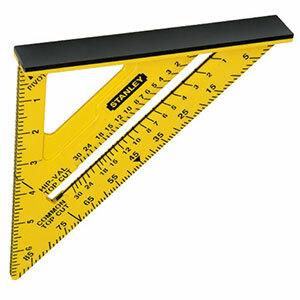
Stanley Guides and Measures
Stanley measuring tools are built for setting out, marking up and checking work properly, from first fix timber to final snagging and fit-off.
When your lines are out, everything after it is a fight. Stanley measuring tools are the bits you reach for to mark timber, check level, pull straight dimensions and keep site work honest. From a Stanley tape measure and Stanley spirit level to squares, chalk lines and plumb bobs, this is the kit chippies, brickies and sparks use day in, day out. Pick the right Stanley measures for the job and get your setting out sorted first time.
What Are Stanley Measuring Tools Used For?
- Setting out stud walls, joists and kitchen runs is where Stanley measuring tools earn their keep, giving you straight marks, repeatable dimensions and fewer nasty surprises when boards or units go in.
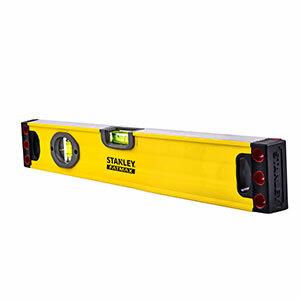
- Checking door linings, window reveals and long timber runs with a Stanley spirit level helps keep first fix and second fix work plumb, level and worth putting your name to.
- Marking roofing battens, sheet material and carcassing with a Stanley square or chalk line speeds up cut lists and keeps your saw line true instead of wandering off on rough timber.
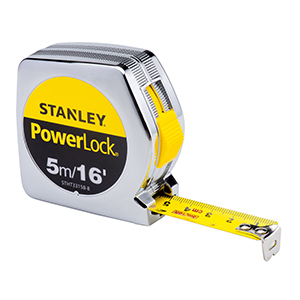
- Measuring openings, cable routes and service positions with a Stanley tape measure makes refurbs and fit-outs easier, especially when you are working around older walls that are never as straight as they look.
- Dropping vertical reference points down stairwells, lift shafts or external brick lines with a Stanley plumb bob gives you a dead simple way to keep work lined through from top to bottom.
Choosing the Right Stanley Measuring Tools
Sort the right kit by the job in front of you. One tape and one level will not cover everything once site work gets varied.
1. Tape Length and Standout
If you are doing internal fit-out, cabinet work or everyday room measuring, a compact Stanley tape measure is easier on the belt and quick to pull. If you are setting out larger rooms, roofs or external runs, go longer and look for decent standout so the blade does not fold every time you stretch across a void.
2. Level Length for the Work
For short checks on sockets, lintels and door gear, a smaller Stanley spirit level is more practical. If you are checking studs, blockwork, kitchen runs or long timber, use a longer level or you will miss the dips and high spots that cause grief later.
3. Square Type Matters
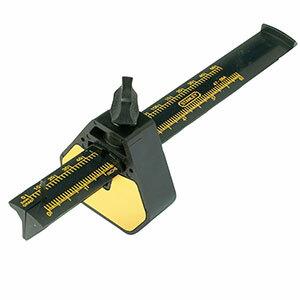
If you just need fast ninety degree marking on timber and sheet, a try square does the simple job well. If you need marking depth, checking forty five degree lines and doing more than one task from the same tool, a combination square is the more useful bit of kit.
4. Marking Tools for Rough or Open Areas
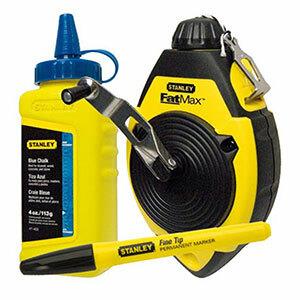
If you are marking long straight lines across floors, roofing, blockwork or sheet stacks, use a Stanley chalk line instead of trying to join marks by eye. For vertical reference over height, a plumb bob is still the right answer when batteries, screens and laser glare start getting in the way.
Who Uses These on Site?
- Chippies rely on Stanley measuring tools for first fix setting out, cutting studwork, checking openings and keeping kitchens, floors and finish carpentry running true.
- Brickies and groundworkers use Stanley spirit levels, chalk lines and plumb bobs to keep blockwork, brick lines and external setting out straight before the job gets away from them.
- Sparkies and plumbers keep a Stanley tape measure and square close by for back boxes, pipe runs, bracket positions and quick marks in tight service spaces.
- Decorators, snagging teams and site managers use Stanley measures for final checks, confirming levels, lining up fittings and spotting where earlier trades have left work out.
Useful Extras for Stanley Measuring Tools
A few simple extras save time, keep your marks visible and stop you making do with the wrong bit of kit halfway through a set-out.
1. Chalk Refill
If your Stanley chalk line is empty on a big floor or roof, you are back to guessing lines or hunting round the van. Keep refill chalk in the box so you can keep snapping clear marks without stopping the job.
2. Spare Blades or Knives for Marking Out
A blunt knife tears plasterboard faces, fuzzy timber edges and membrane instead of giving you a clean line to work to. Fresh blades make your marks easier to follow and your cuts look less like a rush job.
3. Tool Pouches and Holders
Tape measures, squares and levels get dropped, buried or left behind when they are loose in the van. A proper pouch or holder keeps the bits you use all day on you, not ten metres away under a sheet stack.
Choose the Right Stanley Measuring Tools for the Job
Match the tool to the layout job and you will work quicker with fewer mistakes to put right.
| Your Job | Category or Type | Key Features |
|---|---|---|
| Everyday room, timber and opening measurements | Stanley tape measure | Compact size, clear blade markings, solid lock and enough standout for one handed pulls |
| Checking studwork, kitchen runs and door frames | Stanley spirit level | Length to suit the work, easy to read vials and a straight robust frame that will handle site knocks |
| Marking square cuts on timber and sheet | Stanley square | Accurate ninety degree reference, readable graduations and a body that stays true in the bag |
| Snapping long lines across floors, roofs or boards | Stanley chalk line | Quick rewind, good chalk retention and a line that prints clearly on rough surfaces |
| Checking vertical alignment over height | Stanley plumb bob | Simple gravity reference, good weight and reliable plumb for shafts, corners and external lines |
Common Buying and Usage Mistakes
- Buying a tape that is too short for the work means more double measuring and more chance of reading it wrong. If you are regularly setting out larger spaces, step up to a longer Stanley tape measure and save yourself the faff.
- Using a short level to check long runs hides bows and dips that show up later when units, rails or frames go in. Match the Stanley spirit level length to the span you are actually checking.
- Trusting bent, dropped or worn measuring gear is asking for rework. If a square is out or a level has taken a bad hit, check it before using it on finish work and replace it if it will not read true.
- Trying to mark long cuts with a tape and pencil alone usually ends with a wandering line. Use a Stanley chalk line for full length marks and the cut will go a lot cleaner.
- Leaving measures loose in the van knocks vials, kinks blades and buries the tool when you need it most. Store them properly and they will stay readable and usable for longer.
Tape Measures vs Spirit Levels vs Squares
Stanley Tape Measure
This is the everyday one for pulling dimensions, checking openings and setting out centres fast. It is the first thing most trades grab, but it will not tell you if the work is actually level or square.
Stanley Spirit Level
Use this when you need to know if something is plumb, level or running off. It is the right call for frames, blockwork and long runs, but it is not a substitute for measuring exact distances.
Stanley Square
A square is for marking and checking true corners, especially on timber, boards and trim. It is quicker and more reliable than trying to eye up a ninety degree line off a tape hook.
Stanley Chalk Line
When the line is too long for a square and too important to guess, this is the one. It is built for straight reference over distance, but you still need a tape or square to position that line properly in the first place.
Maintenance and Care
Keep Blades and Faces Clean
Wipe dust, wet plaster and adhesive off tape blades, level faces and square edges after use. Build-up stops markings being readable and can throw off how the tool sits against the work.
Check for Damage After Drops
If a level, square or tape has been dropped hard, do not just carry on. Check the reading against a known straight edge or repeat mark before trusting it on anything that needs to finish clean.
Store Dry and Straight
Do not leave levels and squares buried under heavier gear where they can twist, and do not chuck wet tools back in the van. Dry storage helps stop rust, sticking blades and worn markings.
Look After Chalk Lines
Keep the string tidy, keep the case closed and refill with the right chalk when needed. Let the line knot up or run damp and it will stop snapping clean when you need a straight mark in a hurry.
Replace Worn Site Essentials
Once tape markings are rubbed off, hooks are bent or vials no longer read true, stop nursing them along. Measuring gear only earns its keep when it is accurate, so replace worn pieces before they cost you rework.
Why Shop for Stanley Measuring Tools at ITS?
Whether you need a single Stanley tape measure for the pouch or a full Stanley measuring range with levels, squares, chalk lines and marking tools, we have the lot. ITS stocks a serious spread of Stanley measures in our own warehouse, ready for next day delivery so you can get straight back on with the job.
Stanley Measuring Tools FAQs
What measuring tools does Stanley make?
Stanley makes the core site measuring kit most trades actually use, including tape measures, spirit levels, squares, chalk lines, plumb bobs and marking tools. It is the sort of range you buy for everyday setting out, checking level, marking cuts and keeping first fix work straight without overcomplicating it.
How accurate are Stanley tape measures?
They are accurate enough for day to day trade use when the blade, hook and markings are still in good nick. The honest bit is this: any tape measure can read badly if the hook is bent, the blade is kinked or you are dragging it across rough masonry, so check it regularly and do not expect miracles from a battered tape that has lived at the bottom of the van for two years.
What is the difference between a combination square and a try square?
A try square is the simpler option for checking and marking a straight ninety degree line, mainly on timber and boards. A combination square does more, letting you measure, set depths and mark both ninety and forty five degree lines, so it is the better all-rounder if you want one tool doing several layout jobs.
Do Stanley levels need recalibrating?
Most site users will not be recalibrating them in the way they would specialist laser kit. What matters is checking them if they have had a drop or heavy knock. Test the level on a known flat edge, flip it and check again. If the reading changes, do not trust it for finish work and replace it.
Which measuring tools does a carpenter need?
At minimum, a carpenter will want a reliable Stanley tape measure, a square and a spirit level. Add a chalk line for long cuts and large layouts, and you have the basics covered for studwork, carcassing, flooring, kitchens and second fix. Most chippies keep the tape and square on them all day and bring the level out constantly for checks.