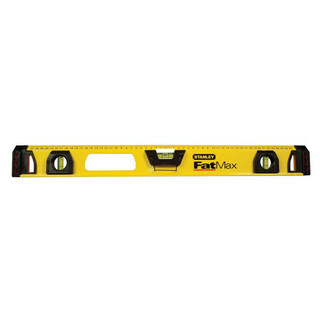
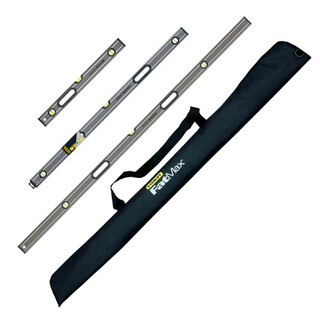
Stanley Spirit Levels
Stanley FatMax level range gives you straight, reliable readings for first fix, kitchens, steel, and snagging, with sizes that suit van work or full room set-out.
When walls are out, frames are off, or units start running away from you, a decent stanley level saves time straight off. Stanley FatMax levels are the ones plenty of chippies, sparks, and fitters keep close because the vials are clear, the bodies take knocks, and the range covers everything from a stanley torpedo level to a stanley level 1200mm. Pick the length to match the work and get a proper spirit level stanley users trust on site.
What Jobs Are Stanley FatMax Levels Best At?
- Setting kitchen units, worktops, and appliance runs is where a stanley fatmax level earns its keep, giving you clear readings before you start scribing panels or fixing anything permanent.
- Checking door linings, stud partitions, and first fix timber is easier with a longer stanley level, especially when you need to spot a bow or twist that a short level will miss.
- Working in tight plant rooms, under sinks, or around pipework suits a stanley torpedo level, where full length kit just gets in the way and slows the job down.
- Laying block, setting lintels, or lining up framework calls for stanley levels that can handle regular knocks, dust, and being in and out of the van all week.
- Snagging finished rooms, checking handrails, shelves, and second fix details is exactly the sort of job for a spirit level stanley trades use when the finish has to look right first time.
Choosing the Right Stanley FatMax Level
Sorting the right one is simple: match the level length and body style to the work, not just what fits in the van.
1. Pick the Length for the Job
If you are fitting kitchens, doors, or doing second fix, a stanley spirit level 600mm is a handy all-rounder. If you are setting stud walls, checking floor runs, or need to read over a longer span, go for a stanley level 1200mm or bigger so you are not missing dips and bows.
2. Box Level or I Beam
If your kit gets knocked about daily, a stanley box level is the tougher shout and usually the better buy for regular site work. A stanley i beam level is lighter and fine for general checking, but it is not what most lads reach for when the job is rough and constant.
3. Short Levels for Tight Spots
Do not drag a full-length level into every job. If you are doing pipework, trays, steel brackets, or work in cupboards and risers, a stanley torpedo level is quicker to place and easier to trust in cramped areas.
4. Sets Make Sense for Mixed Work
If your week jumps from first fix to finishing, a stanley spirit level set is worth a look. One short level and one longer level covers most jobs without forcing you to make do with the wrong size.
Who Uses These on Site?
- Chippies rely on a stanley fat max level for hanging doors, setting frames, and sorting first fix studwork where a bad line shows up fast later on.
- Kitchen fitters and joiners use a stanley spirit level 600mm for cupboards and tighter runs, then step up to a stanley level 1200mm for longer worktops and tall housing.
- Sparkies and plumbers keep a stanley torpedo level in the bag for tray, trunking, pipe clips, and bracket work where space is tight and speed matters.
- Brickies and groundworkers reach for longer stanley levels when they need to check courses, edges, and framework without guessing off short spans.
- Maintenance teams and snaggers swear by a solid stanley box level for quick checks on repairs, refits, and finish work across schools, offices, and housing stock.
Choose the Right Stanley FatMax Level for the Job
Use this quick guide to avoid buying the wrong length or body style.
| Your Job | Level Type | Key Features |
|---|---|---|
| Pipework, brackets, and tight service spaces | Stanley torpedo level | Compact body, easy one-handed checks, fits where longer levels do not |
| Kitchen units, shelves, and second fix fitting | Stanley spirit level 600mm | Handy length, quick to place, accurate enough for finish work |
| Stud walls, doorsets, and longer timber runs | Stanley level 1200mm | Covers a wider span, spots twist and bow better, more reliable on set-out |
| General daily site work with regular knocks | Stanley box level | Stronger body, better durability, built for van and site abuse |
| Occasional checks and lighter-duty work | Stanley i beam level | Lighter to carry, straightforward design, good for basic line and level work |
Common Buying and Usage Mistakes
- Buying one short level for every job is a common mistake, because a small level cannot show longer dips or crowns in walls, floors, and worktop runs. Keep the short one for tight spaces and use a longer stanley level where span matters.
- Choosing purely on price instead of body style usually ends with bent or battered kit. If the level is going in and out of the van all week, a stanley box level is normally the safer buy than lighter-duty options.
- Using a level that has been dropped without checking it first can throw a whole run off. Test it against a known straight edge or flat surface before trusting it on expensive finish work.
- Not matching the level to the trade slows everything down. A full-length level is awkward for pipework and tray, while a torpedo level is no good for checking a full stud partition properly.
- Leaving levels loose under heavy gear in the van is asking for damaged vials and bent frames. Store them flat or clipped clear so they stay accurate for the next job.
Box Level vs I Beam Level vs Torpedo Level
Stanley Box Level
This is the better choice for hard daily site use. It is stronger, usually more resistant to knocks, and better suited to chippies, fitters, and brickies who need a level that lives in the van and still reads true.
Stanley I Beam Level
An i beam level is lighter and fine for general trade work, simple checks, and jobs where the tool is not taking a battering all day. If you are rough on kit, though, most would still step up to a box section body.
Stanley Torpedo Level
The torpedo level is for confined work, not long set-out. It is the one for pipe runs, tray, steel, and brackets in awkward spots, but it will not replace a 600mm or 1200mm level when you need to read a full span properly.
Maintenance and Care
Wipe It Down After Dusty Work
Plaster dust, mortar, and wet muck stuck to the edge can affect how the level sits. Give it a quick wipe before packing it away so the faces stay clean and readable.
Check Accuracy After a Drop
If it has come off a hop-up or been trapped under other kit, do not just carry on. Test it on a known flat edge and reverse it to confirm the reading matches both ways.
Store It Properly in the Van
Do not bury your level under breakers, boxes, and bags. Keep it flat or clipped to the van side so the frame and vials are not taking pointless hits between jobs.
Watch the Edges and Vials
A nicked measuring face or cracked vial is usually the sign it is time to replace the tool. Once the contact edge is damaged, you are guessing more than measuring.
Why Shop for Stanley FatMax Levels at ITS?
Whether you need a compact stanley torpedo level, a stanley spirit level 600mm for fitting work, or a stanley level 1200mm for longer set-out, we stock the range. ITS carries stanley levels in the key sizes and styles trades actually use, all in our own warehouse and ready for next day delivery.
Stanley FatMax Level FAQs
How long is a Stanley FatMax level?
Stanley FatMax levels come in a range of lengths, not just one size. On site, the common picks are short torpedo styles for tight work, 600mm for general fitting, and 1200mm for longer runs like stud, doors, and kitchens.
What length spirit level should I buy?
Buy the length that matches the work. A 600mm spirit level is a solid all-rounder for kitchens, shelving, and second fix, while a 1200mm level is better for walls, frames, and longer spans. For pipework and cramped spots, keep a torpedo level as well.
How accurate is a Stanley spirit level?
A proper Stanley spirit level is made for trade accuracy and is more than good enough for first fix, fitting, and finishing when it is looked after properly. The main thing is keeping the edges clean and checking it after any hard drop, because even good kit can be knocked out by abuse.
Can a spirit level be recalibrated after being dropped?
Some can, some cannot, and on most site levels it is usually not worth the gamble if you rely on it daily. First check it by flipping it on the same surface. If the reading changes, treat it with caution and replace it if accuracy matters.
What is the difference between an I-beam and a box level?
An i beam level is lighter and fine for general work, while a box level has a stronger section that copes better with knocks, twisting, and regular van life. If your tools get proper site abuse, most trades will choose the box level.
Is a Stanley torpedo level enough on its own?
Not really, unless all you do is tight access work. A torpedo level is handy for pipe, tray, brackets, and steel, but it cannot replace a longer level when you need to check a full run or spot a bow in timber or walls.