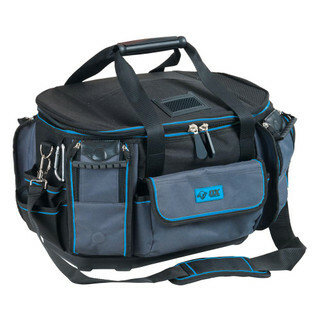
OX Tools Tool Bags & Totes
An OX tote bag keeps your everyday kit open, upright and easy to grab, whether you're moving room to room, up scaffolds, or in and out the van all day.
If you're fed up digging through a zipped holdall for a tape, square or fixings, an OX tool totes setup makes more sense. These are built for first fix, snagging and day-to-day service work where you need hand tools visible, stood up and ready. OX gives you tough handles, solid bases and pocket layouts that suit real site use, so pick the size that fits your usual loadout and get your kit organised properly.
What Jobs Are OX Tote Bags Best At?
- Carrying first fix hand tools from room to room is where an ox tote bag earns its keep, especially when you need drivers, pliers, tapes and bits all visible instead of buried in one main compartment.
- Working off ladders, hop-ups or scaffold lifts is easier with an ox open tool tote because you can drop it down, grab what you need quickly and keep moving without unzipping and rummaging every five minutes.
- Snagging, maintenance and call-out work suit an ox tool bag setup when you only want the core kit for the job rather than dragging a full box in for small adjustments and repairs.
- Shifting levels, squares and longer layout tools between plots is simpler when paired with an OX level bag, keeping the awkward kit separate from your everyday hand tools so nothing gets bent or jammed.
Choosing the Right OX Tote Bag
Sorting the right one is simple: match it to what you carry every day, not what might come out once a month.
1. Open Tote or Closed Bag
If you are in and out of your kit all day, an ox open tool tote is the better shout because everything stays visible and quick to grab. If your tools spend more time in the van, outside, or getting thrown about with other gear, look at OX tool bags for more cover and protection.
2. Size of the Tote
If you only carry hand tools and a few consumables, do not buy a massive tote just because it looks useful. A larger ox 20 inch tool tote makes sense when you genuinely carry more gear, but an overfilled bag gets heavy fast and ends up being left in the van.
3. Base and Site Conditions
If your bag is going down on wet slabs, muddy plots or rough screed every day, prioritise a rigid waterproof base. It keeps the shape, stops the bottom soaking through and helps the tote put up with site abuse for longer.
4. What Else You Carry With It
If your loadout includes levels, pouches and separate fixings kits, think about how the tote works alongside the rest of your storage. A tote is best for the daily hand tools, while bulk kit often lives in OX tool storage and wearable essentials sit in OX tool belts and pouches.
Who Uses These on Site?
- Sparkies swear by an ox open tool tote for first fix and testing because it keeps cutters, drivers, terminals and a tester easy to reach when moving between rooms and boards.
- Chippies use these for second fix and snagging, loading them with squares, chisels, pencils and fixings so they are not hauling a full stack of storage through finished areas.
- Plumbers and heating engineers like an ox tool bag for service calls where a few grips, adjustables, cutters and fittings are all that is needed to get into a plant room or airing cupboard quickly.
- Site maintenance teams and fitters keep one by the van door for the everyday grab kit, then leave bulkier gear in OX tool boxes and organisers until it is actually needed.
Useful Add Ons for Your OX Tote Bag
A tote works best when the awkward gear and heavy bulk are kept separate but close to hand.
1. Level Bag
An OX level bag saves you trying to wedge long levels into the main tote where they snag handles, crush smaller tools and make the whole thing awkward to carry through doorways and up stairs.
2. Tool Belt or Pouch
A pouch takes the few tools you need on your person, while the tote stays nearby with the rest. It saves constant bending back into the bag when you are up steps, on a roof or moving along a run.
3. Organiser Box
A separate organiser for screws, clips, terminals or fixings stops the tote turning into a loose pile of bits at the bottom. It is a simple fix that makes stock easier to check before you leave the van.
Choose the Right OX Tote Bag for the Job
Use this quick guide to sort the right tote for the way you actually work.
| Your Job | OX Tote Type | Key Features |
|---|---|---|
| Room to room first fix and service work | Open tool tote | Fast access, upright tool storage, external pockets and a stable base. |
| Daily hand tools plus a few consumables | Mid size ox pro tote bag | Enough pocket space without getting too bulky or heavy by midday. |
| Larger loadouts with extra hand tools and fittings | OX 20 inch tool tote | More internal room, better for heavier carry, suits van based trades. |
| Wet plots, rough slabs and outdoor site use | Tote with rigid waterproof base | Better shape retention, less moisture coming through, stands up on uneven ground. |
| Tools plus longer layout kit | Tote and level bag setup | Keeps small tools separate from long levels so both are easier to carry and protect. |
Common Buying and Usage Mistakes
- Buying the biggest tote in the range without thinking about weight usually ends with an overloaded bag that is a pain to lift and gets left in the van. Size it for your real everyday kit, not the odd extra tool.
- Using an open tote for loose fixings and tiny consumables without organisers turns the bottom into a mixed pile. Keep small parts boxed or separated so you are not wasting time digging around on site.
- Forcing long levels or awkward bars into the main tote bends pocket edges and makes the carry uneven. Keep longer kit in a proper level bag or separate holder.
- Leaving a tote permanently wet and dirty shortens its life, especially around stitching and pocket edges. Empty it out, brush the grit off and let it dry before it goes back in the van.
- Treating a tote like hard storage is another common one. It is built for access and carrying, not for being buried under rubble sacks and heavy plant gear, so use proper cases where impact protection matters.
Open Tool Totes vs Closed Tool Bags vs Tool Boxes
Open Tool Totes
Best when you need quick access all day and want hand tools stood up where you can see them. They are ideal for first fix, service work and snagging, but they do leave your kit more exposed to weather and site dirt.
Closed Tool Bags
A closed ox tool bag is the better choice when your tools spend time in the van, outside or moving between jobs in poor weather. You lose some speed of access, but you gain protection and cleaner storage.
Tool Boxes
Boxes suit heavier kit, power tools and anything that needs stacking or stronger protection. They are tougher for transport, but not as handy as a tote when you are constantly reaching for hand tools through the day.
Maintenance and Care
Brush Out Dust and Grit
Empty the tote every so often and brush out plaster dust, swarf and grit. It stops pocket wear, keeps your tools cleaner and makes it easier to see what you are carrying.
Dry the Base Properly
If the bag has been standing on wet ground, wipe the base down before it goes back in the van. Even with a waterproof moulded base, leaving mud and moisture on it day after day just trashes the bag quicker.
Do Not Overload the Handles
A tote is for sensible daily carry, not every tool you own. If the handles are straining and the bag is twisting out of shape, split the load before stitching and pocket seams start to suffer.
Store It Open and Dry
Do not shove it damp into the bottom of the van under other gear. Let it dry open so trapped moisture, site muck and stale smells do not build up inside the bag.
Replace When the Structure Goes
If the base cracks, the handles start pulling away or the pockets no longer hold tools upright, replace it. Once the structure has gone, the tote stops saving time and starts slowing you down.
Why Shop for OX Tote Bags at ITS?
Whether you need a compact ox open tool tote for snagging or a larger ox pro tote bag for everyday site carry, we stock the full range of OX options in one place. You will also find matching OX tool bags and totes ranges ready to compare, all held in our own warehouse and ready for next day delivery.
OX Tote Bag FAQs
What features distinguish OX open-top totes from closed tool bags?
Open-top OX totes are built for speed. You can see your hand tools straight away, grab them one-handed and get on with the job. Closed bags give you more weather cover and keep loose kit contained in the van, but they are slower when you are in and out of the bag all day.
Is the base of the OX tote bag molded waterproof plastic?
On the relevant OX tote models, yes, the moulded base is there to keep the bag off wet ground and help it hold its shape. It is a proper site-use feature, not just for looks, but you still want to wipe mud and standing water off rather than leave it caked on for weeks.
Can an OX level bag be strapped directly to an OX tool tote?
Some OX tote and level bag setups are designed to work together, which is handy when you are carrying hand tools and long levels in one trip. Check the product details for the exact tote and bag combination, because attachment points can vary by model.
How many pockets and loops are integrated into OX pro totes?
It depends on the exact OX pro tote bag size and model, so do not guess from the photos. OX builds these with a generous spread of internal and external pockets and loops for the usual hand tool loadout, but always check the listed spec if pocket count matters to the way you work.
Will an OX tote bag hold up to rough site use?
Yes, for what it is built to do. These are made for daily hand tool carry, being set down on rough floors and hauled in and out of the van. They are tough, but they are still soft storage, so do not expect tote behaviour from something loaded like a rubble sack.
Is an open tote better than a box for everyday hand tools?
For plenty of trades, yes. If you are constantly reaching for pliers, screwdrivers, tapes and markers, an open tote is faster and less hassle. A box is better when you need stacking, locking or stronger protection for heavier kit and power tools.