Milwaukee Workshop
When tools bury the bench, Milwaukee workshop storage gives your kit a proper place and keeps working space clear.
For fitters, mechanics and maintenance teams, shelving and compatible mounting systems keep tools accessible between jobs. Check load ratings and wall fixings before buying, then choose storage around the kit you actually use.
What Jobs Is Milwaukee Workshop Storage Best At?
- Clear the assembly bench by moving tool cases, fixings and consumables onto shelving rather than stacking them around the vice.
- Set up a maintenance bay with regularly used tools stored beside the work area, so routine repairs do not start with searching through boxes.
- Organise a garage workshop with wall-mounted storage that leaves floor space available for equipment and cleaning.
- Prepare for site visits by keeping compatible removable storage organised in the workshop, ready to transfer tools and fixings into the van.
Choosing the Right Milwaukee Workshop Storage
Measure the space and weigh the kit before choosing the storage; an empty shelf tells you nothing about how it will cope when loaded.
1. Shelf Loads and Usable Space
If you are storing heavy tool cases, check the load limit for each shelf and the complete assembly. Measure case depth as well as width, and leave clearance to remove boxes without dismantling the stack. Use Milwaukee Shelving to compare the available arrangements.
2. Wall Strength and Fixing Positions
If the wall is plasterboard, do not assume ordinary cavity fixings will carry loaded tool storage. Establish suitable structural fixing points and follow the mounting instructions. Check the substrate before ordering, not after drilling the first hole.
3. Open Access or Enclosed Storage
Choose open storage for equipment you lift out throughout the day. If you need enclosed organisation, compare Milwaukee PACKOUT Cabinets & Lockers, checking internal dimensions and door clearance. Do not assume an enclosed cabinet is a security cabinet or weatherproof store.
4. Fixed Storage or Transferable Kit
If tools move between workshop and site, choose components with explicitly stated compatibility with your existing storage. For equipment that stays beside the bench, prioritise access and load capacity over portability.
Who Uses Milwaukee Workshop Storage?
Maintenance fitters and mechanics use workshop storage to keep tools accessible around service benches. Joiners need clear assembly space, while sparkies and plumbers benefit from organised storage for fittings and equipment between site jobs. Teams already using PACKOUT should start with Milwaukee PACKOUT Workshop to check which components work with their existing kit.
The Basics: Understanding Milwaukee Workshop Storage Systems
A workshop layout needs both a suitable support structure and storage that fits it. The Milwaukee name alone does not mean every component connects together.
1. Mounting Plates Provide the Interface
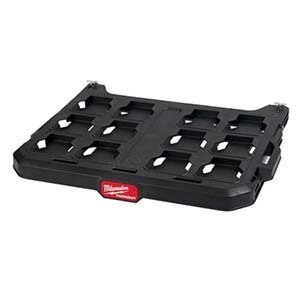
A compatible PACKOUT mounting plate provides attachment points for supported storage components. The plate still needs securing to a suitable surface, and its permitted load can depend on mounting orientation. Follow the instructions for the exact plate and storage combination.
2. The Whole Installation Determines Capacity
A shelf rating does not override the limits of its brackets, mounting system or supporting wall. Stay within every applicable limit and follow any requirements for evenly distributed loads. Keep heavier equipment low where the approved layout allows it.
Accessories for a Working Workshop Layout
Choose compatible mounting hardware and organisers before installation so the finished layout supports the tools you use.
1. Compatible Mounting Plates
Milwaukee PACKOUT Mounting Plates provide fixing interfaces for compatible storage. Check the supported components, mounting direction and load rating rather than assuming any plate will suit any position.
2. Compatible Hooks and Tool Holders
Dedicated holders stop frequently used tools disappearing behind cases on a shelf. Match each holder to the mounting system and tool dimensions, and leave enough room to lift the tool out safely.
3. Small-Parts Organisers
Separate fixings, terminals and fittings into suitable organisers instead of leaving open packets across the bench. Check shelf dimensions and system compatibility if you want the same organiser to move between workshop and site.
Choose the Right Milwaukee Workshop Storage for the Job
Start with what needs storing and how often you need access.
| Your Job | Storage Type | Key Features |
|---|---|---|
| Store bulky tool cases between jobs | Shelving or racking | Suitable shelf depth, case clearance and stated load capacity |
| Keep daily-use tools beside the bench | Compatible wall-mounted holders | Secure mounting, correct tool fit and clear removal space |
| Organise equipment behind a door | Cabinet or locker | Usable internal dimensions, door clearance and suitable load rating |
| Move organised kit from workshop to site | Compatible removable PACKOUT storage | Confirmed mounting compatibility and manageable loaded weight |
Common Buying and Usage Mistakes
- Assuming all Milwaukee storage connects to PACKOUT leads to mismatched components. Check compatibility for each shelf, holder, cabinet and mounting plate.
- Reading a shelf rating as the capacity of the whole installation risks overloading the supports. Check individual, total and mounting limits separately.
- Filling every available wall space can leave cabinet doors obstructed and boxes trapped beneath shelves. Allow working clearance, not just enough room for installation.
- Using unsuitable wall fixings can let loaded storage pull away from the surface. Select fixings for the substrate, installation instructions and expected load.
Workshop Shelving vs Wall-Mounted Storage vs Cabinets
Shelving and Racking
Choose shelving for bulky cases and equipment that need straightforward access. It gives a clear view of stored kit, but open shelves do not protect contents from workshop dust or unauthorised access.
Wall-Mounted Storage
Choose wall-mounted holders and compatible modules to keep frequently used tools off the bench. They make use of vertical space, but depend on suitable fixings and enough clearance to release each item.
Cabinets and Lockers
Choose enclosed storage to keep equipment contained and the work area organised. Check the actual closure, security and protection specifications; a door alone does not make a cabinet theft-resistant or dust-tight.
Maintenance and Care
Keep Mounting Interfaces Clear
Brush swarf and debris out of attachment points and latches. Check that removable components engage fully before loading them.
Inspect Fixings and Supports
Check for loose fasteners, movement around wall fixings and bent brackets, especially after an impact. Unload the affected section before investigating or tightening it.
Keep Surfaces Clean and Dry
Wipe away moisture and spills promptly, using cleaning products suitable for the material. Inspect damaged coatings on metal parts for corrosion and follow the manufacturer's repair advice.
Replace Damaged Load-Bearing Parts
Take cracked mounts, distorted shelves and faulty retaining mechanisms out of service. Do not straighten, drill or modify structural components unless the manufacturer expressly permits it.
Why Shop for Milwaukee Workshop Storage at ITS?
ITS stocks the full Milwaukee workshop storage range, covering shelving, mounting options and compatible organisers, in our own warehouse and ready for next-day delivery, subject to availability and delivery terms. For storage that also travels to site, browse Milwaukee Tool Boxes and Storage alongside your workshop setup.
Milwaukee Workshop Storage FAQs
What workshop storage does Milwaukee make?
Milwaukee makes shelving and racking solutions, plus PACKOUT workshop components including mounting plates, cabinets, holders and organisers. They serve different purposes, so check dimensions, load limits and compatibility rather than treating them as one interchangeable system.
Does Milwaukee make a workbench?
Yes, Milwaukee makes workbench products, although models and availability vary by market. Do not mistake a PACKOUT work surface for a complete freestanding bench. Check the exact listing for the supporting structure, working height and load rating before ordering.
Is Milwaukee workshop storage compatible with Packout?
Selected workshop products are designed for PACKOUT, but compatibility is not universal across Milwaukee storage. Check that the exact component supports your mounting plate or racking arrangement, including the intended mounting orientation.
Can Milwaukee workshop storage be wall mounted?
Yes, selected products are designed for wall mounting using the specified plates or brackets. The wall and fixings must support the loaded installation. Do not hang freestanding storage on a wall unless its instructions explicitly allow it.
What is the weight capacity of Milwaukee shelving?
There is no single capacity across the range. Check the exact product's per-shelf rating, total assembly limit and any evenly distributed load requirement. Mounting orientation and the supporting installation can also impose limits, so use the lowest applicable rating.
Is Milwaukee workshop storage steel?
Not all of it. Materials vary by component and can include metal supports and moulded polymer storage parts. If you specifically need steel shelving or cabinets, confirm the construction of the exact product rather than relying on its appearance.
Is Milwaukee workshop storage good for garages?
Yes, provided you choose storage that suits the space, loads and conditions. Leave room for vehicle doors and safe access, and keep equipment away from damp floors. Do not assume workshop storage is weatherproof or suitable for a garage with persistent leaks.
Does Milwaukee workshop storage need assembly?
It depends on the product. Racking and shelving may require assembly, while wall-mounted components need installation even if supplied assembled. Check what hardware is included, obtain suitable substrate fixings where required, and complete any specified anchoring before loading.