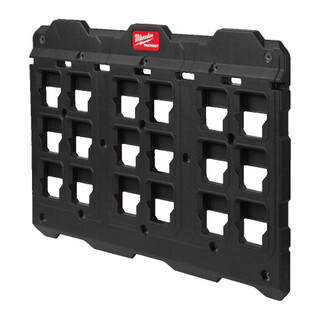
Milwaukee Shelving
When workshop floors disappear under tool cases, a Milwaukee shelving unit helps get kit organised and off the ground.
Use Milwaukee shelving to keep cases, fixings and regularly used tools within reach. Check the mounting method, shelf dimensions and load rating before buying; workshop storage and vehicle racking are not interchangeable. Choose around the kit you actually store.
What Jobs Is Milwaukee Shelving Best At?
- Organise tool cases in the workshop so fitters can find the right drill, saw or tester without unstacking kit from the floor.
- Set out fixings and consumables in suitable storage boxes, keeping regularly used stock visible when preparing for first-fix jobs.
- Keep shared tools in designated positions at the depot so missing equipment is easier to spot before the vans leave.
- Clear workbench space by moving stored equipment onto suitably rated shelves, leaving the bench available for assembly and repairs.
Choosing the Right Milwaukee Shelving Unit
Measure your loaded cases and check the fixing requirements before choosing shelving; an empty shelf tells you very little about whether it suits your kit.
1. Check the Exact Storage System
Do not assume every Milwaukee shelf is a freestanding steel shelving bay. Check whether the product is a wall-mounted shelf, a racking component or a PACKOUT-compatible assembly, and confirm which supports or mounting parts are included.
2. Match Capacity to Loaded Equipment
If you store cases full of fixings or heavy power tools, weigh them loaded. Check both the individual shelf rating and any overall system limit; spare space does not mean spare load capacity.
3. Measure Usable Space and Access
Check usable shelf width and depth rather than relying on overall dimensions. Leave enough clearance to lift cases out and operate handles or catches without catching the shelf above.
4. Match the Installation to the Location
For wall-mounted storage, establish what the wall can support before buying fixings. For a van, choose a system explicitly approved for vehicle installation; a workshop load rating does not establish suitability for loads under braking.
Who Uses Milwaukee Shelving?
Sparkies and plumbers use workshop shelves to separate tool cases from fittings and consumables when loading out for the next job. Joiners and maintenance teams use them to keep equipment accessible without filling the assembly bench, while stores teams organise shared kit into clearly labelled positions.
The Basics: Understanding Shelving Load Ratings
The shelf is only one part of the installation. Its supports, fixings and mounting surface all affect whether you can safely use the stated capacity.
1. Shelf Capacity and System Capacity
An individual shelf rating is not automatically the capacity of every shelf added together. Follow the manufacturer's limits for the complete assembly, including any restrictions on shelf positions or loading arrangements.
2. Even Loading and Secure Support
Where a capacity is stated as a uniformly distributed load, spread the weight across the shelf. One heavy case concentrated at the front is not equivalent to the same weight spread evenly, and wall fixings must suit the substrate and installation instructions.
Storage Additions That Keep the Workshop Organised
Use compatible additions to separate bulky cases, loose tools and smaller equipment without overloading the shelving.
1. Compatible Mounting Plates
Milwaukee PACKOUT Mounting Plates provide a mounting interface for compatible PACKOUT equipment. Check the component requirements before ordering so you do not receive storage that cannot attach to your intended surface.
2. Wall Shelves and Racks
Milwaukee PACKOUT Wall Shelves & Racks help give compatible tools and equipment their own positions rather than leaving everything piled on a general shelf. Check each holder's intended contents and mounting requirements.
3. Cabinets and Lockers
Milwaukee PACKOUT Cabinets & Lockers add enclosed storage alongside open shelves. Use them to keep suitable smaller equipment together, checking dimensions, capacity and mounting compatibility before extending the layout.
Choose the Right Milwaukee Shelving for the Job
Start with what you need to store and where the shelving will be installed.
| Your Job | Shelving Requirement | Key Features |
|---|---|---|
| Storing loaded tool cases | Shelves sized and rated for the cases | Usable depth, supported footprint and loaded case weight |
| Organising compatible PACKOUT equipment | Matching PACKOUT shelving components | Specified compatibility, required supports and secure engagement |
| Clearing a workshop floor | Suitable wall-mounted shelving | Sound mounting surface, correct fixings and accessible shelf height |
| Fitting storage inside a van | Explicitly vehicle-approved storage system | Approved fixing arrangement, load limits and equipment retention |
Common Buying and Usage Mistakes
- Assuming every Milwaukee shelving unit is boltless can leave you short of tools or mounting parts. Check the assembly instructions and supplied components before starting.
- Buying by overall width alone can leave cases overhanging or trapped between supports. Measure the usable shelf area and allow room to remove the equipment.
- Loading shelves before checking the wall and fixings risks the whole installation pulling away. Establish the substrate and use the specified fixing arrangement.
- Treating a case resting on a shelf as securely retained is a mistake, particularly in vehicles. Confirm whether there is a compatible locking interface or whether separate approved restraint is required.
General Wall Shelving vs PACKOUT Shelving vs Freestanding Shelving
General Wall Shelving
Milwaukee Wall Shelves & Racks are worth considering when you need storage above a bench or off the floor. Check what each shelf or rack is designed to hold; wall strength and fixing positions can limit the layout.
PACKOUT Shelving
Milwaukee PACKOUT Shelving suits users organising compatible PACKOUT equipment. Buy the specified combination of shelves, supports and mounting components rather than assuming every PACKOUT item fits every shelf arrangement.
Freestanding Shelving
A freestanding shelving bay can suit mixed boxes and bulky workshop stock where floor space is available. It takes up floor area and may still require anchoring; do not assume a Milwaukee wall-storage component forms a freestanding bay.
Maintenance and Care
Keep Supports and Interfaces Clear
Remove dust, swarf and loose fixings from shelves and attachment points. Debris can prevent compatible cases or storage components from seating properly.
Inspect Fixings and Connections
Check for loose fixings, movement and damaged connections, particularly after an impact or layout change. Unload the affected section before investigating, and follow the specified tightening instructions.
Deal with Moisture
Dry wet cases before storing them and wipe up spills. Inspect metal components for damaged finishes or corrosion, and follow the manufacturer's care guidance rather than leaving wet kit sitting on the shelf.
Replace Damaged Load-Bearing Parts
Stop using shelves or brackets that are bent, cracked or no longer engage correctly. Do not straighten, drill or weld load-bearing components unless the manufacturer expressly permits the repair.
Why Shop for Milwaukee Shelving at ITS?
ITS stocks the full Milwaukee shelving range, including shelves, racks and compatible storage components, in our own warehouse, ready for next-day delivery. Check the individual listing for included parts, current stock and delivery availability before booking your workshop fit-out.
Milwaukee Shelving FAQs
How much weight can Milwaukee shelving hold?
There is no single capacity for all Milwaukee shelving. Check the exact shelf rating and any complete-system limit on the product specification. Follow the stated loading arrangement, and remember that wall-mounted capacity also depends on the supports, fixings and mounting surface.
Is Milwaukee shelving boltless?
Do not assume it is. Assembly methods vary, and a component that clips into a support may still require that support to be screwed or bolted into place. Check the exact model's instructions before buying it as boltless shelving.
Can Milwaukee shelving be anchored to a wall?
Wall-mounted models must be secured using their specified mounting arrangement. For other designs, only use manufacturer-approved anchoring points and methods. Fixings must suit the wall construction; plasterboard alone should not be assumed capable of supporting loaded workshop shelving.
Are Milwaukee shelves adjustable?
That depends on the system. Check whether the shelf can be repositioned on its supports and what spacing is available. Some individual wall shelves have a fixed position once installed, so do not assume every model offers adjustable shelf heights.
Can Packout boxes sit on Milwaukee shelving?
Yes, provided the particular shelf supports the box footprint and loaded weight. Sitting on a shelf is not the same as locking into it: check the specified PACKOUT compatibility if you need positive engagement, and do not assume a box is restrained for vehicle use.
What size is a Milwaukee shelving unit?
Dimensions vary by product and assembly, so there is no standard Milwaukee shelving unit size. Check overall height, width and depth, then confirm the usable shelf dimensions separately. Allow clearance for brackets, case handles and lifting equipment off the shelf.
Is Milwaukee shelving suitable for vans?
Only use a model explicitly specified for vehicle installation, fitted according to its instructions. Workshop shelving capacity does not establish safety under braking or cornering. The shelving, vehicle attachment points and stored equipment all need appropriate restraint.
How long does Milwaukee shelving take to assemble?
There is no reliable single assembly time across the range. A shelf component and a complete wall-mounted layout are different jobs, and setting out or preparing suitable fixings can take longer than assembly. Read the instructions first and check whether a second person is needed before starting.