Milwaukee Routing
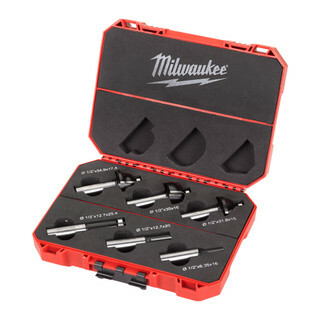
Cutting hinge recesses or trimming worktop edges? Milwaukee routing accessories put the right cutting profile in your router.
Joiners and kitchen fitters need cutters matched to the material, shank size and finish. Check your collet before buying; similar-looking shanks are not interchangeable. Choose the cutter or set for your next job.
What Are Milwaukee Routing Accessories Used For?
- Cut hinge recesses into timber doors and linings with a suitable straight cutter and securely clamped hinge jig.
- Trim timber lippings flush with cabinet panels using a bearing-guided flush-trim cutter that follows a sound reference edge.
- Round over or chamfer exposed shelf and worktop edges to remove sharp corners and leave a consistent profile.
- Route grooves and rebates for cabinet backs, drawer bottoms and panel joints using a cutter sized to the required joint.
- Copy shaped components from a secured template using a suitable guided cutter, keeping repeated parts consistent during workshop production.
Choosing the Right Milwaukee Routing Accessories
Match the shank to your collet first, then choose the cutting profile and working length for the job.
1. Shank and Collet Compatibility
Read the cutter specification and your router manual before ordering. A 6mm shank is not a substitute for a 1/4-inch shank, and an 8mm cutter will not fit either collet. Never force a cutter into the wrong collet or rely on tightening harder to compensate.
2. Cutting Profile and Guidance
For grooves and recesses, choose a straight cutter and a suitable fence or jig. For following an existing edge, choose the correct bearing-guided profile. Compare Milwaukee Router Bits by cutting diameter, working length and bearing position, not just the profile photograph.
3. Individual Cutters or a Set
If you cut the same hinge recesses every week, buy the specific cutter you need and keep a spare. If your work covers grooves, trimming and edge profiles, compare the contents of Milwaukee Router Cutter Sets. A larger set is only useful if the profiles suit your work.
4. Router Capacity and Material
Do not put an oversized profiling cutter in a compact trimmer just because the shank fits. Check the router's permitted cutter diameter, speed range and intended applications. For laminated boards or abrasive sheet materials, check that the cutter is specified for that material and plan shallow passes.
Who Uses Milwaukee Routing Accessories?
Joiners use routing cutters for door hardware recesses, rebates and moulded edges. Kitchen and cabinet fitters use them to trim lippings, shape shelves and cut panel joints. Maintenance carpenters carrying a cordless trim router need compatible cutters for adjustments on site without taking components back to the workshop.
The Basics: Understanding Routing Cutters and Guides
The cutter determines the shape of the cut. The bearing, fence or jig determines where that cut goes. You need both sorted before starting.
1. Bearing-Guided Cutters
A bearing follows the workpiece edge or a template while the cutting edges remove material alongside it. Bearing position matters: it must reach the intended reference surface throughout the cut. A damaged or uneven reference edge will be copied into the finished work.
2. Straight Cutters with Separate Guides
A straight cutter does not automatically follow an edge. Use a compatible fence, guide bush and template, or secured straightedge to control its path. When using a guide bush, allow for the offset between the bush and cutter when sizing the template.
Routing Accessories That Keep the Cut Controlled
The right guidance and extraction save spoiled components and unnecessary clearing up.
1. Compatible Edge Guide or Fence
Use a fence for grooves and rebates that must stay a fixed distance from a straight edge. Check the mounting arrangement against your exact router model; guide rods and fixing points are not universal.
2. Guide Bushes and Routing Templates
A suitable template helps repeat hinge pockets and recesses without marking out each cut from scratch. Match the guide bush, template and cutter dimensions before touching the finished door.
3. Dust Extraction Adaptor and Hose
Connect suitable extraction through the correct router adaptor to reduce chips and airborne dust at source. Check hose fit and routing so it does not catch the bench or pull the router off line.
Choose the Right Milwaukee Routing Accessories for the Job
Start with the cut you need, then check dimensions and router compatibility.
| Your Job | Cutter or Accessory Type | Key Features |
|---|---|---|
| Recessing door hinges | Straight cutter with compatible hinge jig | Correct diameter, sufficient working length and the guide arrangement specified by the jig. |
| Trimming timber lippings flush | Bearing-guided flush-trim cutter | Bearing position that reaches the panel face and cutting length suited to the lipping. |
| Softening exposed timber edges | Round-over or chamfer cutter | Required radius or angle, suitable bearing guidance and permitted cutter diameter. |
| Cutting cabinet grooves and rebates | Straight or rebate cutter with suitable guidance | Correct joint width and depth, with a fence, bearing or jig to control the cut. |
Common Buying and Usage Mistakes
- Treating metric and imperial shanks as interchangeable can leave the cutter insecure. Match the stated shank size exactly to the fitted collet.
- Buying by cutting diameter alone can leave you with insufficient working length or a bearing that cannot reach the template. Check the complete cutter dimensions.
- Removing too much material in one pass increases load, burning and the risk of losing control. Make progressively deeper cuts within the cutter and router instructions.
- Using the wrong feed direction can let the cutter pull the router along the edge. Follow the manufacturer's feed-direction guidance rather than climb-cutting freehand.
- Assuming every Milwaukee router guide fits every Milwaukee router leads to unusable accessories. Check the exact model and attachment references before ordering.
Straight Cutters vs Flush-Trim Cutters vs Edge-Profiling Cutters
Straight Cutters
Choose these for grooves, recesses and square-sided cuts with an appropriate guide. They offer flexibility, but an unguided cutter will not hold a straight line for you. Check whether the cutter is suitable for plunge entry before starting a closed recess.
Flush-Trim Cutters
Choose these for bringing an overhanging edge level with a panel or copying a template. They need a sound reference surface for the bearing and are not a substitute for a grooving cutter.
Edge-Profiling Cutters
Choose round-over, chamfer or other shaped cutters when the edge needs a specific finish. The profile is fixed by the cutter geometry, so buy the radius or angle shown on the drawing rather than expecting depth adjustment to create a different shape.
Maintenance and Care
Remove Resin Build-Up
Disconnect the power source and remove the cutter before cleaning. Use a suitable cutter cleaner as directed; resin-covered edges cut poorly and can cause burning. Keep cleaner away from bearings unless approved for them.
Keep Shanks and Collets Clean
Remove packed dust from the collet and wipe the cutter shank clean and dry. Fit to the insertion depth specified in the manual, and never clamp on the fluted cutting section.
Inspect Edges and Bearings
Stop using cutters with chipped tips, bent shanks or loose components. Check guided-cutter bearings for roughness or seizure. Use approved replacement parts where available; do not keep cutting with a bearing that drags.
Store Cutters Separately
Keep cutters dry in individual holders or a fitted case so cutting edges cannot knock together in the van. Have suitable dull cutters assessed by a specialist sharpening service rather than grinding the profile by hand.
Why Shop for Milwaukee Routing Accessories at ITS?
ITS stocks the full Milwaukee routing range, from individual cutters to cutter sets, in our own warehouse, ready for next-day delivery. Compare profiles, shank sizes and set contents before ordering so the accessories arriving on site match your router and the work ahead. Check individual listings for current availability and delivery options.
Milwaukee Routing FAQs
What routing accessories does Milwaukee make?
Milwaukee makes routing cutters and cutter sets, alongside model-specific router accessories such as guides, bases and dust extraction attachments. Availability and fit vary by model. Check the accessory description against your router's exact model number before buying.
What shank size do Milwaukee router bits use?
There is no single shank size to assume across every cutter. Check each listing; 1/4-inch shanks are common for compact trim-router work, but your cutter must match the fitted collet exactly. A 1/4-inch shank measures 6.35mm, so it is not interchangeable with 6mm.
Does Milwaukee make a cordless router?
Yes. Milwaukee makes cordless routers and trimmers using its M18 battery platform. Compare Milwaukee M18 Routers & Trimmers by capacity, base configuration and supplied equipment. A compact trimmer suits edge work, but it should not be treated as a replacement for every heavy routing application.
What router bit should I start with?
Start with the job rather than a large mixed set. Choose a straight cutter for guided grooves and recesses, a flush-trim cutter for trimming lippings, or a round-over cutter for softening edges. When comparing Router Bits, check shank size, material suitability and permitted speed as well as profile.
Do Milwaukee router accessories fit other routers?
Cutters can fit other brands when the shank, cutter dimensions, speed rating and intended use match the router's requirements. Bases, fences, guide bushes and extraction fittings are a different matter: their mountings can be model-specific. Matching the brand or appearance alone does not establish compatibility.
Does Milwaukee make an M18 router?
Yes. Milwaukee offers M18 cordless routing tools. Check the exact model's collet sizes, maximum cutter diameter and available bases before choosing accessories. Also check whether the listing is a bare tool or a kit; an M18 battery and charger are not automatically included.
What accessories come with a Milwaukee router?
Contents depend on the model and package. Listings may include items such as collets, a fence, extraction attachments or additional bases, but do not assume these are standard across the range. Read the supplied-equipment list, including whether cutters, batteries, a charger and a case are included.
Can a router be used for edging?
Yes. A suitable router and cutter can flush-trim, chamfer or round over timber and compatible board edges. Secure the work, support the router base and follow the specified feed direction. On narrow components, use a suitable support or jig rather than balancing the base on a thin edge.