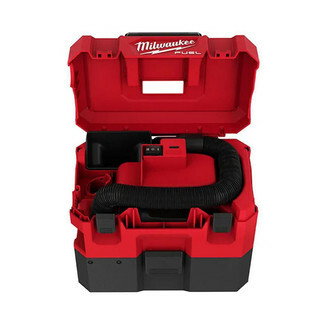
Milwaukee M12 Vacuums & Dust Extractors
Cleaning drill dust from cupboards or grit from the van? An M12 vacuum keeps small clear-ups cordless.
Milwaukee's compact vacuums suit fitters and maintenance teams already using M12 batteries. Check dust classification, collection capacity and supplied attachments before buying; not every model handles liquids or hazardous dust. Choose the format that suits your daily clean-up.
What Jobs Is an M12 Vacuum Best At?
- Clean loose debris from kitchen units after fitting hinges and handles, using a crevice tool to reach the back corners.
- Remove grit from van footwells and seat runners without running an extension lead across the yard.
- Clear small amounts of drilling debris during maintenance visits, choosing a suitably classified model where the dust presents a health risk.
- Collect small liquid spills during maintenance work with a wet-capable model, following its filter and collection instructions.
Choosing the Right M12 Vacuum
Choose for the debris you collect, not just the batteries you already own.
1. Dust Classification Comes First
For ordinary loose dirt, a general-purpose vacuum may be enough. For work-generated dust, match the complete machine's classification to your risk assessment. Check Milwaukee M12 L-Class Vacuums for applications requiring L-Class equipment, but do not treat L-Class as sufficient for wood dust or silica-containing construction dust; these generally require M-Class or H-Class extraction.
2. Compact Pick-Up or Wet and Dry Collection
If you mainly clean van interiors and cupboard shelves, prioritise easy handling and nozzle access. If liquid collection is part of the job, buy a model explicitly rated for wet use. A dry-only vacuum is not a substitute, even for a small spill.
3. Battery Capacity and Working Time
For occasional spot cleaning, a smaller compatible pack keeps the kit lighter. For repeated clear-ups, choose a higher-capacity pack and keep a charged spare. Check runtime against the stated battery and power setting rather than assuming every M12 combination runs equally long.
4. Access and Collection Capacity
If you work under sinks or behind seats, check the supplied hose, crevice tool and reach before buying. A larger tank reduces emptying stops, but it also takes more room in the van. Buy enough capacity for the job without carrying unnecessary bulk.
Who Uses Milwaukee M12 Vacuums?
Kitchen fitters and joiners use compact M12 vacuums for clearing cupboards and finishing snagging visits without bringing in a large cleaner. Electricians, plumbers and maintenance teams use them for local clean-up around service work, while van-based trades keep one handy for grit and debris between jobs. Existing M12 users can share compatible batteries with their other tools.
The Basics: Understanding Cordless Vacuum Filtration
Battery compatibility tells you what powers the vacuum. It does not tell you which dusts the machine can safely collect.
1. A Filter Rating Is Not a Machine Classification
A high-efficiency or HEPA filter does not automatically make the complete vacuum an M-Class extractor. The machine's dust classification covers more than the filter alone. Check the complete unit's rating before using it for hazardous dust.
2. Clean-Up Is Different from On-Tool Extraction
Picking up settled debris after a small fitting job is different from capturing dust continuously at a saw or wall chaser. On-tool work needs suitable airflow, a secure connection and the correct dust classification. Do not assume a compact vacuum can replace a dedicated extractor.
Accessories for M12 Vacuum Clean-Up
Check what comes in the box before adding batteries, filters or nozzles.
1. Spare M12 Batteries
A bare unit arrives without a battery or charger. Choose compatible Milwaukee M12 Batteries so cleaning does not leave your drill without power halfway through a fitting job.
2. Model-Matched Replacement Filters
A blocked or damaged filter cuts performance and can compromise dust containment. Check Milwaukee Dust Extractor Accessories against your exact vacuum model; filters are not interchangeable across the range.
3. Compatible Crevice and Brush Tools
A crevice tool reaches seat runners and cabinet corners where a wide nozzle cannot fit. A suitable brush tool helps clean trim and shelves, but check the connection size and supplied accessories before buying duplicates.
Choose the Right M12 Vacuum for the Job
Match the format and rating to your regular clean-up work.
| Your Job | Vacuum Type | Key Features |
|---|---|---|
| Cleaning van footwells and seat runners | Compact dry vacuum | Crevice tool, manageable weight and easy emptying. |
| Clearing cupboards after fitting work | Compact vacuum with suitable reach | Nozzle access, useful hose length where fitted and effective filtration. |
| Collecting small liquid spills | Wet and dry model | Explicit wet-use approval and the correct collection setup. |
| Collecting dust requiring classified equipment | Suitably classified vacuum or extractor | Complete-machine classification matched to the dust and risk assessment. |
Common Buying and Usage Mistakes
- Buying a bare unit without checking your batteries leaves you with a vacuum you cannot use. Confirm whether the listing includes a compatible battery and charger.
- Assuming every M12 vacuum collects liquids can damage a dry-only machine. Check wet-use approval and follow the model's filter instructions.
- Treating a high-efficiency filter as proof of hazardous-dust suitability risks using the wrong equipment. Check the complete machine's dust classification.
- Choosing a small cordless vacuum for continuous rubble clean-up means frequent emptying and battery changes. Move to a larger-capacity machine when the workload demands it.
M12 Vacuums vs M18 Vacuums vs PACKOUT Vacuums
M12: Compact Local Clean-Up
Choose M12 when carrying space matters and you mainly tackle short cleaning jobs. Sharing batteries with existing M12 tools is useful, but check capacity and runtime before committing it to repeated clear-ups.
M18: Compare for Heavier Workloads
Compare Milwaukee M18 Vacuums & Dust Extractors when you need more collection capacity or longer working periods with suitable batteries. Choose by the individual machine's airflow, capacity and classification, not voltage alone.
PACKOUT: Integration with Your Storage Stack
Consider Milwaukee PACKOUT Dust Extractors & Vacuums if moving the cleaner with your existing storage stack saves separate trips. PACKOUT describes storage integration, not a separate battery platform or dust classification, so check both before buying.
Maintenance and Care
Empty Before Collection Drops Off
Remove the battery before opening the machine. Empty the container using the dust-control method appropriate to the collected material; tipping fine dust into an open bin can put it straight back into the air.
Keep Filters Serviceable
Inspect the filter regularly and clean it only as instructed. Do not wash a filter unless it is approved for washing, and never refit it damp. Replace torn filters or damaged seals rather than trying to work around them.
Check Nozzles and Air Passages
If suction falls, check for a full container, blocked nozzle or obstructed hose before blaming the battery. Remove trapped screws and offcuts with the machine switched off and battery removed.
Dry After Wet Collection
On wet-capable models, empty collected liquid promptly and let the container and approved components dry before storage. Check the required filter arrangement before returning to dry collection.
Why Shop for Milwaukee M12 Vacuums at ITS?
Shop the full Milwaukee M12 vacuum range at ITS, with batteries and model-matched accessories to complete your setup. We hold stock in our own warehouse, with in-stock lines ready for next-day delivery. Check the individual listing for availability, kit contents and delivery options before ordering.
Milwaukee M12 Vacuum FAQs
Is there an M12 vacuum?
Yes. Milwaukee makes cordless vacuums powered by M12 batteries, including compact clean-up models and wet and dry options. They do not all have the same collection capacity, attachments or dust classification, so check the specific model rather than choosing by battery platform alone.
How long does the M12 vacuum run?
There is no single runtime for the range. It depends on the vacuum model, battery capacity, power setting and filter condition. Compare the manufacturer's stated runtime using the specified battery and setting; a maximum figure on low power is not a promise of the same runtime at full suction.
Is the M12 vacuum good for vans?
Yes, for regular grit, loose dirt and small debris in footwells, load areas and around seats. A crevice tool helps with runners and narrow gaps. It is not a carpet shampooer, and heavily embedded dirt may need brushing loose before vacuuming.
Does the M12 vacuum have attachments?
M12 vacuums are available with cleaning attachments, but the supplied set varies by model. Check the listing for the exact nozzles, hose and extension pieces included. Do not assume an attachment from another Milwaukee vacuum will fit without checking compatibility.
Can I use an M12 vacuum for concrete or wood dust?
Do not assume any M12 vacuum is suitable. Wood dust and silica-containing concrete dust generally require M-Class or H-Class extraction, selected through a risk assessment. An L-Class machine or a vacuum fitted with a HEPA filter is not automatically an acceptable substitute.
Will my M18 batteries fit an M12 vacuum?
No. M12 and M18 use different battery connections and are not interchangeable. An M12 vacuum needs a compatible M12 battery and an appropriate charger; check whether these are included or whether you are buying a bare unit.