



Milwaukee Laser Levels Milwaukee Laser Levels

Milwaukee Laser Levels

Milwaukee laser level kit is built for fast, accurate set-out on site, whether you're framing walls, fitting kitchens, levelling trays or lining through ceilings.

If you're sick of dragging a spirit level across every mark, a Milwaukee laser level saves time and cuts mistakes. These are the ones sparks, chippies and fitters reach for when walls, pipe runs and ceilings all need lining through properly. Milwaukee green laser models stay clearer in bright rooms, and the M18 range makes sense if you're already on that battery platform. If you need full-room coverage, start with Milwaukee 360� Lasers Levels. For bigger external set-out, look at Milwaukee Rotary Lasers, while indoor partitioning and first fix is where Milwaukee Cross Line Lasers earn their keep. Pair them with Milwaukee Laser Tripod & Accessories, and if you're checking runs and room sizes as well, add Milwaukee Digital Measures. Pick the right laser Milwaukee setup for your work and get your set-out sorted.

What Are Milwaukee Laser Levels Used For?

  • Setting out stud walls, ceiling track and door openings on first fix jobs where a Milwaukee laser level keeps the whole line true without constant rechecking.
  • Installing kitchen units, worktops and wall cabinets where a Milwaukee green laser gives you a clear line across the room and stops one end drifting out.
  • Running cable tray, conduit, pipe clips and trunking through plant rooms, corridors and commercial fit-outs where straight, repeatable heights matter.
  • Marking floor to ceiling plumb points for partitions, boxing-in and steel framing where a Milwaukee 3 plane laser saves time over old-school line transfer.
  • Handling full-room layout and refurbishment work where a Milwaukee laser 360 helps you line through multiple walls and openings in one hit.

Choosing the Right Milwaukee Laser Level

Sorting the right one is simple: match the beam layout and battery setup to the job, not the other way round.

1. Cross Line or 360

If you're mainly doing punchy indoor set-out in one area, a cross line Milwaukee laser is usually enough. If you're lining through full rooms, multiple walls or ceiling runs, a Milwaukee laser level 360 saves a lot of walking and remarking.

2. Green Beam for Brighter Work Areas

If you work in bright refurbs, near windows or in larger open spaces, go for a Milwaukee green laser level. The line is easier to pick up with the naked eye, which means less squinting and fewer bad marks late in the day.

3. M12 or Milwaukee Laser Level M18

If you've already got M18 batteries on the van and want longer runtime on busy site days, a Milwaukee laser level M18 makes sense. If compact size matters more for indoor fitting and quick moves between rooms, the smaller platform can be easier to live with.

4. 3 Plane for Full Set-Out

If you're transferring lines from floor to wall to ceiling, don't mess about with a basic model. A Milwaukee 3 plane laser gives you horizontal and vertical coverage together, which is the right choice for partitioning, kitchens and detailed fit-out.

Who Uses These on Site?

  • Sparkies use a laser level Milwaukee setup for socket runs, tray, containment and lighting positions, especially when they need the whole floor looking neat and level.
  • Chippies and dryliners swear by a Milwaukee laser level m18 kit for stud walls, suspended ceilings and kitchen fitting because it speeds up set-out and cuts call-backs.
  • Plumbers and HVAC fitters use Milwaukee laser kit to keep brackets, clips, pipework and duct runs lined through properly in risers, corridors and plant rooms.
  • Site managers and snagging teams keep a Milwaukee laser around for checking levels, datum lines and whether trades have actually set out to plan.
  • Floor layers, tilers and fit-out teams use a Milwaukee green laser level when they need clear reference lines across larger rooms without guessing off one wall.

The Basics: Understanding Milwaukee Laser Levels

These save time by throwing out accurate level and plumb lines you can work to straight away. The main thing is choosing the beam pattern that suits the way you actually set out on site.

1. Cross Line Lasers

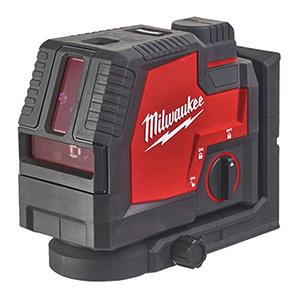
This is the standard choice for indoor fitting work. It projects a horizontal and vertical line, which is what you need for cabinets, trunking, studwork, back boxes and general room set-out.

2. 360 Degree Lasers

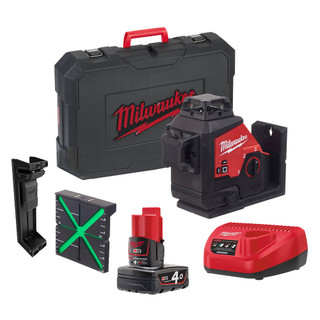
A Milwaukee 360 laser level throws a continuous line around the room, so you can mark several walls without moving the unit every few minutes. That is the one to grab for ceilings, partitions and larger refurb spaces.

3. Rotary Lasers

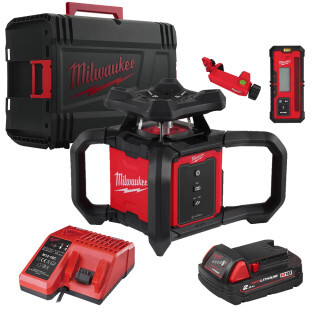
These are for bigger areas and external work where you need a level reference over distance. On groundwork, slabs or larger commercial jobs, they cover far more area than a standard indoor laser.

Milwaukee Laser Accessories That Actually Make the Job Easier

The laser is only half the story. The right extras stop bad readings, awkward mounting and wasted time on set-out.

1. Tripods

A proper tripod saves you balancing the laser on plasterboard stacks, buckets or whatever else is nearby. You get a steady height, cleaner lines and fewer knocks once the room gets busy.

2. Wall Mounts and Clamps

These are the fix when floor space is tight or the line needs to sit exactly where the job demands. Handy for ceiling track, high-level pipework and anywhere a tripod just gets in the way.

3. Laser Detectors

If you're working outside or over longer distances, a detector stops the beam disappearing on you. It is the difference between guessing at a faint line and getting a proper usable reference.

4. Spare Batteries and Chargers

Do not get caught halfway through setting out a floor with a dead laser. A spare battery on the van is a no-brainer, especially if the laser is earning money all day.

Choose the Right Milwaukee Laser Level for the Job

Use this quick guide to narrow down the Milwaukee laser that suits your work.

Your Job Laser Type Key Features
Kitchen fitting, sockets, shelving and quick indoor set-out Cross line laser Horizontal and vertical lines, fast room-to-room setup, compact size
Stud walls, suspended ceilings and full-room refurb work 360 laser level Continuous room-wide line, fewer repositionings, better for multi-wall marking
Detailed partitioning and floor to ceiling transfer 3 plane laser Multiple planes, plumb transfer, strong coverage for layout work
Bright rooms, open spaces and window-heavy refits Green beam laser More visible beam, easier marking in brighter conditions, less eye strain
External levelling, slabs and larger site set-out Rotary laser Longer working range, detector compatibility, better for outdoor work

Common Buying and Usage Mistakes

  • Buying a basic cross line model for full-room set-out can slow you right down. If you are constantly moving the unit to catch each wall, you should have gone for a Milwaukee laser 360 instead.
  • Ignoring beam colour in bright work areas is a common one. A red beam can be harder to see near windows or under strong site lighting, so a Milwaukee green laser is usually the smarter buy.
  • Using the laser on an unstable surface ruins accuracy before you even start. Get it on a tripod or proper mount so the line stays true once other trades start walking through.
  • Not checking battery platform can cost you more than it should. If you are already running Milwaukee batteries, match the laser to the kit you own and avoid adding another charging setup to the van.
  • Trusting a laser that has taken a knock without rechecking it is asking for trouble. After a drop or a hard bang in transit, run a quick accuracy check before setting out a whole room wrong.

Cross Line vs 360 Laser vs Rotary Laser

Cross Line Laser

Best for everyday indoor work like kitchens, stud walls, sockets and shelving. It is usually the easiest and cheapest way into a Milwaukee laser level, but it covers less area and needs more repositioning on larger jobs.

360 Laser

Best for full-room set-out, ceilings and lining through several walls at once. A Milwaukee laser level 360 costs more than a basic cross line, but it earns that back quickly if you do regular fit-out or partitioning.

Rotary Laser

Best for larger areas, external levelling and site-wide reference work. It is overkill for small internal jobs, but if you are setting levels over distance, a rotary is the proper tool rather than trying to stretch an indoor laser beyond its limits.

Maintenance and Care

Keep the Lens Clean

Dust on the lens weakens the beam and makes the line harder to read. Wipe it with a soft cloth after use rather than leaving plaster and site dirt to build up.

Store It in the Case

Throwing a laser loose in the van is how it ends up knocked out of calibration. Keep it in its case between jobs so it is not bouncing around with drill bits and fixings.

Check Accuracy After a Knock

If it has been dropped, do not just carry on and hope for the best. Run a quick check against a known line or level point before you trust it on expensive fit-out work.

Look After Batteries Properly

Charge batteries before they are completely flat and do not leave them rattling around damp vans for weeks. Good battery care means better runtime and fewer headaches on site.

Replace Worn Mounts and Threads

If the mount no longer locks tight or the thread is starting to wear, sort it before it causes a bad setup. A shaky fixing point will ruin a good laser quicker than most people think.

Why Shop for Milwaukee Laser Levels at ITS?

Whether you need a basic Milwaukee laser for indoor fitting, a Milwaukee green laser level for brighter work areas, or a Milwaukee m18 laser level for longer site days, we stock the full range. That means cross line, 3 plane, 360 and rotary options, plus the mounts, detectors and accessories that keep them working properly. It is all in our own warehouse, in stock and ready for next day delivery.

Milwaukee Laser Level FAQs

Are Milwaukee laser levels worth it?

Yes, if you are using one properly on site, they are worth the money. Milwaukee laser levels are built for trade set-out, with tough housings, clear beams and battery options that suit daily use rather than the odd DIY shelf.

Does Milwaukee make a laser level?

Yes, Milwaukee makes laser levels for indoor fitting, full-room 360 work and larger site levelling. That includes cross line, 3 plane, green beam and rotary models, so there is proper choice depending on the job.

How much do laser levels typically cost?

It depends on beam type, range and battery platform. A basic cross line unit will usually cost less than a Milwaukee 360 laser level or rotary model, but the dearer kits often save more time if you are setting out larger areas every week.

How accurate is a 360 laser level?

A decent 360 laser level is accurate enough for serious fitting and set-out work, provided it is set on a stable base and has not been knocked out of line. For partitions, ceilings, kitchens and service runs, it is far more consistent than trying to carry marks round by hand.

Is a Milwaukee green laser really easier to see, or is that just marketing?

Yes, in brighter rooms it is noticeably easier to pick up. If you work near windows, in open refurb spaces or under strong task lighting, a Milwaukee green laser level is usually the better shout than a standard red beam.

Will a Milwaukee laser level hold up to being knocked about in the van?

They are tough, but do not treat them like a lump hammer. Keep the unit in its case and check accuracy after a drop. The body is built for site life, but any laser can go out if it is thrown loose in with the rest of the kit.

Do I need a tripod with a laser Milwaukee setup?

For most proper work, yes. You can sit a laser on a flat surface for quick marks, but a tripod or mount gives you better height control, a steadier line and less chance of someone nudging it halfway through the job.

Is a Milwaukee laser level UK site ready straight out the box?

Yes, provided you choose the right type for the work. For indoor fitting, cross line and 3 plane models are ready to go straight into set-out. For larger external work, you will usually want the right detector and accessories as well.
Read more

Milwaukee Laser Levels

Milwaukee laser level kit is built for fast, accurate set-out on site, whether you're framing walls, fitting kitchens, levelling trays or lining through ceilings.

If you're sick of dragging a spirit level across every mark, a Milwaukee laser level saves time and cuts mistakes. These are the ones sparks, chippies and fitters reach for when walls, pipe runs and ceilings all need lining through properly. Milwaukee green laser models stay clearer in bright rooms, and the M18 range makes sense if you're already on that battery platform. If you need full-room coverage, start with Milwaukee 360� Lasers Levels. For bigger external set-out, look at Milwaukee Rotary Lasers, while indoor partitioning and first fix is where Milwaukee Cross Line Lasers earn their keep. Pair them with Milwaukee Laser Tripod & Accessories, and if you're checking runs and room sizes as well, add Milwaukee Digital Measures. Pick the right laser Milwaukee setup for your work and get your set-out sorted.

What Are Milwaukee Laser Levels Used For?

  • Setting out stud walls, ceiling track and door openings on first fix jobs where a Milwaukee laser level keeps the whole line true without constant rechecking.
  • Installing kitchen units, worktops and wall cabinets where a Milwaukee green laser gives you a clear line across the room and stops one end drifting out.
  • Running cable tray, conduit, pipe clips and trunking through plant rooms, corridors and commercial fit-outs where straight, repeatable heights matter.
  • Marking floor to ceiling plumb points for partitions, boxing-in and steel framing where a Milwaukee 3 plane laser saves time over old-school line transfer.
  • Handling full-room layout and refurbishment work where a Milwaukee laser 360 helps you line through multiple walls and openings in one hit.

Choosing the Right Milwaukee Laser Level

Sorting the right one is simple: match the beam layout and battery setup to the job, not the other way round.

1. Cross Line or 360

If you're mainly doing punchy indoor set-out in one area, a cross line Milwaukee laser is usually enough. If you're lining through full rooms, multiple walls or ceiling runs, a Milwaukee laser level 360 saves a lot of walking and remarking.

2. Green Beam for Brighter Work Areas

If you work in bright refurbs, near windows or in larger open spaces, go for a Milwaukee green laser level. The line is easier to pick up with the naked eye, which means less squinting and fewer bad marks late in the day.

3. M12 or Milwaukee Laser Level M18

If you've already got M18 batteries on the van and want longer runtime on busy site days, a Milwaukee laser level M18 makes sense. If compact size matters more for indoor fitting and quick moves between rooms, the smaller platform can be easier to live with.

4. 3 Plane for Full Set-Out

If you're transferring lines from floor to wall to ceiling, don't mess about with a basic model. A Milwaukee 3 plane laser gives you horizontal and vertical coverage together, which is the right choice for partitioning, kitchens and detailed fit-out.

Who Uses These on Site?

  • Sparkies use a laser level Milwaukee setup for socket runs, tray, containment and lighting positions, especially when they need the whole floor looking neat and level.
  • Chippies and dryliners swear by a Milwaukee laser level m18 kit for stud walls, suspended ceilings and kitchen fitting because it speeds up set-out and cuts call-backs.
  • Plumbers and HVAC fitters use Milwaukee laser kit to keep brackets, clips, pipework and duct runs lined through properly in risers, corridors and plant rooms.
  • Site managers and snagging teams keep a Milwaukee laser around for checking levels, datum lines and whether trades have actually set out to plan.
  • Floor layers, tilers and fit-out teams use a Milwaukee green laser level when they need clear reference lines across larger rooms without guessing off one wall.

The Basics: Understanding Milwaukee Laser Levels

These save time by throwing out accurate level and plumb lines you can work to straight away. The main thing is choosing the beam pattern that suits the way you actually set out on site.

1. Cross Line Lasers

This is the standard choice for indoor fitting work. It projects a horizontal and vertical line, which is what you need for cabinets, trunking, studwork, back boxes and general room set-out.

2. 360 Degree Lasers

A Milwaukee 360 laser level throws a continuous line around the room, so you can mark several walls without moving the unit every few minutes. That is the one to grab for ceilings, partitions and larger refurb spaces.

3. Rotary Lasers

These are for bigger areas and external work where you need a level reference over distance. On groundwork, slabs or larger commercial jobs, they cover far more area than a standard indoor laser.

Milwaukee Laser Accessories That Actually Make the Job Easier

The laser is only half the story. The right extras stop bad readings, awkward mounting and wasted time on set-out.

1. Tripods

A proper tripod saves you balancing the laser on plasterboard stacks, buckets or whatever else is nearby. You get a steady height, cleaner lines and fewer knocks once the room gets busy.

2. Wall Mounts and Clamps

These are the fix when floor space is tight or the line needs to sit exactly where the job demands. Handy for ceiling track, high-level pipework and anywhere a tripod just gets in the way.

3. Laser Detectors

If you're working outside or over longer distances, a detector stops the beam disappearing on you. It is the difference between guessing at a faint line and getting a proper usable reference.

4. Spare Batteries and Chargers

Do not get caught halfway through setting out a floor with a dead laser. A spare battery on the van is a no-brainer, especially if the laser is earning money all day.

Choose the Right Milwaukee Laser Level for the Job

Use this quick guide to narrow down the Milwaukee laser that suits your work.

Your Job Laser Type Key Features
Kitchen fitting, sockets, shelving and quick indoor set-out Cross line laser Horizontal and vertical lines, fast room-to-room setup, compact size
Stud walls, suspended ceilings and full-room refurb work 360 laser level Continuous room-wide line, fewer repositionings, better for multi-wall marking
Detailed partitioning and floor to ceiling transfer 3 plane laser Multiple planes, plumb transfer, strong coverage for layout work
Bright rooms, open spaces and window-heavy refits Green beam laser More visible beam, easier marking in brighter conditions, less eye strain
External levelling, slabs and larger site set-out Rotary laser Longer working range, detector compatibility, better for outdoor work

Common Buying and Usage Mistakes

  • Buying a basic cross line model for full-room set-out can slow you right down. If you are constantly moving the unit to catch each wall, you should have gone for a Milwaukee laser 360 instead.
  • Ignoring beam colour in bright work areas is a common one. A red beam can be harder to see near windows or under strong site lighting, so a Milwaukee green laser is usually the smarter buy.
  • Using the laser on an unstable surface ruins accuracy before you even start. Get it on a tripod or proper mount so the line stays true once other trades start walking through.
  • Not checking battery platform can cost you more than it should. If you are already running Milwaukee batteries, match the laser to the kit you own and avoid adding another charging setup to the van.
  • Trusting a laser that has taken a knock without rechecking it is asking for trouble. After a drop or a hard bang in transit, run a quick accuracy check before setting out a whole room wrong.

Cross Line vs 360 Laser vs Rotary Laser

Cross Line Laser

Best for everyday indoor work like kitchens, stud walls, sockets and shelving. It is usually the easiest and cheapest way into a Milwaukee laser level, but it covers less area and needs more repositioning on larger jobs.

360 Laser

Best for full-room set-out, ceilings and lining through several walls at once. A Milwaukee laser level 360 costs more than a basic cross line, but it earns that back quickly if you do regular fit-out or partitioning.

Rotary Laser

Best for larger areas, external levelling and site-wide reference work. It is overkill for small internal jobs, but if you are setting levels over distance, a rotary is the proper tool rather than trying to stretch an indoor laser beyond its limits.

Maintenance and Care

Keep the Lens Clean

Dust on the lens weakens the beam and makes the line harder to read. Wipe it with a soft cloth after use rather than leaving plaster and site dirt to build up.

Store It in the Case

Throwing a laser loose in the van is how it ends up knocked out of calibration. Keep it in its case between jobs so it is not bouncing around with drill bits and fixings.

Check Accuracy After a Knock

If it has been dropped, do not just carry on and hope for the best. Run a quick check against a known line or level point before you trust it on expensive fit-out work.

Look After Batteries Properly

Charge batteries before they are completely flat and do not leave them rattling around damp vans for weeks. Good battery care means better runtime and fewer headaches on site.

Replace Worn Mounts and Threads

If the mount no longer locks tight or the thread is starting to wear, sort it before it causes a bad setup. A shaky fixing point will ruin a good laser quicker than most people think.

Why Shop for Milwaukee Laser Levels at ITS?

Whether you need a basic Milwaukee laser for indoor fitting, a Milwaukee green laser level for brighter work areas, or a Milwaukee m18 laser level for longer site days, we stock the full range. That means cross line, 3 plane, 360 and rotary options, plus the mounts, detectors and accessories that keep them working properly. It is all in our own warehouse, in stock and ready for next day delivery.

Milwaukee Laser Level FAQs

Are Milwaukee laser levels worth it?

Yes, if you are using one properly on site, they are worth the money. Milwaukee laser levels are built for trade set-out, with tough housings, clear beams and battery options that suit daily use rather than the odd DIY shelf.

Does Milwaukee make a laser level?

Yes, Milwaukee makes laser levels for indoor fitting, full-room 360 work and larger site levelling. That includes cross line, 3 plane, green beam and rotary models, so there is proper choice depending on the job.

How much do laser levels typically cost?

It depends on beam type, range and battery platform. A basic cross line unit will usually cost less than a Milwaukee 360 laser level or rotary model, but the dearer kits often save more time if you are setting out larger areas every week.

How accurate is a 360 laser level?

A decent 360 laser level is accurate enough for serious fitting and set-out work, provided it is set on a stable base and has not been knocked out of line. For partitions, ceilings, kitchens and service runs, it is far more consistent than trying to carry marks round by hand.

Is a Milwaukee green laser really easier to see, or is that just marketing?

Yes, in brighter rooms it is noticeably easier to pick up. If you work near windows, in open refurb spaces or under strong task lighting, a Milwaukee green laser level is usually the better shout than a standard red beam.

Will a Milwaukee laser level hold up to being knocked about in the van?

They are tough, but do not treat them like a lump hammer. Keep the unit in its case and check accuracy after a drop. The body is built for site life, but any laser can go out if it is thrown loose in with the rest of the kit.

Do I need a tripod with a laser Milwaukee setup?

For most proper work, yes. You can sit a laser on a flat surface for quick marks, but a tripod or mount gives you better height control, a steadier line and less chance of someone nudging it halfway through the job.

Is a Milwaukee laser level UK site ready straight out the box?

Yes, provided you choose the right type for the work. For indoor fitting, cross line and 3 plane models are ready to go straight into set-out. For larger external work, you will usually want the right detector and accessories as well.
ITS Click and Collect Icon
What3Words:
Get Directions
Store Opening Hours
Opening times
