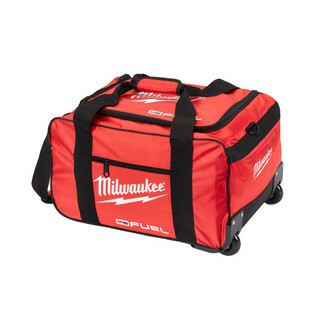
Milwaukee Fuel Tool Bags & Totes
Milwaukee M18 FUEL tool bag options keep your kit together, protected, and easy to haul round site when loose tools just slow the job down.
If you're in and out of plots, lofts, plant rooms, or the van all day, a proper Milwaukee fuel tool bag stops gear getting buried, soaked, or battered. These are built for trades carrying cordless kit, hand tools, chargers, and fixings without the usual zip failures and sagging sides. The right m18 fuel tool bag comes down to load, layout, and how far you're dragging it. If your storage takes as much abuse as your tools, start here and get it sorted.
What Jobs Are Milwaukee M18 FUEL Tool Bags Best At?
- Carrying first fix kit between rooms keeps your drill, impact, bits, fixings, and tester in one place so you are not wasting ten minutes every time you move on to the next plot.
- Loading out the van for service and maintenance jobs makes life easier when you need a grab bag that holds the tools you actually use instead of rooting through three separate boxes on a tight callout.
- Working up ladders, through lofts, or across scaffold suits a milwaukee tool bag because soft-sided storage is easier to handle in awkward spaces where rigid cases catch on everything.
- Keeping wet and dirty site gear off your good tools matters on refurb and outdoor jobs, and a milwaukee fuel bag with a solid base helps stop damp floors soaking through the bottom.
- Moving cordless kit around snagging and final fix work is quicker when an m18 fuel tool bag body only setup lets you pack just the bare tools, batteries, and hand gear needed for the day.
Choosing the Right Milwaukee M18 FUEL Tool Bag
Sorting the right one is simple: match the bag to the load and the route, not just the badge on the side.
1. Daily Carry vs Full Kit Loadout
If you only need a grab bag for a combi, impact, batteries, and hand tools, keep it compact so it stays easy to lift in and out the van. If you carry chargers, larger tools, and boxes of consumables, go bigger or you will just overfill it and wreck the shape.
2. Tote, Closed Bag, or Wheeled Bag
Open totes are quicker for tools you are constantly reaching for on first fix and snagging. Closed bags are better when your kit gets left in the van, carried in bad weather, or piled in with other gear. If you are hauling heavy loads across long site walks, look at Milwaukee FUEL Tool Bags with Wheels and save your shoulders.
3. Base Protection Matters
If the bag is going down on wet slabs, dusty floors, and rough ground every day, do not ignore the base. A reinforced or moulded bottom is worth it because it keeps water out, stops wear through, and helps the bag hold its shape when fully loaded.
4. Think About the Rest of Your Storage
If you already run modular storage, check whether a soft bag needs to work alongside boxes and organisers rather than replace them. For stackable storage, look at Milwaukee PACKOUT Tool Bags & Totes, and for hard storage of fixings and accessories, see Milwaukee Tool Boxes & Organisers.
Who Uses These Tool Bags?
- Sparkies use a milwaukee fuel tool bag for carrying an impact, combi, testers, glands, and sundries from board position to room runs without trekking back to the van.
- Plumbers and heating engineers swear by them for service work because they can separate grips, cutters, fittings, and cordless tools in one bag that still fits under sinks and into cupboards.
- Chippies doing first and second fix use them for keeping fixings, squares, drivers, and a small cordless setup together when they are bouncing between doors, skirting, and kitchen work.
- Maintenance teams and site supervisors keep one packed as a fast-response bag so the common bits are always to hand for snagging, inspections, and minor repairs round the building.
The Basics: Understanding Milwaukee M18 FUEL Tool Bags
With tool bags, the important bit is not power or runtime. It is how the bag carries weight, protects your kit, and speeds up getting to the right tool on site.
1. Soft Storage vs Hard Cases
A soft milwaukee fuel tool bag is easier to carry through finished houses, loft hatches, and tight plant rooms than a hard case. You lose some stacking, but you gain quicker access and a bag that fits awkward spaces better.
2. Open Top vs Zipped Layout
Open top bags suit trades who are constantly in and out of the same hand tools and drivers. Zipped bags are better when the kit lives in the van, gets moved between jobs, or needs a bit more protection from dust and rain.
3. Weight Distribution Is the Real Test
A bag can look big enough on paper, but if it tips over, sags in the middle, or digs into your hand once loaded, it is the wrong one. Good tool bags spread the weight properly and keep the heavy bits low and stable.
Accessories That Make a Milwaukee Fuel Tool Bag More Useful
A decent bag is only half the job. The right add-ons stop wasted trips, loose gear, and tools getting buried.
1. Spare Batteries and Chargers
There is no point carrying the bare tool if the battery dies halfway through a callout. Keep a spare pack and charger in the bag so you are not walking back to the van or borrowing from another kit.
2. Small Organisers for Bits and Fixings
Loose screws, connectors, and driver bits soon end up at the bottom mixed with dust and offcuts. A compact organiser keeps the little stuff separate so you can grab what you need without emptying the whole bag on the floor.
3. Tool Lanyards and Pouches
If you are working on ladders, scaffold, or access kit, a small pouch or lanyard setup stops the tools you use most from being dumped back in the main bag every five minutes.
4. Backpacks for Long Walks
If shoulder carry is wearing thin on bigger sites, it is worth looking at Milwaukee Tool Backpacks for hands-free carrying through stairs, corridors, and long plot walks.
Choose the Right Milwaukee M18 FUEL Tool Bag for the Job
Pick the type that matches what you carry and how far you carry it.
| Your Job | Bag Type | Key Features |
|---|---|---|
| Snagging, service calls, and light maintenance | Compact zipped tool bag | Fast to grab from the van, enough room for bare tools, batteries, tester, and core hand tools. |
| First fix rooms and repeated in-out access | Open tote bag | Quick visibility, easy tool access, and better for trades dipping in and out all day. |
| Outdoor jobs and rough site conditions | Reinforced base tool bag | Better protection from wet ground, dust, and abrasion when the bag gets dropped anywhere. |
| Heavy cordless kit and long site walks | Wheeled tool bag | Takes the strain off your shoulder and moves heavier loads without wrecking handles and seams. |
| Mixed storage with boxes and small parts | Tool bag plus organisers | Keeps bigger tools in the bag and the fiddly consumables separated so nothing gets lost. |
Common Buying and Usage Mistakes
- Buying too small to save a few quid usually ends with batteries, chargers, and hand tools jammed in on top of each other. The fix is simple. Buy for your actual daily load, not the lightest day you ever have.
- Using a soft bag as a dumping ground for every tool you own makes it slow to work from and harder on the stitching. Keep it task specific and leave rarely used gear in separate storage.
- Ignoring the base and handle quality is a common mistake on wet or rough sites. Cheap bottoms soak through and weak handles are the first thing to fail once the bag is loaded properly.
- Assuming every Milwaukee tool bag works with PACKOUT catches people out. If stackability matters, check that first rather than finding out on site the bag does not lock in with the rest of your setup.
- Leaving sharp blades, loose hole saws, or wet gear inside the main compartment shortens the life of the bag fast. Use sleeves, boxes, or organisers and empty the wet rubbish out at the end of the shift.
Open Tote vs Zipped Bag vs Wheeled Bag
Open Tote
Best for first fix, snagging, and jobs where you need constant access to hand tools and drivers. It is quicker to work from, but your kit is more exposed to dust, rain, and van chaos.
Zipped Tool Bag
Better for protecting cordless kit, batteries, and testers during transport between jobs. It is the safer bet if the bag spends a lot of time in the van or on damp sites, though access is slower than an open tote.
Wheeled Tool Bag
The right choice when the load is heavy or the walk from van to workface is a long one. Less strain on your shoulder and back, but bulkier if you are climbing stairs, ladders, or squeezing into tight spaces.
Tool Bag vs Hard Storage
A tool bag is easier to carry and quicker to work from. Hard cases and boxes win for stacking, protecting sensitive kit, and keeping fixings sorted, especially if your storage lives in the van most of the week.
Maintenance and Care
Empty Out Dust and Debris
Shake the bag out every week and get rid of plaster dust, metal swarf, cable offcuts, and loose fixings. That rubbish wears linings, jams zips, and makes it harder to find what you need.
Dry It Properly After Wet Jobs
If the bag has been sitting on wet ground or caught in rain, empty it and let it dry before loading it back into the van. Leaving it damp is how you end up with rusty tools and a bag that starts to smell and soften.
Check Handles, Straps, and Stitching
The first signs of trouble are usually frayed handles and stretched stitching round the top. Catch it early and retire the bag before it lets go halfway across a car park with a full load inside.
Keep Sharp Tools Contained
Blades, hole saws, jab saws, and SDS accessories should not be loose in the main compartment. Store them in sleeves or boxes so they do not cut pockets or damage chargers and batteries.
Replace When It Stops Supporting the Load
If the base has gone soft, the bag collapses when set down, or the handle feels suspect, do not push it. Once storage starts failing, it is only a matter of time before tools hit the deck.
Why Shop for Milwaukee M18 FUEL Tool Bags at ITS?
Whether you need a compact milwaukee m18 fuel tool bag for daily service work or larger storage for a full cordless loadout, we stock the range in one place. That includes the wider Milwaukee FUEL lineup, all held in our own warehouse and ready for next day delivery.
Milwaukee M18 FUEL Tool Bag FAQs
Are Milwaukee tool bags compatible with the PACKOUT system?
Not all of them, no. Some Milwaukee soft storage is built around PACKOUT and some is just stand alone bag storage. If you need it to lock into the rest of your stack, check the spec first rather than assuming every milwaukee fuel tool bag does it.
What tool bags are in the Milwaukee FUEL range?
The range usually covers soft storage built for carrying M18 kit, hand tools, batteries, and job essentials, including open totes, closed bags, and wheeled options depending on the load. It is worth checking the current page range because layouts and sizes vary depending on whether you want fast access or better protection.
Are Milwaukee tool bags water resistant?
Yes, many are built to cope with normal site damp, light rain, and being put down on dirty ground, especially those with reinforced bases. That said, water resistant is not the same as waterproof, so do not leave one sitting out in a proper downpour and expect the contents to stay bone dry.
Is the FUEL tool bag worth the extra over a standard M18 version?
If the bag is used every day and carried properly loaded, usually yes. The better build, stronger base, and tougher layout pay back quickly if your storage gets dragged through plots, lifted in and out the van, and left on rough floors all week.
What does Milwaukee FUEL mean on the tool bag?
On a tool bag, FUEL mainly tells you it is aligned with Milwaukee higher end trade kit rather than meaning the bag itself has any powered feature. In simple terms, it is storage aimed at the same users carrying M18 FUEL tools and wanting tougher site ready transport for them.
Will an m18 fuel tool bag hold more than just cordless tools?
Yes. Most trades use them as mixed carry bags for hand tools, testers, bits, fixings, batteries, chargers, and paperwork as well as the tools themselves. Just do not overload one with every bit of kit you own or it becomes a dead weight to work from.