


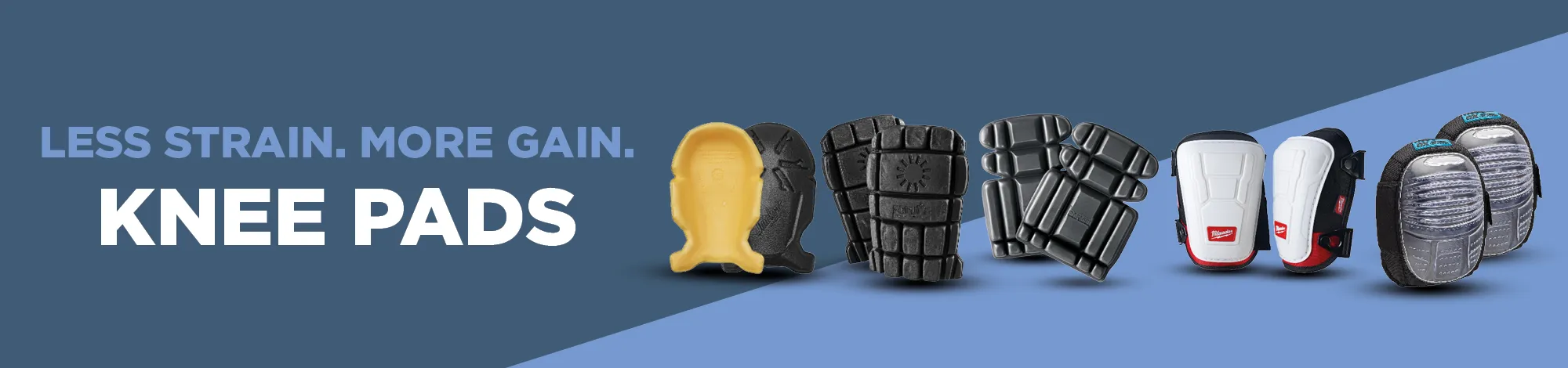
Knee Pads

Knee pads stop your knees getting wrecked on floors, roofs, and concrete, giving proper cushioning and grip when you're down fixing, fitting, or setting out.

When you're on your knees all day, it's not "comfort" you're buying, it's knee protection that lets you keep working without limping by Friday. These work knee pads cover everything from lightweight foam for quick fit-outs to heavy duty hard shell pads for rough concrete and roofing. Pick the right style for the surface, get the straps set once, and you'll stop them sliding round mid-job.

What Jobs Are Knee Pads Best At?

  • Fitting kitchens, skirting, and second-fix joinery where you are constantly dropping to the floor and need cushioned knee pads that do not cut circulation behind the knee.
  • Tiling and flooring work where you are shuffling along all day, so non slip knee pads help you stay planted and stop you grinding your knees into grout lines and debris.
  • Roofing and low-level exterior work where hard shell knee pads take the knocks from battens, fixings, and rough surfaces while spreading the load when kneeling on pitch.
  • Groundworks, landscaping, and gardening jobs where wet ground and sharp stone make durable knee pads and impact resistant shells the difference between cracking on and packing up early.
  • Refurbs and snagging in dusty, cluttered rooms where protective knee pads stop you kneeling on screws, offcuts, and sharp rubble while you work close to the floor.

Choosing the Right Knee Pads

Sort the right knee pads by matching the shell and padding to the surface you kneel on most, not what looks toughest on the shelf.

1. Hard Shell vs Soft Shell

If you are on rough concrete, roofs, or gravel, go hard shell knee pads for impact resistance and to stop sharp bits punching through. If you are indoors on finished floors and want less marking and more comfort, soft shell pads are the sensible pick.

2. Gel vs Foam Padding

If you are kneeling for long spells on hard surfaces, gel knee pads spread pressure better and feel less "pointy" on the kneecap. If you want lightweight knee pads for shorter tasks and easy movement, foam knee pads do the job without bulk.

3. Strap Style and Fit

If your pads slide down when you stand up, you will stop wearing them, so get adjustable knee pads and set the straps properly. Elastic strap knee pads are quicker and comfier for all-day wear, while buckle strap knee pads tend to lock in tighter for heavier duty work.

4. Movement and Profile

If you are constantly shuffling along on floors, choose ergonomic, flexible knee pads with a smooth front so they glide instead of grabbing. If you are mostly static kneeling, a thicker, more cushioned pad is worth it even if it feels bulkier walking around.

Knee Pads FAQs

When should knee pads be worn?

Wear knee pads any time you are kneeling on hard, rough, or debris-strewn surfaces for more than a quick minute, like flooring, tiling, skirting, first-fix in tight spaces, or roofing work. If you are finishing the day with sore kneecaps, you left it too late.

What are the two types of knee pads?

The main split is hard shell knee pads and soft shell knee pads. Hard shell is for rough ground and impact resistance, while soft shell is for comfort and finished surfaces where you do not want to mark floors or feel like you are wearing armour.

How to use knee pads?

Centre the pad over the kneecap, then tighten the straps so it is secure but not cutting in behind your knee. Walk, kneel, and stand a few times and adjust until it stays put. If it slides down, it is too loose or the strap position is wrong for your leg.

Do you wear knee pads over or under pants?

Strap-on knee pads are worn over your work trousers so the shell takes the wear, not the fabric. If you have work trousers with knee pad pockets, those insert pads go inside the trouser knee, which is usually more comfortable for all-day fit-out and flooring work.

Will knee pads stay put when you are constantly getting up and down?

They will if the straps are set right and the pad shape suits the job. For a lot of movement, look for adjustable, ergonomic pads with decent strap placement, because cheap straps are what cause the classic slide-down and twist.

Who Uses Knee Pads for Work?

  • Floor layers, tilers, and bathroom fitters who live on their knees all day and need shock absorbing knee pads that stay put while shuffling along.
  • Chippies and kitchen fitters doing second-fix and scribing, because padded knee pads stop the constant up and down from wrecking your joints.
  • Roofers and cladders who want hard shell protection for rough surfaces and fixings, especially when you are kneeling to nail, screw, and set out.
  • Groundworkers, landscapers, and maintenance teams who need industrial knee pads that handle wet ground, sharp stone, and general site abuse.

The Basics: Understanding Knee Pads

Knee pads are simple kit, but the wrong type will slip, pinch, or wear through fast. These are the parts that actually matter on site.

1. The Shell (What Takes the Abuse)

Hard shells are built to take knocks and sharp debris and help you pivot and slide on rough ground. Soft shells are kinder on finished surfaces and feel less clunky, but they are not the choice for gravel and rubble.

2. The Padding (What Saves Your Kneecaps)

Foam is light and flexible for general work, while gel and thicker cushioning spread pressure better for long kneeling spells. The outcome you want is simple: less pressure on the kneecap and less ache when you stand back up.

3. The Straps (What Stops Them Ending Up Round Your Ankles)

Good straps keep the pad centred on the knee without cutting in behind the leg. If the straps are wrong for your job, you will spend the day adjusting them instead of working, so fit and adjustability matter as much as padding.

Knee Pad Extras That Make Them Wearable All Day

A couple of small add-ons can stop work knee pads slipping, rubbing, or wearing out halfway through a job.

1. Replacement Straps and Buckles

Straps are usually the first thing to go, especially on heavy duty knee pads used daily. A spare strap set keeps your protective knee pads working properly instead of bodging them with tape that fails mid-shift.

2. Knee Pad Sleeves or Retainers

If you are fed up with pads sliding down or rubbing behind the knee, a sleeve helps keep them located and spreads the pressure. It is a simple fix that makes safety knee pads far more likely to stay on all day.

3. Knee Pad-Compatible Work Trousers (Pocket Knees)

If you kneel a lot, pocket-knee trousers with insert pads are often more comfortable than strap-on pads and they do not twist round when you are moving. It is a solid option for flooring and fit-out work where you are up and down constantly.

Shop Knee Pads at ITS.co.uk

Whether you need lightweight foam pads for quick indoor jobs or heavy duty hard shell knee pads for rough concrete and roofing, we stock the full range of knee pads for work in all the main styles. It is all held in our own warehouse, in stock and ready for next day delivery, so you can get your PPE knee protection on site when you need it.

Read more

Knee Pads

Knee pads stop your knees getting wrecked on floors, roofs, and concrete, giving proper cushioning and grip when you're down fixing, fitting, or setting out.

When you're on your knees all day, it's not "comfort" you're buying, it's knee protection that lets you keep working without limping by Friday. These work knee pads cover everything from lightweight foam for quick fit-outs to heavy duty hard shell pads for rough concrete and roofing. Pick the right style for the surface, get the straps set once, and you'll stop them sliding round mid-job.

What Jobs Are Knee Pads Best At?

  • Fitting kitchens, skirting, and second-fix joinery where you are constantly dropping to the floor and need cushioned knee pads that do not cut circulation behind the knee.
  • Tiling and flooring work where you are shuffling along all day, so non slip knee pads help you stay planted and stop you grinding your knees into grout lines and debris.
  • Roofing and low-level exterior work where hard shell knee pads take the knocks from battens, fixings, and rough surfaces while spreading the load when kneeling on pitch.
  • Groundworks, landscaping, and gardening jobs where wet ground and sharp stone make durable knee pads and impact resistant shells the difference between cracking on and packing up early.
  • Refurbs and snagging in dusty, cluttered rooms where protective knee pads stop you kneeling on screws, offcuts, and sharp rubble while you work close to the floor.

Choosing the Right Knee Pads

Sort the right knee pads by matching the shell and padding to the surface you kneel on most, not what looks toughest on the shelf.

1. Hard Shell vs Soft Shell

If you are on rough concrete, roofs, or gravel, go hard shell knee pads for impact resistance and to stop sharp bits punching through. If you are indoors on finished floors and want less marking and more comfort, soft shell pads are the sensible pick.

2. Gel vs Foam Padding

If you are kneeling for long spells on hard surfaces, gel knee pads spread pressure better and feel less "pointy" on the kneecap. If you want lightweight knee pads for shorter tasks and easy movement, foam knee pads do the job without bulk.

3. Strap Style and Fit

If your pads slide down when you stand up, you will stop wearing them, so get adjustable knee pads and set the straps properly. Elastic strap knee pads are quicker and comfier for all-day wear, while buckle strap knee pads tend to lock in tighter for heavier duty work.

4. Movement and Profile

If you are constantly shuffling along on floors, choose ergonomic, flexible knee pads with a smooth front so they glide instead of grabbing. If you are mostly static kneeling, a thicker, more cushioned pad is worth it even if it feels bulkier walking around.

Knee Pads FAQs

When should knee pads be worn?

Wear knee pads any time you are kneeling on hard, rough, or debris-strewn surfaces for more than a quick minute, like flooring, tiling, skirting, first-fix in tight spaces, or roofing work. If you are finishing the day with sore kneecaps, you left it too late.

What are the two types of knee pads?

The main split is hard shell knee pads and soft shell knee pads. Hard shell is for rough ground and impact resistance, while soft shell is for comfort and finished surfaces where you do not want to mark floors or feel like you are wearing armour.

How to use knee pads?

Centre the pad over the kneecap, then tighten the straps so it is secure but not cutting in behind your knee. Walk, kneel, and stand a few times and adjust until it stays put. If it slides down, it is too loose or the strap position is wrong for your leg.

Do you wear knee pads over or under pants?

Strap-on knee pads are worn over your work trousers so the shell takes the wear, not the fabric. If you have work trousers with knee pad pockets, those insert pads go inside the trouser knee, which is usually more comfortable for all-day fit-out and flooring work.

Will knee pads stay put when you are constantly getting up and down?

They will if the straps are set right and the pad shape suits the job. For a lot of movement, look for adjustable, ergonomic pads with decent strap placement, because cheap straps are what cause the classic slide-down and twist.

Who Uses Knee Pads for Work?

  • Floor layers, tilers, and bathroom fitters who live on their knees all day and need shock absorbing knee pads that stay put while shuffling along.
  • Chippies and kitchen fitters doing second-fix and scribing, because padded knee pads stop the constant up and down from wrecking your joints.
  • Roofers and cladders who want hard shell protection for rough surfaces and fixings, especially when you are kneeling to nail, screw, and set out.
  • Groundworkers, landscapers, and maintenance teams who need industrial knee pads that handle wet ground, sharp stone, and general site abuse.

The Basics: Understanding Knee Pads

Knee pads are simple kit, but the wrong type will slip, pinch, or wear through fast. These are the parts that actually matter on site.

1. The Shell (What Takes the Abuse)

Hard shells are built to take knocks and sharp debris and help you pivot and slide on rough ground. Soft shells are kinder on finished surfaces and feel less clunky, but they are not the choice for gravel and rubble.

2. The Padding (What Saves Your Kneecaps)

Foam is light and flexible for general work, while gel and thicker cushioning spread pressure better for long kneeling spells. The outcome you want is simple: less pressure on the kneecap and less ache when you stand back up.

3. The Straps (What Stops Them Ending Up Round Your Ankles)

Good straps keep the pad centred on the knee without cutting in behind the leg. If the straps are wrong for your job, you will spend the day adjusting them instead of working, so fit and adjustability matter as much as padding.

Knee Pad Extras That Make Them Wearable All Day

A couple of small add-ons can stop work knee pads slipping, rubbing, or wearing out halfway through a job.

1. Replacement Straps and Buckles

Straps are usually the first thing to go, especially on heavy duty knee pads used daily. A spare strap set keeps your protective knee pads working properly instead of bodging them with tape that fails mid-shift.

2. Knee Pad Sleeves or Retainers

If you are fed up with pads sliding down or rubbing behind the knee, a sleeve helps keep them located and spreads the pressure. It is a simple fix that makes safety knee pads far more likely to stay on all day.

3. Knee Pad-Compatible Work Trousers (Pocket Knees)

If you kneel a lot, pocket-knee trousers with insert pads are often more comfortable than strap-on pads and they do not twist round when you are moving. It is a solid option for flooring and fit-out work where you are up and down constantly.

Shop Knee Pads at ITS.co.uk

Whether you need lightweight foam pads for quick indoor jobs or heavy duty hard shell knee pads for rough concrete and roofing, we stock the full range of knee pads for work in all the main styles. It is all held in our own warehouse, in stock and ready for next day delivery, so you can get your PPE knee protection on site when you need it.

ITS Click and Collect Icon
Store Opening Hours
Opening times