




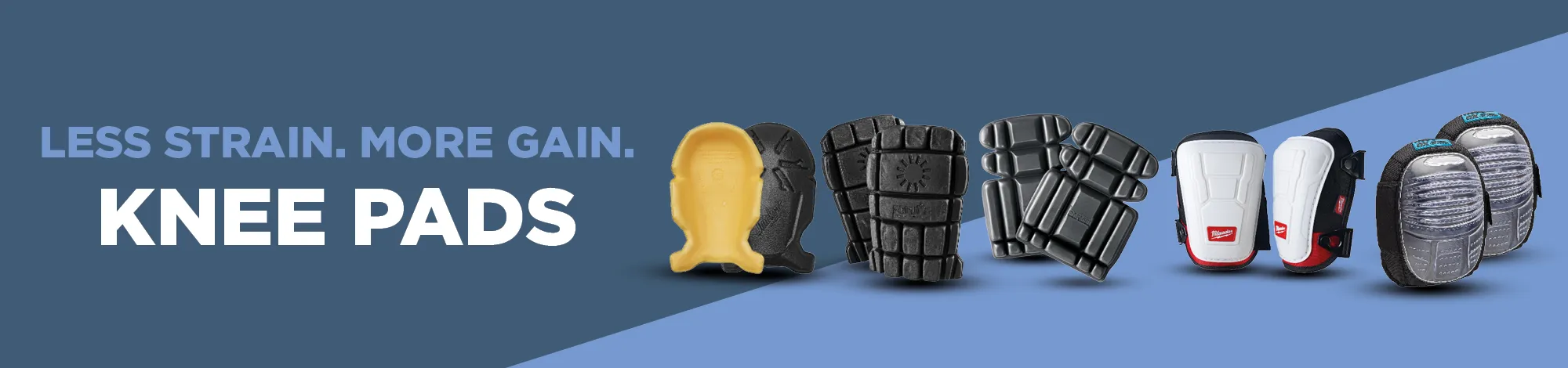

Knee Pads
Knee pads for work save your joints on floors, roofs, fit-outs and snagging, giving proper knee protection pads where hard surfaces and long kneeling hours wear you down.
If you're on your knees all day fixing skirting, setting kitchens, laying floors or working low on first fix, decent work knee pads are not optional. The right knee pad stops aches building up by dinner time, spreads the load properly and stays put instead of twisting round your leg. Whether you wear them with Work Trousers or need strap-on pads for jobs in shorts, pick the pair that matches how long you're kneeling and how rough the surface is. Have a proper look through the range and get knee protection that earns its keep.
What Are Knee Pads for Work Used For?
- Laying laminate, vinyl, carpet gripper or tile means hours on concrete and subfloor, and work knee pads take the pressure off so your knees are not shot before the last room.
- Fitting sockets, pipework and low-level units on first and second fix is easier with a knee pad that stays in place when you're shuffling along skirting lines and cabinet runs.
- Working on roofs, decking and exterior jobs gives you hard surfaces, grit and awkward angles, and knee protection pads help stop knocks, rubbing and soreness building up through the day.
- Snagging, decorating and maintenance work often has you kneeling for short spells in lots of different rooms, so lightweight knee pads for work save constant discomfort without getting in the way.
- Using PPE properly on refurbishment and site fit-out jobs includes protecting your joints, especially where repeated kneeling on screed, block or timber is part of the graft.
Choosing the Right Knee Pads for Work
Sorting the right pair is simple: match them to how long you're kneeling and what you're kneeling on.
1. Insert Pads or Strap-On Pads
If you already wear work trousers with knee pad pockets, insert pads are the neater option and you won't get straps rubbing behind your knees. If you're in and out of kneeling jobs, or wearing shorts, strap-on pads make more sense because you can get them on and off quickly.
2. Light Snagging or Full-Day Kneeling
If you're only dropping down now and then for snagging or final fix, a lighter foam knee pad will do the job without feeling bulky. If you're floor laying, roofing or fitting kitchens all day, go for thicker cushioning and a broader contact area or you'll feel every bit of the slab by lunchtime.
3. Smooth Floors or Rough Ground
For indoor flooring and finished surfaces, look for a knee pad with a non-marking face that slides without scuffing. For rough site ground, decking or external work, a tougher shell stands up better to grit, stone and repeated abuse.
4. Fit Matters More Than You Think
Don't buy loose and hope for the best. If the pad wanders off your knee every time you move, it's useless. A secure fit with the right trouser pocket height or properly adjusted straps is what keeps the protection where you need it.
Who Uses These on Site?
- Floor layers swear by knee pads for work because they spend full shifts down on slab, ply and adhesive beds, moving bay to bay without any let-up on their joints.
- Kitchen fitters and chippies rely on a good knee pad for cabinet fixing, plinth work and skirting, where you're constantly dropping down and getting back up in tight spaces.
- Sparkies and plumbers keep them handy for low-level first fix and final connections, especially when working along walls, under units or around service runs.
- Roofers, landscapers and groundworkers use work knee pads on rougher surfaces where sharp stone, timber edges and hard landings soon start to bite through cheaper pads.
- Decorators and maintenance teams often pair them with Work Shorts on warmer indoor jobs where they still need knee protection without heavy kit.
Extra Kit That Makes Knee Pads Work Better
A few simple add-ons make knee protection more comfortable and actually usable through a full shift.
1. Work Trousers with Knee Pad Pockets
If you're fed up with straps digging in or pads sliding round, proper pocketed trousers sort that out. The pad stays where it should, you are not forever readjusting, and it is a much better setup for full-day fitting and flooring work.
2. Work Shorts for Warm Weather Jobs
On hot indoor jobs, a strap-on knee pad used with shorts saves you boiling in heavy trousers while still protecting your knees. It is the obvious fix when you're snagging, decorating or doing service work in summer.
3. Work Belts & Braces
If your trousers are carrying pads, tools and fixings, braces help stop everything dragging down when you kneel and stand back up. That means less tugging at your waistband and better pad position through the day.
4. Tool Belts, Pouches & Rolls
Keeping fixings and hand tools close stops those constant up-and-down trips that wreck your knees just as much as kneeling does. It is a simple way to make low-level work less punishing and more efficient.
Choose the Right Knee Pads for the Job
Use this quick guide to sort the right knee protection for your day.
| Your Job | Knee Pad or Type | Key Features |
|---|---|---|
| Snagging and short kneeling jobs | Light foam knee pad | Low bulk fit, quick comfort, easy movement room to room |
| Floor laying and kitchen fitting | Thick cushioned work knee pads | Better pressure spread, more comfort for long periods, stable kneeling |
| Outdoor work on rough ground | Hard shell knee pads | Tough outer face, better abrasion resistance, more protection from grit and knocks |
| Trades wearing pocketed trousers daily | Insert knee pads | No straps, cleaner fit, stays in place inside trouser knee pockets |
| Warm weather or mixed maintenance work | Strap-on knee pad | Works with shorts, easy to remove, handy for stop-start kneeling jobs |
Common Buying and Usage Mistakes
- Buying the cheapest knee pad going usually means thin foam, poor fit and straps that rub. You save a few quid, then spend the week adjusting them and still end up sore.
- Using hard shell pads on delicate finished floors can leave marks or feel too skiddy. For indoor fit-out and flooring, use a softer or non-marking face instead.
- Wearing loose strap-on pads is a waste of time because they rotate off the knee as soon as you crawl or twist. Tighten them properly, but not so much they cut in behind the leg.
- Ignoring trouser compatibility catches plenty of lads out. If your trousers are made for inserts, use the right size pad or they sit too low and miss the knee completely.
- Keeping worn-out knee pads too long means the padding has already flattened and the protection has gone. If you can feel the floor straight through them, replace them.
Insert Knee Pads vs Strap-On Knee Pads vs Hard Shell Knee Pads
Insert Knee Pads
Best if you live in work trousers with knee pockets and spend most days on site. They are tidier, more comfortable over long hours and do not have straps digging in, but they depend on the trouser fit being right.
Strap-On Knee Pads
Best for mixed trades, maintenance work and anyone moving between kneeling and standing jobs. They work with almost any clothing, including shorts, but cheaper pairs can slip or chafe if the straps are poor.
Hard Shell Knee Pads
Best for rough external work, roofing, decking and gritty site surfaces where softer pads wear out fast. They protect well against knocks and abrasion, but they can be overkill on clean finished floors.
Maintenance and Care
Brush Off Grit After Use
Dust, stone and plaster build up fast on knee pads and start wearing the face down. Give them a quick clean at the end of the day so they last longer and do not grind dirt into finished surfaces.
Check Straps and Fasteners
If straps are stretching or hook and loop is clogged, the pad will not stay centred. Sort it early rather than fighting with slipping pads halfway through a shift.
Watch for Flattened Padding
Foam and gel do not last forever. Once the padding compresses and stops springing back, the knee pad is not giving proper support and it is time for a new pair.
Store Them Dry
Chucking wet pads in the van for a week leaves them smelling rough and can break down the materials quicker. Let them dry out before storing them with the rest of your workwear.
Replace When the Surface Goes
If the outer face is split, badly scuffed or starting to catch on flooring, do not keep dragging them through another job. Worn covers can mark finished surfaces and the protection underneath is usually not far behind.
Why Shop for Knee Pads for Work at ITS?
Whether you need a simple knee pad for snagging or tougher work knee pads for full days on hard floors and rough site surfaces, we stock the lot. Our range covers the key types trades actually use, from insert pads for trousers to strap-on options for flexible site wear, all held in our own warehouse and ready for next day delivery.
Knee Pads for Work FAQs
What are knee pads used for?
Knee pads are used to protect your knees when you're kneeling on hard, rough or uneven surfaces for any length of time. On site that means flooring, kitchen fitting, roofing, low-level fixing, snagging and maintenance jobs where concrete, timber, decking or screed would otherwise go straight through you.
Do knee pads really work?
Yes, if you buy the right type and wear them properly. A decent knee pad spreads your weight, cushions the joint and takes the sting out of hard surfaces. They are not magic if the fit is poor or the padding is shot, but a proper pair makes a noticeable difference by the end of the day.
How do knee pads help reduce pain?
They reduce pain by spreading pressure over a wider area instead of letting one point of the knee take the full load. That means less direct impact from concrete and less ache from repeated kneeling, especially on long fitting or floor laying jobs.
Are insert knee pads better than strap-on ones?
If you're in pocketed trousers every day, insert pads are usually the better shout because they stay put and do not rub behind the knee. Strap-on pads are better if you switch clothing, wear shorts or only need protection for part of the day.
Will these stay comfortable through a full shift?
They can do, but only if you match the pad to the job. Thin foam pads are fine for quick snagging, but if you're kneeling all day on floors or roofs, go thicker with a better contact area. That is where comfort really comes from.
Can I wear knee pads with shorts?
Yes, but you will need strap-on knee pads rather than insert pads. They are handy for warm weather and indoor jobs, just make sure the straps are secure without being so tight they start cutting in.



