Stanley Spanners
Stanley spanner range covers the day to day fastening jobs that fill a proper tool bag, from plant checks and bracket fitting to awkward fixings in tight spots.
When you're forever tightening, holding or cracking off nuts and bolts, a decent Stanley spanner saves rounded fixings and skinned knuckles. This is the sort of kit fitters, mechanics, installers and maintenance teams keep close because it works on real jobs, whether you need a Stanley combination spanner, Stanley adjustable spanner or a full Stanley spanner set in metric sizes.
What Jobs Are Stanley Spanners Used For?
- Tightening brackets, trays and channel fixings on install work is where a Stanley spanner earns its keep, especially when you need the open end to get on fast and the ring end to finish without slipping.
- Working on pumps, plant covers and service panels is easier with Stanley spanners because they let you hold one side of a fixing steady while you turn the other in cramped maintenance spaces.
- Assembling site furniture, racking and metal framework is a common job for a Stanley combination spanner, giving you better control than trying to make do with pliers on stubborn nuts.
- Adjusting pipe clips, cable supports and general fixings during snagging suits a Stanley adjustable spanner when you do not want to carry half the van in individual sizes.
- Cracking off older, painted or lightly corroded fasteners on refurb jobs is where a proper Stanley wrench or ring spanner helps you keep a solid grip and avoid rounding the flats.
Choosing the Right Stanley Spanner
Sorting the right one is simple: match the spanner to the fixing and the access, not just whatever happens to be nearest in the box.
1. Combination or Adjustable
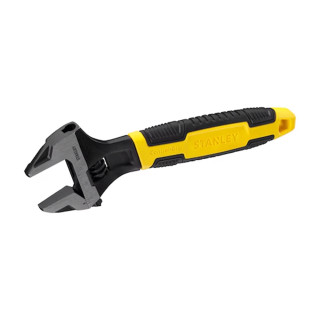
If you know the fixing sizes you deal with every day, go for a Stanley combination spanner because it grips better and is less likely to round the nut. If your work is varied and you are constantly moving between odd sizes, a Stanley adjustable spanner is handy, but only if you keep the jaws set tight.
2. Single Sizes or a Set
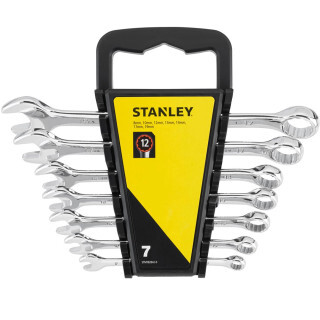
If you are replacing the one size that always goes missing, buy the single. If you are fitting out plant rooms, doing maintenance rounds or building a van kit from scratch, a Stanley spanner set makes more sense and stops you bodging with the wrong size.
3. Ring End for Grip
If the fixing is tight, painted over or sitting in an awkward spot, a Stanley ring spanner is the safer bet because it spreads load round the flats. Use the open ended spanner side for quick spinning on and off, then swap to the ring to finish it properly.
4. Metric Sizes Matter
Most site and modern plant fixings are metric, so Stanley metric spanners are usually the right buy. Do not guess and do not force an almost right fit, because that is how nuts get rounded and jobs slow right down.
Who Uses These on Site?
- Mechanical fitters rely on Stanley spanners for bolting up plant, brackets and guards, especially where one fixing needs holding while the other side is tightened down.
- Sparkies keep a Stanley adjustable spanner or small Stanley spanner set in the bag for tray work, channel fixings and control gear where nuts need nipping up properly without chewing them.
- Plumbers and heating engineers use them for valve sets, pipe clips, pumps and threaded assemblies, particularly when access is too tight for a socket.
- Maintenance teams swear by Stanley combination spanners for day to day repairs because they cover quick access with the open end and safer final torque with the ring end.
- Vehicle and plant techs reach for Stanley wrench styles when working around covers, battery clamps and general service fasteners where a solid hand tool still beats dragging out powered kit.
Choose the Right Stanley Spanner for the Job
Use this quick guide to sort the right type for the work in front of you.
| Your Job | Category or Type | Key Features |
|---|---|---|
| General install work on brackets, clips and fixings | Stanley combination spanner | Open end for quick access and ring end for a firmer finish on common nuts and bolts |
| Mixed maintenance jobs with unknown fixing sizes | Stanley adjustable spanner | One tool covers several sizes and saves carrying a full roll for short callout work |
| Tight or stubborn fixings that are easy to round | Stanley ring spanner | More contact on the flats and better control when cracking off seized or painted fasteners |
| Fast daily work on standard site fixings | Stanley metric spanners | Matches modern metric nuts and bolts properly and avoids slack fit on regular jobs |
| Building out a van kit or workshop drawer | Stanley spanner set | Multiple sizes in one buy so the right spanner is always there when the job changes |
Common Buying and Usage Mistakes
- Buying an adjustable for every job is a false economy because it is slower and easier to slip on tight fixings. For repeat work on known sizes, use a proper Stanley combination spanner or ring spanner.
- Using the wrong size because it is nearly right will round nuts and leave you fighting the same fixing for twice as long. Match the spanner exactly to the flats, especially on softer fittings and older hardware.
- Pulling hard on an open ended spanner first can spread load badly and damage the corners of the nut. Use the ring end first for stubborn fixings, then use the open end where speed matters.
- Mixing up metric and imperial sizes causes slack fit and wasted time, particularly on plant and replacement parts. Most modern site fixings are metric, so check before you buy and build your set around what you actually service.
- Letting oily or rusty spanners rattle around wet in the van shortens tool life and makes them unpleasant to use. Wipe them down after dirty work and keep sets together so the size you need has not disappeared by next week.
Combination Spanner vs Adjustable Spanner vs Ring Spanner
Combination Spanner
This is the everyday pick for most trades. You get an open end for quick positioning and a ring end for proper grip, so it suits regular install, maintenance and assembly work where fixing sizes are known.
Adjustable Spanner
Best when the job changes constantly and you do not want a full set in your pocket. It is handy for callouts and snagging, but it is not the first choice for seized fixings or heavy daily tightening because the jaws can move if used badly.
Ring Spanner
If grip matters more than speed, this is the one. A ring spanner gives better contact on stubborn or awkward nuts, making it the safer option for older fixings, tighter spaces and jobs where slipping will cost you time.
Maintenance and Care
Wipe Down After Dirty Work
Oil, dust and grinding muck make spanners harder to grip and easier to drop. Give them a quick wipe after use, especially before they go back in a tool roll or drawer.
Keep Adjustable Jaws Clean
On a Stanley adjustable spanner, grit in the worm screw or jaws makes adjustment rough and less accurate. Brush it out and add a light bit of lubricant if the movement starts to feel tight.
Store Sets Together
A spanner set only helps if the right size is still there when you need it. Keep them in their rack, wallet or drawer order so you are not hunting for a 13mm halfway through a fix.
Check for Rounded Open Ends
If the jaws or ring faces are worn, the spanner will slip sooner and damage fixings faster. Replace worn sizes rather than forcing them through another few weeks of work.
Keep Them Dry in the Van
Leaving hand tools wet at the bottom of a case invites corrosion and sticky movement. Dry them off after rain or external jobs and do not leave them sitting in a damp box over the weekend.
Why Shop for Stanley Spanners at ITS?
Whether you need a single Stanley spanner, a Stanley adjustable spanner, a Stanley combination spanner or a full Stanley spanner set, we stock the range that site teams and fitters actually use. It is all held in our own warehouse, ready for next day delivery, so you can get the right size on the van without hanging about.
Stanley Spanner FAQs
What is the difference between a spanner and a wrench?
In UK trade use, spanner is the term most lads use for the hand tool that fits nuts and bolts, while wrench often gets used for the same thing or for adjustable types. On this page, Stanley spanner and Stanley wrench can cover similar fastening tools, but the key thing is choosing the head style and size that fits the job properly.
What is a combination spanner?
A combination spanner has an open end on one side and a ring end on the other, both in the same size. It is the one most trades reach for first because you can get on a fixing quickly with the open end, then swap to the ring end for better grip and less chance of slipping.
Are Stanley spanners metric or imperial?
Most modern site users will be looking for Stanley metric spanners because that is what suits the majority of current fixings, plant and general hardware. Always check the product details, but for everyday UK trade work, metric is usually the safe bet.
What spanner sizes are most commonly needed?
On regular site and maintenance work, the sizes that get used and lost most often are usually around 8mm to 19mm, with 10mm, 13mm and 17mm seeing plenty of action. If you are building a practical Stanley spanner set, start with the common metric sizes you use weekly rather than chasing every possible size.
What is the advantage of a ratcheting ring spanner?
The main advantage is speed in tight spaces where you cannot fully lift and reposition the tool each turn. A ratcheting ring spanner lets you keep working on bolts behind pipework, inside panels or against frames, which saves time and a fair bit of frustration.
Will a Stanley adjustable spanner do instead of a full set?
For callouts, snagging and light mixed work, yes, it will get you out of trouble. For repeat daily use on standard fixing sizes, no, a proper set is faster, grips better and does less damage to nuts and bolts.
Are these up to awkward, tight access jobs?
Yes, provided you choose the right pattern. Open ended and combination Stanley spanners are useful where sockets will not fit, while ring styles are better where you can get fully over the fixing and need a more secure hold.