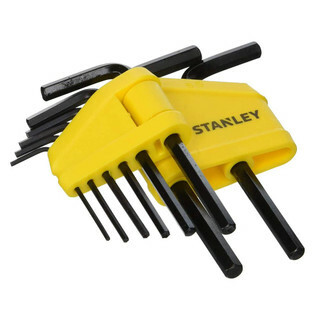
Stanley Allen Keys (Hex Keys)
Stanley allen keys are for the fixings that round off cheap sets fast. From flat-pack adjustments to plant covers and machine bolts, they give you proper grip.
When you're tightening socket screws in awkward brackets, setting machinery, or rebuilding site kit, a decent set matters. Stanley hex keys are the sort of simple hand tools that earn their keep because the sizing is clear, the steel holds up, and the shape lets you get onto fixings without chewing them up. Pick the right Stanley allen key set for metric, imperial, folding, or ball end work and get the job done properly.
What Are Stanley Allen Keys Used For?
- Tightening socket head fixings on site plant guards, door hardware, brackets, and tool servicing jobs is where Stanley allen keys save time and stop you slipping off rounded bolts.
- Working inside cabinets, bike stores, machine housings, and other cramped spots is easier with Stanley hex keys because you can get onto recessed fasteners where a spanner or socket will not fit.
- Assembling benches, shelving, workstations, and flat-pack site furniture is quicker with a Stanley hex key set when you need the right size to hand instead of rummaging through mixed loose keys.
- Adjusting hinges, handles, clamps, and set screws during snagging and maintenance work is a common use for Stanley metric hex keys and imperial allen keys, especially on mixed old and new fittings.
- Reaching awkward angled fasteners on guards, frames, and equipment covers is exactly what Stanley ball end hex keys are for when straight access is blocked by surrounding parts.
Choosing the Right Stanley Allen Keys
Sorting the right set is simple: match the fixing size and access, not just the price on the tag.
1. Metric or Imperial
If you are working on most modern site hardware, furniture, and general fixings, metric usually covers it. If you touch older machinery, imported gear, or mixed workshop kit, do not guess. Keep imperial allen keys as well or you will round the head with a near-match.
2. Loose Keys or Folding Hex Keys
If you work off the bench and want full reach, standard loose Stanley hex keys are the better call. If you want something compact for the van, snagging bag, or quick adjustments, Stanley folding hex keys are harder to lose and faster to grab.
3. Standard End or Ball End
If you can get straight onto the fixing, a standard end gives the strongest bite. If access is awkward behind frames, guards, or fittings, Stanley ball end hex keys let you work at an angle, but use the straight end first if the fixing is tight.
4. Single Key or Full Set
If one size keeps coming up on the same bit of kit, a single replacement key makes sense. For site maintenance, install work, or workshop jobs, a full Stanley allen key set is the sensible option because mixed fixings always turn up when you least need them.
Who Uses These on Site?
- Maintenance teams use Stanley allen keys for routine tightening, repairs, and machine adjustments because socket screws turn up everywhere from access panels to workshop kit.
- Kitchen fitters, shopfitters, and joiners keep a Stanley allen key set close by for assembling units, adjusting hardware, and sorting fittings that need a clean, flush hex drive.
- Mechanical fitters and plant engineers reach for Stanley hex keys when guarding, couplings, and service covers need stripping and refitting without damaging the fastener heads.
- Sparkies and plumbers use them for control gear covers, pump sets, clamps, and specialist brackets where a compact key gets into tighter spaces than bulkier hand tools.
- Van and workshop teams usually keep both Stanley metric hex keys and imperial allen keys in the drawer, because older imported kit and newer fittings rarely stick to one system.
Choose the Right Stanley Allen Keys for the Job
Use this quick guide to avoid buying the wrong set for the fixings in front of you.
| Your Job | Category or Type | Key Features |
|---|---|---|
| General site assembly and maintenance | Stanley metric hex key set | Covers common modern fixing sizes, clear organisation, and quick grab access. |
| Older machinery or imported equipment repairs | Stanley imperial allen keys | Proper imperial sizing stops slop in the head and helps avoid rounded fasteners. |
| Awkward access behind covers and brackets | Stanley ball end hex keys | Angled entry helps where straight line access is blocked by surrounding parts. |
| Snagging, van work, and quick call-out jobs | Stanley folding hex keys | Compact format stays together in one unit and is less likely to go missing. |
| Bench work with mixed fasteners | Stanley allen key set with metric and imperial options | Gives wider coverage when fittings are varied and you cannot afford to guess sizes. |
Common Buying and Usage Mistakes
- Using a metric key in an imperial fixing, or the other way round, is the quickest way to round out the socket. If the fit feels loose at all, stop and get the correct size.
- Buying a tiny folding set for regular bench or workshop work sounds convenient, but you lose reach and leverage on stubborn fixings. For heavier use, go for a full-length Stanley allen key set.
- Leaning on the ball end to crack off seized fixings will shorten tool life and can damage the tip. Use the straight end for first break, then switch to the ball end when the bolt is moving.
- Leaving loose hex keys rolling round the van means you always lose the size you need most. A holder or folding format saves time and stops you replacing half a set.
- Ignoring worn tips leads to slipping, damaged screw heads, and sore knuckles. If a key is visibly rounded or polished off at the end, replace it before it ruins the next fixing.
Metric vs Imperial vs Ball End
Metric Hex Keys
Metric Stanley allen keys are the everyday choice for most modern fixings in furniture, hardware, site equipment, and general maintenance. If your work is mostly current UK and European fittings, this is where you start.
Imperial Allen Keys
Imperial sizes matter when you are working on older machinery, imported kit, or fixings that simply are not metric. They are not optional substitutes. Use them when the fastener calls for them or risk rounding the socket.
Ball End Hex Keys
Ball end Stanley hex keys come into their own when a cover, frame, or bracket blocks straight access. They are better for awkward angles and faster run-down, but they are not the best choice for high breakaway torque.
Folding Hex Keys
Folding hex keys are the handy van and snagging option because everything stays in one place. They are ideal for quick adjustments and call-outs, but full loose keys usually give better reach on deeper or more recessed fixings.
Maintenance and Care
Wipe Off Dust and Grit
Give the keys a quick wipe after workshop or site use. Dust, swarf, and plaster grit on the tip can stop the key seating fully and wear both tool and fixing faster.
Keep Sets Together
Store loose Stanley allen keys back in their holder after use rather than chucking them in the van tray. It saves hunting for the right size and stops the smallest keys disappearing first.
Check the Working Ends
Inspect the tips for rounding, twisting, or polished wear. Once the edges start going off, the key will slip sooner and damage fasteners, so swap it out before it becomes a problem.
Keep Them Dry
A damp toolbox or van floor will eventually mark any steel tool. Dry them off after wet jobs and do not leave them sitting in water trays, mud, or spilled coolant.
Replace Damaged Singles Early
If one key is bent, cracked, or badly worn, replace it before the rest of the set gets blamed. One damaged size can wreck several fixings in a day if it is a commonly used one.
Why Shop for Stanley Allen Keys at ITS?
Whether you need a compact Stanley folding hex key set for the van, a full Stanley allen key set for the bench, or the right metric, imperial, and ball end options for mixed maintenance work, we stock the proper range. It is all held in our own warehouse, in stock, and ready for next day delivery so you can get the right size on site without hanging about.
Stanley Allen Keys FAQs
What is the difference between an Allen key and a hex key?
In everyday trade use, there is basically no difference. Both names mean the same L shaped tool for turning hex socket fixings. Allen started as a brand name years ago, while hex key describes the drive shape. On site, most people use both names interchangeably.
Do Stanley hex key sets include metric and imperial sizes?
Some Stanley hex key sets are metric, some are imperial, and some ranges cover both through separate sets. The important bit is not to assume. Check the listing before you buy, because using the wrong system on a socket screw is how heads get rounded and jobs get slowed down.
What is a ball end hex key for?
A ball end hex key is for getting onto a fixing when straight access is blocked. It lets you turn the fastener at a slight angle, which is handy behind brackets, covers, and machine parts. It is useful, but for tight breakaway torque the straight end is still the better option.
Are Stanley Allen keys made from hardened steel?
Yes, Stanley Allen keys are typically made from hardened steel so they hold their shape better under repeated use. That said, hardened does not mean indestructible. If you force the wrong size into a damaged fixing or use too much leverage, you can still twist or wear the tip.
What hex key sizes are most commonly needed?
For general site hardware, furniture, and maintenance, the smaller to mid metric sizes usually see the most use, with 3mm, 4mm, 5mm, 6mm, and 8mm being common. On older or imported kit, imperial sizes can crop up just as often, which is why mixed workshops usually keep both on hand.
Will Stanley folding hex keys do for everyday site work?
Yes, for snagging, call-outs, and quick adjustments they are a solid choice because they are compact and harder to lose. For all-day bench work or deeper recessed fixings, a full loose key set is usually better because you get more reach and a cleaner working angle.