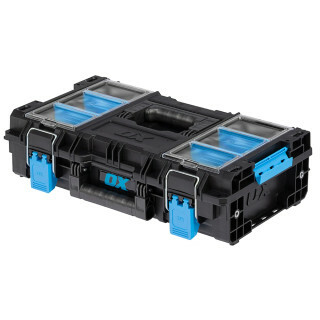
OX Tools TOOLTREK
OX Tooltrek is modular storage built for lads sick of loose kit, cracked boxes, and wasted time hunting gear around site and the van.
If your kit gets dragged through plots, up stairs, and in and out the van all week, the OX Tooltrek system makes life easier. It is proper OX-built storage with stackable boxes, cases, trolleys, and site-ready add-ons that lock together and put up with abuse. Start with the bits you actually need now, then build your OX tooltrek storage around the work you do.
What Is OX Tooltrek Best At?
- Loading out for first fix is quicker when your drills, fixings, hand tools, and testers are packed in one locked stack instead of spread across three battered tubs.
- Working plot to plot is easier with OX Tooltrek modular storage because the boxes clip together properly and move as one load rather than shifting about in the van.
- Keeping small gear under control on snagging and maintenance jobs is simpler when organisers stop screws, clips, blades, and fittings getting mixed up at the bottom of a box.
- Setting up a temporary work area on site is more straightforward when the system includes transport and support kit that can handle rough floors, ramps, and repeated daily use.
Choosing the Right OX Tooltrek
Sorting the right one is simple: match the stack to the work, not the other way round. Do not buy one massive box if most of your day is spent hunting small parts.
1. Boxes for bulk kit, organisers for the fiddly stuff
If you carry drills, chargers, blades, and heavier hand tools, start with the larger OX TOOLTREK boxes and organisers. If your day revolves around screws, clips, terminals, seals, and small consumables, make sure organisers are part of the stack from day one.
2. Cases suit service and smaller tool loads
If you are in and out of occupied properties or doing service work, OX TOOLTREK tool cases make more sense than a full deep box. They are easier to lift, quicker to open, and less of a faff when you only need a selected kit load.
3. Get a trolley if you move kit any distance
If you are parking half a street away, crossing larger sites, or dragging gear through new build plots, buy into OX TOOLTREK trolleys early. Carrying separate boxes sounds fine until it is raining and you are on your third trip.
4. Think beyond storage if your setup lives on site
If your storage system doubles as part of your working setup, look at OX TOOLTREK trestles and saw horses as well. They make sense for chippies, kitchen fitters, and anyone setting up cut stations or bench space on the job.
Who Uses These on Site?
- Sparkies rate OX Tooltrek for keeping testers, fixings, glands, and power tool kit separated, so they are not digging through one big box halfway through a board change.
- Chippies use the system for first and second fix gear, with one case for fixings, another for hand tools, and a bigger box underneath for saws and site essentials.
- Plumbers and heating engineers like modular storage because they can split fittings, press tools, consumables, and fault-finding gear by job rather than unloading everything at every callout.
- Maintenance teams and site managers use these stacks when they need tidy, mobile storage that rolls from van to plant room without loose gear going missing.
The Basics: Understanding OX Tooltrek
The point of OX Tooltrek is not just having another tool box. It is a modular system that lets you stack, lock, move, and split your kit depending on the job.
1. Modular stacking
Each part of the OX tooltrek system is designed to connect with the others, so you can build one stack for transport and then break it down when you reach the work area. That saves time and keeps the van tidier.
2. Different storage for different kit
Deep boxes are for bigger tools and rougher gear. Cases suit selected hand tools and service kit. Organisers stop small parts getting lost. Picking the right mix matters more than just buying the biggest unit.
3. Mobility is part of the system
This is built around moving gear properly, not just storing it. Once the boxes are clipped together on a trolley base, one person can shift a full working load across site without balancing loose tubs and bags.
OX Tooltrek Extras That Make the System Work Harder
The right add-ons stop the usual site nonsense of extra trips, mixed-up fixings, and nowhere decent to work from.
1. Organisers and inserts
These save you from tipping out a full box just to find the right screws, blades, connectors, or clips. If you deal with small parts every day, proper organiser sections pay for themselves in time alone.
2. Trolley bases
A trolley base stops you doing the awkward two-box carry from van to plot. If your gear travels any distance, this is the bit that turns stacked storage into something actually useful.
3. Additional tool cases
A separate case for testing gear, hand tools, or service tools means you do not have to drag the full stack in for smaller jobs. It keeps specialist kit protected and easier to grab.
4. Trestles and saw horses
These are worth adding if your storage system is part of your work setup. They give you a quick cutting or bench area on site, which beats working off the floor or borrowing whatever is lying about.
Choose the Right OX Tooltrek for the Job
Pick the setup by what you carry most and how far you move it.
| Your Job | Category or Type | Key Features |
|---|---|---|
| Daily first fix with power tools and consumables | Large modular box and organiser stack | Deep storage for tools, separate small-parts trays, stackable transport |
| Service work and callouts | Compact tool case | Quicker access, easier lifting, better for selected kits and occupied properties |
| Plot to plot moves on bigger sites | Trolley-based system | Wheels, stacked transport, less carrying, faster load-in and load-out |
| Joinery and site setup work | Storage plus trestles and saw horses | Mobile kit storage and a proper working platform in one setup |
| Snagging and consumables-heavy jobs | Organiser-led setup | Compartment control, quicker sorting, less wasted time hunting parts |
Common Buying and Usage Mistakes
- Buying one oversized box for everything sounds cheaper, but it usually means a heavier lift, a mess inside, and more time wasted finding gear. Split big tools and small consumables into separate Tooltrek units.
- Skipping the trolley on a larger setup is a false economy. Once the stack is loaded with tools, batteries, and fixings, carrying it by hand soon gets old and slows the day down.
- Not planning the stack around your trade leads to dead space and awkward access. A spark or plumber needs organisers and cases in a different mix to a chippy carrying bigger kit.
- Overloading the top case with the heaviest tools makes the whole stack less stable and more annoying to move. Keep weight low in the main box and lighter gear higher up.
- Assuming all modular storage systems cross-fit is where people get caught out. Check compatibility first rather than hoping clips and rails match another brand.
Tool Cases vs Organisers vs Full Modular Stacks
Tool Cases
Best for service engineers, snagging, and smaller daily kits where you only need selected tools. Easier to carry and quicker to open, but they do not swallow bulkier gear like a full box setup will.
Organisers
These are the right call when the job lives or dies by keeping screws, connectors, fixings, and fittings sorted. Brilliant for control, but not a substitute for deeper storage if you are carrying power tools as well.
Full Modular Stacks
This is the proper answer for site lads moving a full kit load through the week. You get one system for transport, storage, and access, though it only really pays off if you build the stack around your actual workload.
Trestles and Saw Horses
Not storage in the strict sense, but useful if your setup needs to become a working station on site. Better for joinery and fit-out jobs where you need support for cuts, assembly, or temporary bench work.
Maintenance and Care
Clear out dust and fixings
Do not let plaster dust, swarf, and loose screws build up in the catches and corners. A quick cleanout stops lids jamming and keeps the stack easier to shut properly.
Check latches and connection points
If the system is clicked together and pulled apart every day, give the clips and locking points a regular once-over. A damaged latch is worth sorting early before a loaded box parts company on the stairs.
Store heavy gear properly
Keep the heavier tools low down and do not leave boxes permanently overloaded in the van. It helps the structure last longer and makes the stack safer to move.
Dry it off after wet site days
The system is built for site use, but it still pays to wipe down wet boxes before storing them up. That keeps the contents in better nick and stops trapped moisture ruining labels, paperwork, or consumables.
Replace damaged units before they become a problem
A cracked lid or failing wheel usually gets ignored until it costs you time on a busy day. Replace worn parts or damaged units early rather than fighting the system every morning.
Why Shop for OX Tooltrek at ITS?
Whether you need a single add-on case or a full OX tooltrek storage setup, we stock the proper range in one place, including OX TOOLTREK boxes and organisers, OX TOOLTREK tool cases, OX TOOLTREK trolleys, OX TOOLTREK trestles and saw horses, and the wider OX tool storage range. It is all held in our own warehouse, in stock, and ready for next day delivery.
OX Tooltrek FAQs
What is OX Tooltrek?
OX Tooltrek is OX's modular tool storage system. It covers stackable tool boxes, organisers, cases, trolleys, and related site kit that clips together so you can move tools and consumables as one proper setup instead of loose separate boxes.
How does the OX Tooltrek system work?
It works by letting you build a stack from compatible Tooltrek units. You clip boxes, organisers, or cases together for transport, usually onto a wheeled base if needed, then split them apart when you reach the job. It is basically a way of keeping gear sorted while making it easier to move.
Are OX Tooltrek products any good?
Yes, if you want hard-working site storage rather than something that lives in a garage. OX Tooltrek is aimed at trade use, so the main draw is tougher construction, proper stackability, and layouts that make sense for carrying mixed tool and fixing loads. Like any system, it lasts best when you choose the right units and do not overload them.
Is Tooltrek compatible with other storage systems?
Do not assume it is. Modular storage brands often look similar, but clip systems and footprints can differ. If you need one stack that locks together properly, stick with matching OX Tooltrek components rather than hoping another system will fit.
What is included in the OX Tooltrek range?
The range typically includes tool boxes, organisers, tool cases, trolleys, and support kit such as trestles and saw horses. The exact mix depends on what is listed, but the idea is a full modular storage setup you can build up as your workload changes.
Is OX Tooltrek worth it if I only do smaller jobs?
Yes, but buy sensibly. If you are mainly doing callouts, snagging, or light maintenance, start with a compact case and an organiser rather than going straight for a full stack. You still get the system benefits without hauling around more box than you need.
Will OX Tooltrek hold up in a van full time?
That is exactly the sort of use it is meant for. It is built for repeated loading, unloading, and site travel. Just be sensible with weight distribution, keep the latches clear of debris, and do not let one overloaded box take all the punishment.