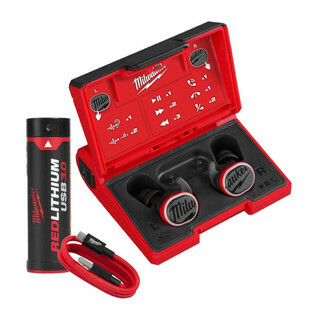
Milwaukee RedLithium USB Ear Defenders
Working around saws and breakers? Milwaukee USB ear defenders combine rechargeable audio with hearing protection.
For fitters and maintenance teams, the right fit matters more than the Bluetooth connection: loose ear tips leave noise getting through. Check the protection rating, helmet compatibility and charging arrangement, then choose the kit that suits your shift.
What Are Milwaukee USB Ear Defenders Used For?
- Protect your hearing during cutting, drilling and workshop machining by choosing a model and ear-tip combination suited to the noise assessment.
- Take Bluetooth calls between tasks without removing correctly fitted hearing protection, provided your site permits connected audio equipment.
- Work around helmet straps and face protection with compact in-ear protection where over-ear cups would interfere, checking that every item of PPE still fits correctly.
- Listen to permitted audio during repetitive workshop or maintenance work without substituting ordinary music earbuds for rated hearing protection.
Choosing the Right Milwaukee USB Ear Defenders
Choose the hearing protection first and the Bluetooth features second; a rechargeable battery cannot make up for a poor seal.
1. Check Whether You Need Earbuds or Ear Muffs
Do not assume this category means rechargeable ear muffs. Check Milwaukee REDLITHIUM USB Bluetooth Earbuds for the connected in-ear option. If you need protection you can put on and remove frequently, compare the fit and convenience of over-ear protection before buying.
2. Match Attenuation to the Noise Assessment
Use the declared SNR and frequency attenuation data for the exact model and fitted tips. Do not simply buy the highest number: insufficient protection risks hearing damage, while excessive attenuation can make essential communication harder.
3. Check Runtime and Charging Separately
If you work long shifts, check both the earbuds' single-charge runtime and the extra charge available from the case. A total runtime figure includes recharging stops; it does not mean the earbuds run continuously for that long.
4. Check Site Rules Before Paying for Bluetooth
If music and phone calls are prohibited in your work area, choose protection for fit and attenuation rather than connectivity. Where audio is allowed, confirm how ambient listening, calls and playback operate before relying on them during a shift.
Who Uses Milwaukee USB Ear Defenders?
Chippies, fitters and workshop teams use rechargeable hearing protection around noisy machinery where the assessed protection level is suitable. Maintenance engineers may also need Bluetooth calling between tasks. For anyone wearing a hard hat or visor, the decision starts with a secure ear seal and compatible PPE, not the audio features.
The Basics: Understanding Rechargeable Hearing Protection
Hearing protection, Bluetooth audio and ambient listening do different jobs. Keep those functions separate when comparing specifications.
1. The Seal Provides Passive Protection
Correctly fitted ear tips reduce the sound reaching your ears. The battery powers the electronic functions, not the physical seal. Ordinary active noise-cancelling earbuds are not a substitute for hearing protection with the appropriate declared rating.
2. Bluetooth Connects Your Audio
Bluetooth carries calls and media from a compatible device. It does not increase the hearing protection rating, and you should stop machinery and move somewhere safe before handling calls.
3. Ambient Listening Helps You Hear Surroundings
Milwaukee's JOBSITE AWARE function on equipped earbuds uses microphones to feed surrounding sound into the earphones. It is not a guarantee that you will hear every alarm or approaching vehicle, so site controls and safe working arrangements still apply.
Accessories to Keep Your Hearing Protection Usable
Keep the correct consumables and charging kit available so a damaged tip or flat charging case does not interrupt the job.
1. Approved Replacement Ear Tips
Keep the correct replacement tips for your exact model. Worn, damaged or badly fitting tips undermine the seal; generic music-earbud tips may not provide the declared attenuation.
2. Compatible USB Charging Cable and Power Supply
Match the cable connector and power supply to the charging case specification. Keep a suitable set at your charging point rather than discovering at the end of a shift that the van cable does not fit.
Choose the Right Milwaukee Hearing Protection for the Job
Start with the required protection and PPE fit, then decide whether you need connected audio.
| Your Job | Protection Type | Key Features |
|---|---|---|
| Workshop tasks where Bluetooth audio is permitted | REDLITHIUM USB Bluetooth earbuds | Rated attenuation, correctly sized tips, single-charge runtime and charging case capacity. |
| Work requiring compact protection without connected audio | Passive in-ear protection | Suitable attenuation, secure fit and straightforward replacement of worn tips or plugs. |
| Intermittent noisy tasks with frequent removal between jobs | Over-ear defenders | Accessible ear cups, intact cushions and a seal unobstructed by other PPE. |
| Helmet-required work needing mounted ear cups | Compatible helmet-mounted defenders | Approved helmet attachment, correct cup position and suitable attenuation. |
Common Buying and Usage Mistakes
- Buying by the Bluetooth description alone can leave you with the wrong protection for the task. Check the exact model's declared attenuation against the noise assessment.
- Using whichever ear tips feel loosest can leave gaps that let noise through. Follow the fitting instructions and use the correct size for each ear.
- Treating charging-case capacity as uninterrupted runtime leads to flat earbuds mid-shift. Check the single-charge figure and plan charging breaks.
- Assuming hear-through makes music safe around moving plant ignores the risk of missed warnings. Follow site rules and do not rely on electronic listening to manage vehicle hazards.
- Assuming all Milwaukee ear defenders attach to a helmet can mean buying incompatible kit. Check the mounting system and approved helmet combination before ordering.
USB Bluetooth Earbuds vs Passive In-Ear Defenders vs Ear Muffs
USB Bluetooth Earbuds
Choose rechargeable Bluetooth earbuds when permitted calls or audio genuinely help your working day. They avoid external ear cups, but need careful tip fitting, clean charging contacts and a charging routine.
Passive In-Ear Defenders
Choose Milwaukee In Ear Defenders when you want compact protection without managing Bluetooth or batteries. Correct insertion remains essential, and handling plugs with dirty hands creates a hygiene problem.
Over-Ear Defenders
Compare Milwaukee Over Ear Defenders for protection that is straightforward to put on between intermittent tasks. Ear cups are bulkier, and eyewear, hair or headwear can interfere with the cushion seal.
Helmet-Mounted Defenders
Check Milwaukee BOLT Ear Defenders when you need cups mounted to a compatible helmet. Confirm the approved combination rather than assuming a BOLT attachment fits every hard hat.
Maintenance and Care
Clean According to Tip Material
Follow the instructions for the supplied foam or silicone tips; they may need different treatment. Do not soak the earbuds or push dirt into microphone and speaker openings.
Keep Charging Contacts Dry
Remove dust and moisture as instructed before putting the earbuds into their charging case. Dirty contacts can interrupt charging and leave one earbud flat when you need it.
Inspect the Seal Before Use
Replace tips that are split, hardened or no longer fit securely. If the earbud housing is damaged or protection seems compromised, stop using it for hazardous noise and arrange inspection or replacement.
Store Away from Site Debris
Keep clean, dry earbuds in their case rather than loose beside screws and drill bits. Follow the stated storage and charging temperature limits, especially when leaving kit in a van.
Why Shop for Milwaukee USB Ear Defenders at ITS?
ITS stocks the full Milwaukee REDLITHIUM USB hearing protection range, with connected earbuds and related hearing protection options to compare for your working setup. Stock is held in our own warehouse, ready for next-day delivery, subject to availability and delivery terms shown when ordering.
Milwaukee USB Ear Defenders FAQs
Are Milwaukee ear defenders Bluetooth?
The REDLITHIUM USB Bluetooth jobsite earbuds have Bluetooth connectivity for compatible phones and audio devices. Not all Milwaukee hearing protection has Bluetooth, so check the exact product rather than assuming passive plugs or ear muffs offer the same functions.
What SNR rating are Milwaukee ear defenders?
There is no single SNR rating across Milwaukee ear defenders. It varies by model and, for in-ear products, can vary with the approved tip type. Use the declared SNR and frequency attenuation data for the exact product and fitted tips, then match that protection to your workplace noise assessment.
Can you take calls on Milwaukee ear defenders?
The REDLITHIUM USB Bluetooth earbuds support calls through a paired compatible phone. That does not mean calls are appropriate during machinery operation: stop the task, move somewhere safe and follow your site's phone policy. Background machinery can also make conversation harder.
How long does the Milwaukee ear defender battery last?
Milwaukee quotes up to 10 hours on a single charge for its REDLITHIUM USB Bluetooth jobsite earbuds, with up to 70 hours in total using the specified charged case setup. The total includes recharging between uses, not continuous listening. Check the exact kit specification; volume, calls, operating modes and battery condition affect runtime.
Do Milwaukee ear defenders fit on a hard hat?
The USB Bluetooth earbuds sit inside your ears; they do not clip onto a hard hat. Check that they remain correctly fitted with your helmet straps and other PPE. For mounted ear cups, choose a helmet-compatible defender and confirm the approved helmet and attachment combination.
Are Milwaukee ear defenders comfortable all day?
Comfort depends on your ears, tip size and correct insertion, so an all-day fit cannot be guaranteed. Try the supplied sizes according to the instructions; each ear may need a different size. Do not accept pain or loosen the fit to relieve it, because that can compromise protection.
Can you listen to music on Milwaukee ear defenders on site?
The Bluetooth earbuds can play music, but only use that function where your site rules and risk assessment allow it. Rated hearing protection does not make distraction harmless. Keep playback at a sensible level and do not use music where it could interfere with warnings, instructions or safe working around plant.
Do Milwaukee ear defenders have hear-through?
The REDLITHIUM USB Bluetooth jobsite earbuds feature Milwaukee's JOBSITE AWARE ambient listening function. Check the exact model for its controls and operating instructions. It helps bring surrounding sound into the earbuds, but does not guarantee you will hear every warning or replace the site's safety arrangements.