Milwaukee M18 Batteries, Chargers and Mounts
Milwaukee M18 battery and charger kit keeps cordless tools running through full site shifts, from first fix and drilling out to clean-up and snagging.
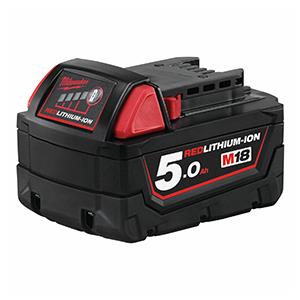
If you're already on Milwaukee M18, this is the stuff that stops jobs grinding to a halt. Pick the right Milwaukee M18 battery for the tool and workload 5.0Ah for everyday van stock, High Output and 8Ah or 12Ah packs for saws and grinders, and the right Milwaukee M18 charger when turnaround matters. It is the practical end of the system that keeps your gear earning, not sitting dead on the floor. If you are also running other Milwaukee platforms, have a look at Milwaukee FORGE Batteries, Chargers and Mounts, Milwaukee PACKOUT Batteries, Chargers and Mounts, Milwaukee M12 Batteries, Chargers and Mounts, Milwaukee Hexon Batteries, Chargers and Mounts, and the wider Milwaukee Batteries, Chargers and Mounts range.
What Are Milwaukee M18 Batteries and Chargers Used For?
- Keeping drills, impact drivers and combis working through first fix means a Milwaukee M18 5Ah battery is often the go to, as it gives decent runtime without making the tool nose heavy in the hand.
- Running grinders, recip saws and SDS kit on tougher jobs is where a Milwaukee M18 High Output battery or 8Ah and 12Ah pack earns its keep, especially when standard packs start dropping off too quickly.
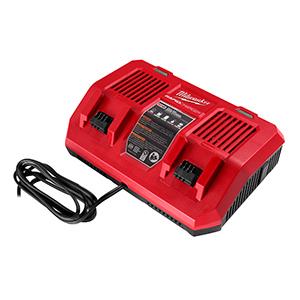
- Turning batteries round between tasks is exactly what a Milwaukee M18 charger is for, whether you keep one in the workshop, one in the van, or a Milwaukee M18 rapid charger on site to stop crews waiting about.
- Covering long snagging lists, maintenance rounds and fit out work is easier with a Milwaukee M18 battery and charger setup that lets you rotate packs instead of nursing the last bar all afternoon.
- Mounting charging kit properly in vans, workshops and stores helps keep batteries together, off the floor and ready to grab, rather than lost under fixings tubs and dead when you need them.
Choosing the Right Milwaukee M18 Battery
Match the pack and charger to the tool first. That saves more grief than chasing the biggest battery on the shelf.
1. Capacity for the Job
If you are mainly on drills, impacts and lights, a Milwaukee M18 5Ah battery is the sensible everyday choice. If you are running grinders, saws, blowers or bigger SDS tools, step up to a Milwaukee M18 8Ah battery or Milwaukee M18 battery 12Ah pack so you are not swapping batteries every hour.
2. Standard Packs vs High Output
If your tools pull hard under load, go for a Milwaukee M18 High Output battery. They suit heavier demand better and make more sense on power hungry kit. For lighter everyday work, standard RedLithium packs still do the job without adding as much bulk.
3. FORGE if Fast Turnaround Matters
If downtime is costing you money, a Milwaukee M18 FORGE battery is worth a look. They are built around faster charging and high demand use. If your batteries mostly charge overnight and you are not hammering big tools all day, standard packs are usually the better value buy.
4. Pick the Right Charger Speed
A standard Milwaukee M18 charger is fine if you rotate a few packs and charge at the yard. If you need batteries back in service fast, a Milwaukee fast charger M18 or Milwaukee M18 rapid charger makes more sense. Just remember faster charging matters most when the batteries are actually being cycled hard every day.
Who Uses These on Site?
- Sparkies rely on Milwaukee M18 battery packs for combis, SDS drills and bandsaws, and they usually keep a charger in the van so batteries are topped up between callouts and board changes.
- Chippies and fitters use these for circular saws, nailers and impact drivers, with 5Ah packs covering most fixing work and bigger packs coming out when they are cutting all day.
- Plumbers and heating engineers swear by them for press tools, recip saws and pipe prep, because flat batteries halfway through a plant room job waste more time than most lads can spare.
- Groundworkers and builders reach for higher capacity Milwaukee battery M18 options when they are on heavier kit, where more runtime and stronger output matter more than shaving a bit of weight.
- Maintenance teams and site managers keep chargers and spare packs in stores, vans and cabins so shared M18 tools are actually ready to use when someone signs them out.
The Basics: Understanding Milwaukee M18 Batteries and Chargers
With M18 kit, the main things to understand are capacity, output and charge speed. Get those three right and your tools feel better on the job straight away.
1. Amp Hours Mean Runtime
The Ah rating tells you roughly how long the battery will keep going. A Milwaukee M18 5.0 battery is the usual all rounder for daily site work, while 6Ah, 8Ah and 12Ah packs are for longer running or more demanding tools.
2. Output Changes Tool Performance
It is not just about runtime. Higher output packs, including Milwaukee M18 High Output battery options, help tools hold their power better when cutting, grinding or drilling hard materials, so the job gets done without the tool feeling flat.
3. Chargers Control Downtime
A Milwaukee M18 battery charger does more than top packs up. Charger type affects how quickly you can get back to work. That is why a workshop setup may suit a standard charger, while a busy crew often wants a Milwaukee multi charger M18 or rapid charger to keep packs cycling all shift.
Milwaukee M18 Accessories That Keep You Working
A couple of smart add ons can save a lot of dead time when you are running cordless gear all week.
1. Spare Batteries
This is the obvious one, but lads still get caught out. A second or third Milwaukee M18 battery stops the whole day being planned around one pack on charge. It is especially worth it if you are sharing tools on site or using grinders, saws or vacs.
2. Rapid and Multi Chargers
A Milwaukee M18 rapid charger or multi charger saves the usual mess of loose chargers and half charged packs. If you have got several batteries in rotation, this is what stops the bench turning into a queue.
3. Mounts and Storage Fixings
Battery and charger mounts make a real difference in vans and workshops. They stop packs sliding about, terminals getting knocked, and chargers disappearing under cables and fixings.
Choose the Right Milwaukee M18 Battery for the Job
Here is the simple way to sort the right pack or charger for the work in front of you.
| Your Job | Battery or Charger Type | Key Features |
|---|---|---|
| Everyday drilling, fixing and first fix | Milwaukee M18 5Ah battery | Good balance of runtime, weight and cost for combis, impacts and general van stock. |
| Long cutting, grinding or heavier cordless use | Milwaukee M18 8Ah High Output battery | More runtime and stronger output for tools that work hard under load. |
| Big SDS, saws and all day demanding applications | Milwaukee M18 12Ah battery | Maximum runtime for heavier kit where fewer battery swaps matter more than tool weight. |
| Fast battery turnaround on busy jobs | Milwaukee M18 rapid charger | Quicker charge times to keep packs cycling when standard charging is too slow. |
| Workshop, van or team charging setup | Milwaukee multi charger M18 | Keeps several packs organised and charging together instead of loose single chargers everywhere. |
Common Buying and Usage Mistakes
- Buying purely on the biggest Ah rating can backfire because a 12Ah pack is not always the right fit for hand tools. It gives longer runtime, but it also adds weight and bulk, so for impacts and combis a 5Ah battery is often the better everyday choice.
- Using standard packs on high demand tools all day usually means more swaps and a tool that feels flat under load. If you are regularly on grinders, saws or bigger SDS machines, move up to High Output or FORGE packs.
- Assuming any charger will do wastes time. A basic Milwaukee M18 charger is fine for overnight charging, but if the battery has to be back on the tool quickly, you need a rapid charger or a better rotation of spare packs.
- Leaving batteries loose in the van shortens their life faster than most realise. Terminals get knocked, casings get battered and chargers go missing, so use mounts or proper storage rather than chucking them in with blades and fixings.
- Running one battery and one charger for a full cordless setup sounds cheaper at first, but it slows the whole day down. A proper Milwaukee M18 battery and charger setup means at least one pack working while another is charging.
5Ah vs High Output vs FORGE
Milwaukee M18 5Ah Battery
This is the sensible all rounder for most trades. It suits drills, impacts and general daily use without making the tool too heavy. If you want one pack that covers the widest spread of jobs, start here.
Milwaukee M18 High Output Battery
High Output packs are the better pick for tools that pull harder, such as grinders, saws and bigger SDS drills. They are not just about lasting longer. They help the tool hold power better when the cut or hole starts fighting back.
Milwaukee M18 FORGE Battery
FORGE is for crews who are charging hard, using hard and cannot afford long waits. If rapid turnaround matters and your batteries are in constant rotation, FORGE makes sense. For lighter use and overnight charging, standard RedLithium packs are usually enough.
Standard Charger vs Rapid Charger
A standard Milwaukee charger M18 setup is fine for a couple of packs charged at the yard. A Milwaukee M18 rapid charger is the right move if your batteries are being emptied and reused through the same shift.
Maintenance and Care
Keep Contacts Clean
Wipe dust and site grime off the battery terminals and charger contacts now and then. Dirty contacts can interrupt charging and make a good battery look faulty when it is not.
Store Them Dry and Out of Heat
Do not leave packs baking on the dashboard or soaking in the back of the van. Batteries last better when they are stored somewhere dry and out of temperature extremes.
Check Casings After Knocks
If a battery has taken a proper drop, inspect the casing before clipping it back on a tool. Cracks, loose sections or damaged terminals are your sign to stop using it and replace it.
Use the Right Charger
Stick to the correct Milwaukee M18 battery charger for the pack. Using the right charger protects charge performance and helps you avoid the usual confusion when different Milwaukee platforms are in the same van or workshop.
Retire Tired Packs Sensibly
If a pack is running down far quicker than the rest or charging oddly every time, do not keep forcing it into the rotation. Mark it up, test against another charger if needed, and replace it before it slows the whole job down.
Why Shop for Milwaukee M18 Batteries and Chargers at ITS?
Whether you need a single Milwaukee M18 5Ah battery, a Milwaukee M18 12Ah battery, a Milwaukee M18 charger or a full Milwaukee M18 battery and charger setup, we stock the range that site lads actually use. It is all in our own warehouse, ready for next day delivery, so you can get dead packs replaced and keep the tools moving.
Milwaukee M18 Battery and Charger FAQs
How long does an M18 battery take to charge?
It depends on the battery size and charger type. A smaller pack on a rapid charger will be back up much quicker than a big 8Ah or 12Ah pack on a standard charger. In real site use, the key point is this. Bigger batteries take longer, and if you are burning through packs all day, a Milwaukee M18 rapid charger is worth having.
Are all Milwaukee M18 batteries interchangeable?
Yes, Milwaukee M18 batteries are built to fit the M18 platform, so the packs are interchangeable across M18 tools. What changes is how well each pack suits the tool. A 5Ah pack is spot on for many hand tools, while heavier demand tools often work better on High Output or larger capacity batteries.
What is the difference between M18 Forge and Red Lithium batteries?
RedLithium is the standard battery family most trades already know and use across the M18 range. FORGE is the step up when you want faster charging and stronger performance for hard running tools and tighter battery rotation. If you charge overnight and mainly use drills and impacts, RedLithium is usually enough. If you are hammering bigger kit and need fast turnaround, FORGE makes more sense.
Can I use an M12 charger for an M18 battery?
No. An M12 charger is for M12 packs, not M18 batteries. You need a compatible Milwaukee M18 charger, or a charger designed to handle both systems if Milwaukee specifies it. Best not to guess here, because the wrong charger just wastes time and leaves you with a dead pack when the job is waiting.
Is a Milwaukee M18 12Ah battery worth it, or is it overkill?
It is worth it on the right tools. If you are running big saws, SDS drills, vacs or other power hungry kit, the extra runtime is useful and you will swap less often. On smaller hand tools, it can feel bulky, so a 5Ah or 6Ah pack is often the smarter everyday option.
Do bigger M18 batteries make the tool more powerful?
Sometimes, yes. Higher output packs can help demanding tools hold performance better under load, especially when cutting or grinding. It is not magic, and the tool still matters, but the right battery can stop a hard working machine feeling sluggish.