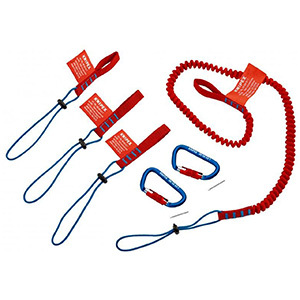
Knipex Tethered Tools PPE
Knipex tethered tools PPE helps stop dropped kit causing damage or injury when you're working at height, on platforms, towers, plant, or scaffold.
If you're working above anyone's head, loose tools are a problem you sort before the job starts. This Knipex tethered tools PPE range covers the basics for proper drop prevention, from retention gear and attachment points to kit that works with Knipex Tethered Tools. Match the tether rating to the tool weight, check compatibility with your belt or harness, and get your height work setup right first time.
What Is Knipex Tethered Tools PPE Used For?
- Working from scaffold, MEWPs, ladders, and gantries where a dropped pair of pliers or cutter can injure lads below or damage finished work.
- Fitting out plant rooms, risers, and steelwork at height where tools are constantly in and out of your hand and need proper retention, not a makeshift cord.
- Carrying out maintenance over live production areas, walkways, or public access zones where dropped tool risk has to be controlled properly and visibly.
- Setting up a safer height-work system by pairing tool retention PPE with Knipex Tethered Tool Lanyards that are rated for the kit you're actually using.
- Keeping essential hand tools close when you're clipped on and moving position, so you're not constantly reaching, overloading pockets, or sending tools down to the deck.
Choosing the Right Knipex Tethered Tools PPE
Sorting the right setup is simple: match it to the tool, the working height, and where that dropped tool could land.
1. Check the Tool Weight First
If the lanyard or attachment is under-rated for the tool, don't use it. A light pair of pliers is one thing, but once you step up in tool size or start carrying multiple bits, you need the correct rating with some headroom.
2. Match the Attachment to the Tool
If the tool has an integrated tether point, use that. If it does not, pick a proper Knipex tether attachment that fits securely and does not foul the handles or stop the tool doing its job.
3. Think About Where You Carry It
If you're climbing, repositioning, or working from awkward access gear, keep the setup short and tidy. Too much slack snags on rails and framework, while the wrong belt setup soon gets in the way, so pair it with Knipex Tool Belts, Pouches & Rolls if that's how you carry your tools.
4. Buy a Full System, Not Random Bits
If you're setting up for regular height work, don't cobble it together. Use compatible retention gear, attachments, and lanyards from the same Knipex setup so everything works cleanly and can be checked properly before shift.
Who Uses These on Site?
- Sparkies use Knipex tethered PPE when working from podiums, towers, and access kit, especially in atriums, risers, and plant rooms where dropped cutters or strippers are not an option.
- Mechanical fitters and maintenance teams swear by this sort of setup for height work over machinery, walkways, and occupied areas where one slipped tool can stop the whole job.
- Telecoms, HVAC, and panel installers use tool tether PPE to keep pliers, snips, and testers retained while moving between access points and cable routes.
- Site supervisors and safety-led contractors reach for this kit when jobs demand formal drop prevention, usually alongside Knipex PPE and a proper inspection routine.
The Basics: Understanding Knipex Tethered Tools PPE
This kit is there to stop a hand tool becoming a falling hazard. The important part is how the tool, attachment, and lanyard work together on the job.
1. The Tool Needs a Secure Retention Point
Some tools are built with a tether point already in place. Others need a proper attachment added. Either way, the connection must stay secure without affecting grip, cutting access, or safe use.
2. The Lanyard Limits the Drop
A tool lanyard does not make the tool lighter. It simply keeps it attached to you or your setup so if it slips, it hangs instead of falling to the floor or onto someone below.
3. The Whole Setup Must Be Rated and Checked
Drop prevention only works if every part of the chain is right for the load. That means rated lanyards, sound attachment points, and regular checks for cuts, stretched sections, worn stitching, or damaged clips.
Knipex Tethered Tool Accessories That Keep You Clipped In
These are the add-ons that stop a basic tether setup becoming a faff halfway through the shift.
1. Tool Lanyards
A proper rated lanyard is the bit that saves you from sending pliers or cutters straight off the platform. If you're replacing worn gear or setting up extra tools, look at Knipex Lanyards that match the tool weight and working setup.
2. Tether Attachments
If your tool does not have its own fixing point, a proper tether attachment solves that without bodging tape, cable ties, or something that slips under load.
3. Compatible Storage
Belts, pouches, and rolls help keep tethered tools organised and stop clips tangling with each other. It sounds minor until you're working one-handed and trying to free snagged kit.
Choose the Right Knipex Tethered Tools PPE for the Job
Start with the job height, the tool weight, and how you are carrying the kit.
| Your Job | Category or Type | Key Features |
|---|---|---|
| Light electrical work from steps or podiums | Light duty tethered PPE setup | Low bulk attachment, short lanyard, easy one-hand use with small hand tools. |
| Regular height work on scaffold or MEWPs | Rated drop prevention PPE | Secure retention points, clear load rating, durable clips, and tidy carry options. |
| Plant room and steelwork maintenance | Tool retention PPE with stronger lanyards | Higher rated tethering, snag-resistant setup, and gear suited to repeated clipping on and off. |
| Mixed tool setups without built in tether points | Tether attachments and lanyards | Tool compatibility, secure fitment, and no interference with handles or jaws. |
| Contractor teams standardising height work kit | Complete Knipex tethering equipment | Consistent system, easier inspections, and simpler replacement across the gang. |
Common Buying and Usage Mistakes
- Buying by tool brand alone and ignoring the weight rating is where people go wrong. If the lanyard is not rated for that actual tool, the whole drop prevention setup is compromised.
- Using makeshift attachment points like tape, loops, or cable ties is a false saving. They shift, wear through, and fail when the tool drops or snags.
- Running too much slack in the system causes snagging on handrails, brackets, and access gear. Keep it tidy and matched to the way you work.
- Skipping pre-use inspection wastes no time until something parts under load. Check clips, stitching, cords, and attachment points before every shift.
- Clipping tools onto the wrong part of your harness or belt can make access awkward and increase swing or snag risk. Use the correct connection point and keep the tool where you can actually work with it.
Integrated Tether Points vs Tether Attachments vs Basic Lanyards
Integrated Tether Points
This is the cleanest setup if your Knipex tool is built for tethering from the start. Nothing shifts about, and you are less likely to interfere with grip or cutting access.
Tether Attachments
Best when you need to convert compatible tools for height work. They are useful, but only if fitted properly and matched to the tool shape and load.
Basic Lanyards
A lanyard only does its job when the rest of the system is right. On its own, it is not a full drop prevention answer if the tool has no proper retention point.
Which One to Buy
If you are buying fresh for regular height work, go for tools or PPE designed to work together. If you are adapting existing kit, make sure every part is rated, compatible, and easy to inspect.
Maintenance and Care
Check Before Every Shift
Look over the stitching, clips, cords, loops, and any tether attachment before you start. Fraying, cuts, stretched sections, or bent hardware mean it is time to pull it out of use.
Clean Off Site Dirt Properly
Dust, slurry, oil, and metal filings all shorten the life of retention gear. Wipe it down after use and keep grit out of clips and moving connection parts.
Store It Dry and Untangled
Do not leave lanyards scrunched in the bottom of the van under wet PPE and fixings. Dry storage stops hidden wear and makes it easier to spot damage next morning.
Replace Damaged Parts Early
Once the webbing, elastic, or clip starts going, do not squeeze another week out of it. Drop prevention gear is not the place for one more job.
Keep the Whole System Compatible
When replacing parts, stick to gear made for the same tethered setup. Mixing random clips, cords, and attachments makes inspection harder and can leave weak points in the chain.
Why Shop for Knipex Tethered Tools PPE at ITS?
If you need proper drop prevention gear, you want the range in one place, not bits scattered about. We stock Knipex tethered tools PPE, from retention essentials and lanyards to compatible height-work kit, all in our own warehouse and ready for next day delivery. Whether you're adding to an existing setup or starting from scratch, the Knipex range is here and ready to go.
Knipex Tethered Tools PPE FAQs
What PPE is needed for tethered tool use?
You need the PPE required for the job itself, plus the right drop prevention setup for the tool and working position. In practice, that usually means suitable height-work PPE, a secure way to carry tools, and rated retention gear that works with the tool, lanyard, and attachment point.
What is drop prevention equipment?
It is the kit used to stop tools and equipment falling from height. That includes tool lanyards, tether attachments, retention points, and compatible carry systems that keep hand tools secured while you work.
How do you choose a tool lanyard rating?
Start with the actual weight of the tool, not a guess. Then choose a lanyard rated for at least that load and suited to the way the tool is used. If the tool is being moved constantly or could snag, do not buy right on the limit.
Do lanyards need inspecting before use?
Yes. Every time. Check webbing, stitching, clips, elastic sections, and any connection hardware before you go up. If it is frayed, cut, stretched, bent, or damaged, it is out.
Can a tool lanyard be attached to a harness?
Yes, if the harness and connection point are designed for that use and the setup stays within the stated rating. Do not just clip onto any loop you can find. Follow the gear guidance and make sure it does not interfere with safe movement or fall protection.
Will this work with all Knipex tools?
No, not every tool takes the same tether setup. Some Knipex tools have proper tether points built in, while others need a compatible attachment. Check the tool design before ordering and do not assume one fix suits the lot.
Is tethered PPE only for big commercial sites?
No. If you are working above people, finished surfaces, machinery, or public areas, dropped tool risk matters on smaller jobs too. A two minute setup is a lot easier than dealing with injury, damage, or a stopped job.