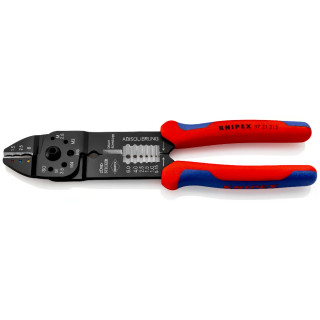
Knipex Strippers & Crimpers
Knipex wire stripper tools make light work of clean, repeatable cable prep, from singles and flex to control cable, without nicking the copper underneath.
If you're wiring boards, fitting accessories or making up tails all day, a proper Knipex wire stripper saves time and stops the sort of damage that comes back to bite later. These are the bits sparks reach for when they want neat strip lengths, reliable grips and less faff on flex. For awkward sheath work, have a look at Knipex ErgoStrip and get the right tool for the cable in front of you.
What Are Knipex Wire Strippers Used For?
- Stripping singles and fine stranded conductors for socket fronts, lighting points and control gear where you need a clean cut without scoring the core.
- Preparing flex on appliance installs, panel work and extension leads, where a proper flex cable stripping tool keeps outer jackets tidy and saves wasting tails.
- Crimping ferrules and terminals during board assembly and maintenance jobs, so stranded cable goes into terminals properly instead of splaying out under the screw.
- Working through snagging, repair and testing jobs where repeated strip lengths need to stay consistent, especially when you are doing the same termination again and again.
- Opening and dressing cable on site cupboards, risers and plant rooms where awkward access and mixed cable sizes punish cheap hand tools straight away.
Choosing the Right Knipex Wire Stripper
Sorting the right one is simple. Match it to the cable and the volume of work, not just whatever is cheapest.
1. Automatic vs Fixed Capacity
If you are stripping mixed cable sizes all day, go for an automatic Knipex wire stripper because it keeps the pace up and cuts down adjustment. If you mostly work on the same conductor sizes, a fixed or manually set tool is often simpler and gives you more feel.
2. Singles, Flex or Sheathed Cable
Do not assume one tool covers every cable on the van. If you are mainly on fine stranded flex, pick a stripper shaped for that job. If you are opening outer sheaths and awkward flat profiles as well, a Knipex flex stripper or dedicated sheath tool makes life much easier.
3. Strip Only or Strip and Crimp
If you are just prepping conductors for terminals, a strip-only tool is usually quicker and less bulky. If you are regularly fitting insulated terminals or ferrules, buy a proper crimper as well instead of trying to make one tool do two jobs badly.
4. Live Working Requirements
If your work demands insulated hand tools, stick to approved VDE models and do not cut corners. The Knipex VDE Strippers & Crimpers range is the one to look at for that side of the kit.
Who Uses These on Site?
- Sparkies use a Knipex wire stripper for first fix, second fix and board work because it speeds up cable prep and helps avoid nicked conductors that fail later.
- Panel builders and control installers rely on these for repetitive strip and crimp work, especially when ferrules and tidy terminations matter more than brute force.
- Maintenance engineers keep them in the bag for fault finding, repairs and quick swaps on plant and controls where you do not want to be chewing cable up with side cutters.
- Data and security fitters use them for lighter cable prep and neat terminations when working in cabinets, trunking and confined service spaces.
The Basics: Understanding Wire Strippers and Crimpers
These tools are simple once you split the jobs up properly. One removes insulation cleanly. The other forms a secure mechanical connection. Buy for the job outcome, not the label.
1. Stripping
A wire stripper removes the insulation without damaging the conductor underneath. That matters because nicked copper weakens the cable and can cause hot joints or failures once the termination is loaded.
2. Crimping
A crimper compresses a terminal or ferrule onto the conductor so it stays secure in service. On stranded cable, that gives you a neater, stronger end that goes properly into terminals and does not fray out.
3. Automatic vs Manual Action
Automatic tools adjust to the cable size for faster repetitive work. Manual tools give you more direct control and can suit odd jobs, but they are slower if you are bouncing between conductor sizes all day.
Electrical Accessories That Keep the Job Moving
The right add-ons save rework, keep terminations tidy and stop you bodging cable ends to get a job signed off.
1. Ferrules
If you are working with fine stranded cable, do not just twist the strands and hope for the best. Proper Knipex Ferrules give you a clean end that lands better in terminals and makes repeat work far tidier.
2. Cable Management
Once the cable is stripped and terminated, it still needs routing properly. Knipex Cable Management helps keep panels, cupboards and service runs neat instead of turning into a bird's nest.
3. Broader Electrical Hand Tools
Most sparks are not buying a stripper in isolation. The wider Knipex Lighting & Electrical range lets you build out the rest of the bag with matching kit for cutting, gripping and finishing cable work properly.
Choose the Right Knipex Wire Stripper for the Job
Use this as a quick guide before you pick one.
| Your Job | Knipex Category or Type | Key Features |
|---|---|---|
| Stripping mixed conductor sizes all day on installs | Automatic wire stripper | Self-adjusting action, repeatable strip lengths, quicker repetitive work |
| Preparing appliance leads, control flex and fine stranded cable | Flex cable stripping tool | Clean jacket removal, better control on stranded cable, less risk of nicking cores |
| Opening flat and awkward outer sheaths during domestic wiring | Knipex flex stripper or sheath stripper | Handles outer jackets neatly, better for twin and earth style work, safer than using a knife |
| Terminating ferrules into boards and control gear | Ferrule crimper | Correct crimp profile, secure terminations, cleaner insertion into terminals |
| Electrical work where insulated tools are required | VDE stripper or crimper | Insulated handles, trade safe option for the right working practice, suited to electrical tool kits |
Common Buying and Usage Mistakes
- Buying a general wire stripper for outer sheath work is a common one. It usually ends with scored insulation or nicked cores, so use a proper sheath or flex stripping tool where the cable calls for it.
- Using one crimper for every terminal type wastes time and gives poor joins. Match the crimper to ferrules, insulated terminals or open barrel terminals so the finished crimp actually holds.
- Stripping too much insulation off leaves bare conductor exposed past the terminal. Keep strip length tight and consistent so the connection is neat and not waiting to fail on inspection.
- Forcing automatic strippers on damaged or unusual cable can tear rather than strip cleanly. If the cable is odd, brittle or awkward, slow down and use the tool best suited to that profile.
- Ignoring VDE requirements when the job calls for insulated tools is false economy. If insulated hand tools are part of the spec, buy the correct rated kit from the start.
Automatic vs Manual vs Sheath Strippers
Automatic Wire Strippers
Best for repetitive electrical work where conductor sizes keep changing. They are quick, consistent and easy on the hands, but they are not always the best answer for thick outer jackets or awkward cable shapes.
Manual Wire Strippers
These suit sparks who want direct control and often work on known cable sizes. Slower than automatic models, but they can feel more precise on light work and simple service jobs.
Sheath and Flex Strippers
This is the one for outer jackets, flat cable and awkward sheath removal where a standard stripper can make a mess of it. If you do much domestic or control cable prep, they earn their keep quickly.
Maintenance and Care
Keep the Jaws Clean
Wipe off insulation debris, dust and sticky residue after use. Built-up muck stops the tool gripping and cutting cleanly, especially on automatic strippers.
Do Not Use Them as Cutters for Everything
Using stripping edges on unsuitable wire or hard materials blunts them fast. Keep to the cable sizes and job they are made for, and use proper cutters when you need them.
Store Them Dry
Do not leave them loose in a damp van tray. Dry storage helps prevent corrosion around pivots and keeps adjustment mechanisms moving as they should.
Check the Action Regularly
If the tool starts dragging, tearing insulation or leaving uneven strips, inspect the mechanism before the next job. A quick clean or adjustment is better than ruining cable tails on site.
Replace Worn Tools Before They Cost You Time
Once stripping edges are worn or the crimp profile is no longer forming properly, stop nursing it along. Poor prep and bad crimps waste more time than replacing the tool.
Why Shop for Knipex Wire Stripper Tools at ITS?
Whether you need a straightforward Knipex wire stripper, a flex cable stripping tool, a Knipex flex stripper or matching crimping kit, we stock the range in depth. That means the right type for panel work, domestic installs, maintenance and everyday electrical jobs, all in our own warehouse and ready for next day delivery.
Knipex Wire Stripper and Crimper FAQs
What is the difference between a stripper and a crimper?
A stripper removes insulation from the conductor without damaging the copper. A crimper forms a terminal or ferrule onto the cable so it stays secure. One preps the wire. The other makes the connection. On most jobs, you need to get both stages right.
Do Knipex wire strippers adjust automatically?
Some do and some do not. Knipex make automatic models that adapt to different conductor sizes, which is handy when you are moving through mixed cable all day. They also do more fixed or manual options for users who prefer direct control.
Which Knipex crimper is right for ferrules?
Use a crimper designed specifically for ferrules, not a general terminal crimper. Ferrules need the correct crimp profile to hold properly and go neatly into terminals. If ferrules are part of your regular work, buy the dedicated tool and do it once.
Can a Knipex stripper handle flat twin and earth cable?
Some can handle outer sheath work better than others, but not every wire stripper is meant for flat twin and earth. For that job, a dedicated sheath or flex stripper is usually the cleaner and safer option than forcing a standard conductor stripper to do it.
Are Knipex crimping tools ratcheted?
Many Knipex crimpers are ratcheted, especially the ones aimed at repeatable electrical termination work. That ratchet helps apply consistent pressure before release, which is what you want for reliable ferrules and terminals.
Will a Knipex wire stripper nick the copper if I am heavy handed?
Used properly, they are built to strip insulation cleanly, not bite into the conductor. That said, the wrong tool on the wrong cable, or trying to force sheath work through a standard stripper, is where damage happens. Match the tool to the cable and you will avoid most of that grief.