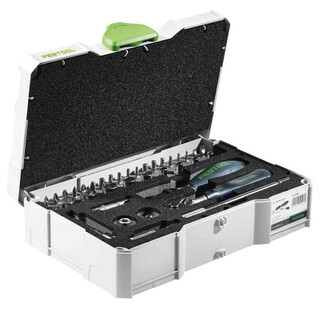
Festool Sockets & Socket Sets
Festool socket set options give you clean, controlled fastening when fixings are tight, repetitive, or awkward to reach on site and in the workshop.
When you're building up installs, adjusting fittings, or tightening machine fixings, a decent socket set saves rounding heads and wasting time with the wrong spanner. These Festool sockets and ratchets are the sort of kit fitters, installers, and workshop teams keep close because the sizing is clear, the cases stay organised, and the tools feel right in the hand when you're working through fixings all day. If you already rely on Festool Hand Tools or wider Festool Fastening Tools, this is the natural place to sort a proper Festool Socket Sets range for van, bench, and snagging work.
What Are Festool Socket Sets Used For?
- Tightening cabinet fittings, brackets, and frame fixings is quicker with a Festool socket set when an open-ended spanner keeps slipping and chewing the flats.
- Working inside plant rooms, service cupboards, and tight install spaces is easier with festool hand tool sockets because you get straighter engagement on nuts and bolts without skinning your knuckles.
- Assembling benches, jigs, site storage, and workshop fixtures suits a Festool ratchet set because you can run through repeated fixings without constantly repositioning the tool.
- Snagging mechanical fixings, furniture hardware, and adjustment bolts at the end of a fit-out is where festool sockets earn their keep, especially when you need neat torque by hand rather than brute force.
Choosing the Right Festool Socket Set
Sorting the right one is simple: match the drive and socket range to the fixings you actually touch every day, not the set with the most pieces.
1. 1.4 or 3.8 Drive
If you are mainly on furniture fittings, light brackets, control gear, or small machine screws, a Festool 1.4 socket set keeps things compact and precise. If you are dealing with heavier fixings, mounting bolts, or general install work, a Festool 3.8 socket set gives you the extra purchase you need.
2. Bench Work or Van Work
If the set lives on a bench, go for broader coverage so you are not reaching for extra tools halfway through an assembly. If it lives in the van for call-outs and snagging, a tighter, well-organised set is usually the better shout because it stays complete and easy to grab.
3. Socket Count vs Real Use
Do not get distracted by a huge piece count if half the sizes never come out the case. For most trade users, the better buy is the Festool socket set with the socket sizes, ratchet, and extensions that cover the fixings you see week in, week out.
4. Case Layout Matters
If you are in and out of jobs all day, buy the set with a case that keeps every socket locked in place and clearly labelled. Losing one common size off site is what turns a decent set into dead weight.
Who Uses These on Site?
- Kitchen fitters and joiners reach for a festool hand tool socket set when building cabinets, tightening connector bolts, and adjusting hardware without marking finished surfaces.
- Mechanical fitters and maintenance teams use Festool sockets for access panels, brackets, machine casings, and service work where a compact ratchet gets into spots a spanner will not.
- Site installers and shopfitters keep a Festool socket wrench in the van for flat-pack assemblies, frame work, and snagging jobs where fixings vary and time is tight.
- Workshop teams and bench joiners swear by a Festool ratchet set for repeated assembly work because it keeps sizes together in one case and saves hunting loose sockets from drawer to drawer.
Accessories That Make Socket Sets More Useful
A few sensible add-ons save repeat trips to the van and make a socket set far more useful on awkward fastening jobs.
1. Extension Bars
These get you onto recessed nuts, back-box fixings, and bolts tucked behind brackets where your ratchet head will not sit square. Handy when the alternative is stripping a fixing because you are working at a bad angle.
2. Universal Joints
A universal joint earns its keep when bolts are hidden behind pipework, frames, or machine guards. It is the bit that stops a simple fastening job becoming half an hour of dismantling for access.
3. Bit Holders and Adaptors
Adding compatible Festool Drill and Screwdriver Bit Holders helps when a job swaps between hex screws, bolts, and mixed fixings. It keeps your fastening kit tighter and saves carrying separate tools for every stage.
Choose the Right Festool Socket Set for the Job
Use this quick guide to sort the set that suits your daily fixing work.
| Your Job | Category or Type | Key Features |
|---|---|---|
| Furniture assembly and cabinet fitting | Festool 1.4 socket set | Compact sockets, lighter ratchet feel, better control on smaller fixings and hardware |
| General install and site snagging | Festool ratchet set | Mixed socket coverage, portable case, quick access to common sizes for van work |
| Maintenance and plant room access | Festool socket wrench set with extensions | Reach into tight spaces, better access around brackets, panels, and awkward service points |
| Heavier bracket and bolt fastening | Festool 3.8 socket set | Stronger drive size, better purchase on larger nuts and bolts, suits repeated tightening work |
Common Buying and Usage Mistakes
- Buying a massive set for the sake of numbers is a common mistake because you end up paying for sizes you never touch. Start with the fixings you actually use and build from there.
- Picking the wrong drive size slows the job down. Too small and the tool feels out of place on bigger fixings, too large and it is clumsy in tight cabinets and service spaces.
- Using worn or loose-fitting sockets on stubborn fixings rounds the corners and creates more work. If a socket is not sitting clean and square, stop and use the right size.
- Letting sockets get mixed loose in a bag is how sets lose their most-used sizes first. Keep them in the case so you are not short of an 8mm or 10mm halfway through a job.
- Treating a hand ratchet like a breaker bar is a good way to damage the mechanism. If a fixing is seized, crack it carefully with the right tool first, then use the ratchet for running it in or out.
1.4 Drive vs 3.8 Drive vs Mixed Socket Sets
Festool 1.4 Socket Sets
Best for lighter fastening, furniture work, control panels, and smaller hardware where space is tight and feel matters. They are easier to handle on delicate jobs but not the first pick for larger bolts.
Festool 3.8 Socket Sets
A better fit for general site fixing, maintenance, bracket work, and repeated tightening on larger nuts and bolts. They give you more leverage, but they can be bulkier in cramped access points.
Mixed Ratchet and Socket Sets
These make most sense for van stock and all-round install work because you get the main sizes and key pieces in one case. Good if your day swings between assembly, snagging, and general fastening rather than one fixed task.
Maintenance and Care
Wipe Down After Dirty Jobs
Dust, plaster, and fine metal swarf soon work into ratchet mechanisms and socket walls. Give the set a quick wipe before it goes back in the case, especially after workshop cutting or site snagging in dusty rooms.
Keep the Ratchet Clean
If the ratchet starts feeling gritty or stops engaging cleanly, do not ignore it. Clean it out properly and lightly lubricate where appropriate so it keeps switching and driving as it should.
Store Sockets in Their Marked Positions
Putting every socket back in its own slot sounds basic, but it is what stops lost sizes and mixed sets. It also lets you spot straight away if a commonly used socket has gone missing off site.
Check for Rounded or Cracked Sockets
If a socket has started to wear or shows cracking, retire it before it ruins a fixing. One damaged socket can slip under load and turn a simple tightening job into a stripped bolt headache.
Keep the Case Dry
A decent case protects the set, but trapped moisture will still do damage over time. If the kit has been in a wet van or out in the rain, open it up and dry it before long-term storage.
Why Shop for Festool Socket Sets at ITS?
Whether you need a compact Festool socket set for fitting work or a broader Festool ratchet set for daily fastening jobs, we stock the range in one place. That means festool sockets, socket sets, and fastening kit ready from our own warehouse, in stock and set up for next day delivery.
Festool Socket Set FAQs
What socket sets does Festool make?
Festool socket sets are typically built around clean, organised fastening for workshop, fitting, and install work rather than random mixed bargain-box contents. Expect practical socket and ratchet combinations aimed at common trade fixings, with cases that keep everything in place and easy to find.
Are Festool socket sets metric or imperial?
For UK trade use, metric sizes are the ones most buyers will be looking for, especially across site fittings, hardware, machinery, and furniture fixings. Always check the listed contents before buying, but in real day-to-day fitting and workshop work, metric coverage is what usually matters.
What drive sizes are Festool socket sets available in?
Festool socket set buyers usually look at 1.4 socket set and 3.8 socket set options because those are the sizes that change how the kit feels in use. Smaller drive sets suit tighter, lighter fastening, while 3.8 gives you more leverage for general install and maintenance work.
Are Festool socket sets suitable for professional mechanics?
They are more naturally suited to fitters, installers, maintenance teams, and workshop users than full-time heavy automotive strip-down. They will handle professional fastening work well, but if you are on seized suspension bolts and daily breaker-bar abuse, you would usually want a range built specifically around mechanic work.
Will a Festool ratchet set hold up to daily site use?
Yes, for the sort of repeated fastening, assembly, and snagging work most site and workshop users actually do. Keep the ratchet clean, do not use it as a pry bar, and it will put up with proper day-to-day graft without turning rough or sloppy too quickly.
Is a Festool socket wrench set worth keeping in the van?
Yes, especially if your jobs jump between fitting, adjustment, and call-backs. A tidy cased set saves time, stops lost sockets, and means you are not making do with an adjustable spanner on fixings that need proper contact.