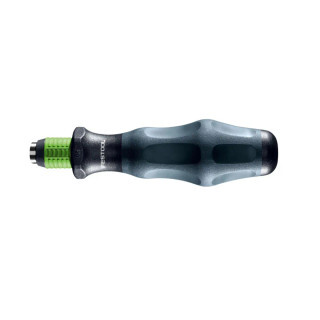
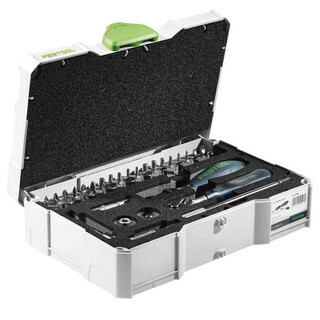
Festool Fastening Tools
When a fixing needs a controlled final turn, Festool fastening tools put screwdrivers, sockets and hex keys to work.
For joiners and maintenance fitters, the right profile matters more than a bigger handle. Match the tip, socket size and access to the fixing before buying. Choose the kit that fits your regular jobs.
What Are Festool Fastening Tools Used For?
- Adjust cabinet hinges and drawer fittings during kitchen installation, using a correctly matched screwdriver tip to avoid damaging visible screw heads.
- Tighten accessible nuts and bolts on workshop assemblies with a matching spanner or socket, checking the specified torque where required.
- Set hex socket screws on furniture frames and adjustable fittings with the correct Allen key, keeping it fully seated before applying force.
- Finish snagging work in occupied properties by tightening loose handles and fittings by hand, where a powered driver could overtighten the screw.
Choosing the Right Festool Fastening Tools
Buy for the fasteners you actually work on: the wrong profile or size will damage a fixing long before the handle gives out.
1. Match the Screw Head Properly
If you regularly fit hinges and handles, check the screw profiles and sizes before choosing your drivers. Phillips and Pozidriv are not interchangeable. For mixed fittings, Festool Interchangeable Blade Screwdrivers can reduce the number of separate handles you carry, but check exactly which blades are included.
2. Check Socket Size and Drive Size
Choose Festool Sockets & Socket Sets by the nut sizes you need, then check the square drive matches your ratchet and extensions. A socket's fastener size and drive size are separate measurements; matching one does not guarantee the other fits.
3. Allow for Access Around the Fixing
If the screw sits inside a frame or behind a fitting, check reach and turning clearance rather than buying on size alone. With Festool Allen Keys (Hex Keys), make sure the key can seat fully and turn without fouling the surrounding work.
4. Separate Hand Tightening from Torque Control
If the assembly specifies a tightening torque, use an appropriate torque tool for the final setting. An ordinary screwdriver, spanner or ratchet gives leverage, not a measured tightening value.
Who Uses Festool Fastening Tools?
Kitchen fitters and joiners use Festool Screwdrivers for hinge adjustment, handle fitting and final tightening without reaching for a drill. Maintenance teams need sockets and hex keys for bolted fittings and routine adjustments. These fastening tools sit alongside the wider Festool Hand Tools range for fitting, assembly and snagging work.
Accessories for Access and Tool Organisation
Choose accessories around the tools you own, checking fit before adding them to the kit.
1. Socket Extension Bars
A matching square-drive extension helps reach recessed nuts where the ratchet handle cannot sit close to the work. Check the drive size and available clearance; an extension will not make an oversized socket fit a narrow recess.
2. Tool Cases and Organiser Inserts
A suitable case or insert keeps small sockets, keys and interchangeable blades together instead of loose in the van. Choose compartments that hold the actual tool sizes, so you can spot a missing piece before leaving the job.
Choose the Right Festool Fastening Tools for the Job
Match the fastening tool to the head profile and the space available around it.
| Your Job | Fastening Tool Type | Key Features |
|---|---|---|
| Adjusting cabinet hinges and fitting handles | Screwdriver | Exact tip profile and size, suitable shaft reach and a handle you can control. |
| Working across several screw profiles during maintenance | Interchangeable blade screwdriver | Required blade selection, secure blade retention and suitable working length. |
| Turning accessible nuts and bolt heads | Spanner | Correct across-flats size and enough clearance to reposition the tool. |
| Repeated tightening on bolted assemblies | Socket and ratchet | Correct socket size, matching square drive and adequate socket depth. |
| Adjusting hex socket screws in frames and fittings | Allen key | Exact hex size, sufficient reach and clearance for the turning arc. |
Common Buying and Usage Mistakes
- Using a nearly matching screwdriver tip damages the recess and makes removal harder later. Check both the profile and size, particularly with Phillips and Pozidriv screws.
- Buying sockets by fastener size alone can leave you with a set that will not fit your ratchet. Check the square drive as well as the socket sizes supplied.
- Using ordinary hand sockets on an impact wrench risks tool failure. Only use sockets specifically rated for impact use with that tool.
- Adding a pipe to a spanner or key can overload the tool and damage the fastener. Use a correctly rated tool and investigate why the fixing will not move.
- Buying metric keys for imperial fasteners leaves a loose fit that can round the socket. Confirm the sizing system rather than choosing whichever key feels closest.
Screwdrivers vs Spanners vs Sockets vs Allen Keys
Screwdrivers for Screw Recesses
Choose a screwdriver for slotted, cross-head or other matching screw recesses. It gives direct control for fitting and adjustment, but the tip must match exactly; extra pressure will not compensate for the wrong profile.
Spanners for Side Access
An open-ended spanner can reach a nut from the side when a socket cannot go over it. The trade-off is having to reposition it as you turn, and an open jaw offers less contact than a correctly fitted ring end or socket.
Sockets for Repeated Turning
A socket and ratchet suit repeated tightening where you can reach over the fastener. They reduce repeated tool removal, but socket depth and ratchet-head clearance can rule them out in confined spaces.
Allen Keys for Internal Hex Fixings
Allen keys fit internal hex sockets commonly found in frames and adjustable fittings. They are compact, but need full engagement and room to turn; they cannot replace a Torx driver or a spanner on an external hex head.
Maintenance and Care
Clear Dirt Before Use
Wipe grit from sockets, keys and driver tips, and clear debris from the fixing recess. Packed dirt stops the tool seating fully and increases the chance of slipping.
Dry Before Packing Away
Dry tools after damp jobs rather than shutting them in a wet case. Where the care instructions allow, use a light protective oil on exposed steel, keeping handles and working contact surfaces free from excess oil.
Check Working Ends for Wear
Replace rounded keys, chipped driver tips and cracked sockets before they damage the next fixing. Do not grind worn profiles back into shape or keep using a socket with visible damage.
Keep Retention Mechanisms Clean
Check that interchangeable blades and sockets lock securely before use. If a holder or ratchet slips, stop using it and arrange an appropriate repair or replacement rather than forcing it through the job.
Why Shop for Festool Fastening Tools at ITS?
ITS stocks the full Festool fastening tools range, covering screwdrivers, sockets, spanners and hex keys for fitting and maintenance work. Stock is held in our own warehouse, ready for next-day delivery. Check the individual listing for current availability, included sizes and delivery options before ordering.
Festool Fastening Tools FAQs
What fastening tools does Festool make?
Festool's hand-fastening range includes screwdrivers, interchangeable blade screwdrivers, spanners, sockets and Allen keys. Check each listing for the exact contents: a set name does not tell you every size or profile supplied, and individual availability can change.
Are Festool fastening tools any good?
They are worth considering for fitting, assembly and maintenance, but buy on the tool specification rather than the badge. Correct tip fit, useful sizes and access to the fixing matter most. If you only use a few sizes regularly, a focused selection may serve you better than a larger set with tools you rarely touch.
What is the difference between a spanner and a socket?
A spanner has its working jaw or ring built into the handle; a socket is a separate head driven by a ratchet or another compatible handle. An open-ended spanner suits side access, while a socket and ratchet are useful for repeated turning where there is clearance over the fastener.
Where are Festool tools made?
Festool is a German manufacturer with production in Germany and other locations. That does not mean every Festool-branded hand tool is made in Germany. If country of manufacture is part of your purchasing specification, confirm it for the exact product rather than relying on the brand's origin.
Do Festool tools come with a warranty?
Warranty cover depends on the product and the applicable terms. Do not assume a hand tool qualifies for the same registered cover as a Festool power tool. Confirm the warranty for the exact item, keep your proof of purchase and check any registration requirements; normal wear and misuse are not the same as a manufacturing defect.
Can I put these sockets straight on an impact wrench?
Only if the particular socket is explicitly rated for impact use and has the correct drive fitting. A hand socket fitting the wrench does not make it suitable. Check the socket specification before use, and keep ordinary hand sockets for their intended tools.