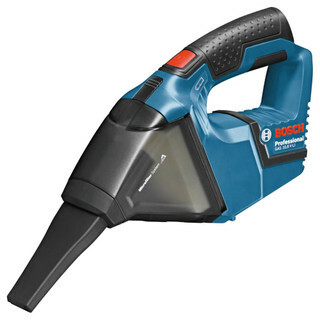
Bosch 12V Vacuums & Dust Extractors
Cleaning out cupboards after fitting? A Bosch Professional 12V dust extractor vacuum handles small dry clean-ups without trailing a mains lead.
This compact cordless vacuum suits fitters clearing loose debris from cabinets and van interiors. Choose it for local clean-up, not controlled extraction of hazardous construction dust. Check battery compatibility before buying.
What Jobs Are Bosch Professional 12V Cordless Vacuums Best At?
- Clear loose, non-hazardous dry debris from cabinet interiors after fitting shelves and adjusting hinges, using a suitable nozzle to reach the corners.
- Clean grit from van footwells and tool storage compartments without running an extension lead out to the vehicle.
- Reach into drawer runners and narrow recesses during maintenance visits where a full-size vacuum would be awkward to position.
- Tidy small amounts of suitable dry debris around a workbench between assembly jobs, rather than bringing out a larger mains machine.
Choosing the Right Bosch Professional 12V Dust Extractor
Buy for the material you need to collect, not just the battery platform you already own.
1. Clean-Up or Hazardous Dust Control
If you need a handheld vacuum for small amounts of suitable dry debris, the 12V format makes sense. If you need to capture dust from concrete, masonry or woodworking machinery, choose an appropriately classified extractor specified by your risk assessment. A compact vacuum is not a substitute.
2. Battery Compatibility and Supplied Kit
Check whether the listing includes a battery and charger or is body only. Match the exact vacuum to compatible Bosch 12V Batteries & Chargers; the Bosch name and 12V marking alone do not establish compatibility with other battery ranges.
3. Collection Capacity and Access
For cupboard corners and short service visits, prioritise manageable size and the right nozzle. For repeated floor cleaning or larger volumes, compare Bosch 18V Vacuums & Dust Extractors and check each model's capacity, runtime and dust classification separately.
Who Uses Bosch Professional 12V Vacuums?
Kitchen fitters, maintenance teams and service engineers use these compact vacuums for small clean-ups inside units, around fittings and in the van. They make particular sense alongside Bosch 12V Drills and Drivers, provided the tools and vacuum use compatible Professional batteries. They are not a replacement for assessed on-tool dust extraction when drilling, sanding or cutting.
The Basics: Understanding Vacuum Clean-Up and Dust Extraction
The important distinction is whether you are collecting debris already on a surface or controlling airborne dust as a tool produces it.
1. Handheld Vacuum Clean-Up
A Bosch Professional 12V cordless vacuum draws suitable loose dry debris through a nozzle into its container. It is useful for small clean-ups, but its filter and compact size do not establish suitability for hazardous dust or liquid collection.
2. Classified On-Tool Extraction
On-tool extraction captures dust close to the cutting or drilling point through a compatible guard or shroud. The extractor needs the correct dust class, airflow and connection for the task. A nozzle that fits a tool does not, by itself, make the arrangement suitable.
Accessories for Small Clean-Up Jobs
Check what comes in the box before ordering extras, and match replacement parts to the exact vacuum model.
1. Compatible Spare Battery
A charged spare avoids taking the only working battery off your drill halfway through a fitting job. Check approved battery sizes and compatibility before buying.
2. Replacement Filter
Keep the correct replacement filter available so a damaged or heavily loaded filter does not leave the vacuum unusable. Never run it without its specified filter fitted.
3. Compatible Crevice Nozzle
A narrow nozzle reaches cabinet corners and van seat gaps without forcing the vacuum body into the space. Check the connection and supplied accessory list first.
4. Suitable Storage Case
Keep nozzles and batteries together rather than loose under other tools. If using Bosch L-BOXX Tool Boxes, check internal dimensions and any required insert; do not assume every vacuum fits every case.
Choose the Right Bosch Vacuum for the Job
Match the machine to the debris, working area and extraction requirement.
| Your Job | Vacuum Type | Key Features |
|---|---|---|
| Small dry clean-ups inside cabinets | Professional 12V handheld vacuum | Compact body, suitable nozzle and compatible battery. |
| Cleaning van footwells between visits | Professional 12V handheld vacuum | Cordless access and crevice nozzle; collect only permitted dry debris. |
| Repeated cleaning across larger areas | Larger cordless or mains vacuum | Greater collection capacity and runtime suited to the workload. |
| Collecting water or wet debris | Explicitly rated wet and dry vacuum | Manufacturer-approved liquid collection and correct filter arrangement. |
| Extracting dust while cutting masonry | Appropriately classified on-tool extractor | Suitable dust class, airflow, hose and tool shroud. |
Common Buying and Usage Mistakes
- Assuming every Bosch dust extractor is suitable for hazardous dust can leave the job without adequate controls. Check the exact model's classification against the task assessment.
- Buying a dry handheld vacuum for spills risks damage. Do not treat this range as a Bosch Professional 12V wet and dry vacuum unless the individual specification explicitly permits liquid collection.
- Ordering a body-only vacuum without a compatible battery leaves you unable to use it. Check the supplied kit and battery platform before checkout.
- Continuing with a full container or blocked filter reduces pickup. Empty and maintain the vacuum as instructed rather than repeatedly passing over the same debris.
12V Handheld vs Larger Cordless vs Mains Extraction
12V Handheld Vacuum
Choose this for short, local clean-ups where access and portability matter most. It is easier to carry between service jobs, but limited collection capacity makes it a poor choice for clearing a whole workshop.
Larger Cordless Vacuum
Choose a larger cordless model when you need more capacity without a mains lead. Expect more bulk, and check runtime, wet-use approval and dust classification individually rather than assuming a higher voltage settles those questions.
Mains Vacuum or Classified Extractor
For longer cleaning sessions, compare Bosch General Use Vacuums. For hazardous dust, select a suitably classified extractor instead; mains power alone does not make a general cleaner appropriate for on-tool extraction.
Maintenance and Care
Empty Before Debris Builds Up
Switch off and remove the battery before opening the container. Empty it using a method appropriate to the collected material, avoiding unnecessary dust release.
Maintain the Correct Filter
Follow the model's filter-cleaning instructions. Do not wash a filter unless expressly permitted, and replace it if torn, damaged or no longer serviceable.
Check Nozzles and Air Passages
Remove trapped debris with the battery disconnected. Check attachments and container seals for damage if pickup remains weak after emptying and filter maintenance.
Store Dry and Protected
Keep the vacuum, battery contacts and accessories dry. Secure the tool during transport, and stop using it if the housing, battery or electrical contacts are damaged.
Shop Bosch Professional 12V Vacuums at ITS
Shop the Bosch Professional 12V vacuum range alongside compatible batteries, chargers and clean-up accessories at ITS. Stock is held in our own warehouse, with in-stock items ready for next-day delivery. Check the individual listing for supplied equipment, current availability and delivery eligibility before ordering.
Bosch Professional 12V Dust Extractor FAQs
What is the difference between a vacuum and a dust extractor?
A vacuum generally collects debris from surfaces, while an on-tool dust extractor captures dust as the tool produces it. The names can overlap, so check the actual specification. Hazardous dust work requires suitable extraction, filtration and other controls identified by the task assessment, not simply a product labelled "extractor".
Does the Bosch dust extractor connect to power tools?
Some Bosch extractors do, but do not assume that applies to this 12V handheld range. The GAS 12V handheld vacuum is intended for dry clean-up rather than classified on-tool extraction. For drilling, sanding or cutting, check the extractor's intended use, dust class, airflow and tool connection before buying.
Is the Bosch dust extractor L or M class?
Bosch sells different extractor types, so there is no single classification for the brand. Do not treat the GAS 12V handheld vacuum as an L-class or M-class extractor. If your work requires a classified machine, buy a model explicitly carrying the required rating.
Are Bosch dust extractors any good?
The useful question is whether the model matches the job. A Bosch Professional 12V workshop vacuum makes sense for small dry clean-ups and convenient battery sharing. It is the wrong purchase if you need large-volume collection, liquid pickup or classified extraction from a cutting tool.
Where are Bosch tools made?
Bosch manufactures tools in several countries; a German brand name does not mean every tool is made in Germany. Check the country-of-origin marking on the specific vacuum or its packaging if manufacturing location affects your purchase.
Can this 12V vacuum pick up water from a leaking fitting?
No, not if it is specified for dry use only. The GAS 12V handheld vacuum must not be used for liquid pickup. Choose an explicitly rated wet and dry model and follow its instructions for filters and collection limits.