Vaunt Laser Levels
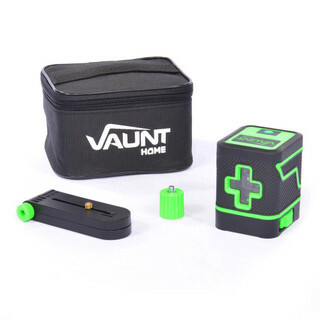
Vaunt laser level kit gives you quick, accurate set-out for stud, kitchens, tiling and second fix, with clear lines that stop small errors becoming big snags.
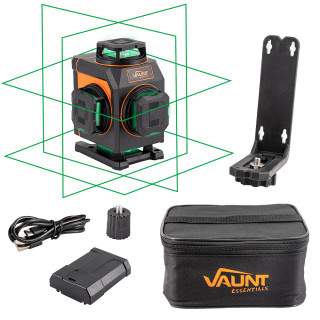
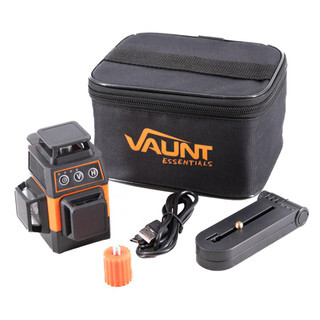
When you are setting sockets, running battens or lining up cabinets, guessing it by eye is how you lose time putting it right later. A vaunt laser level gives you fast, repeatable lines for first fix and finish work, with self-levelling options that make set-out quicker on real site jobs. If you need wider coverage, look at Vaunt Crossline Lasers and Vaunt Multi Line Lasers, then choose the beam and range that suits your work.
What Jobs Are Vaunt Laser Levels Best At?
- Setting out stud walls, door linings and first-fix runs is quicker with a vaunt line laser throwing clean horizontal and vertical lines across the room.
- Fitting kitchens, worktops and wall units is easier when a vaunt self levelling laser keeps long runs consistent instead of creeping out by a few millimetres.
- Tiling bathrooms, splashbacks and utility rooms goes cleaner with a vaunt cross line laser marking level courses and plumb edges before adhesive goes on the wall.
- Levelling sockets, conduit, trunking and pipe clips on refurb jobs saves snagging later, especially where old walls and floors are nowhere near straight.
- Checking datum lines and basic outdoor set-out on extensions or landscaping can be handled by a vaunt levelling laser, provided the model range and visibility suit the site conditions.
Choosing the Right Vaunt Laser Level
Sorting the right one is simple. Match the beam pattern and visibility to the job, not just the price.
1. Cross Line or Multi Line
If you are mainly doing kitchens, sockets, tiling or studwork in single rooms, a vaunt cross line laser is usually plenty. If you need more layout points around a space or more coverage for bigger set-out work, go up to a multi line model.
2. Red Beam or Green Beam
If most of your work is indoors in decent light control, a vaunt red laser level will do the job and keep cost down. If you are working in brighter rooms, larger spaces or near daylight, a vaunt green laser level is easier to pick up without squinting for the line.
3. Indoor Trimming or Site Set Out
For second fix and finish work, compact self-levelling models are quicker to carry room to room. If you are setting longer lines or basic external levels, check the stated working range and whether a receiver-compatible vaunt rotary laser or larger model makes more sense.
4. Think About the Kit Around It
Do not buy the laser on its own and then realise you still need support gear. A decent tripod, staff, clamp or detector can make the difference between a laser you use every day and one that stays in the case.
Who Uses These on Site?
- Sparkies use a vaunt laser level for lining up back boxes, trunking and tray runs, especially on first fix where one crooked line turns into a full row of snags.
- Chippies and kitchen fitters swear by them for cabinet runs, battens, stud partitions and door sets, where straight set-out saves a lot of packers and bad language later.
- Tilers use a vaunt line laser to get the first course dead right, because once the base line is off, the whole wall shows it.
- Plumbers and heating engineers reach for them when clipping pipework or setting radiator brackets, particularly on long walls where tape-and-pencil marking is too slow.
- General builders, maintenance teams and snagging crews keep one in the van for quick checks, because it is faster to throw a line than keep measuring off a wonky corner.
The Basics: Understanding Vaunt Laser Levels
These save time by throwing a straight reference line where your eye and tape would otherwise slow you down. The main thing is understanding what type of beam you need and where it works best.
1. Self Levelling Lasers
A vaunt self levelling laser automatically corrects itself when the unit is slightly out, so you get a true level or plumb line without endless fiddling. On site, that means quicker set-out and fewer mistakes when moving from room to room.
2. Cross Line Lasers
A vaunt cross line laser projects one horizontal and one vertical line, which is what most trades need for kitchens, studwork, tiling and service runs. It is the everyday choice for indoor set-out where speed matters more than overcomplicated features.
3. Rotary and Longer Range Options
A vaunt rotary laser is for bigger areas and longer distances, especially where a standard visible line starts to struggle. That matters more on larger refurbs, outdoor jobs and datum work than it does in a single kitchen or bathroom.
Laser Accessories That Make the Job Easier
The laser is only half the story. The right add-ons save setup time and stop you fighting the room.
1. Tripods
A tripod gives you stable height adjustment without balancing the laser on offcuts, buckets or whatever is nearest. You will be glad of it when setting long runs for kitchens, ceilings or partition lines.
2. Wall Mounts and Clamps
These let you fix the unit where a tripod is in the way, especially in tight rooms, stairwells or first-fix spaces. It is a simple fix for awkward set-out where floor space is already full of gear.
3. Detectors and Receivers
If you are trying to use a beam outside or over longer distances, a detector saves you guessing where the line disappears in bright light. That is often the difference between a useful outdoor laser and a frustrating one.
4. Spare Cases and Targets
A proper case stops the pendulum and lenses getting battered in the van, and a target plate helps pick up the beam on awkward surfaces. Small extras, but they help the kit last and stay accurate.
Choose the Right Vaunt Laser Level for the Job
Use this as a quick guide before you pick your model.
| Your Job | Vaunt Laser Level Type | Key Features |
|---|---|---|
| Hanging cabinets, shelves and pictures | Red cross line laser | Compact body, fast setup, horizontal and vertical lines for indoor trimming work |
| Tiling bathrooms and splashbacks | Self levelling cross line laser | Clear plumb and level lines, quick room-to-room setup, accurate first course marking |
| Stud walls, sockets and first-fix runs | Green line laser | Better beam visibility, quick alignment over longer internal distances, easy repeat set-out |
| Larger rooms, long corridors or more complex layouts | Multi line laser | Wider coverage, more reference lines, better for full-room set-out |
| Basic outdoor levelling and longer distance work | Rotary laser | Extended range, better suited to open areas, often used with detector support |
Common Buying and Usage Mistakes
- Buying a basic indoor laser for bright outdoor work is a common mistake. The beam washes out fast, so check working range and detector compatibility before you commit.
- Choosing red when you work mostly in bright extensions or open rooms can slow you down. A green beam usually costs more, but it is easier to see where daylight is fighting you.
- Using the laser on an unstable surface gives you bad set-out even if the unit itself is accurate. Get it on a proper tripod or clamp instead of balancing it on loose materials.
- Ignoring the pendulum lock during transport is how lasers end up out of calibration. Lock it, case it, and do not just throw it behind the van seat with the rest of the gear.
- Assuming every job needs the most complex model wastes money. For plenty of indoor first-fix and finish work, a straightforward vaunt line laser is all you actually need.
Cross Line vs Multi Line vs Rotary Laser
Cross Line Laser
This is the everyday indoor option for kitchens, tiling, sockets and studwork. It is quick to set up and easy to use, but it is not the best pick once you move into larger open spaces or longer range outdoor work.
Multi Line Laser
A multi line unit gives you more coverage around the room, which helps when setting out several walls or working across a bigger area. It suits fit-out and more involved layouts, though it can be more than you need for simple one-wall jobs.
Rotary Laser
A rotary laser is the choice for larger distances, datum lines and outdoor use where standard visible beams start falling away. It is less about quick kitchen fitting and more about site-wide levelling, landscaping and bigger build work.
Maintenance and Care
Keep the Lenses Clean
Wipe dust and plaster off the lens windows after use with a soft cloth. A dirty lens can dull the beam and make the line harder to see, especially on red models.
Lock It Before Transport
If the model has a pendulum lock, use it every time before it goes back in the van. That protects the internal mechanism from knocks and helps the laser hold its accuracy.
Store It Properly
Keep the unit in its case rather than loose in a toolbox with blades, fixings and hand tools. Laser levels do not need pampering, but they do not thank you for being rattled about all week.
Check Accuracy Now and Then
After a drop or hard knock, run a quick line check against a known level reference. If the beam has wandered, get it checked before using it on finish work where errors will show.
Mind the Batteries
Do not leave dead batteries sitting in the unit for ages, especially in cold vans. Fresh power keeps the beam strength consistent and saves you wondering if poor visibility is the laser or the batteries.
Why Shop for Vaunt Laser Levels at ITS?
Whether you need a compact vaunt laser level for indoor set-out, a brighter vaunt green laser level, or a longer-range vaunt rotary laser, we stock the full range in one place. You can also shop the wider Laser Levels range, add the right Laser Accessories, or pair up with Vaunt Digital Measures. It is all held in our own warehouse, in stock and ready for next day delivery.
Vaunt Laser Level FAQs
What laser levels does Vaunt make?
Vaunt makes a practical spread of laser levels for common site set-out, including cross line, multi line and rotary options. That covers everything from indoor kitchen and studwork jobs to longer-range levelling where a standard line laser starts to run out of road.
Are Vaunt laser levels self-levelling?
Yes, many Vaunt models are self-levelling, which is what most trades want for quick, reliable setup. It means the unit corrects small out-of-level placement on its own, so you spend less time fiddling and more time marking out accurately.
What is the range of Vaunt laser levels?
The range depends on the model, beam colour and whether you are working inside or out. For indoor rooms, most users are covered by standard visible beam distances, but for bigger spaces or external work you will want one with longer stated range and detector support.
Are Vaunt laser levels suitable for outdoor use?
Yes, but be sensible about which one you choose. A basic indoor line laser can struggle badly in bright daylight, so for outdoor use you are better with a green beam, greater range, or a rotary setup used with a detector.
Is a green Vaunt laser level really worth it over red?
For bright rooms, extensions with lots of daylight, or bigger internal areas, yes, it usually is. Red is fine for plenty of indoor work, but green is easier to see and saves you hunting for the beam when the light is against you.
Will a Vaunt laser level hold up in the van and on site?
Yes, for normal trade use they are built for site life, but they are still precision kit. They will take everyday knocks better than cheap DIY gear, though you should still lock the pendulum, use the case and avoid chucking them around loose.
Do I need accessories with a Vaunt laser level, or is the bare unit enough?
For quick checks, the bare unit may do. For proper day-to-day use, a tripod or clamp is usually money well spent, and if you are working outside or over distance, a detector can turn a frustrating job into a straightforward one.