Stabila Guides and Measures
Stabila measuring tools are built for straight setting out, accurate marking, and reliable checks on site, from first fix through to final snagging.
If your measurements are out, everything after it is harder work. This Stabila guides and measures range covers the kit trades actually reach for daily, including tapes, rules, levels, lasers and angle finders that stay readable, hold accuracy and put up with van life. For layout work, cut lists and install checks, start with Stabila Hand Tools and pick the Stabila measuring equipment that suits the job.
What Are Stabila Measuring Tools Used For?
- Setting out stud walls, kitchen runs and second fix work is quicker when you have Stabila measures that give clear readings and stay accurate after being knocked about in the van.
- Checking floors, lintels, frames and long timber sections for level and plumb helps stop small errors turning into bigger snagging jobs later in the build.
- Marking repeat cuts on sheet material, skirting, joists and battens is easier with Stabila measuring devices that are built to read fast and track straight.
- Sorting awkward corners, roof pitches and scribed work is where angle finders and digital measuring instruments save time over trial and error on site.
- Running internal fit-out and wider set-out jobs is simpler with lasers and digital measures when you need consistent reference lines across rooms, corridors or full work areas.
Choosing the Right Stabila Measuring Tools
Match the tool to the check you do all day. Do not buy laser kit for pocket jobs or a short tape for full room set-out.
1. Tape, Level or Laser
If you are measuring lengths, marking cut points and doing day to day fitting work, go with Stabila Tape Measures. If you are checking plumb, level and straight runs on frames, blockwork or cabinetry, use Stabila Spirit Levels. If you need reference lines across a room or fast set-out over distance, step up to Stabila Lasers & Digital Measures.
2. Length Matters
If you are mostly doing kitchen units, boxing in and trim, shorter tapes and compact levels are easier to carry and use in tight spots. If you are setting long runs, checking floors or working on framing and external work, buy longer lengths so you are not bridging gaps and hoping for the best.
3. Manual or Digital
Manual Stabila measures are harder to beat for quick checks and rough site use. If you are recording room sizes, transferring angles or repeating measurements across multiple areas, digital kit earns its keep by cutting down reading errors and saving time.
4. Straight Runs or Awkward Angles
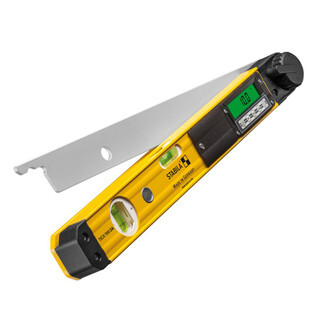
For standard level and length work, stick with tapes, rules and levels. If your day involves stairs, roof work, mitres or scribing, add Stabila Angle Finders so you are measuring the angle properly instead of copying it twice and still trimming it again.
Who Uses These on Site?
- Chippies use Stabila measuring tools for first fix carcassing, door linings, flooring and kitchen fitting, where straight lines and repeatable measurements save rework.
- Sparkies keep Stabila measures and levels close for setting socket heights, lining up containment and keeping back boxes neat across a whole room.
- Brickies and groundworkers rely on the Stabila measuring range for checking courses, formwork and set-out lines, especially when small errors carry right through the job.
- Plumbers and heating engineers use them for bracket spacing, pipe runs and plant room installs where level and spacing matter more than guesswork.
- Site managers, snagging teams and fitters reach for Stabila measuring instruments for quick checks before sign-off, because it is easier to catch a problem early than explain it later.
The Basics: Understanding Stabila Measuring Tools
The main thing is knowing which type gives you the answer quickest on site. These tools all measure something different, and choosing the right one saves both time and rework.
1. Spirit Levels Check True Level and Plumb
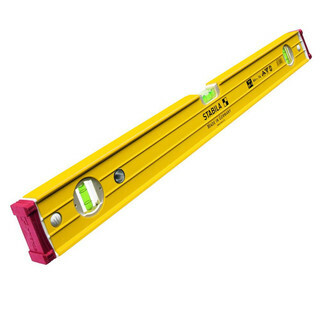
A spirit level tells you whether a surface is flat or upright by reading the bubble in the vial. It is the simple, reliable choice for checking lintels, frames, worktops, conduit runs and all the other jobs where straight really does need to mean straight.
2. Tapes and Rules Handle Direct Measuring
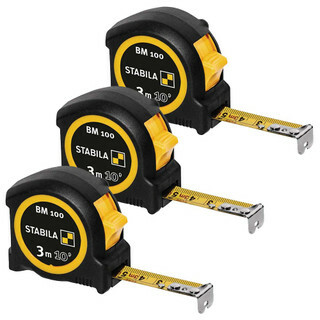
These are for actual dimensions like widths, lengths, heights and spacing. They are what you use for cut lists, set-out marks and fitting work where getting the number right first time saves wasted material.
3. Lasers and Digital Measures Speed Up Layout
Lasers project a fixed line or point to carry level and alignment across a wider area, while digital measures calculate distance fast without stretching a tape across the room. They come into their own on larger rooms, repeat layouts and jobs where one person needs accurate set-out without constant rechecking.
Accessories That Keep Your Measuring Kit Useful on Site
A few sensible extras save damage, bad readings and repeat trips back to the van.
1. Laser Tripods and Mounts
If your laser is balanced on a bucket or a stack of board, you are asking for bad set-out. A proper tripod or mount keeps the line steady and at the right height, which matters when you are carrying levels across a whole room.
2. Detector and Target Plates
These help when you are working over distance or in brighter conditions where the beam is harder to pick up. They save the usual faff of guessing where the line is and marking off a bad reference.
3. Protective Cases and Holsters
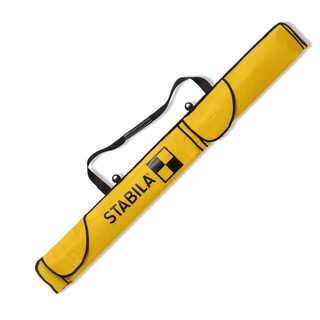
Decent measuring gear does not stay accurate by being loose in the back of the van with fixings and blades. A case or belt holster cuts down knocks, cracked displays and bent tapes.
4. Spare Batteries for Digital Tools
For lasers and digital measures, a spare set is basic planning. Do not be the one halfway through setting out a ceiling grid when the screen dies and the only replacements are back at the yard.
Choose the Right Stabila Measuring Tools for the Job
Use this quick guide to sort the right measuring kit for the work in front of you.
| Your Job | Category or Type | Key Features |
|---|---|---|
| Marking cut lengths and checking material sizes | Tape measures and folding rules | Clear scale, easy carry, fast readout, solid lock and good standout |
| Checking frames, worktops, blockwork and long runs | Spirit levels | Accurate vials, strong frame, readable markings and length to suit the run |
| Setting out full rooms, ceilings and repeat install heights | Laser levels and digital measures | Fast room wide reference, fewer two man checks and consistent layout |
| Measuring roof pitches, stairs, mitres and awkward corners | Angle finders | Quick angle transfer, better accuracy on cuts and less trial fitting |
| Snagging, inspection and general daily checks | Compact measuring tools | Pocket size, quick access and easy use when moving around site |
Common Buying and Usage Mistakes
- Buying only by size and ignoring the job usually ends with a tool that is either too short for reliable checks or too bulky to use properly in tight fitting spaces. Match the length and type to the work you actually do most.
- Using a spirit level for long range set-out across multiple rooms wastes time and invites errors. For wider layout work, use a laser or digital measure instead of stretching simple hand tools beyond what they are for.
- Throwing measuring instruments loose into the van is a good way to end up with bent tapes, damaged housings or knocked accuracy. Store them properly if you expect them to read properly.
- Choosing digital kit without thinking about batteries catches plenty of lads out halfway through the job. Keep spare batteries in the case so the tool does not stop when you need one last measurement.
- Guessing awkward angles by eye instead of using the right tool leads to bad cuts and wasted materials. If the job involves repeated mitres, stairs or roof work, use an angle finder and transfer the angle properly.
Spirit Levels vs Tape Measures vs Laser Levels
Spirit Levels
Best for checking level and plumb directly on the workpiece. They are simple, tough and reliable, but they do not give you room wide set-out or actual distance measurements.
Tape Measures
Best for direct lengths, spacing and cut marks. Every trade needs one, but a tape cannot tell you if a frame is truly plumb or carry a reference line across a full room.
Laser Levels
Best for fast layout over wider areas, especially ceilings, partitions and repeat fixing heights. More kit to manage than a hand level, but far quicker when you are setting out more than one point.
Which One Should You Buy?
For most trades, it is not one or the other. A tape handles dimensions, a spirit level checks the install, and a laser speeds up full room set-out. Buy around the jobs you do every week, not the odd one off.
Maintenance and Care
Keep Faces and Scales Clean
Wipe off plaster dust, adhesive, wet mortar and general muck after use. Dirty scales and smeared vial windows slow you down and can lead to bad readings when you are rushing.
Store Them So They Stay Accurate
Do not leave levels, tapes and digital measuring devices bouncing around loose with blades and fixings. A case, sleeve or dedicated van slot helps stop knocks that shorten their working life.
Check for Damage Before Important Set Out
If a level has taken a drop or a tape is kinked, do not trust it blindly on critical work. A quick check against a known straight edge or repeat measurement is better than ripping work out later.
Look After Digital Kit Properly
Remove flat batteries if the tool is being stored for a while and keep screens and lenses clean. Most digital issues on site come from dirt, dead batteries or poor storage rather than the tool itself.
Replace Worn Kit Before It Costs You
A tape with a bent hook or a cracked vial window is not worth nursing along on precision work. If it is no longer reading properly or standing up to site use, replace it before it starts creating mistakes.
Why Shop for Stabila Measuring Tools at ITS?
Whether you need compact Stabila measures for day to day fitting, longer levels and tapes for site set-out, or specialist measuring devices for layout and angle work, we stock the full range in one place. From Stabila guides and measures through to the wider Stabila measuring range, it is all in our own warehouse and ready for next day delivery.
Stabila Measuring Tools FAQs
What measuring tools does Stabila make?
Stabila makes the measuring kit most trades actually use, including spirit levels, tape measures, folding rules, laser levels, digital distance measures and angle finders. It is a proper site range, covering quick daily checks right through to full room set-out and longer distance layout work.
What is the difference between a spirit level and a laser level?
A spirit level is for checking level or plumb directly against the work, like a frame, course or worktop. A laser level throws that reference line across a wider area, so it is the better choice for setting out ceilings, partitions, repeated fixing heights or full room installs.
How accurate are Stabila measuring tools?
They are known for strong accuracy and consistency, which is why so many trades stick with them. The real answer is they are accurate enough for serious site use, provided the tool suits the job and has not been damaged or left to rattle round the van unchecked.
Are Stabila vials replaceable?
That depends on the specific level and design, so it is not a blanket yes across the whole range. In practice, most trades replace a badly damaged level rather than gamble on a tool that may no longer read true, especially on first fix or finishing work.
Which Stabila measuring tool is best for setting out?
For simple local checks, a spirit level and tape will do the job. For larger areas, repeated heights or full room layout, lasers and digital measures are the better call because they carry lines and dimensions faster with less chance of cumulative error.
Are Stabila measuring tools tough enough for daily site use?
Yes, that is exactly where they earn their keep. They are built for van storage, repeated handling and the usual knocks of site life, but like any measuring instrument they still need sensible storage if you want them to stay accurate.
Do I need digital measuring kit, or will hand tools do?
For plenty of jobs, hand tools are still the right answer because they are quick, simple and always ready. Go digital when you are measuring bigger spaces, repeating layout across multiple areas or transferring angles where speed and consistency matter.