



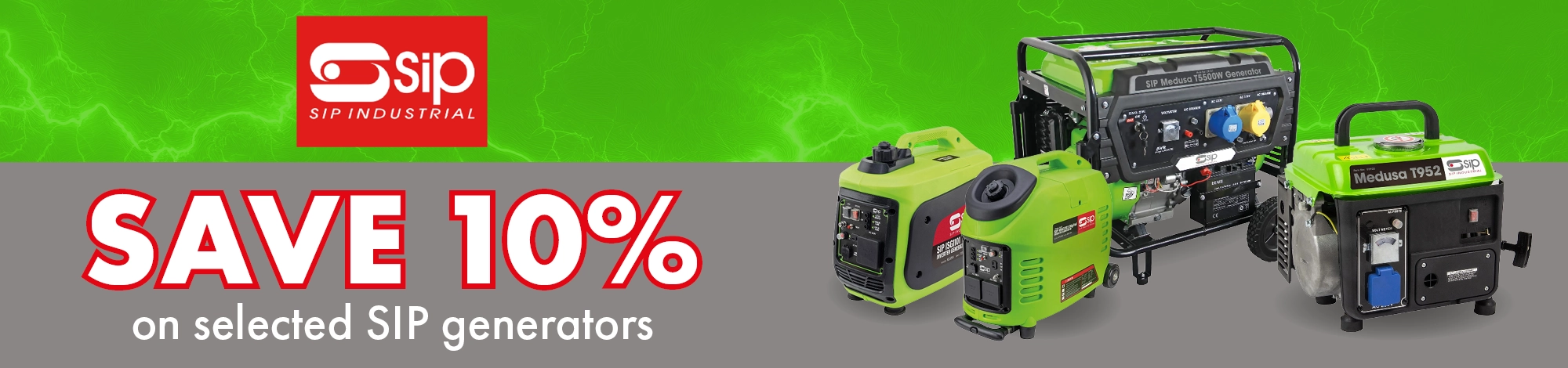
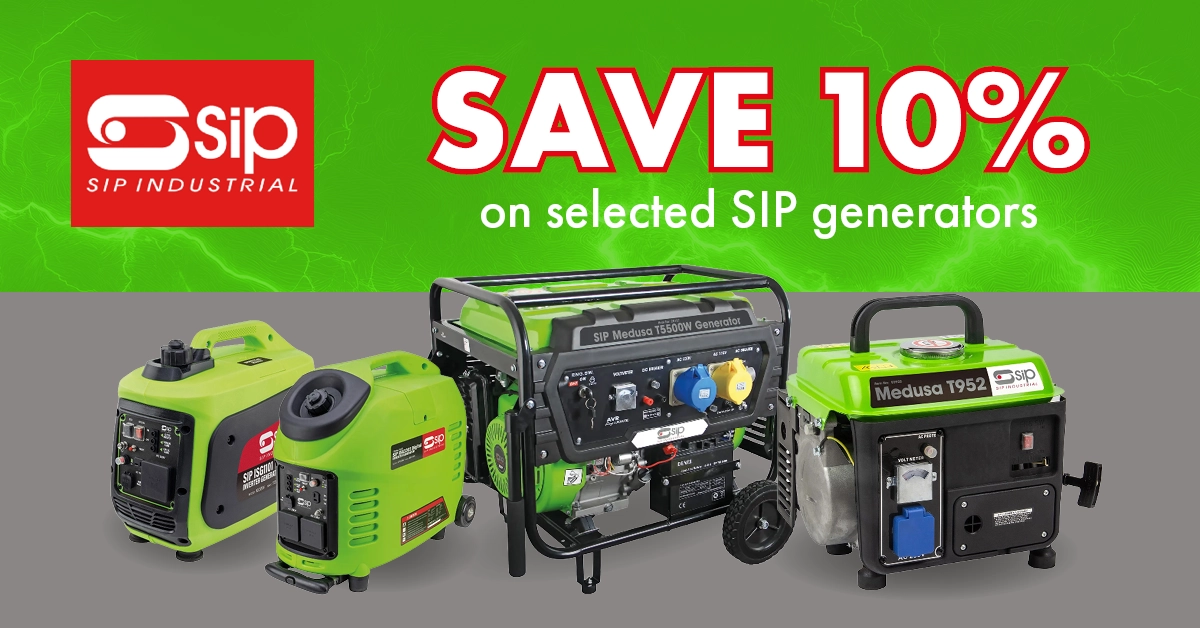
SIP GENERATORS
SIP generators give you reliable site power for tools, lighting and backup jobs, with petrol and inverter models suited to van work, handover and remote areas.
When you're working where there's no mains, or the supply is too far away to be worth the hassle, a SIP generator keeps the job moving. SIP petrol generator models suit tougher site power and rougher tool loads, while a SIP inverter generator is the smarter pick for cleaner output, lower noise and kit like chargers, testers or laptops. Whether you need a sip portable generator for van stock, a sip silent generator for quieter areas, or a sip 2kva generator for lighter duties, buy for the load you actually run, not the badge on the frame.
What Are SIP Generators Used For?
- Powering tools on first fix, maintenance call-outs, and remote site work where there is no dependable mains supply nearby.
- Running task lighting, chargers, and welfare basics when you're starting early, finishing late, or sorting snagging in unfinished plots.
- Backing up smaller site setups during outages so drills, saws, and test gear do not leave you standing about waiting for power to come back.
- Feeding cleaner power to sensitive kit with a SIP inverter generator when you're charging batteries, using laptops, or running electronic testing equipment.
- Handling outdoor jobs, events, and property maintenance with a sip portable generator that is easier to load in and out of the van between jobs.
Choosing the Right SIP Generator
Sorting the right one is simple: add up what you actually need to run, then leave headroom so the generator is not flat out all day.
1. Inverter or Standard
If you are running chargers, laptops, testers, or anything with sensitive electronics, go for a SIP inverter generator. If it is mainly lights, rougher site tools, or general backup power, a standard SIP petrol generator usually makes more sense.
2. Power Output
Do not buy a sip 2kva generator if you are expecting it to carry high-startup tools all day. For lighter loads and one or two smaller items, it is a sensible size. If you are starting motors or running several bits of kit together, step up.
3. Noise and Location
If you are working near houses, schools, offices, or indoor-outdoor handover areas, a sip silent generator is worth paying for. On open sites where noise matters less, a standard framed unit is often the better value workhorse.
4. Portability
If this is living in the van and moving from job to job, keep the size sensible and check the frame and carry points. If it is mostly staying in one place on site, you can go bigger without regretting it every time you load out.
Who Uses These on Site?
- Sparks use SIP generators on first fix and temporary power jobs where they need to run small tools, battery chargers, and test gear before the mains is live.
- Builders and chippies reach for a sip petrol generator on plots, refurbs, and garden builds where saws and drills need steady power away from the board.
- Maintenance teams and site managers keep a sip portable generator handy for outages, handover jobs, and quick fixes where lighting and access to power cannot wait.
- Landscapers and groundworkers use SIP generators for outdoor work where task lights, compact tools, or smaller site equipment need power well away from buildings.
- Anyone running quieter kit near occupied properties usually swears by a sip silent generator or inverter model because it causes less grief on noise-sensitive jobs.
The Basics: Understanding SIP Generators
The key difference is not just power. It is the type of output, the noise level, and how well the machine matches the tools you actually run on site.
1. Standard Generators
These are the usual choice for straightforward site power. They are built to run general tools, lighting, and tougher loads where absolute clean output is less critical than having reliable power on tap.
2. Inverter Generators
A SIP inverter generator produces cleaner, more stable power, which matters when you are plugging in battery chargers, laptops, or sensitive electronic gear. They are also often quieter, which helps on domestic jobs and handover work.
3. Rated Output and Startup Load
The number on the machine is only part of the story. Some tools pull a bigger surge when they start, so a generator that looks big enough on paper can still struggle if you have not left enough headroom.
SIP Generator Extras That Save Hassle on Site
A few sensible add-ons stop fuel runs, poor visibility, and avoidable downtime once the generator is out on the job.
1. Oil, Petrol and Fuel Cans
Do not be the one nursing a dead generator halfway through a job because the tank ran dry. Keep proper Oil, Petrol and Fuel Cans in the van so refuelling is clean, safe, and quick.
2. Torches & Lighting
A generator is no use for late finishes if you still cannot see what you are doing. Pair it with decent Torches & Lighting so you can actually make use of that power on darker jobs and winter call-outs.
3. Extension Leads and Site Cables
Get the generator parked where it is safe and sensible, then run power to the work area properly. Good site-rated leads save dragging the machine right into the mess or noise-sensitive part of the job.
Choose the Right SIP Generator for the Job
Match the output and generator type to the kit you actually plan to run.
| Your Job | Generator Type | Key Features |
|---|---|---|
| Charging batteries and running a laptop or tester | SIP inverter generator | Cleaner power output, quieter running, better for sensitive electronics |
| General site tools and work lights on remote jobs | SIP petrol generator | Solid all-round output, tougher site use, suited to straightforward power demands |
| Domestic outdoor work near neighbours | SIP silent generator | Lower noise, easier to use in quieter areas, less likely to cause complaints |
| Van-based maintenance and lighter backup power | SIP portable generator | Compact size, easier loading, practical for moving between smaller jobs |
| Light-duty single tool use and temporary power | SIP 2kva generator | Smaller footprint, sensible for modest loads, good where space is tight |
Common Buying and Usage Mistakes
- Buying on the headline kva alone is where a lot of people come unstuck. If your tool has a big startup draw, the generator can still struggle, so always leave some breathing room in the spec.
- Using a standard generator for sensitive electronics can cause issues with chargers, laptops, or testing kit. If that gear matters on the job, pick a SIP inverter generator instead of hoping for the best.
- Choosing too big a unit for small van jobs just gives you extra weight, more fuel use, and more noise to lug about. Match the machine to the real workload, not the once-a-year worst case.
- Running a generator indoors or in enclosed spaces is dangerous full stop. These machines need open, well-ventilated outdoor use to avoid carbon monoxide risk.
- Ignoring fuel, oil, and basic checks is a fast way to lose runtime and reliability. Keep it topped up, serviced, and stored properly if you expect it to start when the mains lets you down.
Inverter Generators vs Standard Generators vs Portable Generators
SIP Inverter Generator
Best for cleaner power, quieter running, and smaller van-based jobs where you are charging batteries or using electronic kit. Usually the better call for domestic work, but not always the cheapest way to feed heavier tool loads.
SIP Standard Petrol Generator
A stronger fit for straightforward site power, rougher environments, and general tool use where you want output and durability more than low noise. Better for tougher jobs, but less suited to sensitive electronics.
SIP Portable Generator
This is about size and handling more than output type. A sip portable generator is the one for maintenance teams and trades loading in and out of the van all week, though it may not cover larger multi-tool setups.
Maintenance and Care
Check Oil Before Long Runs
A generator working hard all day wants basic checks before you fire it up. Low oil is one of the quickest ways to shorten engine life or stop the job dead.
Keep It Clean and Dry
Brush off site dust, wipe away mud and fuel drips, and do not leave the unit sat in standing water. Clean cooling areas help it run properly and stop grime building up where it should not.
Use Fresh Fuel
Old petrol causes hard starts and rough running, especially if the generator sits in the van for long gaps between jobs. If it is not being used for a while, manage the fuel properly rather than leaving stale petrol in it.
Store It Sensibly
Keep it upright, secure, and out of damp storage corners where frames rust and fuel systems suffer. A generator that gets thrown around loose in the van will not stay tidy for long.
Replace Worn Parts Early
If plugs, filters, cords, or sockets are showing wear, sort them before the machine strands you on a job. Small maintenance is cheaper than losing half a day because the generator will not play ball.
Why Shop for SIP Generators at ITS?
Whether you need a compact sip 2kva generator for lighter work, a sip petrol generator for proper site use, or a SIP inverter generator for cleaner output, we stock the range in one place. You can also shop related SIP Tools & Equipment, compare with the wider Generators range, or match your setup with SIP Compressors. It is all in our own warehouse, in stock, and ready for next day delivery.
SIP Generator FAQs
What size SIP generator do I need to run power tools?
That depends on the tool load and the startup surge, not just the running wattage on paper. For one smaller tool or light backup duties, a sip 2kva generator can be enough, but if you are starting motor-driven tools or running more than one item at once, leave proper headroom or the generator will bog down.
What's the difference between a standard and an inverter generator?
A standard generator is the usual site workhorse for general tools and lighting. A SIP inverter generator gives cleaner, more stable power and is the safer bet for chargers, laptops, and other electronic kit. Inverter models are often quieter too, which helps on domestic and handover jobs.
Can I run a SIP generator indoors?
No. Not in a room, garage, cabin, or any enclosed space. SIP generators must be run outdoors in well-ventilated areas because engine exhaust is dangerous. That is not a maybe, it is a hard no.
How long does a SIP generator run on a full tank?
It varies by tank size, engine, and how hard you are loading it. A generator ticking over on lights and chargers will run longer than one working hard on site tools. If runtime matters, look at both fuel tank capacity and the sort of load you will actually put on it day to day.
Is a SIP generator safe for sensitive electronics?
Yes, if you choose the right type. For laptops, battery chargers, test instruments, and similar gear, use a SIP inverter generator because it gives cleaner output. For rougher site power and less delicate kit, a standard model is often fine.



