Saws
Saws for every cut on site — circular saws, mitre saws, jigsaws, reciprocating saws, plunge saws, and table saws from Milwaukee, Makita, DeWalt, Bosch, Festool, HiKOKI, and Metabo.
Whether you're on M18, LXT, XR, or any other cordless platform, or you need a corded saw for heavy workshop use, the right saw for the job is the one that matches the cut you make most. Get that right, pair it with the correct blade, and the speed and finish take care of themselves.
What Are Saws Used For?
- Ripping sheet materials to size — ply, OSB, MDF — with a circular saw on trestles, in the van, or straight off the deck. The go-to for first-fix timber, roofing battens, and fast board breakdown on site.
- Cutting accurate repeat angles and lengths with a mitre saw for skirting boards, architrave, CLS studwork, and second-fix joinery where every gap gets noticed by the client.
- Handling curves, cut-outs, and scribe lines with a jigsaw — kitchen worktops, flooring repairs, pipework, back boxes, and anywhere a straight saw simply can't follow the line.
- Getting through nails, old fixings, conduit, and mixed materials with a reciprocating saw when you're stripping out and a clean edge is not the priority.
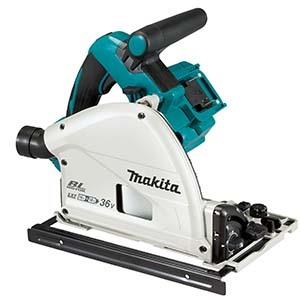
- Making clean, splinter-free edges on kitchens, doors, and veneered sheet goods with a plunge saw on a guide rail — the upgrade from a circular saw when the finish is going to be seen.
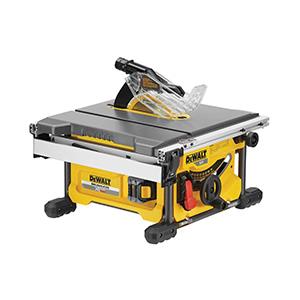
- Running volume repeat cuts with a table saw when you're set up in one location and want the fence doing the accuracy work on identical lengths all day.
How to Choose the Right Saw
The most common mistake is buying the saw that can do the job rather than the saw that's built for it. Start with the cut you do most and work from there — the wrong type will either fight you all day or leave you cleaning up the finish after.
1. Circular saws — sheet breakdown and timber ripping
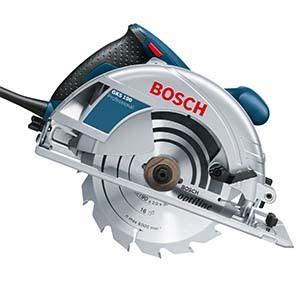
If you're breaking down ply, OSB, or MDF on site, a circular saw is the right tool. Cordless 18V models from Milwaukee, Makita, and DeWalt are the standard on most sites now — light enough to use on trestles or off the deck, with enough power for full sheets of 18mm ply. If you're already on M18 or LXT, there's a circular saw that fits your platform. Pair with a fine-tooth blade for sheet goods and a general-purpose blade for framing and you've covered most site cutting.
2. Mitre saws — repeat angles and clean end cuts
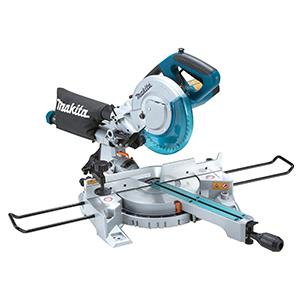
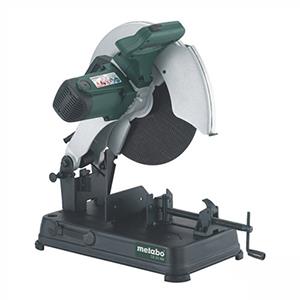
For cutting skirting boards, architrave, door casings, and CLS to consistent lengths and angles, a mitre saw is what saves you time and rework. Set the angle once and every cut comes out the same — no measuring twice, no gaps at the corners. Sliding compound models handle wider boards and more complex bevel cuts, which matters if you're doing a lot of second-fix joinery or shopfitting. Makita, DeWalt, and Milwaukee all make strong cordless mitre saws that run off the same batteries as your other tools.
3. Jigsaws — curves, cut-outs, and scribing
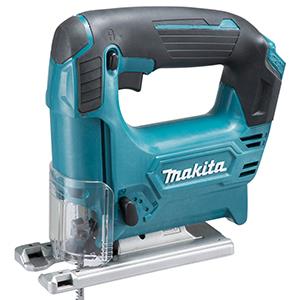
When the cut follows a curve or has to work around an obstacle, a jigsaw is the only practical option. Kitchen worktop cut-outs, scribe lines on cabinets, flooring around door frames, back boxes in plasterboard — none of those are circular saw jobs. Bosch and Makita jigsaws are popular with kitchen fitters and joiners for their orbital settings and blade change systems. A jigsaw will cut a short straight line adequately, but on anything longer the blade will wander — for straight cuts, use the right saw for the job.
4. Plunge saws — clean finish cuts on expensive materials
A plunge saw paired with a guide rail is the professional answer to cutting kitchen worktops, veneered panels, doors, and laminates where tearout is not acceptable. The blade is enclosed until the cut starts, which eliminates the chipping you get at the entry point with a circular saw. Festool track saws set the benchmark here, with Makita, DeWalt, and HiKOKI offering strong alternatives at different price points. If you're fitting kitchens or doing any work where the cut edge will be visible, a plunge saw is the upgrade that pays for itself quickly.
5. Reciprocating saws — demolition and strip-out
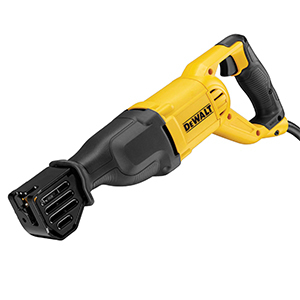
Reciprocating saws are not finishing tools — they're demolition tools, and they're very good at it. Timber with nails still in it, old fixings, conduit, stud walls, floor joists in tight spaces — a recip saw gets through all of it faster than anything else. Milwaukee M18 FUEL and DeWalt XR models are popular with maintenance teams and demo crews for their power and the range of blades available. Bi-metal blades for mixed materials and nail-embedded timber, wood blades for clean timber, and demo blades for when you genuinely don't know what's in there.
6. Table saws — volume and repeatability in a fixed setup
If you're doing high volumes of the same cut from a fixed location — a workshop, a shopfitting setup, or a site cabin — a table saw gives you the fence, the repeatability, and the control that a circular saw can't match for that kind of work. Not a tool you move between jobs, but for the right setup it's faster and more accurate than any handheld alternative.
Who Uses These Saws?
- Carpenters and joiners running circular saws and mitre saws as daily tools for first-fix, second-fix, sheet breakdown, and trim work where accuracy and repeatability both matter.
- Kitchen fitters and shopfitters using plunge saws and jigsaws for worktop cut-outs, cabinet scribing, and edges that won't chip out in a finished space where everything gets looked at.
- Roofers and timber framers who need saws that handle wet and rough-sawn timber at speed without losing accuracy on rafters, battens, and carcassing cuts made repeatedly all day.
- Maintenance engineers and facilities teams who keep a reciprocating saw in the bag because it's the fastest way into a wall, under a floor, or through a frame with old fixings still in it.
- Demo crews who need recip saws and circular saws that can take daily abuse, run off a reliable battery platform, and keep cutting when the conditions are rough.
Cordless Saws and Battery Platforms
Most site saws bought today are cordless, and which platform you're on matters as much as which saw you choose. Buying into the wrong ecosystem means carrying two sets of batteries and two chargers — an unnecessary complication on any job.
Milwaukee M18 — the professional cordless standard
Milwaukee's M18 platform covers circular saws, mitre saws, jigsaws, and reciprocating saws in the same battery ecosystem. M18 FUEL models use brushless motors for the power and runtime to handle demanding site cutting all day. If your drills, impacts, and grinders are already M18, your saws should be too.
Makita LXT and XGT — the widest platform choice
Makita's 18V LXT platform is one of the most widely used in the trade, with circular saws, jigsaws, reciprocating saws, and mitre saws all available. For heavier cutting, the 40V XGT platform offers corded-level performance in a cordless format — worth considering if you're doing high-volume sheet breakdown or cutting thick hardwood regularly.
DeWalt XR and FlexVolt — 18V and 54V in the same battery
DeWalt's FlexVolt system runs at 18V in standard XR tools and switches to 54V in FlexVolt-compatible saws — meaning the same battery powers both your everyday tools and your heavier cutting equipment. A practical option if you want cordless versatility without committing to a separate high-voltage platform.
Bosch, Festool, HiKOKI, and Metabo
Bosch Professional 18V covers the full range of site saws and integrates with one of the broadest cordless tool ecosystems available. Festool's 18V and 36V cordless systems are the choice for high-end finishing work, particularly plunge saws. HiKOKI MultiVolt runs at both 18V and 36V from the same battery. Metabo's 18V platform is a strong option for tradespeople who want professional quality at a sharper price point.
Getting the Best From Your Saw
The saw type gets you the right cut. The blade decides the quality of it. Most cutting problems on site — burning, tearing out, wandering, bouncing — come down to the wrong blade or a blunt one, not the machine.
1. Match the blade to the material
Fine-tooth TCT blades for laminates, MDF, and veneered boards where tearout matters. General-purpose blades for mixed site timber and sheet. Coarse blades for rough-sawn and wet timber where speed is more important than finish. Bi-metal recip blades for demolition and anything with fixings in it. If the saw is burning or bouncing, change the blade before you blame the tool.
2. Set depth correctly and support the work
On circular and plunge saws, depth should clear the material by a few millimetres — no more. Too deep increases kickback risk and reduces control. Support both sides of the cut so the material doesn't pinch the blade or drop and split at the end of the cut. It's basic setup, but it's what separates a clean cut from a wasted piece of material.
Saw Accessories Worth Having
The saw does the cutting. The right accessories are what keep cuts clean, accurate, and repeatable when you're pushing on through a full day's work.
1. Spare blades for every saw you carry
A blunt blade doesn't just cut badly — it makes the motor work harder, generates heat, and can burn or split material you can't afford to redo. Keep at least one spare in the van. Blades are cheap. Rework isn't.
2. Guide rails and straight edges
Essential for plunge saws and useful for long circular saw cuts on sheet material. A guide rail removes the human variable — the saw follows the rail instead of your hand following a pencil line. On kitchens and board breakdown, a wavy cut is not something you can fix after.
3. Mitre saw stands and material supports
Long lengths of skirting or CLS need support either side of the blade or they'll tip and pinch mid-cut. A folding stand with roller extensions is worth it the first time it stops a good length of hardwood from being binned at the end of the cut.
4. Dust extraction
Cutting indoors without extraction means dust on the finish, dust in the cut line, and a clean-up at the end of the day that could have been avoided. Most saws have a standard extraction port. A bag or a vac connection is not optional on a clean site or in a finished space.
Shop Saws at ITS
We stock the full range of saws from Milwaukee, Makita, DeWalt, Bosch, Festool, HiKOKI, Metabo, and more — circular saws, mitre saws, jigsaws, reciprocating saws, plunge saws, table saws, and accessories. Everything is held in our own warehouse with next-day delivery available, so you're not waiting on a saw to get a job started.
Shop by Sub Category
Circular Saws
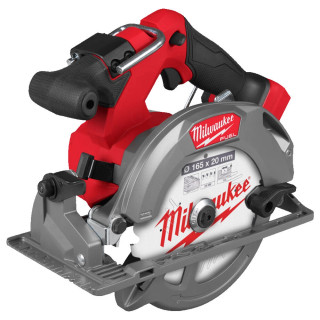
The site workhorse for sheet breakdown and timber ripping. Cordless 18V models from Milwaukee, Makita, and DeWalt cover most site cutting — fast, portable, and no leads to trip over in an unfinished building.

Mitre Saws
Set the angle once, cut all day. The tool that keeps skirting, architrave, and trim consistent without measuring every time. Sliding compound models for wider boards and more complex second-fix work.
Jigsaws
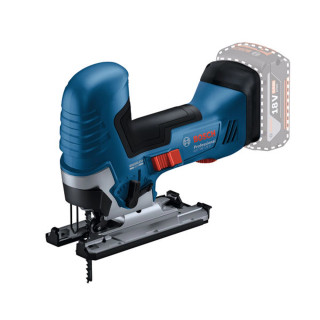
Curves, worktop cut-outs, scribing, and shapes — anywhere a straight saw can't follow the line. The fitter's tool for finishing work where access and accuracy mean following a contour, not a rule.
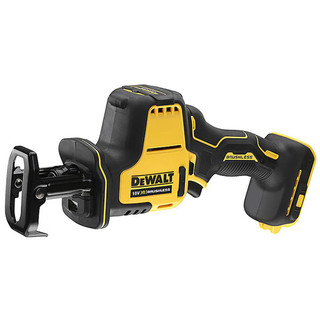
Recip Saws
Built to take abuse. The demolition and strip-out tool that cuts through timber, nails, conduit, and mixed materials in spaces where nothing else reaches. Not a finishing tool — and not trying to be.
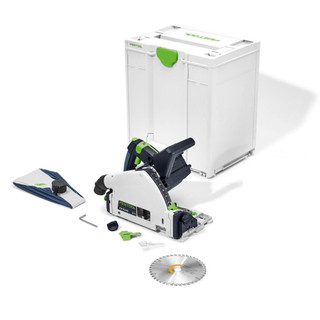
Plunge Saws
The clean cut option for kitchens, doors, and finished materials. Pair with a guide rail for splinter-free edges that a freehand circular saw can't match. Festool, Makita, DeWalt, and HiKOKI all stocked.
Saws FAQs
What's the best saw for cutting skirting boards and architrave?
A mitre saw. It's built for exactly this — accurate repeat crosscuts and angles on trim, skirting, and architrave. Set the angle once and every cut comes out the same. A circular saw can do it, but you'll be measuring and marking every time and the results will be less consistent. If you're doing any volume of second-fix joinery, a mitre saw pays for itself quickly.
What saw do I need for cutting kitchen worktops?
A plunge saw with a guide rail is the professional choice. The blade starts enclosed, which eliminates the chip-out you get at the entry point with a circular saw, and the rail keeps the cut dead straight without fighting the tool. For the sink cut-out and any internal cuts, a jigsaw. Festool, Makita, and DeWalt all make plunge saws suited to worktop cutting — the difference is in the dust extraction and the quality of the rail system.
Circular saw vs mitre saw — which should I buy first?
If you're doing varied site work, a circular saw first — it's more versatile and handles sheet breakdown and timber ripping that a mitre saw can't do. Add a mitre saw when you find yourself doing a lot of trim and second-fix work where repeat angles matter. Most tradespeople end up with both; the question is just which comes first based on the work you do most.
Are cordless saws powerful enough for site work?
Yes, for the vast majority of site cutting. 18V brushless circular saws from Milwaukee, Makita, and DeWalt will handle full sheets of 18mm ply and most framing timber all day on a good battery. For heavier or sustained cutting — thick hardwood, high-volume sheet breakdown — 40V or 54V platforms like Makita XGT or DeWalt FlexVolt close the gap with corded tools considerably. Corded still makes sense for workshop use where runtime and sustained power matter more than portability.
Which battery platform should I choose for cordless saws?
If you're already on a platform — M18, LXT, XR, Bosch 18V — buy the saw that fits it and keep your battery ecosystem simple. If you're starting fresh, choose based on the full range of tools you'll want over time, not just the saw. Milwaukee M18, Makita LXT, and DeWalt XR all have comprehensive saw ranges. Festool is worth considering if plunge saws and high-end finishing work are central to what you do.
What should I look for when buying a saw?
Start with the cut you do most — that determines which type of saw you need before anything else. Then check capacity: depth of cut on circular and plunge saws, bevel and slide range on mitre saws, stroke length on reciprocating saws. On cordless, confirm it fits your existing battery platform. And always budget for quality blades — the blade has more effect on cut quality than the saw itself, and a cheap blade on a good saw will still cut badly.
Saws for every cut on site — circular saws, mitre saws, jigsaws, reciprocating saws, plunge saws, and table saws from Milwaukee, Makita, DeWalt, Bosch, Festool, HiKOKI, and Metabo.
Whether you're on M18, LXT, XR, or any other cordless platform, or you need a corded saw for heavy workshop use, the right saw for the job is the one that matches the cut you make most. Get that right, pair it with the correct blade, and the speed and finish take care of themselves.
What Are Saws Used For?
- Ripping sheet materials to size — ply, OSB, MDF — with a circular saw on trestles, in the van, or straight off the deck. The go-to for first-fix timber, roofing battens, and fast board breakdown on site.
- Cutting accurate repeat angles and lengths with a mitre saw for skirting boards, architrave, CLS studwork, and second-fix joinery where every gap gets noticed by the client.
- Handling curves, cut-outs, and scribe lines with a jigsaw — kitchen worktops, flooring repairs, pipework, back boxes, and anywhere a straight saw simply can't follow the line.
- Getting through nails, old fixings, conduit, and mixed materials with a reciprocating saw when you're stripping out and a clean edge is not the priority.
- Making clean, splinter-free edges on kitchens, doors, and veneered sheet goods with a plunge saw on a guide rail — the upgrade from a circular saw when the finish is going to be seen.
- Running volume repeat cuts with a table saw when you're set up in one location and want the fence doing the accuracy work on identical lengths all day.
How to Choose the Right Saw
The most common mistake is buying the saw that can do the job rather than the saw that's built for it. Start with the cut you do most and work from there — the wrong type will either fight you all day or leave you cleaning up the finish after.
1. Circular saws — sheet breakdown and timber ripping
If you're breaking down ply, OSB, or MDF on site, a circular saw is the right tool. Cordless 18V models from Milwaukee, Makita, and DeWalt are the standard on most sites now — light enough to use on trestles or off the deck, with enough power for full sheets of 18mm ply. If you're already on M18 or LXT, there's a circular saw that fits your platform. Pair with a fine-tooth blade for sheet goods and a general-purpose blade for framing and you've covered most site cutting.
2. Mitre saws — repeat angles and clean end cuts
For cutting skirting boards, architrave, door casings, and CLS to consistent lengths and angles, a mitre saw is what saves you time and rework. Set the angle once and every cut comes out the same — no measuring twice, no gaps at the corners. Sliding compound models handle wider boards and more complex bevel cuts, which matters if you're doing a lot of second-fix joinery or shopfitting. Makita, DeWalt, and Milwaukee all make strong cordless mitre saws that run off the same batteries as your other tools.
3. Jigsaws — curves, cut-outs, and scribing
When the cut follows a curve or has to work around an obstacle, a jigsaw is the only practical option. Kitchen worktop cut-outs, scribe lines on cabinets, flooring around door frames, back boxes in plasterboard — none of those are circular saw jobs. Bosch and Makita jigsaws are popular with kitchen fitters and joiners for their orbital settings and blade change systems. A jigsaw will cut a short straight line adequately, but on anything longer the blade will wander — for straight cuts, use the right saw for the job.
4. Plunge saws — clean finish cuts on expensive materials
A plunge saw paired with a guide rail is the professional answer to cutting kitchen worktops, veneered panels, doors, and laminates where tearout is not acceptable. The blade is enclosed until the cut starts, which eliminates the chipping you get at the entry point with a circular saw. Festool track saws set the benchmark here, with Makita, DeWalt, and HiKOKI offering strong alternatives at different price points. If you're fitting kitchens or doing any work where the cut edge will be visible, a plunge saw is the upgrade that pays for itself quickly.
5. Reciprocating saws — demolition and strip-out
Reciprocating saws are not finishing tools — they're demolition tools, and they're very good at it. Timber with nails still in it, old fixings, conduit, stud walls, floor joists in tight spaces — a recip saw gets through all of it faster than anything else. Milwaukee M18 FUEL and DeWalt XR models are popular with maintenance teams and demo crews for their power and the range of blades available. Bi-metal blades for mixed materials and nail-embedded timber, wood blades for clean timber, and demo blades for when you genuinely don't know what's in there.
6. Table saws — volume and repeatability in a fixed setup
If you're doing high volumes of the same cut from a fixed location — a workshop, a shopfitting setup, or a site cabin — a table saw gives you the fence, the repeatability, and the control that a circular saw can't match for that kind of work. Not a tool you move between jobs, but for the right setup it's faster and more accurate than any handheld alternative.
Who Uses These Saws?
- Carpenters and joiners running circular saws and mitre saws as daily tools for first-fix, second-fix, sheet breakdown, and trim work where accuracy and repeatability both matter.
- Kitchen fitters and shopfitters using plunge saws and jigsaws for worktop cut-outs, cabinet scribing, and edges that won't chip out in a finished space where everything gets looked at.
- Roofers and timber framers who need saws that handle wet and rough-sawn timber at speed without losing accuracy on rafters, battens, and carcassing cuts made repeatedly all day.
- Maintenance engineers and facilities teams who keep a reciprocating saw in the bag because it's the fastest way into a wall, under a floor, or through a frame with old fixings still in it.
- Demo crews who need recip saws and circular saws that can take daily abuse, run off a reliable battery platform, and keep cutting when the conditions are rough.
Cordless Saws and Battery Platforms
Most site saws bought today are cordless, and which platform you're on matters as much as which saw you choose. Buying into the wrong ecosystem means carrying two sets of batteries and two chargers — an unnecessary complication on any job.
Milwaukee M18 — the professional cordless standard
Milwaukee's M18 platform covers circular saws, mitre saws, jigsaws, and reciprocating saws in the same battery ecosystem. M18 FUEL models use brushless motors for the power and runtime to handle demanding site cutting all day. If your drills, impacts, and grinders are already M18, your saws should be too.
Makita LXT and XGT — the widest platform choice
Makita's 18V LXT platform is one of the most widely used in the trade, with circular saws, jigsaws, reciprocating saws, and mitre saws all available. For heavier cutting, the 40V XGT platform offers corded-level performance in a cordless format — worth considering if you're doing high-volume sheet breakdown or cutting thick hardwood regularly.
DeWalt XR and FlexVolt — 18V and 54V in the same battery
DeWalt's FlexVolt system runs at 18V in standard XR tools and switches to 54V in FlexVolt-compatible saws — meaning the same battery powers both your everyday tools and your heavier cutting equipment. A practical option if you want cordless versatility without committing to a separate high-voltage platform.
Bosch, Festool, HiKOKI, and Metabo
Bosch Professional 18V covers the full range of site saws and integrates with one of the broadest cordless tool ecosystems available. Festool's 18V and 36V cordless systems are the choice for high-end finishing work, particularly plunge saws. HiKOKI MultiVolt runs at both 18V and 36V from the same battery. Metabo's 18V platform is a strong option for tradespeople who want professional quality at a sharper price point.
Getting the Best From Your Saw
The saw type gets you the right cut. The blade decides the quality of it. Most cutting problems on site — burning, tearing out, wandering, bouncing — come down to the wrong blade or a blunt one, not the machine.
1. Match the blade to the material
Fine-tooth TCT blades for laminates, MDF, and veneered boards where tearout matters. General-purpose blades for mixed site timber and sheet. Coarse blades for rough-sawn and wet timber where speed is more important than finish. Bi-metal recip blades for demolition and anything with fixings in it. If the saw is burning or bouncing, change the blade before you blame the tool.
2. Set depth correctly and support the work
On circular and plunge saws, depth should clear the material by a few millimetres — no more. Too deep increases kickback risk and reduces control. Support both sides of the cut so the material doesn't pinch the blade or drop and split at the end of the cut. It's basic setup, but it's what separates a clean cut from a wasted piece of material.
Saw Accessories Worth Having
The saw does the cutting. The right accessories are what keep cuts clean, accurate, and repeatable when you're pushing on through a full day's work.
1. Spare blades for every saw you carry
A blunt blade doesn't just cut badly — it makes the motor work harder, generates heat, and can burn or split material you can't afford to redo. Keep at least one spare in the van. Blades are cheap. Rework isn't.
2. Guide rails and straight edges
Essential for plunge saws and useful for long circular saw cuts on sheet material. A guide rail removes the human variable — the saw follows the rail instead of your hand following a pencil line. On kitchens and board breakdown, a wavy cut is not something you can fix after.
3. Mitre saw stands and material supports
Long lengths of skirting or CLS need support either side of the blade or they'll tip and pinch mid-cut. A folding stand with roller extensions is worth it the first time it stops a good length of hardwood from being binned at the end of the cut.
4. Dust extraction
Cutting indoors without extraction means dust on the finish, dust in the cut line, and a clean-up at the end of the day that could have been avoided. Most saws have a standard extraction port. A bag or a vac connection is not optional on a clean site or in a finished space.
Shop Saws at ITS
We stock the full range of saws from Milwaukee, Makita, DeWalt, Bosch, Festool, HiKOKI, Metabo, and more — circular saws, mitre saws, jigsaws, reciprocating saws, plunge saws, table saws, and accessories. Everything is held in our own warehouse with next-day delivery available, so you're not waiting on a saw to get a job started.
Shop by Sub Category
Circular Saws
The site workhorse for sheet breakdown and timber ripping. Cordless 18V models from Milwaukee, Makita, and DeWalt cover most site cutting — fast, portable, and no leads to trip over in an unfinished building.
Mitre Saws
Set the angle once, cut all day. The tool that keeps skirting, architrave, and trim consistent without measuring every time. Sliding compound models for wider boards and more complex second-fix work.
Jigsaws
Curves, worktop cut-outs, scribing, and shapes — anywhere a straight saw can't follow the line. The fitter's tool for finishing work where access and accuracy mean following a contour, not a rule.
Recip Saws
Built to take abuse. The demolition and strip-out tool that cuts through timber, nails, conduit, and mixed materials in spaces where nothing else reaches. Not a finishing tool — and not trying to be.
Plunge Saws
The clean cut option for kitchens, doors, and finished materials. Pair with a guide rail for splinter-free edges that a freehand circular saw can't match. Festool, Makita, DeWalt, and HiKOKI all stocked.
Saws FAQs
What's the best saw for cutting skirting boards and architrave?
A mitre saw. It's built for exactly this — accurate repeat crosscuts and angles on trim, skirting, and architrave. Set the angle once and every cut comes out the same. A circular saw can do it, but you'll be measuring and marking every time and the results will be less consistent. If you're doing any volume of second-fix joinery, a mitre saw pays for itself quickly.
What saw do I need for cutting kitchen worktops?
A plunge saw with a guide rail is the professional choice. The blade starts enclosed, which eliminates the chip-out you get at the entry point with a circular saw, and the rail keeps the cut dead straight without fighting the tool. For the sink cut-out and any internal cuts, a jigsaw. Festool, Makita, and DeWalt all make plunge saws suited to worktop cutting — the difference is in the dust extraction and the quality of the rail system.
Circular saw vs mitre saw — which should I buy first?
If you're doing varied site work, a circular saw first — it's more versatile and handles sheet breakdown and timber ripping that a mitre saw can't do. Add a mitre saw when you find yourself doing a lot of trim and second-fix work where repeat angles matter. Most tradespeople end up with both; the question is just which comes first based on the work you do most.
Are cordless saws powerful enough for site work?
Yes, for the vast majority of site cutting. 18V brushless circular saws from Milwaukee, Makita, and DeWalt will handle full sheets of 18mm ply and most framing timber all day on a good battery. For heavier or sustained cutting — thick hardwood, high-volume sheet breakdown — 40V or 54V platforms like Makita XGT or DeWalt FlexVolt close the gap with corded tools considerably. Corded still makes sense for workshop use where runtime and sustained power matter more than portability.
Which battery platform should I choose for cordless saws?
If you're already on a platform — M18, LXT, XR, Bosch 18V — buy the saw that fits it and keep your battery ecosystem simple. If you're starting fresh, choose based on the full range of tools you'll want over time, not just the saw. Milwaukee M18, Makita LXT, and DeWalt XR all have comprehensive saw ranges. Festool is worth considering if plunge saws and high-end finishing work are central to what you do.
What should I look for when buying a saw?
Start with the cut you do most — that determines which type of saw you need before anything else. Then check capacity: depth of cut on circular and plunge saws, bevel and slide range on mitre saws, stroke length on reciprocating saws. On cordless, confirm it fits your existing battery platform. And always budget for quality blades — the blade has more effect on cut quality than the saw itself, and a cheap blade on a good saw will still cut badly.