





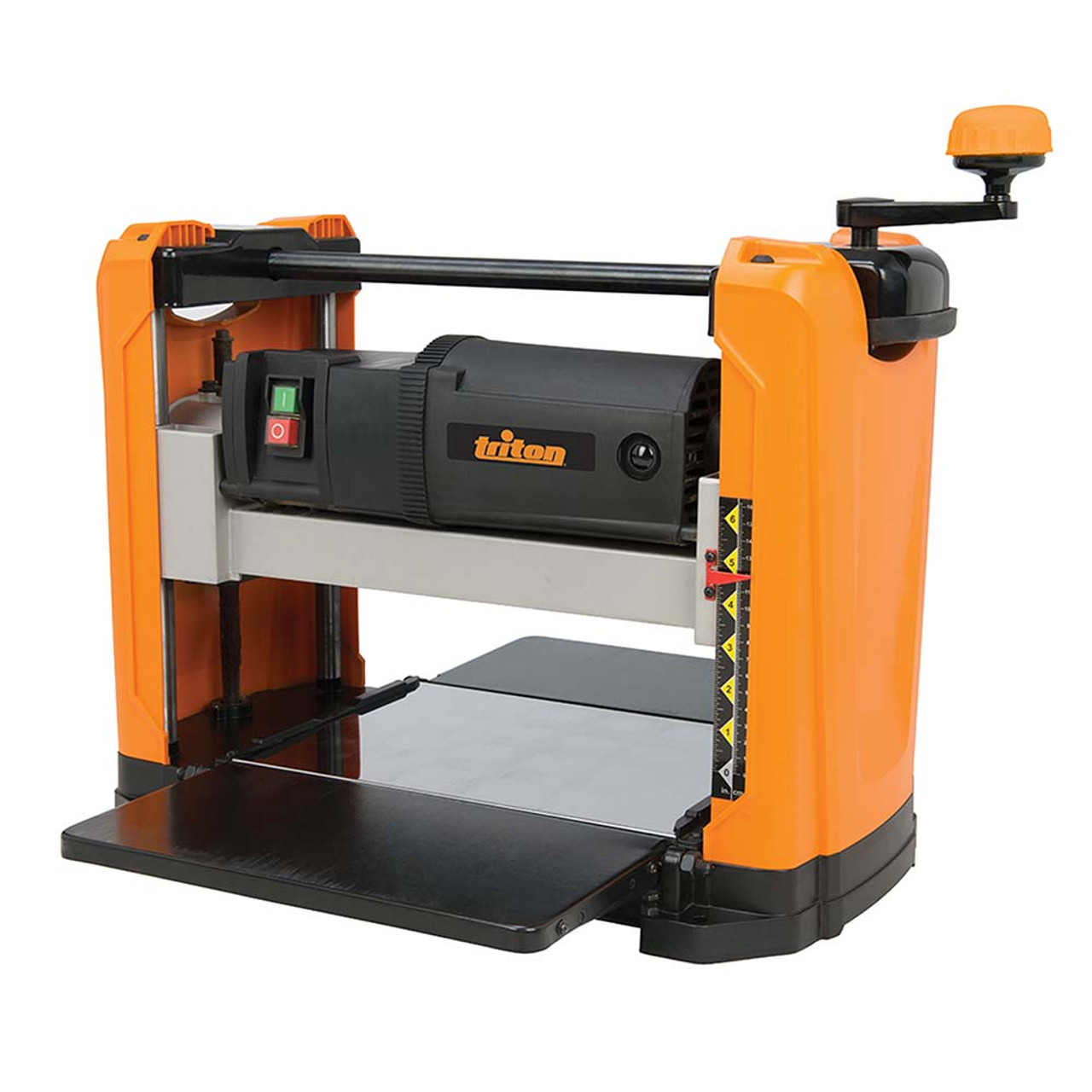








Impressive bit of kit!
First time owning or even using a thickness planer, so can't directly compare with its competitors. So far though, it's done exactly what I needed it to. First big project was running through over 100m of 2x1 rough sawn pre-used soft wood recycled from an old garden project. It was painted, sticky, pealing, covered in algae, warped and full of knots. The Triton absolutely ate it up though, and thanks to its wide bed and ample power, was happy to pull through several 3m lengths at once. The timber it produced was finish ready and just as good as any PAR stock you'll buy new. Doing this with a hand held planer would have taken days, wouldn't be be squared and would have been a far more dangerous process, so It's already paid for itself in my book. It's not feature rich, but it hasn't needed to be for me. It's easy to use and just does exactly what it's supposed to. Downsides: Its big, heavy, messy and noisy, but that's going to be the same for any planer. - You'll need a serious dust extraction system to make full use of the included dust port. It does redirect chips one way with it on, but I worry without suction that it'll eventually jam up. There's surprisingly little dust, but there are a TON of chips, so for me its probably going to be an outside use only tool with no dust port fitted, just whack a mask on and sweep up as you go. I half filled a big aggregate bag with wood chips within just a couple of hours. Good points: - Sturdy, and well made, 4 post design doesn't flex and remains level - Compact size, heavy enough to stay where you put it without bolts or clamps, but not so heavy that you can't move it around and lift it up onto a bench on your own. - A Thicknesser isn't the cheapest tool in the shed, but compared to the competition I can't imagine anything offers a better performance to value ratio than this one. - Replacement blades and other parts are easily obtainable and cheap. Downsides: - "handle" on top is just a basic roller, handy for resting or passing stock across but not strong enough to lift the machine with, so remember to lift with the built in side handles. - The measurement gauge hasn't done much for me so far, not that accurate or useful, so it's been far easier to make an initial guess, take a couple of passes if needed, and then creep up on a final thickness. - The infeed/outfeed tables aren't the easiest to adjust and dial in, and are quite short. They don't flex, but If you want precision without snipe, particularly with longer lengths, you'll want to make up and fix a length of board to sit right through the machine creating one big bed. out of the box though for most jobs it's gonna work just fine. - The on/off buttons aren't that accessible from all sides, so I'll definitely be adding some kind of inline emergency stop button at least. - I don't yet know how the blades will fare long term or how well/easy they sharpen. If you accidently hit a screw or nail though, they will chip and will likely need completely replacing. Looks easy enough to access and do though, and they are cheap. Helical multiblade upgrades are available which cut better, last longer and don't need complete replacements when damaged, but they are CRAZY expensive, so way outside a non-professional use case. All in all, so far I'm loving it! Hopefully it'll continue to save me a ton a of time and money recycling or buying cheaper rough sawn timber, and replacement parts will remain available to keep it going for years to come.

