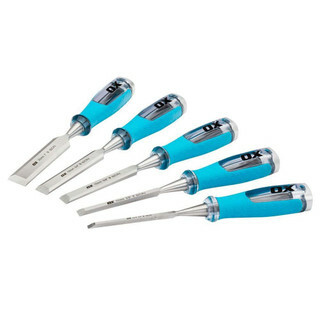
OX Tools Wood Chisels
OX wood chisels are built for clean paring, chopping joints and trimming timber properly, whether you're hanging doors, cutting housings or tidying first fix work.
If you're chopping hinges, cleaning out mortices or pairing back awkward timber that a machine can't reach, this is the kit you want in the bag. OX wood chisels are the sort of no-nonsense hand tools chippies trust for site fit-out, bench work and snagging, with bevel edge profiles that get into tight corners and handles made to take regular mallet strikes without giving up. If you do mixed first and second fix, keep a few key widths ready rather than making one chisel do every job.
What Are OX Wood Chisels Used For?
- Cutting hinge recesses in door linings and doors is where an OX wood chisel earns its keep, letting you square off corners and trim depth cleanly after marking out.
- Cleaning out mortices, housings and lap joints on first fix timber work is much easier with ox wood chisels, especially when a router or multi tool cannot get right into the corner.
- Paring back swollen timber, easing tight fitted parts and trimming plugs or dowels flush is the sort of snagging work an ox bevel edge chisel handles without making a mess of the face.
- Working on benches, trestles or straight off installed joinery, an ox chisel helps with final fitting on skirtings, frames, stair parts and other bits that need hand control rather than brute force.
- Setting out and finishing accurate hand cut joints goes better when you pair these with OX squares and bevels so your lines are right before you even start chopping.
Choosing the Right OX Wood Chisel
Sorting the right one is simple: match the chisel width and edge shape to the joint, not just whatever happens to be in the toolbox.
1. Single Chisel or Set
If you only need one size for hinge work or general trimming, buy that width and keep it sharp. If you move between first fix, bench joints and second fix snagging, go straight to OX wood chisel sets so you are not forcing the wrong size into every cut.
2. Width Matters More Than You Think
Narrow chisels are handy for small housings, corners and detail work, but they are slower on broad recesses. If you are chopping hinges and lock keeps all week, step up to wider blades so you get flatter bottoms and spend less time cleaning up.
3. Bevel Edge for Tight Corners
If you are working into dovetails, shoulders or marked-out corners, an ox bevel edge chisel makes more sense than a bulky sided blade. The slimmer profile gets where it needs to without bruising the surrounding timber.
4. Struck by Hand or Mallet
For light paring, any decent chisel will do the job if the edge is keen. If you will be chopping joints properly, pair it with OX hammers and mallets and choose handles that are made to take repeated strikes without splitting or loosening.
Who Uses These on Site?
- Chippies use OX wood chisels for first fix joints, hinge gains, lock recesses and all the little corrections that save dragging out bigger kit for a ten minute job.
- Joiners keep an ox wood chisel set on the bench for controlled paring and clean shoulder work where accuracy matters more than speed.
- Kitchen fitters and second fix carpenters reach for an ox pro wood chisel when scribing infills, trimming panels and easing tight components into place without bruising finished surfaces.
- Maintenance teams and site snaggers swear by an ox trade wood chisel for quick repairs, swollen door edges and tidy-up work that always shows up at the end of the job.
Useful Extras for OX Wood Chisels
A sharp chisel is only half the story. These extras make the work cleaner, quicker and a lot less frustrating on site.
1. Mallets
Using the wrong hammer is how you batter handles and lose control of the cut. A proper mallet gives you cleaner strikes when chopping housings, mortices and hinge recesses.
2. Squares and Bevels
Bad marking out ruins more joints than blunt edges do. A good square or bevel saves you from cutting off a line that was wrong to begin with.
3. Hand Saws
When you saw the shoulders first, the chisel work gets cleaner and faster. It is the difference between controlled waste removal and hacking away trying to rescue a joint.
4. Trestles and Saw Horses
Trying to chisel timber balanced on the floor or against a wall is asking for a slipped cut. A solid working height keeps the piece steady and gives you far better control.
Choose the Right OX Wood Chisel for the Job
Use this quick guide to pick the right blade width and style for the work in front of you.
| Your Job | OX Wood Chisel Type | Key Features |
|---|---|---|
| Chopping hinge recesses | Bevel edge chisel in a mid width | Gets into corners cleanly and leaves a flatter recess with less clean-up. |
| Paring end grain or trimming joints | Sharp single ox wood chisel | Good hand control, clean slicing action and better feel on finish work. |
| Bench joinery and mixed widths | OX wood chisel set | Gives you the right size for each joint instead of forcing one blade to do everything. |
| Mortices and deeper waste removal | Wider struck chisel | Takes mallet blows better and shifts more waste per hit on heavier timber work. |
| Site snagging and van carry | Compact selection of common sizes | Covers trimming, recess work and quick fixes without loading the whole bench kit. |
Common Buying and Usage Mistakes
- Buying one chisel and expecting it to cover every joint slows the job down and usually roughs up the cut. Keep a few sensible widths so the blade matches the recess.
- Using a blunt edge and blaming the timber is a classic mistake. Most tearing, wandering and bruising comes from poor sharpening, not the chisel itself.
- Striking a chisel with the wrong hammer batters the handle and kills control. Use a proper mallet when you are chopping and keep metal hammers for jobs that suit them.
- Prying with a wood chisel twists the blade and can chip the edge. They are for cutting and paring, not levering boards apart or scraping out stubborn fixings.
- Ignoring marking out wastes more time than bad cutting. Set your lines properly before you start or you will be chasing square corners that were never square in the first place.
Bevel Edge Chisels vs Chisel Sets vs Single Chisels
OX Bevel Edge Chisels
Best when you need access into tight corners, shoulders and detailed joinery lines. They are the right call for hinge gains, housings and neat trimming where a bulky side would get in the way.
OX Wood Chisel Sets
The sensible buy if you do mixed carpentry and do not want to make one width do every job badly. A set gives you proper flexibility for first fix, second fix and bench work in one go.
Single OX Wood Chisels
A good option if you already know the size you use most or need a replacement for a worn favourite. Better value for targeted jobs, but limited if your work changes day to day.
Maintenance and Care
Keep the Edge Sharp
A chisel should cut cleanly with control, not need forcing. Touch up the bevel regularly rather than waiting until the edge is fully rounded over and hard work to bring back.
Wipe Off Resin and Moisture
After site use, wipe the blade clean and dry before it goes back in the box. Resin, wet sawdust and van condensation all help surface rust along if you leave them sitting.
Protect the Cutting Edge
Do not throw loose chisels in with screws, nails and drill bits. Keep edge guards on if supplied, or store them so the cutting edge is not knocking against steel all day in the van.
Check the Handle After Striking
If you are hitting them hard, inspect the striking end and handle fit now and then. Once a handle starts loosening or mushrooming badly, deal with it before control goes off and the chisel becomes awkward to use.
Replace When the Blade Is Past Saving
Small nicks sharpen out, but badly chipped edges, bent blades or split handles are rarely worth fighting on a busy week. Replace tired pieces before they start ruining finished timber.
Why Shop for OX Wood Chisels at ITS?
Whether you need a single ox wood chisel for hinge work or a full ox wood chisel set for bench and site jobs, we stock the proper range in one place. That means key sizes, bevel edge options and trusted OX hand tool lines, all held in our own warehouse and ready for next day delivery.
OX Wood Chisel FAQs
What is a wood chisel used for?
A wood chisel is used for chopping, paring and cleaning out timber by hand. On site that usually means hinge recesses, mortices, housings, trimming joints and tidying work where a power tool is too rough or simply will not fit.
What sizes do wood chisels come in?
Wood chisels come in a spread of blade widths, from narrow sizes for detail work up to wider blades for larger recesses and flatter cuts. Most trades carry a few core sizes rather than every width going, so they can cover hinge gains, joints and general trimming without making do.
Are OX wood chisels any good?
Yes, they are a solid choice for regular trade use. OX wood chisels are made for real site work, with handles that stand up to being struck and blade shapes that suit joinery, first fix and snagging. Like any chisel, they still need proper sharpening if you want the best out of them.
How do you sharpen a wood chisel?
Keep the bevel at a consistent angle and work it on a sharpening stone or suitable abrasive until you raise and remove the burr. The main thing is not to leave it until the edge is wrecked. A quick regular touch-up is far easier than trying to recover a blunt chisel on the morning of a job.
What is a bevel edge chisel?
A bevel edge chisel has the sides ground down so the blade is slimmer near the cutting edge. That lets it get right into corners and tight joint lines, which is why it is so useful for dovetails, shoulders, hinge work and other accurate timber joints.
Will these stand up to being struck on site?
Yes, for normal chopping work with a proper mallet they are made for that kind of use. Just be sensible with them. A wood chisel is for cutting timber, not levering, digging out nails or taking full force from the wrong hammer all day.
What else should I keep with a wood chisel kit?
A decent setup is a chisel, a mallet, a square or bevel and a saw for cutting shoulders before you chop out waste. If you are building out a matching OX kit, have a look at OX hand saws and OX trestles and saw horses as well, because both make chisel work cleaner and easier.