Milwaukee Saw Blades
For clean cuts without forcing the saw, match your Milwaukee saw blade to the material and machine.
From ripping joists to cutting pipe, blade type and tooth pattern make the difference. Check the fitting, cutting capacity and material rating before buying. Choose the Milwaukee circular saw blade, jigsaw, reciprocating or band saw blade for your job.
What Jobs Are Milwaukee Saw Blades Best At?
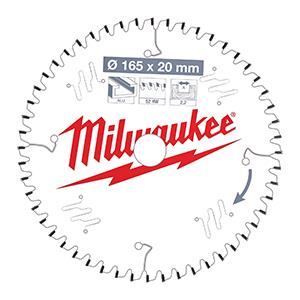
- Rip structural timber and crosscut sheet materials during first fix with Milwaukee Circular Saw Blades, selecting the tooth count for cutting speed or finish.
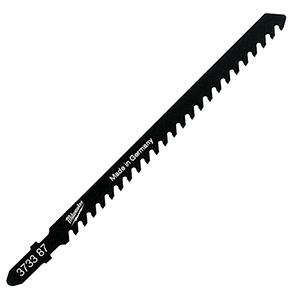
- Cut sink openings, curved panels and service notches with Milwaukee Jigsaw Blades, matching blade width and tooth direction to the shape and exposed surface.
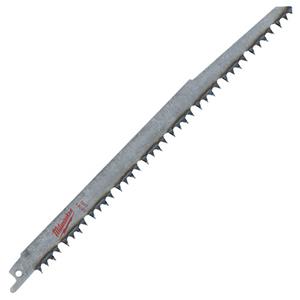
- Strip out studwork and cut redundant pipework during refurbs with Milwaukee Reciprocating Saw Blades, using blades specifically rated for nail-embedded timber or the metal being cut.
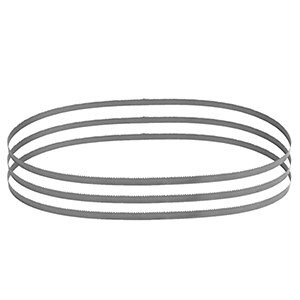
- Cut metal tube, conduit and section to length with Milwaukee Band Saw Blades, checking the loop dimensions and tooth pitch against the saw and wall thickness.
Choosing the Right Milwaukee Saw Blade
Match the blade to the saw first, the material second and the finish third. Brand alone does not tell you whether it fits.
1. Check the Machine Fitting
For circular saws, check diameter, bore, permitted kerf and maximum blade speed against the manual. Jigsaws need the correct shank, and band saws need the exact loop dimensions. If you use Milwaukee M18 Saws, check the individual model rather than assuming every M18 saw takes the same blade.
2. Buy for the Material You Will Actually Cut
If you are cutting clean timber, choose a wood blade. If old studs contain nails, choose a blade explicitly rated for embedded fixings. Steel, stainless steel and non-ferrous metals need suitable blades and a compatible machine; a metal-rated blade does not turn a timber circular saw into a metal-cutting saw.
3. Balance Cutting Speed Against Finish
For circular blades of the same diameter, fewer teeth generally suit fast timber ripping, while more teeth usually give cleaner crosscuts and sheet edges. For jigsaw, reciprocating and band saw blades, choose tooth pitch for the material thickness rather than simply buying the finest teeth available.
4. Use Enough Blade, Not Excess Length
A reciprocating blade must clear the work throughout its stroke, but unnecessary length makes controlled cutting harder. For thick jigsaw cuts, check both the blade's stated capacity and the saw's capacity; an overlong, flexible blade can wander underneath while the top cut appears straight.
Who Uses Milwaukee Saw Blades?
Chippies and kitchen fitters use circular and jigsaw blades for framing, sheet cutting and worktop openings. Plumbers, sparkies and mechanical installers use reciprocating and band saw blades to cut pipe, conduit and metal section, while strip-out teams need material-rated demolition blades for timber containing nails.
The Basics: Understanding Saw Blade Teeth
Tooth count and tooth pitch describe different things. Read them alongside blade size and material suitability, not as a quality score.
1. Circular Blade Tooth Count
The tooth count is the total number of teeth around the disc. On blades of equal diameter, wider tooth spacing generally clears timber chips faster, while closer spacing gives more cutting edges for a finer finish. Tooth geometry also matters, particularly on laminates and metals.
2. Teeth Per Inch
TPI describes tooth spacing on many straight and band saw blades. Thin metal usually needs finer teeth so several teeth stay engaged, rather than a single tooth catching the edge. Thick timber needs space between teeth to clear waste; follow the blade's stated material and thickness range.
Accessories for Controlled, Accurate Sawing
Secure the work and support the cut before blaming the blade for a poor finish.
1. Work Clamps
Clamp loose timber, sheet or pipe securely so it cannot shift as the teeth engage. Keep clamps outside the cutting path and support offcuts so they cannot close the cut onto the blade.
2. Compatible Guide Rails or Cutting Guides
Use a guide approved for your circular saw when cutting long sheet edges. It controls the saw's path instead of leaving you to correct a wandering cut halfway through an expensive board.
3. Blade Storage Cases
Store spare blades in suitable holders rather than loose beneath the tools. Separate circular blades to protect carbide teeth, and keep straight blades organised so the material markings remain readable.
Choose the Right Milwaukee Saw Blade for the Job
Start with the cutting task, then check the blade specification against your saw.
| Your Job | Blade Type | Key Features |
|---|---|---|
| Ripping clean structural timber | Coarse-tooth timber circular blade | Correct diameter and bore, suitable ripping geometry and space to clear chips. |
| Crosscutting panels for visible joinery | Fine-finish circular blade | Higher tooth count for its diameter and explicit suitability for the board material. |
| Cutting curves and openings in panels | Material-rated jigsaw blade | Suitable width for the curve, sufficient cutting depth and the right tooth direction. |
| Removing timber with embedded nails | Nail-embedded wood reciprocating blade | Explicit nail-cutting rating and enough working length throughout the stroke. |
| Cutting metal tube and section | Metal-cutting band saw blade | Exact loop dimensions and tooth pitch suited to the section's wall thickness. |
Common Buying and Usage Mistakes
- Buying by diameter alone can leave you with a circular blade that has the wrong bore or kerf. Check every fitting requirement in the saw manual before ordering.
- Using a clean-wood blade on reclaimed timber can damage teeth when it hits nails. Inspect the material and use a blade specifically rated for embedded fixings where needed.
- Choosing very coarse teeth for thin metal can make the blade snag and strip teeth. Match the pitch to the wall thickness using the blade manufacturer's guidance.
- Forcing a blunt blade causes heat, poor cuts and unnecessary load on the saw. Stop and check the blade, work support and setup rather than pushing harder.
Circular vs Jigsaw vs Reciprocating vs Band Saw Blades
Circular Saw Blades
Choose these for fast, straight cuts through supported timber and sheet materials with a suitable saw. They are the practical choice for long rips, but cannot follow curves or replace a demolition blade in confined spaces.
Jigsaw Blades
Choose these for curves, notches and internal openings started through a drilled hole. They offer more shaping control than a circular saw, but long straight cuts and thick material need care to prevent blade deflection.
Reciprocating Saw Blades
Choose these for strip-out, rough cutting and access around existing structures. Material-specific blades handle timber or metal, but the flexible blade and cutting action are not the choice for finished joinery edges.
Band Saw Blades
Choose these with a compatible band saw for controlled cutting of tube and section. They suit repetitive metal installation work, but the saw's throat and cutting capacity limit what fits inside it.
Maintenance and Care
Clean Off Resin and Swarf
Disconnect the power or remove the battery before handling blades. Let them cool, then remove deposits using a suitable cleaner and the blade manufacturer's method; avoid aggressive scraping across carbide tips.
Inspect Before Refitting
Check for cracks, missing teeth, damaged shanks and distortion. Do not straighten a bent blade or reuse a cracked one. Replace damaged blades before they spoil the work or fail during cutting.
Keep Blades Dry and Protected
Dry blades before putting them away and protect the cutting edges in storage. Handle band saw loops according to the manufacturer's instructions; their stored tension makes careless unpacking or coiling hazardous.
Replace or Sharpen Appropriately
Some carbide-tipped circular blades can be professionally sharpened if their condition permits. Replace worn disposable straight blades and band saw blades; forcing them through another job usually costs more in time and spoiled material.
Why Shop for Milwaukee Saw Blades at ITS?
ITS stocks the Milwaukee saw blade range across circular, jigsaw, reciprocating and band saw types, with sizes and tooth patterns for timber, sheet materials and metal. Stock is held in our own warehouse, ready for next-day delivery. Check the individual listing for current availability and delivery options before ordering for a booked job.
Milwaukee Saw Blade FAQs
Are Milwaukee circular saw blades any good?
They are a practical trade option when the blade specification matches the job. A coarse timber blade prioritises cutting speed, while a suitable fine-tooth blade gives cleaner crosscuts. Judge the material rating, tooth geometry and fit rather than expecting one Milwaukee blade to cover framing timber, laminate and metal equally well.
Does Milwaukee make saw blades?
Yes. Milwaukee offers saw blades for several machine types, including circular saws, jigsaws, reciprocating saws and band saws. Each blade has its own fitting and material specification, so check the individual product rather than buying on the brand name alone.
What saw blades does Milwaukee make?
The range includes circular blades for straight cutting, jigsaw blades for shaping and openings, reciprocating blades for demolition and installation work, and band saw blades for compatible machines. Material options vary by blade type and include products rated for wood, nail-embedded timber and specific metals.
Do Milwaukee saw blades fit other circular saws?
Yes, where the blade meets every requirement specified by the saw manufacturer. Check diameter, bore, kerf, blade speed rating and intended material. On saws with a riving knife, blade plate thickness and kerf must also suit the knife. Do not improvise adaptors or assume a matching diameter is enough.
What tooth count saw blade should I use?
For circular blades of the same diameter, choose fewer teeth for faster timber ripping and more teeth for cleaner crosscuts or sheet edges, subject to the blade's material rating. There is no single tooth count that suits every blade diameter. For jigsaw, reciprocating and band saw blades, use the stated tooth pitch and material-thickness guidance instead.