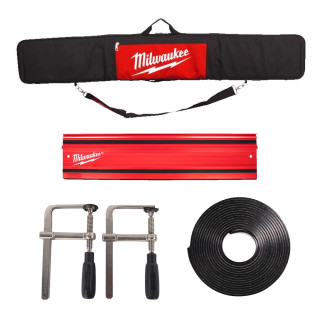
Milwaukee Guide Rails & Plunge Saw Accessories
Milwaukee guide rail gear is what you reach for when sheet cuts need to stay dead straight, clean edged, and repeatable on site or in the workshop.
If you're breaking down doors, worktops, sheet timber or fitted panels, a proper Milwaukee guide rail kit saves time and stops costly wander, breakout and wonky cuts. The rail keeps the plunge saw tracking true, the clamps stop movement on slick boards, and the right bag stops the strips getting bent in the van. For keeping cuts tidy from first pass to final fit, this is the kit to get sorted.
What Are Milwaukee Guide Rails Used For?
- Cutting down full sheets of MDF, ply and laminated boards on trestles is where a Milwaukee guide rail earns its keep, giving you a straight reference without wrestling a long fence or chalk line.
- Trimming worktops, doors and filler panels on kitchen and fit-out jobs is far easier with Milwaukee plunge saw rails, because the saw stays tracking true and leaves a cleaner edge to finish from.
- Working in occupied homes or finished spaces suits a Milwaukee plunge saw guide rail setup, as it helps keep cuts controlled, accurate and easier to pair with dust extraction.
- Repeating the same rip or trim cuts in joinery shops and site cabins is quicker with Milwaukee rails, especially when you need consistent sizing without marking out every board from scratch.
- Clamping awkward, smooth or heavy sheet material before a critical cut is exactly where Milwaukee Guide Rail Clamps make the job less risky and a lot more accurate.
Choosing the Right Milwaukee Guide Rail
Sorting the right one is simple. Match the rail length and accessories to the material you cut most, not the odd job you do once a year.
1. Rail Length
If you mainly trim doors, plinths and short panels, a shorter Milwaukee rail is easier to carry, store and set up. If you are regularly breaking down full sheets, go longer or use a Milwaukee guide rail kit that gives you enough run to finish the cut in one pass.
2. Single Rail or Kit
If you already have the basics, buy the rail you are missing. If you are starting from scratch, a Milwaukee guide rail kit makes more sense because it usually covers the bits that stop the usual site grief, like movement, poor support and damaged rails in transit.
3. Clamps and Stability
Do not assume the rail will always stay put on its own. If you cut slick laminates, warped sheet or boards balanced on insulation, get clamps as well or you will end up chasing a cut line that moved halfway through.
4. Transport and Protection
If the rail is living in the van with levels, pipe and ladders, protect it properly. A bent or dinged edge ruins the whole point of using a guide rail, so storage matters more than most lads admit.
Who Uses These on Site?
- Chippies and kitchen fitters use a Milwaukee guide rail for breaking down sheet goods, trimming end panels and cutting worktops cleanly without dragging full boards back to the saw bench.
- Shopfitters and fit-out teams rely on Milwaukee plunge saw rail setups when they need neat visible cuts in melamine, veneered boards and finished panels where breakout looks amateur.
- Joiners keep a Milwaukee rail in the van for first fit and second fix jobs, especially when space is tight and a table saw simply is not practical.
- Site teams and maintenance crews reach for a Milwaukee guide rail kit when they need portable straight cutting for repairs, access panels and one-off board replacement work.
The Basics: Understanding Milwaukee Guide Rails
A guide rail does one main job. It gives the saw a fixed, straight path so the cut follows the rail instead of your eye or a wobbly fence. Here is the simple version.
1. The Rail Guides the Saw
The saw rides along the Milwaukee guide rail so you get a straighter cut over long distances, especially on full sheets where a hand-held cut would usually drift off line.
2. The Rail Helps Cut Cleaner
A Milwaukee plunge saw guide rail helps control the saw from start to finish and supports neater entry and exit on the cut, which matters when you are working on finished boards and visible faces.
3. Accessories Make It Site Ready
Clamps, connectors, bags and a Milwaukee guide rail adapter are what turn a basic rail into a setup that actually works day after day on site, not just on a clean bench in a workshop.
Milwaukee Guide Rail Accessories That Save Hassle on Site
A rail on its own is only half the job. These extras stop movement, damage and setup faff when you are cutting for real.
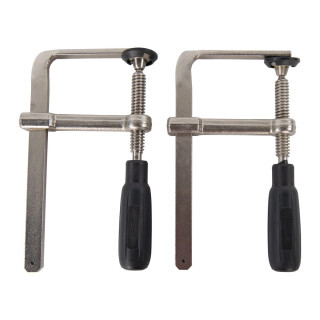
1. Guide Rail Clamps
Get these if you are cutting smooth laminate, heavy sheet or awkward offcuts. They stop the rail creeping mid cut, which is exactly how expensive panels get wrecked. Have a look at Milwaukee Guide Rail Clamps if accuracy matters more than luck.
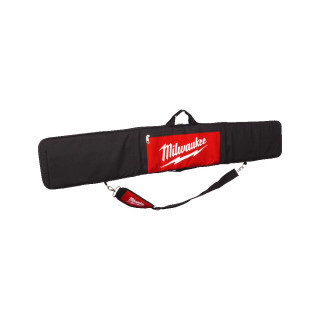
2. Guide Rail Bag
Do not just chuck rails in with breakers, levels and pipe benders. A proper bag stops the edges getting knocked about in the van and keeps the rail usable. Milwaukee Guide Rail Bags are worth it if your kit travels every day.
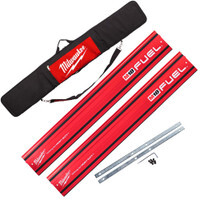
3. Accessory Kits
If you are piecing together a setup, kits usually make more sense than buying every bit separately. Milwaukee Plunge Saw Accessory Kits help cover the common extras in one go.
4. Other Rail and Saw Extras
Connectors, replacement parts and the odd fitting can be the difference between getting the cut done or bodging round a missing piece. Milwaukee Other Plunge Saw Accessories are where to look when the main kit needs backing up.
Choose the Right Milwaukee Guide Rail for the Job
Use this quick guide to match the rail setup to the kind of cutting you actually do.
| Your Job | Category or Type | Key Features |
|---|---|---|
| Trimming doors and short panels on site | Short Milwaukee rail | Easier to carry, quicker to set up, less awkward in tight rooms and hallways. |
| Breaking down full sheets of MDF or ply | Long Milwaukee guide rail | Better cut length, fewer resets, straighter full-sheet ripping and cross cutting. |
| Starting from scratch with plunge saw cutting | Milwaukee guide rail kit | Combines core rail gear, cuts setup time and avoids missing key accessories. |
| Cutting slippery laminate or expensive finished boards | Rail with clamps | Stops rail movement, protects cut accuracy and reduces the chance of spoilage. |
| Van based joinery and mobile fit out work | Rail with storage bag | Keeps rails straight, protects edges and makes transport far less of a pain. |
Common Buying and Usage Mistakes
- Buying a rail that is too short for the sheet size you cut most often means stopping and resetting halfway through, which is exactly where a straight cut turns into a visible mismatch.
- Assuming anti slip strips will handle every board is a mistake. On dusty, slick or bowed material, use clamps or expect the rail to shift when the cut matters most.
- Throwing Milwaukee rails loose in the van soon leads to dinged edges and poor tracking. Store them properly or you will blame the saw for a rail problem.
- Using the wrong saw or skipping the correct Milwaukee guide rail adapter can leave the saw sitting badly on the rail, which ruins cut accuracy and confidence straight away.
- Treating a guide rail like a rough site straightedge wears it out fast. Keep it for cutting duties, not as a bench lever, prop or makeshift level.
Long Rail vs Short Rail vs Guide Rail Kit
Short Rail
Best for doors, fillers, trims and quick site jobs where space is tight. Easier to move about, but not the one for full sheet breakdown unless you enjoy extra setup and a bigger chance of inaccuracy.
Long Rail
This is the better pick for sheet materials, worktops and long rip cuts where one clean pass matters. It takes up more room in the van, but it saves time and usually gives the tidier result.
Milwaukee Guide Rail Kit
A Milwaukee guide rail kit suits trades starting fresh or anyone fed up of missing the small but vital bits. You pay more up front, but you avoid the usual stop start nonsense caused by incomplete kit.
Rail Only vs Rail with Accessories
Rail only is fine if your setup is already sorted. Rail with clamps, bag or connectors is the smarter choice for daily site use, because accuracy is no good if the rail moves or gets bent in transit.
Maintenance and Care
Keep the Rail Edge Clean
Wipe off dust, resin and site muck after use so the saw runs smoothly and the rail sits flat on the board. A dirty rail is an easy way to lose cut accuracy.
Check for Knocks and Bends
Give the rail a quick look before important cuts. If the edge is dinged or the rail has taken a bend in the van, sort it before you ruin a panel that costs more than the accessory did.
Store It Properly
Keep rails flat, protected and away from heavier kit. Using a bag or dedicated storage stops transit damage and helps the rail stay reliable job after job.
Look After Clamps and Fittings
Keep moving parts free of packed dust and check threads or locking points now and then. If clamps stop gripping properly, the whole cutting setup becomes harder to trust.
Replace Worn Parts Before Finish Work
If strips, fittings or adapters are worn, change them before you start cutting finished material. Rough gear might pass on shuttering ply, but it shows up straight away on kitchens and joinery.
Why Shop for Milwaukee Guide Rail at ITS?
Whether you need a single Milwaukee Guide Rails option, a full Milwaukee guide rail kit, or backup accessories for plunge saw work, we stock the proper range in one place. It is all held in our own warehouse, in stock and ready for next day delivery, so you can get the right rail kit on site without hanging about.
Milwaukee Guide Rail FAQs
Is Milwaukee circular saw compatible with guide rail?
Some are, some are not. You need to check whether your saw is designed to run on a Milwaukee guide rail directly or with the correct Milwaukee guide rail adapter. Do not assume every circular saw will sit properly on Milwaukee plunge saw rails, because poor fit means poor tracking and a cut you cannot trust.
Are circular saw guide rails worth it?
Yes, if you cut sheet material, doors, worktops or finished boards with any regularity. A guide rail gives you straighter cuts, cleaner edges and less rework. If you only make the odd rough cut in stud timber, probably not. If neatness and repeatability matter, they are well worth having.
Is Milwaukee Track Saw compatible with other tracks?
Best advice is do not bank on it unless the spec says so. Track profiles vary, and even a near fit can introduce play, drag or poor alignment. If you want the saw to run properly and cut dead straight, stick with the correct Milwaukee rail setup for that saw.
Do I really need clamps if the rail has grip strips underneath?
On clean, flat boards, grip strips often do enough for a quick cut. On dusty sheets, slick laminate or bowed material, clamps are the safer bet. If the board is expensive or the cut is visible, clamp it and take the doubt out of the job.
Will a Milwaukee guide rail kit save time compared with buying bits one by one?
Usually, yes. If you are building a plunge saw setup from nothing, a Milwaukee guide rail kit stops you missing the obvious extras that make it actually usable on site. It is often a better shout than realising halfway through a job that you still need clamps, storage or connectors.
How do I stop a guide rail getting damaged in the van?
Keep it in a proper bag or dedicated slot and do not bury it under heavier gear. Most rail problems come from transport, not cutting. Once the edge is knocked or bent, accuracy goes with it, so storing it properly is not being precious, it is just sensible.