Milwaukee M12 Saws
Cutting pipe inside a cupboard or trimming boards in a loft? Milwaukee M12 saws keep the kit compact.
These 12V cordless saws suit fitters, sparkies and maintenance teams working where larger tools get awkward. Choose the cutting action and capacity first, then check whether batteries are included. Pick the saw that suits your regular cuts.
What Jobs Are Milwaukee M12 Saws Best At?
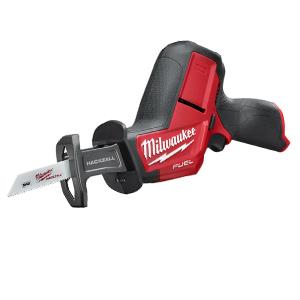
- Cut plastic pipe and remove redundant timber during kitchen and bathroom refurbs with an M12 Hackzall fitted with the correct blade.
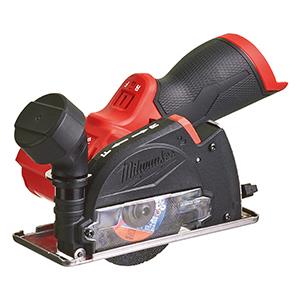
- Trim sheet material and make straight timber cuts with an M12 circular saw, checking that its cutting depth covers the material thickness.
- Cut threaded rod and suitable metal pipe during electrical and mechanical installations with an M12 band saw, keeping the work within its stated capacity.
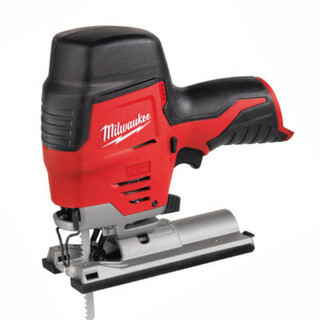
- Form curves and cut-outs in boards with an M12 jigsaw, supporting the sheet properly and checking behind the cut before starting.
- Carry out snagging and maintenance cuts in lofts, cupboards and service spaces where a larger cordless saw is awkward to position.
Choosing the Right Milwaukee M12 Saw
Buy for the cut you make most often: a compact saw is useful only if its blade, cutting action and capacity suit the work.
1. Pipe Cutting and Strip-Out
Choose from Milwaukee M12 Recip Saws for pipe alterations, rough timber cuts and removal work. A Hackzall is easier to position in restricted spaces than a larger reciprocating saw, but it is not the tool for straight, finished board edges. Match the blade to the material and allow clearance for its full stroke.
2. Straight Cuts in Boards and Timber
Look at Milwaukee M12 Circular Saws for straight trimming and crosscuts. Check cutting depth at both 90 degrees and your intended bevel angle. If your regular timber exceeds that capacity, buy a larger saw rather than relying on turning every piece over.
3. Curves and Internal Cut-Outs
Choose Milwaukee M12 Jigsaws for shaped cuts in boards and panels. Check blade compatibility, speed control and bevel adjustment on the individual model. For visible edges, use the right fine-cut blade and test on an offcut first.
4. Repeated Metal Installation Cuts
Consider Milwaukee M12 Band Saws for repeated cuts in suitable metal pipe, rod and section. Check both dimensions of the cutting capacity, not just the pipe diameter. Band blade length is model-specific, so confirm replacement blade availability before ordering.
Who Uses Milwaukee M12 Saws?
Plumbers and bathroom fitters use compact reciprocating saws for pipe alterations and strip-out work. Sparkies and mechanical installers reach for band saws when cutting threaded rod and suitable conduit. Joiners, kitchen fitters and maintenance teams use circular saws and jigsaws for board trimming and cut-outs, particularly when they already carry M12 batteries.
The Basics: Understanding Milwaukee M12 Saws
M12 identifies the battery platform, not the type of cut. The blade movement determines which jobs the saw handles properly.
1. Different Cutting Actions
Circular saws rotate a disc-shaped blade for straight cuts. Jigsaws use a narrow, reciprocating blade for curves and cut-outs. Hackzall reciprocating saws suit rough cutting and removal work, while band saws run a continuous toothed band through material within their cutting opening.
2. Battery Capacity Is Not Cutting Capacity
A higher-capacity compatible battery can extend runtime, but it cannot increase the saw's maximum cutting depth or opening. Choose the saw capacity first, then select batteries for the workload and the weight you are prepared to carry.
Accessories to Keep Your M12 Saw Cutting
The right blades, charged batteries and secure workholding prevent most avoidable cutting delays.
1. Material-Matched Replacement Blades
Keep blades suited to the actual work, whether that is timber, nail-embedded wood or metal. Check blade fitting, dimensions and speed rating where applicable; M12 saws do not share one universal blade.
2. Compatible M12 Batteries and Charger
A spare charged pack keeps intermittent fitting work moving. Check the box contents before ordering a body-only saw, and balance extra runtime against the bulk of a larger battery in tight cupboards.
3. Clamps and Material Supports
Clamp small workpieces and support boards so the blade is not trapped as the cut closes. Trying to steady loose material by hand makes a poor cut more likely and puts your fingers too close to the blade.
Choose the Right Milwaukee M12 Saw for the Job
Match the saw type to the material, access and finish required.
| Your Job | Saw Type | Key Features |
|---|---|---|
| Pipe alterations and rough removal cuts in cupboards | M12 Hackzall reciprocating saw | Compact body, suitable blade length and clearance behind the cut. |
| Straight trimming of boards and sheet material | M12 circular saw | Sufficient cutting depth, suitable blade and a stable cutting guide. |
| Curves and cut-outs in panels | M12 jigsaw | Correct blade fitting, appropriate tooth pattern and speed control. |
| Repeated cuts in metal pipe, threaded rod and section | M12 band saw | Adequate cutting opening and the correct band length and tooth pitch. |
Common Buying and Usage Mistakes
- Choosing by battery platform alone can leave you with the wrong cutting action. A Hackzall handles rough removal cuts, but a circular saw is the better choice for straight board edges.
- Ignoring cutting depth or band saw capacity can stop the job before it starts. Measure your largest regular workpiece and check the individual saw specification.
- Using a blunt or unsuitable blade wastes battery power and encourages forcing the cut. Fit the correct blade and let its teeth do the work.
- Ordering a body-only saw without checking your batteries and charger creates an avoidable delay. Confirm what is supplied rather than assuming the product image shows the complete kit.
- Cutting installed boards or pipe without checking behind them risks striking cables, services or hidden fixings. Inspect the cutting path and isolate services where required before starting.
M12 Hackzall vs M12 Circular Saw vs M12 Band Saw vs M18 Saws
M12 Hackzall
Choose a Hackzall for awkward pipe cuts and rough removal work where access matters more than finish. It is versatile with the right blades, but it will not replace a guided circular saw for straight sheet cuts.
M12 Circular Saw
Choose a circular saw for straight cuts in boards and sheet material within its rated capacity. Its base supports controlled cutting, but blade depth limits thicker timber and it cannot follow tight curves.
M12 Band Saw
Choose a band saw for repeated cuts in suitable metal sections without an abrasive cutting disc. Its opening limits workpiece size, and it is not a substitute for a general timber saw.
M18 Saws
Compare Milwaukee M18 Saws when deeper cuts and sustained heavy work matter more than compact handling. The range includes larger-capacity options, but check individual specifications and remember that M12 batteries do not fit M18 tools.
Maintenance and Care
Remove the Battery Before Maintenance
Take the battery out before changing blades, clearing a jam or cleaning around the cutting mechanism. Wait for all movement to stop before handling the blade.
Clear Dust and Swarf
Brush away debris after use and keep ventilation slots clear. Remove metal swarf carefully rather than wiping it away with bare hands, and follow the manual for access beneath covers.
Inspect Blades and Guards
Replace bent, cracked or badly worn blades. Check that guards and blade retention mechanisms operate correctly; stop using the saw if a guard sticks or a blade will not lock securely.
Store Dry and Investigate Damage
Store the saw and batteries dry, away from loose screws and metal offcuts. After a hard drop, check the base, housing and blade alignment. Have damaged safety parts or persistent vibration assessed rather than working around the fault.
Why Shop for Milwaukee M12 Saws at ITS?
ITS stocks the full Milwaukee M12 saw range, covering reciprocating saws, circular saws, jigsaws and band saws, alongside compatible blades and battery options. Stock is held in our own warehouse, ready for next-day delivery. Check the individual listing for current availability, kit contents and delivery options before ordering.
Milwaukee M12 Saws FAQs
Which Milwaukee M12 saw is best for general use?
For mixed maintenance and rough cutting, an M12 Hackzall is a practical starting point because suitable blades cover timber, plastic and metal. If most of your work is straight board cutting, choose a circular saw instead. There is no single M12 saw that gives the right finish and cutting action for every job.
Is the Milwaukee M12 Hackzall good?
It is a useful choice for compact-access cutting, pipe alterations and light strip-out work. Its limits matter: it is not intended to give a finished joinery edge or replace a larger reciprocating saw for sustained heavy demolition. A sharp, material-matched blade makes a substantial difference to the cut.
Is there an M12 circular saw?
Yes. Milwaukee makes M12 circular saws for straight cutting in suitable timber and sheet materials. Check the particular model's blade size and maximum cutting depth, especially at a bevel, rather than assuming it will cut the same thickness as a larger cordless saw.
Are M12 saws powerful enough for decking?
An M12 circular saw can handle occasional cuts in timber decking boards when their thickness is within its rated cutting depth and the correct blade is fitted. Thick joists, wet timber and repeated cuts put more demand on it. For building whole decks regularly, a larger-capacity saw is the more practical choice. Composite decking needs a blade approved for that material.
What is the difference between M12 and M18 saws?
M12 is Milwaukee's 12V battery platform; M18 is its 18V platform. M12 saws generally prioritise compact handling, while the M18 range includes options for larger cutting capacities and heavier workloads. Compare the actual models for depth, speed and weight. The two platforms use different batteries and are not interchangeable.
Are M12 saws brushless?
Not all of them. The M12 range includes brushed and brushless models, while M12 FUEL saws use brushless motors. Check the individual specification rather than treating the M12 badge as a motor description. Cutting capacity and blade choice still matter even when choosing brushless.
Is the M12 Hackzall one-handed?
Yes, the M12 Hackzall is designed for one-handed operation. That does not mean holding the workpiece beside the blade with your free hand. Secure the material, keep clear of the cutting path and follow the model's operating instructions. Restricted access is no reason to cut unsupported material.
Can M12 saws cut metal?
Yes, suitable M12 models can cut metal with the correct blade and within their stated capacity. Band saws suit appropriate pipe, threaded rod and sections; Hackzall saws can handle suitable metal-cutting tasks with a metal blade. Do not fit a metal blade to a timber circular saw unless the manufacturer explicitly approves that application.