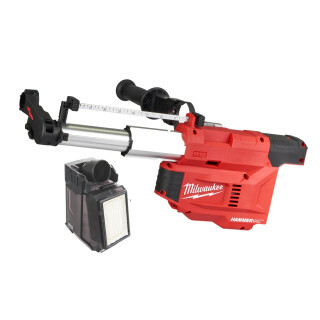
Milwaukee M12 Dust Extractor Accessories
Drilling overhead? Milwaukee M12 dust extractor accessories help collect dust before it drops across the room.
For sparkies and fitters, the right filter, hose or attachment keeps Milwaukee M12 dust extraction working at the drilling point. Match parts to your exact collector or vacuum model, not just the battery platform. Choose the compatible replacement below.
What Are Milwaukee M12 Dust Extractor Accessories Used For?
- Collect dust at the drilling point when fixing cable tray brackets or pipe clips, using an attachment compatible with your extractor, drill and bit size.
- Replace a loaded or damaged filter before drilling repeated fixing holes, so restricted airflow does not undermine dust collection.
- Reach around fitted cabinets and into service cupboards with a compatible vacuum hose or nozzle when clearing loose drilling debris.
- Maintain contact around the hole with the correct replacement dust attachment, particularly when drilling overhead for suspended services.
Choosing the Right Milwaukee M12 Dust Extractor Accessories
Buy by the extractor model number first; an M12 badge does not make every filter, hose and attachment interchangeable.
1. Match the Exact Machine
If you are replacing a filter or hose, check the accessory part number against your machine's compatibility list. A drill dust collector and a portable vacuum can use different connections, filter shapes and seals despite sharing the M12 platform.
2. Check Bit Diameter and Working Length
For a drilling attachment, check its stated hole diameter and drilling depth limits. If the bit is outside those limits, choose a suitable extraction arrangement rather than forcing it through the wrong head.
3. Match Extraction to the Dust Hazard
If you are drilling concrete or masonry, check that the complete extraction setup meets the job's dust-control requirements. A filter labelled HEPA does not, by itself, make the machine an M-class extractor or remove the need for suitable respiratory protection.
4. Check What Is Supplied
If you need a complete connection from drill to vacuum, check whether the listing includes the head, hose and any adaptor. Buying a replacement attachment alone will not help if the connecting parts are missing.
Who Uses Milwaukee M12 Dust Extractor Accessories?
Sparkies, plumbers and mechanical fitters use these accessories when drilling repeated fixing holes for containment, pipework and brackets. Maintenance teams working in occupied buildings also need compatible filters and attachments to collect dust close to the work rather than spreading it over fittings and finished surfaces.
The Basics: Understanding Milwaukee M12 Dust Extraction
A drilling dust collector and a portable vacuum do different jobs. Match the accessory to how your machine collects dust, not simply to its battery voltage.
1. Capture at the Hole
A suitable drilling attachment positions the extraction opening around or beside the bit. This collects dust as the hole is drilled, rather than leaving it to settle before cleaning. Correct positioning and compatibility matter as much as suction.
2. Keep the Air Path Clear
The hose carries dust towards the collection container, while the filter retains particles before air leaves the machine. A blocked hose, full container or loaded filter reduces airflow, so fitting a new head will not cure every collection problem.
3. Separate Filtration from Machine Classification
Filter efficiency describes one component. A machine's dust classification covers the complete extractor. Check the machine specification and your dust-control assessment before using it for hazardous construction dust.
Choose the Right Milwaukee M12 Dust Extractor Accessories for the Job
Start with the task, then confirm the part fits your exact machine.
| Your Job | Accessory Type | Key Features |
|---|---|---|
| Restore filtration after a filter becomes damaged or cannot be cleaned effectively. | Model-specific replacement filter. | Correct filter specification, seating profile and seal arrangement. |
| Collect dust while drilling fixing holes. | Compatible drilling dust attachment. | Approved drill fit, bit diameter range and working depth. |
| Replace a split hose or reach an awkward cleaning point. | Compatible vacuum hose. | Correct end fittings, bore and manufacturer-approved length. |
| Clear loose debris from cabinet corners and service cupboards. | Compatible crevice nozzle. | Suitable hose connection and access into narrow spaces. |
Common Buying and Usage Mistakes
- Buying by battery platform alone can leave you with the wrong connection or filter shape. Check the machine model and accessory part number before ordering.
- Washing a filter without checking its instructions can damage the filter media. Only rinse filters specifically identified as washable, and follow the stated drying procedure.
- Using an attachment beyond its bit diameter or depth limit can prevent proper positioning and dust capture. Match the head to the actual holes being drilled.
- Treating a compact collector as a substitute for every site extractor can leave dust inadequately controlled. Check the complete machine's suitability for the material and workload.
- Continuing with a full container or blocked hose reduces airflow. Check both before assuming the filter or machine needs replacing.
Drilling Dust Attachments vs Vacuum Nozzles vs Replacement Filters
Drilling Dust Attachments
Choose a compatible drilling attachment when you need collection at the hole during fixing work. Unlike a cleaning nozzle, it is designed around the drilling position, but its bit size and working depth limits must suit the job.
Vacuum Nozzles and Hoses
Choose these for reaching loose debris inside cupboards, around equipment and along edges. They improve cleaning access, but an ordinary nozzle is not automatically a suitable on-tool drilling connection.
Replacement Filters
Choose the specified replacement when the existing filter is damaged or remains restricted after approved cleaning. A filter maintains the machine's intended filtration; it does not add drilling compatibility or upgrade its dust classification.
Maintenance and Care
Isolate Before Clearing Blockages
Switch off and remove the battery before opening the container or clearing a hose. Follow the machine's emptying instructions and use the dust controls and protective equipment required for the material collected.
Clean Filters as Specified
Check the instructions for the exact filter before cleaning. Do not assume it can be washed or blasted with compressed air; either can damage unsuitable media or release fine dust into the work area.
Inspect Connections and Seals
Check hoses for splits and attachment connections for cracks or trapped debris. Replace damaged parts rather than relying on a loose fit that allows air leakage and poor collection.
Store Without Crushing
Store hoses without sharp bends and keep filters protected from damp and impact. Do not leave heavy tool cases resting on dust heads or hose couplings in the van.
Why Shop for Milwaukee M12 Dust Extractor Accessories at ITS?
ITS stocks the full Milwaukee M12 dust extractor accessory range, covering replacement filtration and compatible dust-collection parts. Stock is held in our own warehouse, ready for next-day delivery. Check the listed machine compatibility and live availability before ordering the parts for your next job.
Milwaukee M12 Dust Extractor Accessories FAQs
What dust extraction accessories are there for Milwaukee M12?
Depending on the machine, accessories include replacement filters, dust-collection attachments, hoses and cleaning nozzles. They are not universal across the M12 range. Check the accessory listing against your collector or vacuum model before buying.
Do Milwaukee M12 dust accessories fit M18 tools?
Some accessories may have compatibility across machines, but M12 and M18 branding does not establish a fit. Only use the part where Milwaukee lists your tool or extractor as compatible. Filters, mounting points and hose connections can differ.
How do you clean Milwaukee M12 vacuum filters?
Remove the battery and follow the cleaning procedure for the exact vacuum and filter. Empty collected dust using appropriate containment and protective equipment, then clean the filter only by the approved method. Replace it if the media or seal is damaged, or airflow remains poor after cleaning and checking for blockages.
Is an M12 dust extractor powerful enough for drilling?
A purpose-designed M12 drilling dust collector can serve the drilling applications stated in its specification. Battery voltage alone does not tell you whether a setup is suitable. Check the permitted bit diameter, depth, material and dust-control requirements; do not assume a compact collector can cover large-hole or continuous drilling work.
What is the M12 dust collector used for?
A drilling-focused M12 dust collector captures dust close to the bit while you make holes, such as fixings for brackets and services. Its exact use depends on the model and attachment. It is not automatically suitable for chasing walls, floor grinding or general wet pick-up.
Can you connect a Milwaukee M12 vacuum to a drill?
Only with a suitable drilling extraction attachment and a compatible hose connection. A hose that fits physically is not enough: the attachment must collect effectively at the hole, and the vacuum must be suitable for the dust and task. Check the approved setup before buying separate parts.
Are Milwaukee M12 filters washable?
Do not assume they all are. Washability depends on the specific filter, not the M12 name or a HEPA label. Only wash it if its instructions expressly allow it, and let it dry completely as directed before refitting.
Do M12 dust accessories reduce cleanup time?
A correctly matched drilling attachment can reduce the amount of dust settling around each hole, leaving less to clear afterwards. Results depend on positioning, airflow and the condition of the filter and seals. You should still expect some final cleaning; collection is not a guarantee of a dust-free room.