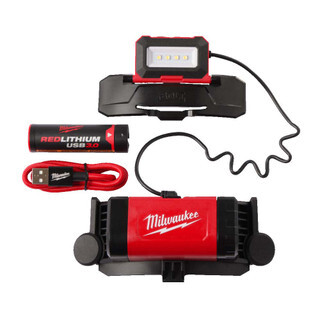
Milwaukee BOLT Torches & Lighting
Working in dark risers or roof spaces? A Milwaukee BOLT hard hat light keeps the beam on the job and both hands free.
For sparkies, fitters and maintenance teams, the right helmet light saves juggling a torch around tools and fixings. Check helmet compatibility, runtime and accessory clearance before choosing your BOLT lighting.
What Jobs Are Milwaukee BOLT Hard Hat Lights Best At?
- Trace cables and identify terminal markings inside poorly lit risers while keeping both hands available for tools and testing equipment.
- Inspect pipe joints and position fixings above suspended ceilings without balancing a separate torch on the framework.
- Light the immediate work area when fitting brackets or checking connections in plant rooms where your body blocks the fixed lighting.
- Carry out maintenance checks in roof spaces with a helmet-mounted beam that follows where you look, rather than repeatedly repositioning a handheld torch.
Choosing the Right Milwaukee BOLT Hard Hat Light
Start with the helmet and the shift length, not the highest lumen figure.
1. Check the Helmet and Mount Together
If you already wear a BOLT helmet, check that the light and its supplied mount are approved for that exact model. Do not assume a BOLT fitting will attach to another manufacturer's hard hat, or that a mount is included with every replacement light.
2. Match the Beam to the Working Distance
For wiring and pipework within arm's reach, prioritise an even close-range beam and a usable low setting. If you need to inspect further into a roof space, check the beam distance as well as the lumen output. More light is not always helpful when it reflects straight back from shiny panels.
3. Buy for Runtime at the Setting You Need
If the light will run for most of your shift, compare runtime at your intended brightness. The longest advertised runtime normally uses the lowest setting. Check the charging connection, battery arrangement and supplied charging equipment before ordering.
4. Allow for Visors and Other PPE
If you use a visor or ear defenders, check the approved accessory combination before adding the light. The lamp must not stop the visor closing properly or interfere with helmet adjustment.
Who Uses Milwaukee BOLT Helmet Lights?
Sparkies use a Milwaukee BOLT helmet light for cable identification and termination work in dark service spaces. Mechanical fitters and maintenance engineers use helmet-mounted lighting to inspect valves, brackets and equipment while keeping their hands free. It supplements the site lighting; it does not replace proper lighting for access routes or the wider work area.
The Basics: Understanding Milwaukee BOLT Helmet Lighting
1. Helmet Mounting Rather Than an Improvised Strap
A compatible BOLT light uses the intended helmet mounting arrangement to position the lamp. That keeps the setup organised without drilling the shell or relying on an improvised fixing. Compatibility still needs checking against the individual helmet and light.
2. Task Lighting and Rear Visibility Are Different Jobs
A front headlamp illuminates the work in front of you. A rear light, where specified, helps make the wearer visible from behind. Do not assume a front lamp includes a rear light or a red-light mode, and do not treat helmet lighting as a replacement for required high-visibility PPE.
Accessories to Keep Your Helmet Light Working
Match charging kit and replacement fittings to the exact light rather than buying by appearance.
1. Compatible Charging Cable and Power Supply
Keep the correct charging lead and a suitable USB supply available so the lamp is ready for the next shift. Check the connector and electrical requirements; not every USB lead or adaptor suits every model.
2. Approved Replacement Helmet Mount
If the mounting clip is damaged or missing, use the approved replacement for that light and helmet. Tape and cable ties are not a sound substitute for a fitting designed to retain the lamp.
Choose the Right Milwaukee BOLT Hard Hat Light for the Job
Use the working conditions to decide which specifications matter most.
| Your Job | Lighting Requirement | Key Features |
|---|---|---|
| Terminating cables inside service risers | Close-range task lighting | Even beam, lower brightness settings and suitable beam adjustment. |
| Inspecting deeper roof spaces | Longer-reaching front lighting | Published beam distance and runtime at the required output. |
| Carrying out maintenance throughout a shift | Extended-use rechargeable lighting | Runtime at working brightness and a practical charging arrangement. |
| Working with a helmet-mounted visor | Verified accessory-compatible lighting | Approved mount and clearance throughout the visor's movement. |
Common Buying and Usage Mistakes
- Buying on the BOLT name alone can leave you with the wrong fitting. Check the exact helmet, lamp and mounting components before ordering.
- Treating maximum brightness and maximum runtime as simultaneous figures leads to a flat battery mid-job. Compare the runtime for the brightness setting you will actually use.
- Assuming a front headlamp includes a red rear light can leave a visibility requirement unmet. Check the listed lighting modes and included components separately.
- Drilling the helmet or forcing an unsuitable mount risks compromising protective equipment. Only use the attachment method approved for the helmet and lamp.
BOLT-Mounted Headlamp vs Strap Headlamp vs Handheld Torch
BOLT-Mounted Headlamp
Choose this for hands-free work with a compatible helmet and approved mount. It avoids a strap around the shell, but you must check compatibility with the helmet and any fitted visor.
Strap Headlamp
A strap headlamp suits work without a helmet and may suit approved helmet setups. It is not automatically suitable for every hard hat: straps can move or obstruct fittings, so check the helmet manufacturer's guidance.
Handheld Torch
A handheld torch lets you direct light independently of your head, which helps when checking behind equipment. It occupies a hand unless it has a suitable support, making it less practical for two-handed fitting work.
Maintenance and Care
Clean the Lens Without Scratching It
Remove loose grit before wiping the lens with a soft cloth using the cleaning method specified in the manual. Do not scrape off plaster with a blade or use aggressive solvents.
Check the Mount After Knocks
Inspect the clip, lamp housing and attachment points after an impact. Stop using damaged fittings and replace them with approved parts; assess the helmet separately under its manufacturer's instructions.
Keep Charging Connections Dry
Remove dust and allow the charging connection to dry before plugging in. Close any protective cover properly after charging to help keep site dirt out.
Store and Charge Within the Specified Temperatures
Follow the battery temperature limits rather than leaving the lamp on a hot dashboard or charging it straight from freezing storage. Stop using a battery that is swollen, leaking or visibly damaged.
Shop Milwaukee BOLT Hard Hat Lighting at ITS
Shop the Milwaukee BOLT lighting range at ITS, checking each listing for the lamp, mounting equipment and charging kit included. Stock is held in our own warehouse for next-day delivery on eligible orders. Check live availability and delivery terms before ordering for a specific job.
Milwaukee BOLT Hard Hat Light FAQs
Does the Milwaukee Bolt light fit any hard hat?
No. A BOLT-mounted light needs a compatible helmet and the correct mounting components. Do not assume it fits another brand's accessory slots or every Milwaukee helmet. Check the compatibility information for the exact light and helmet before buying.
How do you attach a light to a Milwaukee Bolt hard hat?
Use the designated BOLT mounting point and the approved fitting specified for your light. Follow its fitting instructions, check that the retaining mechanism is fully engaged, and confirm the lamp is secure before work. Do not drill the shell or improvise a fixing.
Is the Milwaukee Bolt hard hat light rechargeable?
Milwaukee offers USB-rechargeable BOLT headlamps. Check the individual listing for the battery system, charging connector and whether the battery, lead and power supply are included. A rechargeable lamp does not necessarily come with a mains adaptor.
How bright is the Milwaukee Bolt headlamp?
The BOLT 600 headlamp is rated at up to 600 lumens. Check the exact model because output varies across lights. For close-up wiring or reflective surfaces, a lower setting can be more useful than maximum output and will generally extend runtime.
How long does the Milwaukee Bolt light battery last?
Runtime depends on the model, brightness setting, battery condition and temperature. Use the published runtime for your chosen mode, not just the longest figure on the listing. If you need strong illumination throughout a shift, plan charging or a compatible spare battery where the model supports replacement.
Does the Milwaukee Bolt light have a red light mode?
Do not assume it does. Check the exact model's listed modes and whether any red light is front-facing illumination or a separate rear visibility light. A white front headlamp and a red rear light serve different purposes and are not interchangeable.
Is the Milwaukee Bolt hard hat light waterproof?
Check the model's IP rating rather than treating it as waterproof. An IP54-rated light resists splashing water but is not designed for immersion or pressure washing. Follow the instructions for wet conditions and dry the charging connection before connecting power.
Can the Milwaukee Bolt light be used as a handheld torch?
If the model detaches from its mount, you may be able to hold it for a quick inspection, subject to its instructions. It is still designed primarily as a helmet light, not a conventional handheld torch. For regular inspection behind equipment, a separate torch gives you a more suitable grip and independent beam positioning.