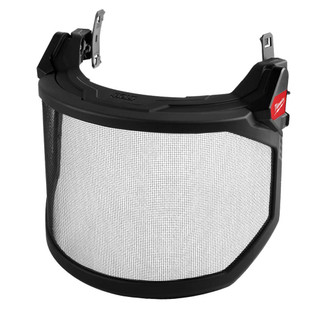
Milwaukee BOLT Hard Hats
Working beneath overhead trades or around steelwork? Choose a Milwaukee BOLT hard hat to match the head protection your job requires.
The Milwaukee BOLT safety helmet range gives site teams options for head protection with compatible face, hearing and lighting attachments. Check the exact helmet's certification, ventilation and chinstrap requirements before choosing your kit.
What Jobs Are Milwaukee BOLT Hard Hats Best At?
- Working beneath scaffold lifts or overhead installation teams requires suitable head protection against falling objects, with the helmet specification matched to the site risk assessment.
- Drilling fixings into concrete soffits is more practical with compatible hearing and eye protection fitted to the helmet rather than separate kit fighting for space.
- Inspecting service risers or fitting pipework in poorly lit plant rooms benefits from a compatible helmet-mounted light that leaves both hands free.
- Working on exposed structures requires a helmet and retention system specifically selected for the height-work risks, rather than assuming any hard hat with a chinstrap will do.
Choosing the Right Milwaukee BOLT Hard Hat
Start with the site's required protection standard, then sort the fit and accessories. Buying by appearance alone can leave you with the wrong helmet.
1. BOLT 100 or BOLT 200
For conventional site hard-hat requirements, look at the Milwaukee BOLT 100 hard hat. If your assessment calls for the BOLT 200's additional impact-protection construction or a height-work configuration, check the exact model's certification and instructions before ordering. The model number alone is not an approval for the job.
2. Vented or Unvented
If heat build-up is the main issue and site rules allow it, consider a Milwaukee vented hard hat. If electrical hazards are present, select a helmet with the required electrical certification; an unvented shell alone does not prove electrical protection.
3. Fit and Retention
Check the stated head-size range and adjust the helmet so it sits securely without pressure points. For work at height, confirm the approved chinstrap, its operating configuration and the relevant helmet standard rather than adding an arbitrary strap.
4. Accessory Compatibility
If you need a visor, ear defenders and a light together, check that complete combination before buying. BOLT compatibility does not mean every accessory fits every helmet in every position without the specified mount or adaptor.
Who Uses Milwaukee BOLT Hard Hats?
Sparkies, mechanical fitters and maintenance engineers use Milwaukee BOLT helmets where head protection needs to work alongside lights, visors and ear defenders. Groundworkers and general site teams need a secure, adjustable fit for daily wear, while steel erectors and access teams must select the precise helmet and chinstrap configuration approved for their work.
The Basics: Understanding Milwaukee BOLT Helmets
1. BOLT Is an Accessory System
BOLT provides attachment points for compatible helmet accessories, including face protection, hearing protection and lighting. It helps you assemble the protection needed for the task, but each attachment must be approved for the helmet and used as instructed.
2. Helmet Standards Are Not Interchangeable
EN 397 covers industrial safety helmets, while EN 12492 covers mountaineering helmets and includes different retention requirements. Neither marking alone settles every site application. Check the exact helmet, chinstrap configuration and task assessment, especially when working at height.
3. Type 2 Is a Separate Classification
A search for a Milwaukee BOLT Type 2 helmet may bring up overseas specifications. ANSI Type II is an American impact classification, not another name for BOLT 200 or a substitute for the standards required on a UK site.
Milwaukee BOLT Accessories for Site Work
Choose approved attachments that work together without disturbing the helmet's fit or protection.
1. Compatible Visors and Face Shields
A compatible visor avoids the fit problems of wearing a separate headband over your helmet. Match its protection rating to the task, and retain separate eye protection wherever the assessment requires it.
2. Helmet-Mounted Ear Defenders
Approved ear defenders keep hearing protection attached when moving between noisy work areas. Check the helmet combination and attenuation rating, then make sure eyewear and straps do not break the ear-cushion seal.
3. Compatible Lights and Mounts
A properly mounted light leaves both hands free for maintenance in dark risers and plant rooms. Use the specified mount rather than drilling the shell or improvising a fixing.
4. Approved Replacement Sweatbands and Suspensions
Replaceable internal parts help maintain hygiene and fit during daily use. Only fit replacements listed for that helmet; fresh internals do not make an impact-damaged or expired shell safe.
Choose the Right Milwaukee BOLT Hard Hat for the Job
Use the task requirements to narrow the range before comparing accessories.
| Your Job | Helmet Type | Key Features |
|---|---|---|
| General construction requiring industrial head protection | BOLT 100 with the required certification | EN 397 marking, suitable fit and approved accessory options. |
| Work requiring additional impact protection | Appropriately specified BOLT 200 | Protective liner construction and certification matching the assessed risks. |
| Hot working conditions where ventilation is permitted | Vented BOLT variant | Ventilation, secure adjustment and compliance with site rules. |
| Work at height | Helmet approved for the assessed height-work task | Correct retention system, relevant standard and approved chinstrap configuration. |
Common Buying and Usage Mistakes
- Treating every BOLT helmet as the same specification can leave you short of the required protection. Check the exact variant's markings rather than relying on the range name.
- Buying an unvented helmet on the assumption that it is electrically insulating is unsafe. Confirm the required electrical standard and any conditions of use.
- Fitting accessories individually without checking the complete combination can obstruct a visor or compromise hearing protection. Verify that all attachments work together before site use.
- Keeping a helmet after a significant impact because the shell looks intact risks using damaged protection. Remove it from service and follow the manufacturer's replacement instructions.
Milwaukee BOLT 100 vs BOLT 200
BOLT 100: Conventional Site Hard Hat
Start here for general industrial hard-hat requirements where the selected model's EN 397 certification meets the assessment. It supports compatible BOLT accessories, but do not assume it provides the same impact coverage or retention specification as a BOLT 200.
BOLT 200: Additional Protective Construction
The BOLT 200 uses an internal protective liner for additional impact protection. Consider it where those protective characteristics are required, but check the exact vented or unvented version and chinstrap instructions. The BOLT 200 name alone does not establish suitability for every height-work or electrical task.
Maintenance and Care
Inspect Before Each Shift
Check the shell, liner, suspension, adjustment mechanism and chinstrap for damage or deterioration. Remove the helmet from service if anything is cracked, distorted or no longer holds securely.
Clean Without Aggressive Chemicals
Use the cleaning method specified by Milwaukee, normally mild soap and water where permitted. Do not use solvents, paint or unapproved adhesives that could affect the shell material.
Store Away from Heat and Sunlight
Keep the helmet dry and protected from crushing, chemicals and prolonged direct sunlight. A van dashboard is a poor storage spot because of heat and UV exposure.
Track Age and Impact History
Record when the helmet enters service and follow its stated service-life limits. Replace it after a significant impact, even without visible damage, and do not extend shell life by changing the suspension.
Why Shop for Milwaukee BOLT Hard Hats at ITS?
ITS stocks the full Milwaukee BOLT hard hat range, covering BOLT 100 and BOLT 200 options alongside compatible accessories. Stock is held in our own warehouse, ready for next-day delivery. Check your chosen model's availability and the delivery conditions before ordering for a scheduled start.
Milwaukee BOLT Hard Hat FAQs
What is the Milwaukee Bolt system?
BOLT is Milwaukee's helmet accessory system, providing attachment options for compatible face protection, hearing protection and lights. Check compatibility with the exact helmet, including any required adaptors and whether your chosen accessories can be worn together.
Is the Milwaukee Bolt hard hat EN 397 certified?
EN 397-certified helmets are available in the BOLT range, but certification must be checked against the exact model. BOLT 100 and BOLT 200 variants do not all have identical specifications, and some approvals depend on the prescribed chinstrap configuration. Read the product documentation and helmet markings before site use.
What is the difference between Milwaukee Bolt 100 and Bolt 200 helmets?
The BOLT 100 is a conventional industrial hard-hat design, while the BOLT 200 incorporates an internal protective liner for additional impact protection. Both support compatible BOLT accessories. Compare the exact models for certification, ventilation and retention requirements rather than assuming the higher number automatically meets your site specification.
Can you attach a light or visor to a Milwaukee Bolt hard hat?
Yes, using compatible accessories and the specified mounts. Check whether the light and visor can be fitted together on your helmet and whether adaptors are included or sold separately. Never drill the shell to attach equipment.
How often should a Milwaukee hard hat be replaced?
Follow the service-life and storage limits in the instructions for your exact helmet; there is no safe universal replacement interval for every model and working condition. Replace it sooner after a significant impact, visible damage, chemical exposure or deterioration. Check the date markings and keep a record of first use.
Can you fit ear defenders to a Milwaukee Bolt hard hat?
Yes, provided the ear defenders and any adaptors are approved for that helmet. Hearing protection performance depends on the tested combination and a proper seal around each ear. Check the attenuation data for the combination rather than choosing solely by whether the fittings clip in.
Is the Milwaukee Bolt hard hat adjustable?
Yes, BOLT helmets have adjustable fitting systems, although head-size ranges and adjustment options vary by model. Set the helmet level and secure according to its instructions, then check the fit again with your usual accessories. Do not force the fit over an unapproved hat or bulky hood.
Is the Milwaukee Bolt helmet suitable for working at height?
Selected BOLT configurations may be suitable, but not every Milwaukee safety helmet is automatically approved for every height-work task. Confirm the required standard, retention system and chinstrap configuration against the risk assessment and manufacturer's instructions. Do not treat a listing described as a Milwaukee climbing helmet as proof of suitability.