Ladders, Access & Benches

Ladders access benches keep you safe and steady when the job's off the deck, from quick snagging to full-day installs where a wobble isn't an option.

When you're up and down all day, the right ladders and access equipment saves time and keeps your footing solid. This range covers trade ladders for daily site use, plus work benches, work platforms, saw stands, trestles and saw horses for cutting and fixing at a sensible height. Whether it's step ladders for indoor first fix, extension ladders for gutters and fascias, or access towers and scaffold towers for longer runs, pick the kit that matches the height, surface, and how often you'll be moving it.

What Are Ladders Access Benches Used For?

  • Reaching ceilings, soffits, and high fixings safely on refurbs and fit-outs using step ladders, combination ladders, or work platforms that give you a stable stance.
  • Getting up to gutters, rooflines, and upper windows on external work with extension ladders where you need proper reach and a secure lean angle.
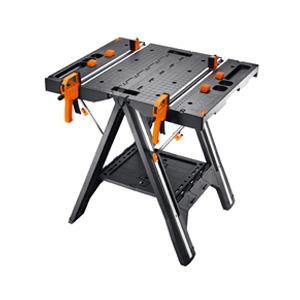
  • Setting up a solid cutting and assembly station on site with work benches, workbenches, saw stands, and work stands so you are not cutting timber on the floor or the back of the van.
  • Supporting long lengths of timber and sheet when you are ripping down or cross-cutting with trestles and saw horses, keeping material level and stopping it tipping as the cut finishes.
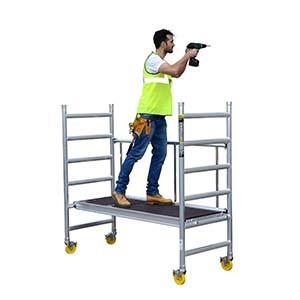
  • Working longer in one spot, like running cable tray or boarding ceilings, using access towers, scaffold towers, and access support where constant ladder moves would slow you down.

Choosing the Right Ladders Access Benches

Sort the right kit by matching it to how long you will be up there and how often you will move it, not just the maximum height on the label.

1. Step ladders vs extension ladders

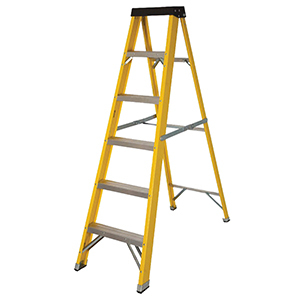
If you are working indoors, hopping between rooms, or need both hands free, step ladders are the sensible choice because they stand on their own. If you are accessing gutters, upper windows, or anything where you must lean to a wall, extension ladders give you the reach, but only when you have a solid footing and a safe tie-off point.

2. Telescopic ladders and storage

If van space is tight or you are carrying kit through finished properties, telescopic ladders are handy because they pack down small. If you are on ladders every day on rougher sites, a more traditional trade ladders set-up is often the better long-term bet for speed and confidence underfoot.

3. Platforms and towers for long runs

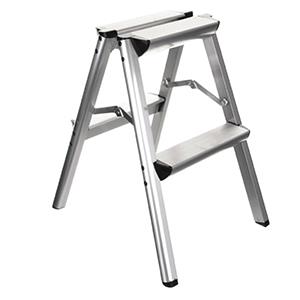
If you are only up for quick fixings, a work platform or step up stool is faster than building a tower. If you are working in one area for hours, especially at ceiling height, access towers and scaffold towers pay for themselves in stability and less climbing up and down.

4. Work benches, saw stands, and trestles

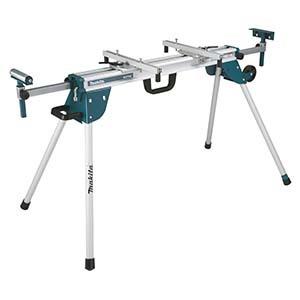
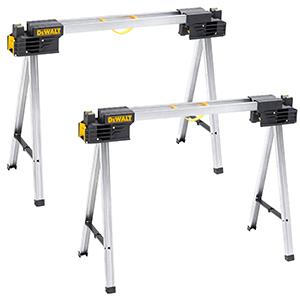
If you are doing repetitive cuts with a mitre saw, pick saw stands that support long stock and set up level on uneven ground. If you need a general station for fixing, drilling, and assembly, work benches and work stands give you a proper surface, while trestles and saw horses are the quick grab for sheet and long lengths.

Who Uses Ladders and Access Equipment on Site?

  • Sparkies, plumbers, and HVAC installers who are constantly up for first fix and second fix, and need step ladders and work platforms that feel planted when you are drilling overhead.
  • Chippies and kitchen fitters who rely on work benches, saw stands, and trestles to keep cuts accurate and repeatable without chasing twisted timber around.
  • Decorators and maintenance teams doing snagging and touch-ups, where a step up stool or compact professional ladders set-up saves dragging big kit through occupied areas.
  • Roofers, fascia and gutter crews, and window fitters who need extension ladders and trade ladders with the right reach so you are not over-stretching off the side.

Accessories That Make Ladders and Work Stands Safer and Easier

A couple of the right add-ons stop slips, speed up set-up, and keep your access equipment working properly for longer.

1. Ladder stabilisers and stand-off arms

These give you a wider, steadier footprint and help you clear gutters and sills, which is exactly what you want when the ground is uneven or you are working on fragile finishes.

2. Replacement ladder feet and anti-slip pads

Worn feet are one of the quickest ways to turn a decent ladder into a liability, especially on smooth concrete or wet paving, so swapping them out is cheap insurance.

3. Workbench clamps and bench dogs

If you are using workbenches for cutting and assembly, proper clamping stops material creeping, which keeps your cuts square and your hands away from the blade.

Shop Ladders Access Benches at ITS

Whether you need a compact step up stool, trade ladders for daily site use, or full access towers and work benches for set-up work, we stock the full range of ladders and access equipment in all the main types and sizes. It is all held in our own warehouse, in stock and ready for next day delivery so you can get the job moving.

Ladders and Access Equipment FAQs

What are ladders access benches used for?

They cover two day-to-day needs on site: safe access for working at height, and stable support for cutting and assembly. That means ladders for reaching fixings and services, plus work benches, saw stands, and trestles for keeping materials at a sensible working height.

What types of ladders are available?

You will typically see step ladders for self-supporting indoor work, extension ladders for leaning access and extra reach, telescopic ladders for compact storage, combination ladders for flexibility across tasks, and loft ladders for fixed attic access.

Do you sell work benches and saw stands?

Yes. The range includes work benches and workbenches for a proper site station, plus saw stands and work stands for supporting mitre saws and long stock, and trestles and saw horses for quick set-ups when you are cutting sheet or timber.

What is the difference between step ladders and extension ladders?

Step ladders are free-standing, so they are better when you are working in rooms, corridors, or open areas and need to keep repositioning quickly. Extension ladders are designed to lean against a structure to reach higher points, so they suit external access like gutters and upper windows, but they rely on correct angle and solid ground.

Are telescopic ladders good for easy storage?

Yes, that is their main advantage, especially for van-based trades and tight storage. Just be honest about how you work: if you are in and out all day, you may prefer the speed and feel of a standard ladder, but for occasional access and compact transport, telescopic ladders are a practical solution.

Do you sell loft ladders for attic access?

Yes, loft ladders are available for proper attic access where you need a more permanent, repeatable way in and out. They are a better option than dragging a step ladder through a hatch every time, especially for storage lofts and regular maintenance access.

Do you sell scaffold towers and access towers?

Yes. Scaffold towers and access towers are the go-to when you are working at height for longer periods and need a stable platform to move along, rather than constantly climbing and shifting a ladder.

Can I get next day delivery on ladders and access equipment?

Yes. We hold stock in our own warehouse, so you can order what you need and get it delivered next day, which is ideal when a job changes and you cannot wait around for access kit.
Read more

Ladders, Access & Benches

Ladders access benches keep you safe and steady when the job's off the deck, from quick snagging to full-day installs where a wobble isn't an option.

When you're up and down all day, the right ladders and access equipment saves time and keeps your footing solid. This range covers trade ladders for daily site use, plus work benches, work platforms, saw stands, trestles and saw horses for cutting and fixing at a sensible height. Whether it's step ladders for indoor first fix, extension ladders for gutters and fascias, or access towers and scaffold towers for longer runs, pick the kit that matches the height, surface, and how often you'll be moving it.

What Are Ladders Access Benches Used For?

  • Reaching ceilings, soffits, and high fixings safely on refurbs and fit-outs using step ladders, combination ladders, or work platforms that give you a stable stance.
  • Getting up to gutters, rooflines, and upper windows on external work with extension ladders where you need proper reach and a secure lean angle.
  • Setting up a solid cutting and assembly station on site with work benches, workbenches, saw stands, and work stands so you are not cutting timber on the floor or the back of the van.
  • Supporting long lengths of timber and sheet when you are ripping down or cross-cutting with trestles and saw horses, keeping material level and stopping it tipping as the cut finishes.
  • Working longer in one spot, like running cable tray or boarding ceilings, using access towers, scaffold towers, and access support where constant ladder moves would slow you down.

Choosing the Right Ladders Access Benches

Sort the right kit by matching it to how long you will be up there and how often you will move it, not just the maximum height on the label.

1. Step ladders vs extension ladders

If you are working indoors, hopping between rooms, or need both hands free, step ladders are the sensible choice because they stand on their own. If you are accessing gutters, upper windows, or anything where you must lean to a wall, extension ladders give you the reach, but only when you have a solid footing and a safe tie-off point.

2. Telescopic ladders and storage

If van space is tight or you are carrying kit through finished properties, telescopic ladders are handy because they pack down small. If you are on ladders every day on rougher sites, a more traditional trade ladders set-up is often the better long-term bet for speed and confidence underfoot.

3. Platforms and towers for long runs

If you are only up for quick fixings, a work platform or step up stool is faster than building a tower. If you are working in one area for hours, especially at ceiling height, access towers and scaffold towers pay for themselves in stability and less climbing up and down.

4. Work benches, saw stands, and trestles

If you are doing repetitive cuts with a mitre saw, pick saw stands that support long stock and set up level on uneven ground. If you need a general station for fixing, drilling, and assembly, work benches and work stands give you a proper surface, while trestles and saw horses are the quick grab for sheet and long lengths.

Who Uses Ladders and Access Equipment on Site?

  • Sparkies, plumbers, and HVAC installers who are constantly up for first fix and second fix, and need step ladders and work platforms that feel planted when you are drilling overhead.
  • Chippies and kitchen fitters who rely on work benches, saw stands, and trestles to keep cuts accurate and repeatable without chasing twisted timber around.
  • Decorators and maintenance teams doing snagging and touch-ups, where a step up stool or compact professional ladders set-up saves dragging big kit through occupied areas.
  • Roofers, fascia and gutter crews, and window fitters who need extension ladders and trade ladders with the right reach so you are not over-stretching off the side.

Accessories That Make Ladders and Work Stands Safer and Easier

A couple of the right add-ons stop slips, speed up set-up, and keep your access equipment working properly for longer.

1. Ladder stabilisers and stand-off arms

These give you a wider, steadier footprint and help you clear gutters and sills, which is exactly what you want when the ground is uneven or you are working on fragile finishes.

2. Replacement ladder feet and anti-slip pads

Worn feet are one of the quickest ways to turn a decent ladder into a liability, especially on smooth concrete or wet paving, so swapping them out is cheap insurance.

3. Workbench clamps and bench dogs

If you are using workbenches for cutting and assembly, proper clamping stops material creeping, which keeps your cuts square and your hands away from the blade.

Shop Ladders Access Benches at ITS

Whether you need a compact step up stool, trade ladders for daily site use, or full access towers and work benches for set-up work, we stock the full range of ladders and access equipment in all the main types and sizes. It is all held in our own warehouse, in stock and ready for next day delivery so you can get the job moving.

Ladders and Access Equipment FAQs

What are ladders access benches used for?

They cover two day-to-day needs on site: safe access for working at height, and stable support for cutting and assembly. That means ladders for reaching fixings and services, plus work benches, saw stands, and trestles for keeping materials at a sensible working height.

What types of ladders are available?

You will typically see step ladders for self-supporting indoor work, extension ladders for leaning access and extra reach, telescopic ladders for compact storage, combination ladders for flexibility across tasks, and loft ladders for fixed attic access.

Do you sell work benches and saw stands?

Yes. The range includes work benches and workbenches for a proper site station, plus saw stands and work stands for supporting mitre saws and long stock, and trestles and saw horses for quick set-ups when you are cutting sheet or timber.

What is the difference between step ladders and extension ladders?

Step ladders are free-standing, so they are better when you are working in rooms, corridors, or open areas and need to keep repositioning quickly. Extension ladders are designed to lean against a structure to reach higher points, so they suit external access like gutters and upper windows, but they rely on correct angle and solid ground.

Are telescopic ladders good for easy storage?

Yes, that is their main advantage, especially for van-based trades and tight storage. Just be honest about how you work: if you are in and out all day, you may prefer the speed and feel of a standard ladder, but for occasional access and compact transport, telescopic ladders are a practical solution.

Do you sell loft ladders for attic access?

Yes, loft ladders are available for proper attic access where you need a more permanent, repeatable way in and out. They are a better option than dragging a step ladder through a hatch every time, especially for storage lofts and regular maintenance access.

Do you sell scaffold towers and access towers?

Yes. Scaffold towers and access towers are the go-to when you are working at height for longer periods and need a stable platform to move along, rather than constantly climbing and shifting a ladder.

Can I get next day delivery on ladders and access equipment?

Yes. We hold stock in our own warehouse, so you can order what you need and get it delivered next day, which is ideal when a job changes and you cannot wait around for access kit.
ITS Click and Collect Icon
What3Words:
Get Directions
Store Opening Hours
Opening times