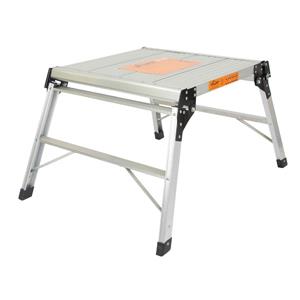
Step Up Stools & Platforms
Hop up platform kits give you a stable, low-level working height for decorating, fitting and snagging where a ladder feels awkward or slows you down.
If you're in and out of rooms all day, a hop up platform saves time over dragging a ladder about for every little height change. These aluminium step up platforms are the go-to for painters, sparkies, kitchen fitters and maintenance teams who need a solid work step for ceilings, first fix, clean-down and punch-list jobs. If the job needs more standing room and less faff, this is where to start.
What Are Hop Up Platforms Used For?
- Reaching ceiling height for painting, cutting in and patch repairs is far easier on a hop up platform because you can move along the wall without constantly climbing down and shifting a ladder.
- Fitting lights, detectors, trunking and cable runs in domestic rooms or commercial refurbs suits a step up platform well when you need both feet planted and space to keep tools close by.
- Snagging kitchens, bathrooms and fitted furniture is quicker from a work step because it gives you a broader standing area for drilling, scribing and fixing at awkward mid-level heights.
- Working in stock rooms, workshops and facilities spaces is simpler with an aluminium step up when staff need safe, repeat access to shelves, services or boxed-in pipework without going full tower.
- Cleaning, maintenance and handover jobs benefit from step up work platforms where you're moving room to room and need something quick to open, solid underfoot and easy to get through doorways.
Choosing the Right Hop Up Platform
Sorting the right one is simple: buy for the height and the way you move, not just the cheapest deck in the range.
1. Platform Height
If you're mainly doing skirtings, low services or warehouse picking, a lower step up platform is usually enough and feels more secure for repeated up-and-down use. If you're cutting in ceilings or fitting overhead gear all day, go taller but stay within safe working limits and never stretch past the frame to gain extra reach.
2. Deck Size
If you need to shuffle sideways while decorating or fixing across a run, choose a wider or longer deck so you're not climbing down every few minutes. For van-based maintenance and punch-list work, a compact work step is easier to carry, store and get through tight hallways.
3. Weight and Foldability
If you're lugging it in and out of occupied properties, upstairs flats or small vans, an aluminium step up that folds flat will save your back and your patience. If it lives mostly on one site, a slightly bulkier platform can be worth it for the extra deck space.
4. Job Type and Access Level
Use a hop up platform for quick, low-level access where you want a stable standing area. If the task needs more height or longer duration access, move up to work platforms, step ladders or full access towers and scaffold rather than trying to make a low platform do a bigger job.
Who Uses These on Site?
- Decorators swear by a hop up platform for ceilings, cutting in and long wall runs because they can work across a section without climbing up and down every minute.
- Sparkies use a step up platform for fitting lights, alarms and conduit where a ladder is too narrow for tools and small parts, especially on domestic first and second fix.
- Kitchen fitters and chippies reach for a work step when hanging wall units, scribing end panels and sorting cornice details because the wider deck gives better balance and room to turn.
- Maintenance teams and site managers keep aluminium step up platforms handy for quick inspections, signage, sensor resets and small remedials where setting up bigger access would be overkill.
- Warehouse and facilities staff use step up platforms for shelf picking and light maintenance where they need frequent low-level access and something easier to move than full access towers and scaffold.
The Basics: Understanding Hop Up Platforms
A hop up platform is simple kit, but knowing where it sits in the access range helps you buy the right one and use it properly on site.
1. It Gives You Low-Level Access With More Standing Room
Unlike a ladder rung, the platform deck gives you a flat area to stand on, which is why a step up work platform feels better for decorating, fitting and any job where you need to shuffle along and keep your balance.
2. It Is Quicker Than Bigger Access for Short Jobs
For room-to-room snagging, M and E checks or quick overhead fixes, a hop up platform opens fast and moves fast. It fills the gap between ground work and larger access kit from the wider ladders, access and benches range.
3. It Is Not a Substitute for High Access
Once the job needs more reach, longer duration standing or safer access over a bigger area, step away from the work step and use the proper next level of kit. That might mean builders stilts for plastering runs or tower access for height-critical work.
Choose the Right Hop Up Platform for the Job
Match the platform size and height to the job so you're not overreaching or carrying more kit than you need.
| Your Job | Category or Type | Key Features |
|---|---|---|
| Room to room decorating and snagging | Compact hop up platform | Lightweight build, quick fold legs, easy van storage, enough deck space for steady footing |
| Ceiling fixings and overhead second fix | Taller step up platform | Extra platform height, rigid frame, non slip deck, suitable for repeated access during the day |
| Kitchen fitting and joinery detail work | Wide deck work step | More side to side movement, better balance with tools in hand, easier positioning along units and walls |
| Warehouse shelf picking and facilities checks | Portable aluminium step up | Frequent up and down use, low overall weight, compact footprint, stable platform for short duration tasks |
| Longer runs or jobs needing more reach | Larger work platform or tower access | Bigger working area, more height, better choice when a low hop up platform leaves you stretching |
Common Buying and Usage Mistakes
- Buying too low to save a few quid usually means you end up stretching for the ceiling or top fixing line. That kills stability and slows the job down, so buy the platform height that lets you work upright.
- Using a hop up platform for work that really needs more access is a classic mistake. If you're leaning out, carrying too much or staying up there for longer runs, step up to the proper access kit instead.
- Ignoring deck size catches plenty of buyers out. A narrow work step might be fine for one fitting, but it becomes a pain for decorating or joinery where you need to move sideways with tools.
- Setting up on uneven, soft or cluttered ground is asking for wobble. Always use the platform on firm, level footing and clear the area before climbing on.
- Treating an aluminium step up like a storage shelf shortens its life and creates trip hazards. Keep loose kit off the deck where possible and use it for access, not as a dumping point.
Hop Up Platform vs Step Ladders vs Work Platforms
Hop Up Platform
Best for low-level overhead work where you want a flat deck under both feet. It is quicker and more comfortable than a ladder for decorating, second fix and room-to-room snagging, but it is not the choice for serious height.
Step Ladders
Better when you need a narrower footprint or a bit more reach in tight spots. They are handy for quick access, but you get less room to stand and less freedom to move sideways than on a step up platform.
Work Platforms
A stronger option for bigger access jobs, longer standing time and wider working areas. If the task goes beyond short duration low-level work, a larger work platform gives you more deck space and usually more controlled access.
Maintenance and Care
Clean the Deck After Dusty Jobs
Plaster dust, paint overspray and site muck make the standing surface slippery. Wipe the deck down after use so the next job starts with proper grip underfoot.
Check Hinges and Locking Points
Before each shift, make sure folding legs, braces and locks open fully and seat properly. If anything sticks, bends or will not lock cleanly, pull it from use until it is sorted.
Store It Dry and Flat
Aluminium step up platforms cope well with site life, but they still last longer if they are not left outside in muck and rain. Store them dry in the van or workshop and avoid crushing them under heavier kit.
Inspect Feet and Grip Surfaces
Worn feet are one of the first things to cause slipping on smooth floors. If the contact points are damaged or uneven, replace them or retire the platform before it becomes a problem.
Repair Only If It Stays Square
A bent frame or twisted deck is not worth bodging. Cosmetic scuffs are one thing, but if the platform no longer sits square on the floor, replace it and move on.
Why Shop for Hop Up Platforms at ITS?
Whether you need a compact work step for snagging or a larger step up platform for fitting and decorating, we stock the full range of low-level access kit in one place. That means different sizes, deck styles and site-suited options, all in our own warehouse and ready for next day delivery.
Hop Up Platform FAQs
What is a hop up platform used for?
A hop up platform is used for low-level access jobs where a ladder feels too cramped or keeps slowing you down. Think decorating, fitting lights, kitchen install work, maintenance checks and snagging where you want a flat standing area and quick set-up.
How high can a step up platform be used safely?
Only use it within the maker's rated platform height and working height guidance, on firm and level ground. The honest answer is this. Once you are stretching, leaning out or trying to gain extra reach, you are already on the wrong bit of access kit.
Are hop up platforms suitable for warehouse picking?
Yes, for low-level picking and short-duration access they can work well, especially where staff are repeatedly stepping up and down. Just match the platform to the shelf height, keep loads sensible and make sure the floor is clean and level.
Are these better than step ladders for decorating?
For plenty of decorating jobs, yes. A hop up platform gives you more room underfoot and lets you move along a wall more naturally, which is why decorators often prefer them for ceilings, cutting in and patching work.
Will an aluminium step up hold up to regular site use?
Yes, if it is used properly and not abused. Aluminium step up platforms are built for repeated trade use, but like any access kit they need checking for bent frames, worn feet and damaged hinges after hard knocks or rough transport.
What should I check before buying a work step?
Start with platform height, deck size, folded size and weight. Then think about the real job. If you are in occupied homes all day, lighter and easier to carry matters. If you are working across longer runs, more deck space matters more than shaving off a kilo.