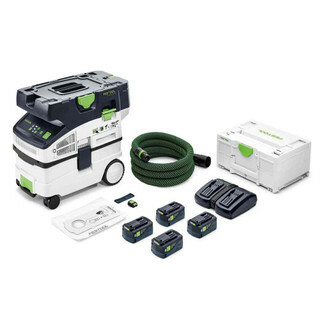
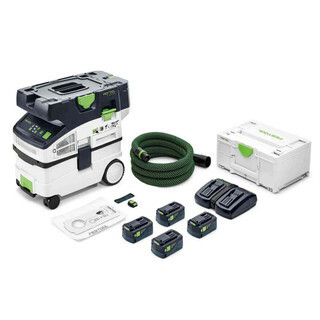
Festool 18V Vacuums & Dust Extractors
Festool 18v dust extractor kit is for snagging, punch work and small cutting jobs where dragging a corded vac round site just wastes time.
A proper festool cordless vacuum earns its keep when you're drilling fixings, trimming boards in occupied rooms, or sorting final bits in a finished space. The Festool CTLC cordless extractor and other festool 18v vacuum options are built for quick setup, clean pick-up, and getting in and out without trailing leads. If you're already on Festool batteries, this is the tidy way to work.
What Are Festool 18V Dust Extractors Used For?
- Cleaning up drilling dust when fitting kitchens, rails, sockets, or brackets in finished rooms where a broom just spreads the mess about.
- Extracting from small saws, sanders, and site fix-up tools during snagging and second fix, especially where you need to move room to room without hunting for power.
- Working in occupied homes, offices, and refurb jobs where a festool cordless dust extractor helps keep noise, setup time, and trailing cables down.
- Handling van stock, stair access, loft work, and quick maintenance call-outs where a festool battery dust extractor is easier to carry than a full-size mains machine.
Choosing the Right Festool 18V Dust Extractor
Match the extractor to the job size and how often you actually need to work away from mains power.
1. Quick Snagging or Longer Shifts
If you're only clearing up after short drilling or a few trim cuts, a compact festool 18v vacuum makes sense. If the extractor is going to run alongside your tool for bigger chunks of the day, check bin size, run time, and whether you'd be better stepping up to one of the larger Festool Vacuums and Dust Extractors.
2. Bare Unit or Full Battery Setup
If you're already deep into Festool cordless kit, buying the body and using the packs you own is the sensible move. If not, price in the right power source from Festool 18V Batteries Chargers and Mounts before you commit.
3. Tool Extraction or Standalone Clean-Up
If the extractor will live on a sander or saw, focus on hose fit, auto start functions, and how compact the unit stays once connected. If it's mainly for tidying after drilling and fixings, go for the festool cordless vacuum that's easiest to carry, park, and empty quickly.
4. Dust Bags and Running Costs
Don't ignore consumables. If you're using your festool 18v ct extractor regularly, keep spare Festool Dust Bags in the van, otherwise the machine is no use when the bag is full halfway through a job.
Who Uses These on Site?
- Joiners and kitchen fitters use a festool 18v dust extractor for trim cuts, hinge recess clean-up, and final fitting in customers' homes where keeping dust down matters.
- Sparkies reach for a festool cordless vacuum when drilling fixings, chasing light dust, and tidying back boxes during second fix without dragging extension leads through the job.
- Decorators and snagging teams keep a festool cordless dust collector handy for sanding touch-ins, shelf fixing, and quick clear-ups before handover.
- Maintenance engineers and service fitters like the festool mini extractor 18v style of kit for van-based work, especially when they're in and out of plant rooms, offices, and occupied spaces all day.
The Basics: Understanding Festool 18V Dust Extractors
These are built to give you proper extraction without needing a socket nearby. The important bit is knowing where cordless extraction helps most and where a larger mains unit still makes more sense.
1. Battery Extraction for Short, Mobile Work
A festool battery dust extractor is made for moving quickly between jobs, rooms, and floors. It suits drilling, small cuts, and service work where setup speed matters more than running all day flat out.
2. Tool Connected or Clean-Up Only
Some users run a festool cordless dust extractor straight off sanders and saws, while others use it as a follow-up clean-up vac. The right choice depends on whether you need constant extraction at the tool or just a fast way to leave the area tidy.
3. Capacity Matters More Than People Think
Compact extractors are easier to carry up stairs and through finished properties, but they fill faster. If you're collecting fine sanding dust or cutting waste all day, expect more emptying than with a full-size CT unit.
Festool 18V Dust Extractor Accessories That Save Time
A few sensible extras stop the usual hold-ups and keep your extractor useful all day.
1. Spare Dust Bags
Keep a pack of bags in the van. When the current one is rammed with sanding dust or plaster debris, you're not standing about trying to shake more life out of it. You'll find the right fit in Festool Dust Bags.
2. Hoses and Tool Adaptors
The right hose and adaptor stop poor pickup, loose connections, and dust blowing back round finished rooms. If you're swapping between saws, sanders, and clean-up work, proper fitment is worth sorting once.
3. Filters and General Extractor Spares
A tired filter or worn fitting makes even good extraction feel weak. Stocking the basics from Festool Dust Extractor Accessories saves downtime when the machine starts losing performance.
Choose the Right Festool 18V Dust Extractor for the Job
Use this as a quick way to match the extractor to the kind of work you actually do.
| Your Job | Category or Type | Key Features |
|---|---|---|
| Drilling fixings and small snagging jobs in finished rooms | Compact festool 18v vacuum | Low setup time, easy carry, quick clean-up, no lead to drag through the property |
| Second fix joinery and kitchen fitting with regular room-to-room moves | Festool CTLC cordless extractor | Portable format, tool connection options, tidy extraction for occupied spaces |
| Sanding, trimming, and service work from the van all day | Festool cordless dust extractor with larger run time setup | Battery flexibility, manageable capacity, easier access on stairs and tight jobs |
| Longer cuts, heavier dust loads, or constant extraction on bigger jobs | Larger Festool CT extractor | More capacity, longer continuous use, better choice when cordless mobility is less important |
Common Buying and Usage Mistakes
- Buying a compact festool 18v dust extractor for full-day heavy extraction work is the usual mistake. It will do mobile jobs well, but for constant high-volume dust you'll be emptying it too often and wishing you'd gone bigger.
- Ignoring battery setup catches plenty of buyers out. If you do not already own suitable packs and charging kit, the real cost of a festool cordless vacuum is higher than the body price alone.
- Using the wrong hose or a loose adaptor leads to poor pickup and dust escaping at the tool. Sort the connection properly or the extractor cannot do its job.
- Trying to squeeze one more day out of a full dust bag kills performance fast. Change the bag when suction drops rather than blaming the machine.
- Assuming every cordless extractor suits every dust type is risky. Always check the stated filter class and intended use before putting it on concrete, plaster, or fine sanding dust.
Cordless Extractors vs Mains Extractors vs Jobsite Vacuums
Festool 18V Dust Extractor
Best when you're moving through occupied rooms, up stairs, or onto short service calls where a cable is more hassle than help. You give up some run time and capacity, but you gain speed and mobility.
Mains Festool CT Extractor
The better choice for longer sanding sessions, bigger saw work, and heavier dust loads. Less convenient to move about, but stronger for all-day extraction and fewer stops to empty or swap batteries.
General Jobsite Vacuum
Fine for broad clean-up, van mess, and rough site tidying, but not always the right answer for proper tool extraction or finer indoor finishing work. If dust control at the tool matters, a dedicated extractor is the safer bet.
Maintenance and Care
Empty It Before It Chokes
Do not keep running the extractor once the bag is packed solid. Suction drops off, the motor works harder, and the whole thing feels worse than it should.
Check the Filter Regularly
Fine dust blocks filters quicker than many users expect, especially after sanding filler, plaster, or decorated surfaces. Clean or replace the filter as needed to keep airflow where it should be.
Look After the Hose Ends
Most extraction problems start at the connection points. Check for splits, loose cuffs, and poor tool fit before blaming the machine for weak performance.
Store Batteries Sensibly
Leaving packs flat in a cold van all weekend is a good way to shorten their useful life. Charge them properly and store them dry so your festool 18v vacuum is ready when you need it.
Replace Worn Consumables on Time
Bags, filters, and seals are cheaper than wasted labour and dusty handovers. If the machine is clean but still underperforming, those are the first things to check.
Why Shop for Festool 18V Dust Extractors at ITS?
Whether you need a compact festool 18v dust extractor for quick room-to-room work or you're comparing the full cordless range before buying, we've got the options in one place. ITS stocks Festool kit, batteries, bags, and extractor essentials in our own warehouse, ready for next day delivery direct to site or home.
Festool 18V Dust Extractor FAQs
What 18V dust extractors does Festool make?
Festool's best-known cordless option in this part of the range is the Festool CTLC cordless extractor. It is aimed at mobile jobs, quick clean-up, and light tool extraction where you do not want a mains lead under your feet. You will also see compact festool 18v vacuum and festool mini extractor 18v style machines built around the same idea of portability first.
Are Festool 18V dust extractors compatible with all Festool power tools?
With most Festool tools, yes, but do not assume every hose and port setup is identical straight out of the box. The extractor itself is designed to work across a wide range of Festool kit, but the real question is whether you have the right hose diameter and adaptor for the tool in hand. Check that before the job, not after the dust starts flying.
What filter class is the Festool 18V dust extractor?
That depends on the exact model, so always check the machine listing rather than guessing from the range name. Filter class matters because it tells you what dust the extractor is intended to handle on site. If you're working with plaster, masonry, hardwood, or finer dust, make sure the stated class is right for the task and your site requirements.
How long does the battery last on a Festool 18V dust extractor?
Battery run time depends on the pack size, the suction setting, and whether you're using it for quick clean-up or constant tool extraction. For short snagging, drilling, and room-to-room jobs, run time is usually more than workable. For longer sanding or repeated cuts through the day, keep spare packs charged or you'll burn time waiting.
Is a festool cordless vacuum strong enough for proper site work?
Yes, for the work it is built for. It is very good on snagging, second fix, drilling dust, service calls, and smaller tool extraction jobs. It is not the clever choice for full-day heavy debris or long sanding sessions where a larger mains extractor will simply cope better.
Do I really need dust bags for a Festool 18V CT extractor?
In most real jobs, yes. Bags keep suction more consistent, make disposal cleaner, and stop fine dust coating the inside of the unit. If you skip them where they are meant to be used, expect more mess and more maintenance.
Is a cordless extractor worth it if I already own a mains CT vac?
If you regularly work in finished properties, on ladders, up stairwells, or on quick call-outs, yes, it can save a lot of messing about. If most of your work is bench-based, workshop-based, or long-duration extraction, your mains machine will still do the heavy lifting better.