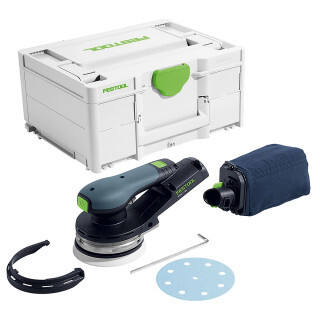
Festool 18V Sanders
Festool 18v sanders are built for clean finishing, snagging, and prep work where cords just get in the way and dust needs keeping under control.
On second fix, kitchen fitting, decorating prep, or punch-list jobs, a festool cordless sander saves dragging leads through finished spaces. The Festool ETS 150 18V and ETSC sander range suits trades who want proper dust extraction, balanced control, and a finish that needs less rework. If you already run Festool batteries, it is an easy way to keep moving.
What Are Festool 18V Sanders Used For?
- Finishing filled plaster, timber trim, and painted surfaces on refurbs is where a festool 18v sander earns its keep, especially when you are moving room to room and do not want leads underfoot.
- Snagging kitchen installs, wardrobes, doors, and fitted furniture is quicker with a festool cordless random orbital sander because you can lift it in, sort the mark or edge, and get out without setting up extension reels.
- Prepping between coats on joinery, handrails, and site-made units is easier with a festool battery orbital sander that stays controlled on face work and does not leave the swirl marks cheap gear often does.
- Working in occupied homes, offices, and finished commercial spaces suits a Festool battery sander because dust extraction helps keep the mess down and saves time on clean-up after the sanding is done.
Choosing the Right Festool 18V Sander
Match the pad size, orbit, and shape to the finish you need. Do not buy on brand alone and assume they all do the same job.
1. Random Orbital or Detail Shape
If you are covering broad panels, doors, filler work, or sheet material, go for a Festool 18v orbital sander or festool cordless random orbital sander. If your day is more corners, edges, and awkward trim, an ETSC style body makes more sense.
2. Orbit Size Matters
If you want a finer finish on painted joinery or final prep, stick with the smaller orbit options. If you need to move material a bit quicker on filler, sealer, or first pass prep, the larger orbit will save time but can be a bit more aggressive.
3. Pad Diameter and Job Size
A 150mm pad, like on the Festool ETS 150 18V, is a better shout for larger flat areas and workshop-style prep. Smaller pads are easier to control on narrow parts, face frames, and snagging work inside finished rooms.
4. Dust Control on Live Jobs
If you are sanding in occupied houses, schools, or finished offices, do not skimp on extraction. A festool battery sander with proper dust collection keeps the air cleaner, cuts clean-up time, and stops you leaving a mess behind for the next trade.
Who Uses These Festool 18V Sanders?
- Chippies and kitchen fitters rely on a festool 18v finishing sander for trimming back filler, easing edges, and refining face frames without dragging a cord across finished units.
- Decorators use a festool cordless sander for prep between coats, flattening repairs, and getting walls, woodwork, and doors ready for the final finish with less dust hanging about.
- Joiners and furniture fitters swear by the Festool ETS 150 18V and ETSC sander styles for controlled sanding on visible timber where a poor finish means going back over the job.
- Maintenance teams and shopfitters keep a festool battery sander in the van for quick repair work, touch-ups, and snagging in live environments where speed and tidy working matter.
The Basics: Understanding Festool 18V Sanders
These sanders all do the same core job, but the pad movement and shape change how fast they cut and how clean the finish comes out. Here is the bit that actually matters on site.
1. Random Orbital Action
A festool cordless random orbital sander spins and oscillates at the same time, so it removes material without leaving the heavy straight scratch pattern you get from rougher sanding methods. That is why it suits doors, panels, fillers, and finishing work.
2. Orbit Size Changes the Finish
A smaller orbit is for cleaner finishing and lighter prep. A larger orbit removes stock faster. If you are trying to sort visible joinery, go finer. If you are flattening filler or knocking back rough prep, go more aggressive.
3. Extraction Makes the Difference
Dust extraction is not just about tidiness. It keeps abrasive cutting properly, stops the pad clogging as fast, and gives you a clearer view of the surface so you do not miss scratches or low spots.
Festool 18V Sander Accessories That Save Time
The right consumables and add-ons stop poor finishes, blocked abrasives, and wasted trips back to the van.
1. Sanding Pads and Sheets
Wrong grit or a worn abrasive will make a decent sander feel useless. Keep proper Festool Sanding Pads and Sheets to hand so you can go from stock removal to final finishing without chewing the surface up.
2. Delta Sanding Sheets
If you are working edges, internal corners, stair details, or awkward trim, Festool Delta Sanding Sheets save you trying to force a round pad where it will never reach properly.
3. Dust Bags and Extraction Fittings
Do not wait until the room is coated before thinking about extraction. Festool Other Sanding Accessories cover the bits that keep extraction working and help the sander stay clean, balanced, and ready for the next room.
Choose the Right Festool 18V Sander for the Job
Pick the sander by surface size, finish level, and how much access you have.
| Your Job | Category or Type | Key Features |
|---|---|---|
| Final prep on doors, panels, and fitted furniture | Festool 18v orbital sander | Balanced control, fine finish, good dust extraction, suits visible face work |
| Flattening filler and wider prep on flat surfaces | Festool ETS 150 18V | 150mm pad, better coverage, quicker progress on broad areas |
| Snagging trim, edges, and work in finished rooms | Festool ETSC sander | Cordless access, easy handling, less faff moving around occupied spaces |
| Between-coat sanding on paint and varnish | Festool cordless random orbital sander | Cleaner scratch pattern, controlled cut, reduced swirl marks |
| Maintenance and van-based touch-up work | Festool battery sander | Quick setup, no extension leads, tidy working with extraction |
Common Buying and Usage Mistakes
- Buying on pad size alone is a common one. A bigger pad covers more ground, but if you are mainly sanding narrow joinery or awkward fitted work, it can feel clumsy and slow you down.
- Using the wrong grit to save time usually does the opposite. Go too coarse on finished timber or painted surfaces and you will spend longer taking scratches back out.
- Ignoring dust extraction is false economy. Poor extraction clogs abrasives faster, leaves a worse finish, and creates more clean-up in homes and finished commercial spaces.
- Treating every Festool cordless sander as the same tool leads to poor results. Match the orbit and pad style to whether you are finishing, flattening filler, or getting into edges.
- Running worn pads and tired hook and loop backing will ruin control. If sheets are not holding properly or the pad face is damaged, replace it before it marks the work.
150mm Orbital vs Compact Cordless vs Detail Sanders
150mm Orbital Sanders
Best for broad flat work like doors, panels, worktops, and filler prep. They cover ground faster, but they are not the first pick for tight corners or narrow trim.
Compact Cordless Sanders
These suit snagging, second fix, and room-to-room prep where speed of setup matters more than maximum coverage. Easier to carry, easier to control, and ideal for finished properties.
Detail Sanders
The right choice for corners, stair parts, window boards, and edge work a round pad cannot reach properly. They are not the quickest way to flatten large faces, but they save hand sanding in awkward spots.
Maintenance and Care
Clear Dust After Each Job
Empty the dust bag or clean out the extraction path after use. Fine sanding dust soon packs in, and once airflow drops, finish quality usually drops with it.
Check the Pad Face
Keep an eye on the hook and loop backing and the pad edge. If sheets stop gripping flat or the pad gets damaged, replace it before it starts marking your work.
Store Abrasives Properly
Do not leave sanding sheets bent, damp, or loose in the van. Dry, flat storage keeps them usable and stops you fitting a curled sheet that never sits right on the pad.
Keep Vents and Moving Parts Clean
Blow out or brush off the body vents regularly so dust is not dragged back through the tool. It helps the motor run cooler and keeps the sander feeling smooth in use.
Replace Worn Consumables Early
If the abrasive is glazed, the pad is tired, or extraction fittings are split, do not nurse them along. Fresh consumables usually fix poor sanding faster than leaning harder on the tool.
Why Shop for Festool 18V Sanders at ITS?
Whether you need a compact festool cordless sander for snagging or a larger Festool ETS 150 18V for flat-out prep work, we stock the proper range in one place. You can also browse the wider Festool Sanders line-up for corded and cordless options. It is all held in our own warehouse, in stock, and ready for next day delivery.
Festool 18V Sander FAQs
What 18V sanders does Festool make?
Festool covers a few proper cordless sanding jobs rather than churning out loads of near identical models. In this range you will usually see options like the Festool ETS 150 18V for wider random orbital work and the Festool ETSC sander for compact finishing and detail-focused prep.
Are Festool 18V sanders compatible with standard sanding pads?
Not always, and it is worth checking before you order. Pad size, hole pattern, and fixing method all need to match the tool properly or extraction and sheet hold will be poor. Best bet is to use the right Festool pad and abrasive for the model you are running.
What is the orbit size on the Festool 18V sander?
That depends on the exact model. Festool uses different orbit sizes across the range to suit either finer finishing or quicker stock removal, so check the spec on the sander you are buying rather than assuming they are all the same.
Does the Festool 18V sander have dust extraction?
Yes, dust extraction is a key part of the range and one of the main reasons trades buy them. You get much cleaner sanding, less clogging, and far less mess in finished rooms when the extraction is set up properly.
Is a Festool battery sander worth it over a corded one?
If you are constantly moving around finished spaces, up steps, or from room to room, yes, it usually is. A festool battery sander cuts setup time and keeps the job tidier. If you are bench sanding in one spot all day, corded still has its place.
Will a festool cordless random orbital sander leave swirl marks?
Used properly, they are built to keep that to a minimum. The usual causes are the wrong grit jump, too much pressure, a clogged sheet, or a worn pad. Let the sander do the work and keep the abrasives fresh.