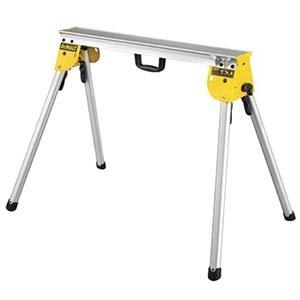
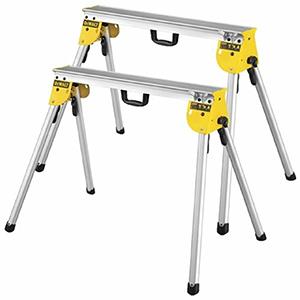
Dewalt Ladders, Access & Benches
DeWalt work bench options give you a solid, portable surface for cutting, fixing and fitting on site, without balancing gear on trestles or the van tailgate.
When you're setting up in a half-finished room or out by the unit, a proper DeWalt bench saves time and mistakes. You get stable support for saws and materials, decent clamping points, and legs that don't wobble on rough ground. Pair it with the right DeWalt ladder access gear and you've got a safer, tidier set-up for day-to-day installs. Pick the size and load rating that matches what you actually sit on it, then get yourself sorted.
What Jobs Are DeWalt Work Benches Best At?
- Setting up a stable cutting and assembly station for second fix, kitchens, and fit-out work when you cannot rely on uneven floors or makeshift trestles.
- Supporting mitre saws, chop saws, and materials at a sensible working height so you are not fighting twist, bounce, or snagging when you are trying to cut accurately.
- Holding doors, sheet, and trim for drilling and fixing with proper clamping, so the work stays put and you are not chasing it across the bench mid-hole.
- Creating a quick, repeatable work area for snagging and maintenance jobs where you are in and out of rooms all day and need something that folds and moves fast.
Choosing the Right DeWalt Work Bench
Pick your DeWalt bench based on what you're actually loading it with and how often you're moving it, not just how tidy it looks in the van.
1. Load rating and real use
If you are only supporting timber and tools, a lighter bench is fine. If you are parking saws, doors, or stacked materials on it, go for the higher load-rated DeWalt work bench so it does not sag or rack when you lean into the job.
2. Folding speed and footprint
If you are bouncing between plots or doing punch-list work, you want a DeWalt bench that folds quickly and stores flat. If it is living in one area for a week, a wider stance and bigger top is worth it for stability and space.
3. Clamping and fixing options
If you do any drilling, routing, or trimming, make sure the DeWalt work bench has proper clamping points or a top that takes dogs and clamps. It is the difference between clean work and fighting the material all day.
Who Uses DeWalt Benches and Access Benches?
- Chippies and kitchen fitters who need a DeWalt work bench that stays rigid for trimming, scribing, and assembling without the top flexing under load.
- Site maintenance teams doing reactive jobs who want a DeWalt bench that folds up quick, rides in the van, and sets up anywhere without hunting for a flat spot.
- Dryliners and fixers who are constantly measuring, drilling, and fixing and need a dependable surface for tools and materials to keep the work flowing.
- Decorators and finishers who use a bench for prep and light assembly, keeping kit off dusty floors and reducing damage on finished surfaces.
Workbench Add-Ons That Make Site Life Easier
The right extras stop the usual site headaches like slipping workpieces, lost time resetting, and damaged edges.
1. Clamps and bench dogs
Get clamps that actually suit the bench top and holes, so you can pin down doors, trim, and sheet without using your knee as a third hand while you drill or cut.
2. Saw stands and support extensions
If you are running longer lengths through a saw, proper support arms or extensions stop the timber tipping, snatching, and ruining your cut, especially when you are working solo.
3. Workbench tops and sacrificial surfaces
A replaceable top or sacrificial board saves you from chewing up the bench itself when you are trimming through, drilling out, or doing messy adhesive work.
Shop DeWalt Work Benches at ITS
Whether you need a compact DeWalt bench for quick maintenance jobs or a bigger DeWalt work bench for daily cutting and assembly, we stock the range in one place. It is all held in our own warehouse, ready for next day delivery so you can get set up and crack on.
DeWalt Work Bench FAQs
How much weight can a DeWalt table hold?
It depends on the exact DeWalt bench or table, because load ratings vary a lot between folding benches and access benches. Check the product spec for the stated maximum load and do not guess, especially if you are putting a saw and stacked materials on it.
What is the difference between a workbench and a worktable?
A workbench is usually built for clamping, fixing, and taking heavier abuse, with a more rigid frame and a top designed to be worked on. A worktable is often more about a flat surface for layout and light tasks, so it can be quicker to move but may not be as solid when you are cutting or drilling hard.
How much weight can a workbench hold?
There is no single number that covers every workbench, because folding benches, fixed benches, and access benches are built differently. Treat the manufacturer load rating as the limit, and remember the real killer is uneven loading, like one heavy saw parked on one corner or someone sitting on the edge.
Will a folding DeWalt work bench stay stable on rough site floors?
Yes, if you set it up properly and the legs are fully locked out, it will be stable for normal cutting and fixing. On really rough concrete or gravel, take a minute to level it with packers rather than forcing it to sit twisted, because that is when any bench starts rocking and your cuts go off.
Can I use a DeWalt bench as a step or platform?
No, not unless it is specifically sold and rated as an access bench or platform. A standard DeWalt work bench is for supporting work and tools, and standing on it is how you end up with a slip, a collapse, or a twisted frame.