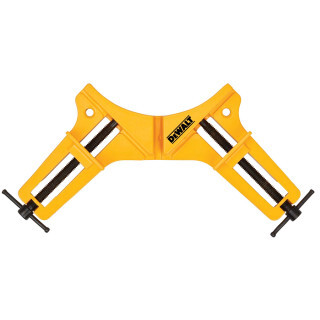
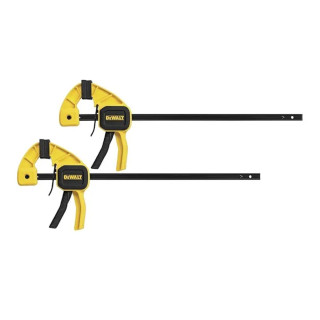
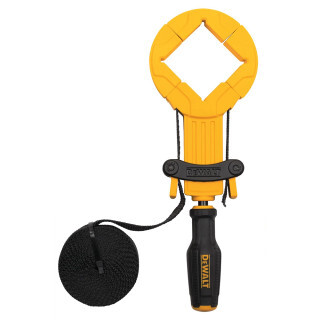
Dewalt Clamps
DeWalt clamps hold work solid while you cut, glue, fix or line things up. From quick clamps to F clamps, they save time and stop jobs creeping out of square.
When you're trying to hold timber, sheet, trim or assemblies steady on your own, a decent clamp stops the whole job turning into a fight. DeWalt clamps are built for site abuse, with trigger clamps for fast one handed use, bar clamps for bigger spans, and F clamps when you need more bite. If you're already buying from the Dewalt Hand Tools range, this is the sort of kit that earns its place straight away. Pick the jaw opening and clamping force to suit the work, then get sorted with clamps that hold properly.
What Jobs Are DeWalt Clamps Best At?
- Holding skirting, architrave and trim in place during fixing saves you chasing pieces that keep shifting while you line up pins or screws.
- Clamping timber sections for gluing and assembly keeps joints tight and square, which matters when you are building frames, boxing-in or site-made units.
- Securing sheet material or battens to benches and trestles makes cutting safer and cleaner, especially when you are working alone with a circular saw or jigsaw.
- Gripping awkward parts during refit and repair work gives you an extra pair of hands when adjusting, marking out or drilling in tight spaces.
- Locking work to portable benches or site tables helps stop movement on snagging, second fix and workshop jobs where accuracy matters more than brute force.
Choosing the Right DeWalt Clamps
Match the clamp to the hold you need. Fast access is one thing, but jaw opening and pressure are what stop a job slipping halfway through.
1. Quick Clamp or F Clamp
If you are doing trim, light holding, marking out or quick repeat work, a DeWalt quick clamp is the sensible shout because you can use it one handed. If you are pulling joints together or clamping up timber with proper pressure, go for a DeWalt F clamp.
2. Check Jaw Opening Properly
Do not buy too small and hope it will do. If you are clamping sheet, deep carcasses or wider boards, make sure the jaw opening covers the full width with room to spare, otherwise you will be swapping clamps all day.
3. One Handed Use Matters on Site
If you are up steps, holding material in place or working in a tight room, a DeWalt trigger clamp or DeWalt one handed clamp makes life easier. For bench work where both hands are free, a heavier screw style clamp can give you more control.
4. Buy Singles or a Clamp Set
If you only need one spare for the van, buy the size you actually use most. If you are doing regular glue-ups, cabinet work or repeat installs, a DeWalt clamp set saves scrabbling around for matched sizes when the job needs four corners pulled in together.
Who Uses These Clamps on Site?
- Chippies rely on DeWalt quick clamp and DeWalt one handed clamp models for first fix and second fix, especially when they need to hold timber steady while fixing on their own.
- Joiners and workshop fitters use DeWalt F clamp and DeWalt bar clamp options for glue-ups, assemblies and keeping panels square while the adhesive grabs.
- Kitchen fitters and installers keep a DeWalt trigger clamp in the van for pulling fillers, end panels and trim into place without marking the job.
- Maintenance teams and site supervisors use them for quick holding, temporary positioning and awkward repair work where a third hand saves time straight off.
Clamp Extras That Make the Job Easier
A few sensible add-ons stop damage to the work and keep your kit easier to carry, store and use on site.
1. Clamp Pads and Protective Faces
These save you denting finished trim, marked-up panels or painted surfaces when you need pressure but cannot afford to leave witness marks all over the job.
2. Workbench and Support Setups
A decent bench gives your DeWalt work clamp something solid to bite onto, which is a lot better than balancing sheet or joinery across buckets and hoping it stays put.
3. Tool Storage
Clamps get tangled, bent and buried if they are just thrown in the van. Keeping them organised with DeWalt Tool Storage saves time and stops damage to rails, jaws and handles.
Choose the Right DeWalt Clamps for the Job
Use this as a quick guide before you throw the wrong clamp in the basket.
| Your Job | Clamp Type | Key Features |
|---|---|---|
| Holding trim, battens or light timber during fixing | DeWalt quick clamp | One handed use, fast trigger action, handy for repeat positioning |
| Pulling glued joints and timber assemblies tight | DeWalt F clamp | Higher clamping pressure, steady adjustment, better for square glue-ups |
| Securing wider panels or sheet on a bench | DeWalt bar clamp | Longer reach, decent jaw opening, stable hold across bigger work |
| Awkward solo work on steps or in tight rooms | DeWalt trigger clamp | Quick to apply, easy release, useful when one hand is already occupied |
| Regular install or workshop work with multiple joints | DeWalt clamp set | Matched sizes, better value for repeat jobs, easier to keep work even |
Common Buying and Usage Mistakes
- Buying by price instead of clamping force is a common mistake. A light clamp might hold trim, but it will not pull heavier joints tight, so match the clamp to the pressure the job actually needs.
- Choosing the exact jaw opening with no spare room wastes time on site. Give yourself extra capacity so you are not fighting to get over the workpiece every time.
- Using bare jaws on finished material leaves marks and dents. Fit protective pads or use packers if the surface needs to stay clean for handover.
- Overtightening a quick clamp can bow lighter work or pull assemblies out of square. Tight is good, but keep checking alignment instead of just cranking harder.
- Throwing clamps loose in the van shortens their life. Bent bars, damaged pads and jammed mechanisms are easily avoided if you store them properly after use.
Quick Clamps vs F Clamps vs Bar Clamps
DeWalt Quick Clamps
These are the grab first option for fast site work. If you need to hold trim, battens or light sections while fixing, they are quicker than screw clamps and easier to use one handed, but they are not the first pick for heavy glue pressure.
DeWalt F Clamps
A DeWalt F clamp is the better choice when you need stronger, steadier pressure across joints and assemblies. They are slower to wind in than trigger clamps, but they hold harder and suit workshop and install jobs better.
DeWalt Bar Clamps
Bar clamps come into their own on wider boards, doors, panels and carcasses where a small clamp just will not span the work. They take up more room in the van, but they save a lot of grief on bigger pieces.
Which One Should You Buy First?
If you mainly do second fix and snagging, start with quick clamps. If you build or assemble regularly, buy F clamps first. If sheet, panel work or larger joinery is your bread and butter, make room for bar clamps as well.
Maintenance and Care
Wipe Off Glue and Dust
Dried glue, plaster dust and site muck gum up moving parts fast. Clean clamps after use so the jaws slide properly and the release does not start sticking.
Check Pads and Jaw Faces
If pads are missing or split, you will mark finished work before you realise it. Replace worn faces early rather than risking damage on fitted joinery or painted surfaces.
Keep Rails Straight
Do not lash heavy bars under other gear in the van. Bent rails make clamps awkward to use and stop them applying pressure evenly across the work.
Store Them Dry
If clamps live in a damp box or on a wet van floor, surface rust soon creeps in. Dry storage keeps bars, screws and mechanisms working smoothly for longer.
Replace When the Mechanism Starts Slipping
A clamp that will not hold pressure is no use at all. If the trigger, screw or locking action starts letting go under load, retire it before it ruins a glue-up or drops the work.
Why Shop for DeWalt Clamps at ITS?
Whether you need a single DeWalt quick clamp for snagging work or a full mix of DeWalt F clamp, bar clamp and clamp set options for the bench and van, we stock the range that trades actually use. It is all in our own warehouse and ready for next day delivery, so you can get the right holding kit on site without waiting around. While you are sorting the job, you can also pick up Dewalt Power Tool Accessories, and if you are already on the yellow kit, there is also Dewalt FLEXVOLT More Power Tools plus Dewalt FLEXVOLT Batteries Chargers and Mounts ready to go.
DeWalt Clamps FAQs
What types of clamps does DeWalt make?
DeWalt makes the main clamp types most trades actually use, including quick clamps, trigger clamps, F clamps, bar clamps and some clamp set options. In simple terms, quick and one handed clamps are for fast holding on site, while F and bar clamps are better when you need more reach or more pressure.
Are DeWalt clamps suitable for heavy-duty woodworking?
Yes, the right DeWalt clamps are well suited to heavy timber and workshop jobs, but you need to choose the proper style. For light trim and quick holding, trigger clamps are fine. For serious glue-ups, frame work or pulling boards tight, go for DeWalt F clamp or larger bar clamp models with stronger clamping pressure.
What jaw opening do DeWalt clamps have?
Jaw opening varies by clamp size and type, so there is no one answer across the whole range. Smaller DeWalt quick clamp models suit trim, battens and lighter sections, while larger F clamps and bar clamps open wider for panels, frames and wider boards. Always buy with spare capacity rather than the bare minimum.
Are DeWalt clamps compatible with DeWalt workbenches?
Many DeWalt clamps work well with DeWalt benches and work supports for holding timber, sheet and assemblies steady, but it depends on the bench design and clamp size. Check the bench thickness, clamp reach and access underneath before you assume any clamp will fit every setup.
Are one handed DeWalt clamps actually strong enough for site work?
Yes, for the jobs they are meant for. A DeWalt one handed clamp is spot on for holding trim, battens, sheet edges and light assemblies while you fix or mark out. Just do not expect it to replace a bigger F clamp when you are clamping heavy joints under proper pressure.
Will DeWalt quick clamps mark finished timber or painted surfaces?
They are designed to grip cleanly, but any clamp can mark delicate finishes if you overdo it or the pads are worn. If the job is finished face work, use protective pads or a packing piece and check the contact points before you squeeze up tight.