Bosch Sanding Pads & Sheets
When paint needs flattening or timber needs finishing, Bosch sander pads put the right abrasive between your machine and the work.
Match the shape, fixing and extraction holes before choosing the grit. Bosch sanding pads and sheets suit different machines and materials, so check compatibility first, then choose the abrasive for your next job.
What Are Bosch Sander Pads Used For?
- Flatten sound paint between coats on doors and skirting with a suitable fine abrasive, removing nibs without cutting unnecessarily through the finish.
- Prepare bare timber before painting or varnishing by working through progressively finer grits rather than trying to remove coarse scratches in one pass.
- Sand into internal corners on window frames and fitted joinery using sheets matched to a compatible detail sander.
- Level filler repairs on timber trim with a suitable abrasive and light pressure, keeping the sander flat to avoid hollowing the repair.
- Finish larger timber panels with compatible orbital sanding abrasives, aligning the extraction holes to help clear dust from the sanding face.
Choosing the Right Bosch Sander Pads
Sort the machine fit first, the material second and the grit third. A cheap pack is wasted money if it will not stay attached or extract properly.
1. Abrasive or Replacement Backing Pad
If the abrasive is worn, buy replacement sheets or discs. If fresh abrasives will not grip because the machine's hook surface is worn, check whether you need a replacement backing pad instead. These are different parts, despite often being called sanding pads.
2. Shape, Size and Fixing
Match the dimensions, fastening method and hole pattern to the machine instructions. Choose Bosch Sanding Discs for compatible round bases and Bosch Sanding Sheets for matching sheet or detail sanders. Do not buy on shape alone.
3. Grit and Material
For substantial stock removal, start with a suitable coarse grit. For finish preparation, step through finer grades until the previous scratches are removed. Check the abrasive's stated material suitability; a sheet intended for timber is not automatically the right choice for metal or plaster.
4. Dust Extraction Layout
If the sander extracts through its base, choose a compatible perforation pattern and align it properly. Covering the holes restricts collection, leaving more dust at the work and increasing abrasive loading.
Who Uses Bosch Sander Pads?
Decorators use Bosch sander sheets for paint preparation and between-coat sanding on doors, frames and trim. Joiners and kitchen fitters use compatible pads and sheets to prepare timber components before finishing, while maintenance teams keep replacement abrasives ready for patch repairs. Check the machine model on your Bosch Sanders before ordering; the brand alone does not establish compatibility.
The Basics: Understanding Bosch Sanding Pads
Two distinctions matter when ordering: which part you are replacing and how aggressively the abrasive cuts.
1. The Backing Pad Supports the Abrasive
The backing pad is the machine component beneath the sanding disc or sheet. Its condition affects attachment and support. A damaged or worn pad needs the correct machine-specific replacement, not another pack of abrasive sheets.
2. Grit Numbers Control the Cut
Lower grit numbers generally cut more aggressively and leave deeper scratches. Higher numbers refine the surface. Work through suitable grades rather than jumping straight from stripping to a finishing grit, which leaves you sanding longer to remove scratches.
Accessories for Cleaner, More Consistent Sanding
Keep dust moving and protect the machine's backing surface with compatible supporting kit.
1. Dust Extraction and Hose Adaptors
A correctly fitting hose adaptor stops a loose connection interrupting dust collection. Check Bosch M-Class Dust Extractors against your dust assessment and machine connection requirements; extraction does not remove the need for other specified controls.
2. Compatible Pad Savers
Where approved for the sanding system, a pad saver provides a replaceable attachment surface between the backing pad and abrasive. Match its size and extraction layout carefully; an unsuitable extra layer can affect support and dust collection.
Choose the Right Bosch Sander Pads for the Job
Use the task to narrow down the abrasive, then confirm the machine fit.
| Your Job | Pad or Abrasive Type | Key Features |
|---|---|---|
| Removing substantial material from bare timber | Suitable coarse abrasive | Correct timber rating, machine dimensions and extraction pattern |
| Preparing timber for its final finish | Progressively finer abrasives | Grit sequence suited to the timber and coating instructions |
| Sanding frame corners and tight recesses | Matching detail sanding sheets | Correct tip profile, attachment and hole layout |
| Flattening between paint coats | Fine abrasive suitable for coatings | Appropriate grit and light cutting action on fully cured paint |
| Replacing a worn machine attachment surface | Model-specific backing pad | Correct mounting, diameter or profile and specified pad hardness |
Common Buying and Usage Mistakes
- Buying by brand alone can leave you with the wrong size or fixing. Check the sander model, abrasive dimensions and attachment method before ordering.
- Pressing harder on a blunt sheet creates heat and can damage the finish or backing pad. Replace loaded or worn abrasives and let the machine work under controlled pressure.
- Skipping several grit grades leaves coarse scratches visible under the finish. Remove the previous scratch pattern before moving to the next grade.
- Fitting a perforated sheet without aligning its holes restricts extraction. Position it carefully and check that the base openings remain clear.
- Dry sanding unknown old coatings can release hazardous dust. Establish what the coating contains and use the required controls before starting.
Round Discs vs Rectangular Sheets vs Detail Sheets
Round Sanding Discs
Round discs suit compatible machines such as Bosch Random Orbit Sanders for working across panels and broader surfaces. They cover open areas well but cannot reach square internal corners.
Rectangular Sanding Sheets
Rectangular sheets suit matching sheet sanders for flat faces and straight edges. Check whether the machine takes clamps or hook-and-loop abrasives; similar dimensions do not guarantee the same fixing.
Detail Sanding Sheets
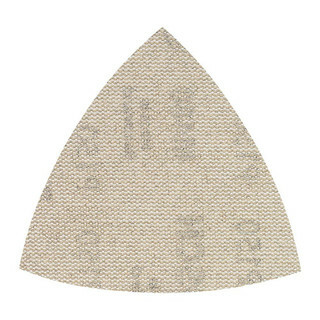
Pointed detail sheets reach into frame corners and confined joinery that a round disc misses. Choose them for access rather than broad-area removal, and avoid leaning heavily on the tip, which concentrates wear.
Maintenance and Care
Clear the Backing Surface
Disconnect the power supply or remove the battery before cleaning. Clear loose dust from the backing surface and extraction holes without damaging the hooks or pad material.
Replace Spent Abrasives
Change sheets that are torn, heavily loaded or no longer cutting effectively. Continuing with a clogged abrasive wastes time and can leave heat marks or an uneven finish.
Store Flat and Dry
Keep abrasives in their packaging, separated by grit and away from damp. Loose sheets left under tools in the van can crease or lose usable edges before reaching the job.
Inspect the Machine Pad
Check for damaged edges, distortion and worn attachment surfaces. Replace a defective backing pad with the specified part rather than trying to compensate with extra pressure or improvised adhesive.
Why Shop for Bosch Sander Pads at ITS?
ITS stocks the Bosch sanding pad and sheet range across different shapes, sizes and grit grades, so you can match replacements to the machine and finish required. Stock is held in our own warehouse, with in-stock options ready for next-day delivery, subject to order cut-offs and delivery availability.
Bosch Sander Pads FAQs
Will these Bosch sanding pads fit any Bosch sander?
No. Match the model requirements, dimensions, fixing and extraction pattern. Bosch orbital sander pads are not universally interchangeable, and a replacement backing pad also needs the correct machine mounting.
Am I buying an abrasive sheet or the actual backing pad?
Check the individual listing. Abrasive sheets and discs are the consumables that cut the surface. The backing pad is the machine part supporting them. If its hooks are worn or its edges are damaged, replacement abrasives alone will not fix it.
Why do new sanding sheets keep coming off?
Check for dust in the attachment surface, worn hooks, an incompatible abrasive backing or a damaged pad. Excessive pressure and heat can also shorten attachment life. Stop and find the cause rather than holding a loose sheet in place while sanding.
Does the hole pattern really matter if the sheet fits?
Yes, where the machine extracts through the base. A mismatched or misaligned sheet can block the dust path, increasing dust left at the surface and loading the abrasive sooner. Use the layout specified for your machine or sanding system.
Can I use the same abrasive on timber and painted metal?
Only if the abrasive is specified for both. Use a fresh abrasive when changing materials to avoid transferring contamination, and assess existing coatings before sanding. Material suitability and dust controls matter as much as grit choice.