Bosch Fastening Tools
When fixings need tightening without damaging the heads, Bosch fastening tools give you hand control over screws, nuts and bolts.
Bosch screwdrivers, spanners, sockets and Allen keys suit fitting and maintenance work. Match the tip, jaw or drive size before buying. Choose the tools your fixings need.
What Are Bosch Fastening Tools Used For?
- Tighten hinge and bracket screws during kitchen fitting, using the correct screwdriver profile to avoid chewing up visible screw heads.
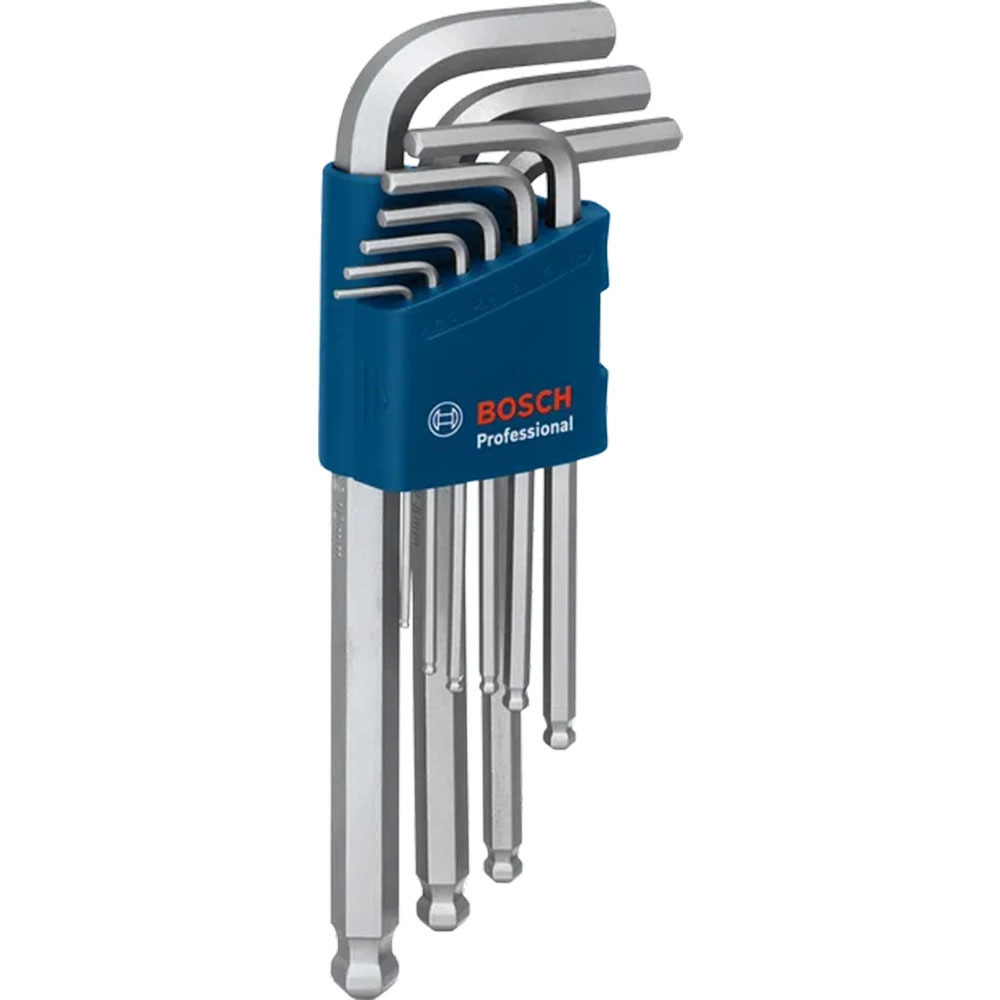
- Assemble frames and equipment with Bosch Allen keys, matching the hex size closely before tightening recessed socket screws.
- Hold nuts with Bosch spanners while tightening the bolt from the opposite side during bracket and framework installation.
- Remove and refit accessible nuts with Bosch sockets and a compatible ratchet when repeated turns would mean constantly repositioning a spanner.
Choosing the Right Bosch Fastening Tools
Buy for the fasteners in front of you, not the number of tools in the box.
1. Match the Screw Head Exactly
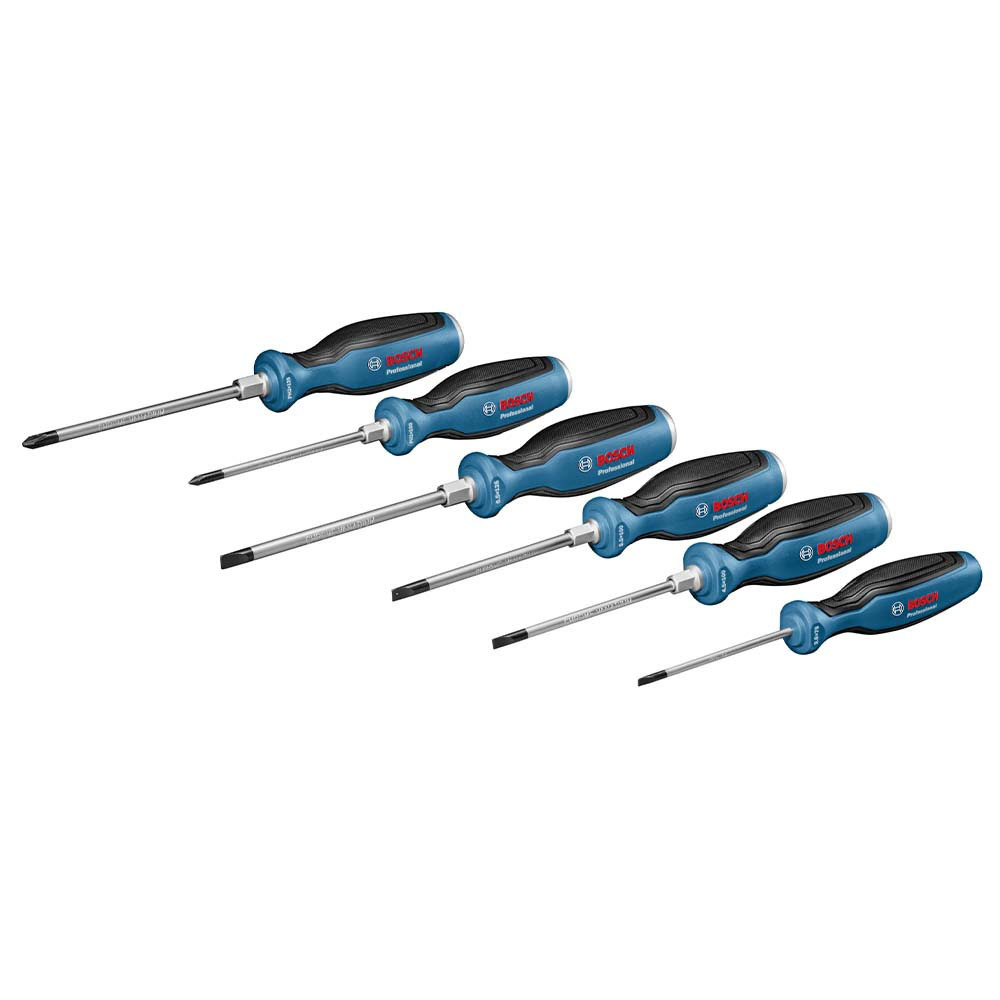
If you are fitting hinges or brackets, check both the screw profile and tip size. Phillips and Pozidriv are not interchangeable. Choose Bosch Screwdrivers with tips that seat fully rather than relying on one driver for every screw.
2. Check Access Around the Fastener
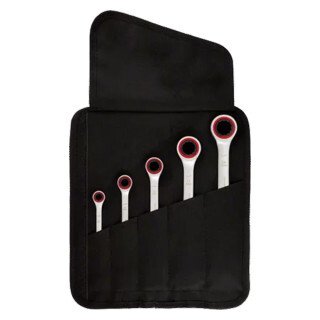
If there is little clearance above a nut, a spanner may fit where a socket and ratchet will not. Compare Bosch Spanners by size and head style. Where access allows, a correctly sized ring end gives more contact around the nut than an open end.
3. Choose the Correct Hex Size
If you work on socket-head screws, check whether the fittings are metric or imperial. With Bosch Allen Keys (Hex Keys), a close-looking size is not close enough. Use the straight end fully seated for final tightening; ball ends, where fitted, are for angled access within their specified limits.
4. Check Set Contents Before Buying
If you maintain several types of equipment, a set can keep common sizes together. Check the actual sizes, socket drive and included handles before ordering. Compare Bosch Hand Tool Kits if you also need tools beyond fastening.
Who Uses Bosch Fastening Tools?
Kitchen fitters and joiners use hand screwdrivers for controlled final adjustments to hinges and furniture fittings. Maintenance engineers and mechanical fitters use spanners, sockets and hex keys to assemble equipment and replace components. For a broader fitting bag, compare the fastening tools with the wider Bosch Hand Tools range.
Accessories for Better Fastener Access
For socket work, the right drive accessories save awkward positioning without forcing the tool.
1. Socket Extension Bars
An extension reaches recessed nuts and moves the ratchet handle clear of surrounding brackets. Match its square drive to the ratchet and socket rather than buying by length alone.
2. Socket Universal Joints
A compatible universal joint helps where you cannot approach a fastener straight on. Keep the angle as shallow as practical and do not treat it as a substitute for proper access on heavily loaded fixings.
Choose the Right Bosch Fastening Tools for the Job
Start with the fixing type, then check the room available to turn it.
| Your Job | Tool Type | Key Features |
|---|---|---|
| Adjusting hinges and tightening brackets | Bosch screwdrivers | Correct tip profile, tip size and shaft reach |
| Holding a nut while turning its bolt | Bosch spanners | Exact jaw size and suitable head access |
| Removing several accessible nuts | Bosch sockets with a compatible ratchet | Matching drive size, nut size and socket depth |
| Assembling equipment with recessed hex screws | Bosch Allen keys | Correct metric or imperial size and suitable reach |
Common Buying and Usage Mistakes
- Using a nearly matching screwdriver tip damages screw recesses. Check the profile and size, then seat the tip fully before applying force.
- Buying sockets without checking the square drive can leave them incompatible with your ratchet. Confirm both the drive size and fastener size.
- Adding a pipe to a spanner or hex key risks tool failure and overtightening. Use equipment rated for the load and a torque wrench where a torque is specified.
- Treating ordinary fastening tools as electrically insulated creates a serious safety risk. For electrical work, isolate and prove dead, and select appropriately rated insulated tools where required.
Spanners vs Sockets vs Allen Keys
Spanners for Side Access
Spanners suit external nuts and bolt heads where access above the fixing is restricted. Open ends can approach from the side, but need careful seating and usually need repositioning between turns.
Sockets for Repeated Turning
Sockets surround external fasteners and work with a ratchet for repeated turns without lifting the tool off. They need clearance for the socket depth and drive head, so check access before choosing them over spanners.
Allen Keys for Internal Hex Screws
Allen keys engage the hex recess inside a screw rather than gripping its outside. Choose them for matching furniture and equipment fixings; they cannot replace a spanner or socket on an ordinary hex nut.
Maintenance and Care
Clean Contact Surfaces
Wipe dirt from screwdriver tips, socket interiors and spanner jaws after use. Packed debris prevents full engagement and makes slipping more likely.
Store Dry and Organised
Dry tools before putting them back in their rack or case. Keep sizes in order so missing tools are obvious before you leave for the next job.
Replace Worn Tools
Replace rounded hex keys, damaged screwdriver tips and spread or cracked spanner jaws. Do not grind them into a rough fit; poor contact transfers damage to the fixing.
Check Ratchets Before Loading
Check that the ratchet engages and retains its socket securely. If it skips, stop using it and arrange servicing or replacement rather than applying more force.
Why Shop for Bosch Fastening Tools at ITS?
Shop the full Bosch fastening tools range at ITS, from screwdrivers and Allen keys to spanners and sockets for fitting and maintenance. Stock is held in our own warehouse, with in-stock tools ready for next-day delivery. Check individual sizes, set contents and delivery availability before ordering.
Bosch Fastening Tools FAQs
What fastening tools does Bosch make?
Bosch makes hand fastening tools including screwdrivers, spanners, sockets, ratchets and Allen keys. Available sizes and set contents vary, so check the individual listing against the fixings you use.
Are Bosch fastening tools any good?
They are a practical option for fitting, assembly and maintenance, provided you choose the right tool for the load and fixing. The brand alone does not establish suitability: check dimensions, drive compatibility and any insulation or impact rating you need.
What is the difference between a spanner and a socket?
A spanner has a handle with an open or ring-shaped head. A socket fits over the fastener and connects to a separate ratchet or handle. Spanners can suit restricted overhead clearance, while sockets with a ratchet make repeated turning easier where there is enough room.
Where are Bosch tools made?
Bosch manufactures and sources tools across several countries. Do not assume a Bosch hand tool is made in Germany. Check the specific tool or packaging for its country of origin, or ask for confirmation before ordering if this is a purchasing requirement.
Do Bosch tools come with a warranty?
Bosch tools carry warranty cover subject to the applicable product terms. Duration, exclusions and registration requirements can differ, so check the current terms for the exact hand tool. Keep your proof of purchase and do not assume a power tool warranty extension also covers hand tools.
Can I use Bosch hand sockets on an impact wrench?
Only if the specific sockets are explicitly impact-rated. Ordinary hand sockets are not a substitute for impact sockets and can fail under impact loading. A matching square drive does not mean the socket is suitable.